


Empowering Education Through AI Education Training Ppt




Try Before you Buy Download Free Sample Product
 Impress Your
 Audience
 100%
100% Editable
 Save Hours
 of Time


These slides depict the estimated growth in the application of AI in the education market. Also, the advantages of AI are listed, including automation of admin tasks, personalized learning, constructive feedback, and universal access for students.
People who downloaded this PowerPoint presentation also viewed the following :
Content of this Powerpoint Presentation
Slide 1
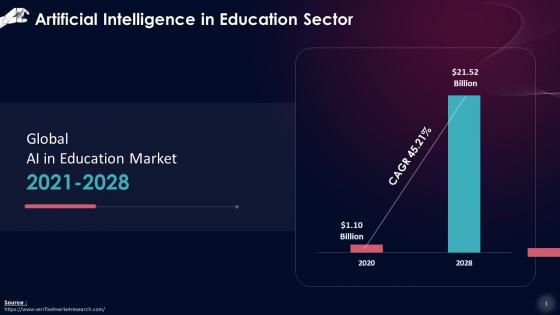
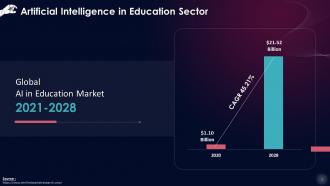
This slide depicts the estimated growth in the application of AI in education market by 2028. Artificial intelligence and Machine Learning have a promising future in this market, with a scorching rate of growth. From 2021 to 2028, the AI in Education market is expected to increase at a CAGR of 45.2%, from $1.1 billion in 2020 to $21.52 billion in 2028.
Slide 2
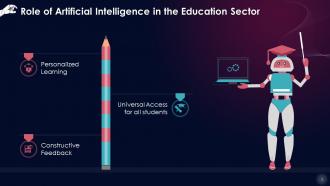
This slide lists advantages of Artificial Intelligence which can help enhance and transform the education sector. Some of these advantages include automation of admin tasks, personalized learning, constructive feedback, and universal access for students.
Instructor’s Notes:
- Automate admin tasks: Grading homework and assessments take a lot of instructor's time, and AI can quickly tend to these tasks. As AI optimizes administrative work, teachers have more time to spend with each student. AI also has massive potential for making enrollment and admissions procedures more efficient
- Personalized learning: The goal of AI in education is to better understand each student's potential and limitations. AI in schools makes things more accessible and convenient for both teachers and students
- Constructive feedback: Artificial Intelligence-powered programmes can provide vital feedback to both students and teachers. Teachers can use AI in the classroom to help them enhance the instructions they provide their students and make learning more engaging. Students benefit from immediate feedback since it enables them to realize areas where they need to improve
- Universal access for all students: Artificial Intelligence can aid in the creation of global classrooms that are accessible to everybody, including those who are differently-abled such as students with certain visual or hearing impairments along with students from varied linguistic backgrounds
Slide 3
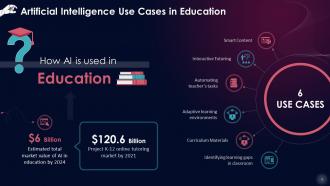
This slide lists use cases of Artificial Intelligence within the education industry.
Empowering Education Through AI Education Training Ppt with all 19 slides:
Use our Empowering Education Through AI Education Training Ppt to effectively help you save your valuable time. They are readymade to fit into any presentation structure.










FAQs for Empowering Education Through AI
Honestly, the personalized learning thing is huge - kids can actually work at their own speed instead of everyone being stuck with the same lesson. But what really sold me was getting rid of all that tedious grading and attendance stuff. AI handles the basic questions too, which frees up so much time for actual teaching. You'll get instant feedback on who's struggling before they completely tank. I probably sound like a broken record about this, but the time savings alone are worth it. Maybe try automated quiz grading first? See how it feels.
So basically the AI watches how each kid learns and adjusts on the fly. If someone's struggling, it gives them more practice problems. Advanced kids? They skip ahead without getting bored. Really smart how it works, honestly. The system notices if a student learns better with pictures versus written explanations, then customizes everything. Some get visual stuff, others need things broken down step-by-step. I'd probably start with just one platform first - see how your kids react to having their own personalized experience before going all-in.
Oh man, you'll love this - start with automated grading for quizzes and tests. Saves me like 3 hours a week, no joke. AI also whips up lesson plans super fast and creates different versions for your struggling kids vs. advanced ones. Parent emails? Automated. Assignment reminders? Done automatically. Honestly, the tracking student progress thing is pretty sweet too. I was skeptical at first but now I actually have time to, you know, teach instead of drowning in paperwork. Just pick one thing to try first - I'd go with the grading since that's where you'll see immediate results.
Privacy's huge - don't store student data without consent. AI can be sneaky biased too, which honestly still catches me off guard sometimes. Be upfront about when you're using it. Never let AI make final calls on grades though, that's still your job. Start small - maybe try one tool first? Check your school's data policies beforehand. The bias thing is tricky because different student groups can get totally different results and you won't always notice right away. Just keep your own judgment in the driver's seat.
Honestly, the speed difference is crazy - AI can spot knowledge gaps in seconds while you're still on paper three. Real-time data shows exactly where kids are stuck, and it automatically creates personalized feedback based on their actual mistakes. I swear it catches stuff I'd totally miss during those late-night grading marathons (we've all been there). Progress tracking happens continuously too, so you can pivot your teaching approach mid-semester instead of discovering problems at finals. My advice? Start with something simple like quiz grading to test it out.
So basically AI can catch struggling students super early by tracking stuff like how long they spend on assignments, quiz scores, whether they're actually turning things in on time. Way better than waiting for midterm grades to roll around, you know? Once it spots patterns, it automatically sends alerts to teachers or connects kids with tutors. The real-time dashboards are honestly pretty cool - you can see everything happening as it unfolds. No more playing catch-up when it's already too late. Teachers love it because they're not scrambling to help students who've been drowning for weeks.
Dude, schools are getting pretty smart with this stuff. They're using AI to dig through student data and spot where kids are struggling consistently. Then it automatically suggests curriculum fixes or different learning paths. The crazy part? It can crunch through thousands of student interactions to find patterns teachers would never notice on their own. Plus it builds personalized sequences for each kid and flags who might need help before they actually start failing. Honestly didn't think we'd get here this fast. If you wanna try it, check out learning analytics platforms that work with whatever LMS you're already using.
Honestly, money's always the first issue - schools are broke. Then you've got teachers who aren't thrilled about learning new systems on top of everything else. Most schools are still running on ancient networks that can barely handle basic stuff, let alone AI tools. Parents freak out about data collection too, which... fair enough, I guess? The worst part is these AI platforms aren't built for how classrooms actually work. Teachers end up spending more time figuring out the tech than teaching. My advice? Start super small with maybe one or two willing teachers first.
Oh dude, Google Translate's conversation mode is actually a game changer for this! Your students can get instant help with instructions, or even submit work in their language and you'll get it auto-translated. There are also some education platforms that adjust materials to different language levels - honestly didn't know that was a thing until recently. Some AI tutoring systems can explain the same concept in multiple languages at once, which is pretty wild. I'd say just try the translation app during group work first. Once everyone gets the hang of it, you can add more features without overwhelming anyone.
Look, AI isn't gonna steal your job - it's more like getting a really good TA who never calls in sick. You'll spend way less time on the boring stuff like grading and making worksheets. That frees you up for what actually matters: connecting with kids, running discussions, being there when they're struggling. Honestly, the emotional support piece is huge and no robot can do that. The tech suggests personalized learning paths, but you're still the one interpreting everything and guiding students through it. You become more of a coach, which is honestly more fun anyway.
Skip the theory sessions - they're useless. Find workshops where you actually get to mess around with AI writing tools, auto-graders, that kind of stuff. So much "AI training" is complete fluff, honestly. You want programs that let you practice with real classroom situations. Online teacher groups are gold for this - people share what actually works vs. what's garbage. Oh, and don't try to learn everything at once (I made that mistake). Pick one tool, get decent with it, then move on. Way less overwhelming that way.
Just a heads up - AI makes stuff up constantly, especially with specialized topics, so double-check everything before showing students. Privacy's another nightmare since most tools hoover up data without clear policies. They're also weirdly bad with cultural nuance and can push biased info from their training. Plus they can't read a room or adapt to kids with learning differences the way you can. Honestly, I think of them like a research assistant who's helpful but needs babysitting. Use them for brainstorming or first drafts, but don't let anything reach students without your review first.
So basically AI can create learning experiences that actually adapt to each student's needs. Like, text-to-speech helps kids with dyslexia, visual recognition software works for blind students, and predictive text is great for motor difficulties. The tech has gotten crazy good lately - honestly didn't expect it to advance this fast. Real-time feedback is huge too, plus it adjusts difficulty automatically so nobody falls behind. Just don't let it replace your actual teaching style, you know? Pick tools that work with what you're already doing.
So AI in education is getting crazy personalized - like, the same math concept gets explained totally different ways depending on how your brain works. Sarah might get a visual breakdown while Mike gets step-by-step logic, you know? The wild part is these systems will catch when you're about to struggle before you even know it. Teachers won't waste time on grading busy work anymore (thank god). They'll actually get to... teach. Honestly, you should mess around with some AI tools now. Don't be that person playing catch-up in five years when this stuff is everywhere.
Honestly, parents hold all the cards here. They're voting on school boards and budging budgets, so their opinion matters big time. Most freak out about privacy stuff and worry kids will get addicted to screens. Oh, and they're convinced AI teachers are gonna replace real ones - which is ridiculous but good luck convincing them otherwise. Some want zero tech, others demand cutting-edge everything so their district stays competitive. The trick? Show them how it actually works instead of just talking about it. Get them involved in testing it out. Way better than trying to explain AI at some chaotic PTA meeting.
-
You guys are life-saver when it comes to presentations. Honestly I cannot do much without your services. Thank you!!!
-
Good research work and creative work done on every template.