


Environmental educational showing information education and awareness




Try Before you Buy Download Free Sample Product
 Impress Your
 Audience
 100%
100% Editable
 Save Hours
 of Time


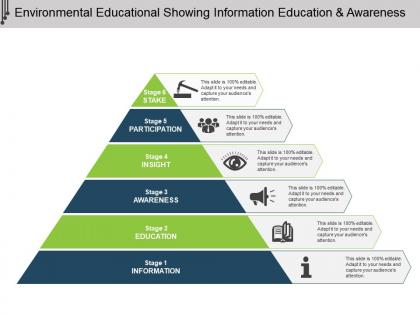
Utilize this Environmental Educational Showing Information Education And Awareness PowerPoint presentation for your company’s overall efficiency. The stages of creating awareness among the audience can be listed with this environment conservation PowerPoint layout. The need for protecting the natural habitat can be illustrated efficiently using this nature conservation PPT theme. The steps namely information, education, awareness, insight, participation, and stake can be highlighted with this environmental protection PowerPoint slideshow. The various campaigns for the promotion of environmental conservation can be showcased using this educational PPT theme. The awareness techniques to reach out to the audience can also be elucidated with this PowerPoint template. Also, the knowledge of conserving the environment for a better future can be demonstrated with this awareness PPT layout. The activities promoting the participation of masses can also be illustrated with this environmental PPT layout. Hence, environmentalists can download this natural habitat PowerPoint template.
People who downloaded this PowerPoint presentation also viewed the following :
Environmental educational showing information education and awareness with all 5 slides:
Bring about a better ethic with our Environmental Educational Showing Information Education And Awareness. They will help you change the culture.



FAQs for Environmental educational showing information
So here's the thing - environmental ed works because kids finally understand why any of this matters to them personally. Start with stuff they can actually see around your school, like doing waste audits or setting up gardens. Once they get how ecosystems connect to their daily choices, they're way more likely to care about bigger climate issues. The hands-on projects are honestly where the magic happens. My friend tried this energy monitoring thing with her class last year and they became obsessed with tracking everything. Kids are surprisingly quick to pick up on environmental concepts when you don't make it feel like another boring lecture topic.
Hey! So definitely reach out to local environmental groups and government agencies first - they have all the current data on real problems happening nearby. Build your lessons around local stuff like watershed issues or heat islands in your area. Students actually care when they see their work might help their own neighborhood, you know? Field trips to local sites work great, plus bring in community experts to speak. Oh and have kids present their findings to city council or environmental boards - that part's huge. Makes it feel urgent instead of just another boring assignment they'll forget about.
Honestly, mixing hands-on stuff with reflection works best. Get kids outside documenting actual environmental problems, then have them make concept maps connecting everything. Portfolios are gold - watching their work develop over months gives you way better insights than any test. Throw in peer discussions and real-world problem scenarios too. Short version: start with one outdoor observation activity plus a simple reflection journal. The magic happens when they experience something firsthand then have to explain it back to you. Sometimes I think we overcomplicate this, but experiential learning paired with articulation opportunities? That's your sweet spot right there.
Honestly, getting kids outside changes everything. Instead of just reading about pollution, they're actually testing that gross stream behind the school. Way more powerful. It's like... you can watch a million cooking shows but you don't really *get* it until you're elbow-deep in flour, you know? Plus they start caring more when they see the problems up close. Critical thinking develops naturally too - hard to ignore what's right in front of you. Even a quick walk around campus beats another PowerPoint any day. Your students will actually remember this stuff.
Honestly, the trickiest part is dealing with how differently families view environmental stuff - some see it as totally political while others just haven't been exposed to concepts like biodiversity or climate change. Language barriers make explaining "ecosystem" even harder than it already is! Your students' backgrounds will be all over the place too. Some kids have never been hiking, others live on actual farms. Different levels of science literacy don't help either. But here's what works - start with environmental issues happening right in their neighborhoods. That way it connects to what they actually see and experience every day.
Honestly, tech has been a game-changer for environmental education. VR trips to coral reefs? Mind-blowing stuff - way better than staring at textbook photos. Apps let students mess around with climate scenarios without actually breaking anything, which is pretty cool. Online platforms are huge too since they reach kids in remote areas who'd never get this kind of content otherwise. My cousin's school does these virtual rainforest tours now and the kids are obsessed. Just don't let the flashy tech overshadow the actual environmental message you're trying to get across.
So partnerships are honestly a game-changer for environmental programs. You get way more resources and credibility than trying to do everything yourself. Local businesses can fund stuff or provide real case studies. Environmental groups bring actual expertise and sometimes guest speakers who know their stuff (way better than that disaster presenter from last year lol). Field trips become way easier to arrange. Students get hands-on experiences they wouldn't otherwise have. Plus community members can share stories about local environmental issues that actually matter to kids' lives. I'd start with your nearest nature center or environmental nonprofit - they're usually pretty excited about school partnerships and won't leave you hanging.
Honestly, gamifying stuff works so well - try scavenger hunts with QR codes or get them doing citizen science where they're actually collecting data for real researchers. Geocaching combined with habitat studies gets kids ridiculously excited (I think it's the treasure hunt aspect). Apps for identifying species or making digital nature journals help too. Role-playing works great - like having them debate as different parts of an ecosystem. The trick is making them DO things instead of just wandering around looking at stuff. Start small with one interactive thing and see what clicks with your kids.
Oh this is such a good question! Environmental ed is perfect for critical thinking because there's literally never just one right answer. Students have to dig into evidence, question sources, and figure out competing viewpoints on stuff like climate policy. What I love is how it forces kids to think about systems - like how economics affects ecology affects society, you know? And honestly, they actually give a damn about these issues since they're so current. Try using local controversies in your lessons - maybe that proposed development near the river? Nothing gets them fired up and thinking harder than something happening in their own backyard.
Honestly, getting kids outside for environmental stuff works wonders for their mental health. Research shows it cuts anxiety and helps them focus better - which makes total sense if you think about it. Way better than having them spiral over climate doom on their phones, right? The hands-on approach breaks up that typical classroom stress too. Students get this real sense of purpose when they're actually doing something about environmental issues. Even small nature activities in your curriculum can be huge stress relievers. Worth trying if you want happier, more engaged kids.
Honestly, surveys are your best bet - hit up students 6 months out, then again at 1 and 2 years. Ask about actual stuff they're doing though, like whether they're actually recycling or biking more. Don't just ask if they "care about the environment" because everyone says yes to that. Social media's clutch for staying in touch with graduates (way easier than formal follow-ups). Local environmental groups might tell you if your former students are showing up to volunteer. I'd probably start with just one graduating class as a test run - tracking everyone sounds exhausting.
So basically, policies and laws decide what environmental stuff actually gets taught in schools. They control the money, set curriculum rules, and tell schools what they have to cover. The Environmental Education Act gives out grants and guidelines at the federal level. Then states do their own thing - some require solid environmental programs, others barely care. It's honestly pretty random depending where you live. You should probably figure out what your local rules are though, so you can either push for better programs or at least know what help you can get.
Honestly, skip the doom-and-gloom stats - kids tune that out fast. Get them involved in stuff they can actually see and touch. Water quality tests, school energy audits, maybe start a garden. I've noticed kids care way more when it's happening in their own backyard rather than some melting glacier they'll never visit. Field trips work great too. The trick is giving them real solutions they can control, not just problems that make them feel helpless. Pick one project they can actually make a difference with and go from there.
Start small with stuff they can actually do - composting, nature walks, easy projects that connect to class but won't stress them out more. Parents are already overwhelmed, honestly. Quick emails or apps work better than long newsletters for keeping them updated on what kids are learning. Garden workdays are great because families can jump in together without pressure. Oh, and recycling drives too - kids love that competitive element. Give them concrete ideas for home so the environmental stuff doesn't just disappear after school. Communication's everything, but keep it simple and don't make it feel like homework for the parents.
Dude, environmental literacy totally gets kids more involved in civic stuff. Once they understand climate change or how pollution hits their neighborhood, they start voting and volunteering way more. Makes sense, right? These aren't just "nature" problems - they're people problems that need everyone working together. Kids begin connecting environmental damage to things like health disparities and economic issues. Honestly, I've seen it happen so many times. Their whole sense of responsibility shifts when they realize their choices impact others. You should definitely use local environmental justice examples in class. Nothing beats real stories from their own community.
-
Easily Understandable slides.
-
Great experience, I would definitely use your services further.