


Environmental analysis powerpoint presentation slides




Try Before you Buy Download Free Sample Product
 Impress Your
 Audience
 100%
100% Editable
 Save Hours
 of Time


Introducing our environmental analysis PowerPoint presentation slides. Successfully conduct environmental impact analysis with help of this performance tally PowerPoint deck. Study the market and industry forces with the help of our surrounding assessment PPT layout. Make this area analyzation PowerPoint design part of your presentation as it lets you focus on the dynamics of the market issues. This particular environmental adaptation PPT theme helps you analyze the macro economic forces. Deploy this area performance PowerPoint creative set to understand the steps in environmental analysis including identification, scanning, analyzation, and forecasting. Using this area tally PPT bundle to monitor the macro environmental factors. Employment of this problem recognition PowerPoint template lets you graph the internal and external competitive profile matrix. This environment tally PPT deck lets you make required variations to icons and colors. Choose this environmental analysis PowerPoint design to showcase organization and assurance. Download this PPT slide to explore true perfection.
People who downloaded this PowerPoint presentation also viewed the following :
Content of this Powerpoint Presentation
Slide 1: This is an Environmental Analysis template. You can put your company name and proceed.
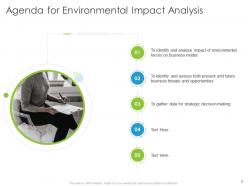
Slide 2: This is an Environmental Impact Analysis Agenda slide that presents the environmental forces on a business model, present and future business threats and opportunities, data collection process, and more.
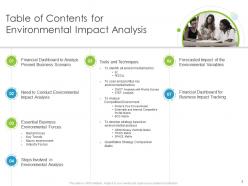
Slide 3: This is a Table of Contents slide for Environmental Impact Analysis that illustrates a financial dashboard to analyze the present business scenario and essential business environmental analysis.
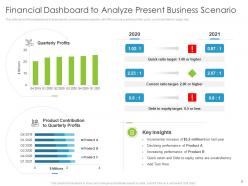
Slide 4: This slide illustrates the financial dashboard to analyze the present business scenario.
Slide 5: This slide shows a financial dashboard to demonstrate the current business scenario with KPIs such as the quarterly profits and the quick/current/debt to equity ratio.
Slide 6: This is the Table of Contents template that presents the need to conduct an environmental impact analysis.
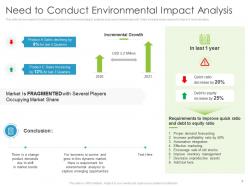
Slide 7: This slide shows the reasons for businesses to conduct environmental impact analysis like incremental growth. It also includes steps required to improve financial ratios.
Slide 8: This slide illustrates the Table of Contents related to the essential business environmental forces.
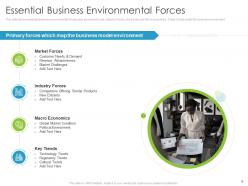
Slide 9: This slide shows essential business environmental forces such as the market forces, industry forces, key trends, and macroeconomics.
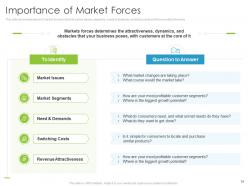
Slide 10: This slide shows the importance of market forces to identify the market issues, segments, needs/demands, switching costs, and revenue attractiveness.
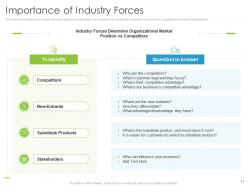
Slide 11: This slide shows the importance of industry forces to analyze market position vs. competitors by identifying the competitors, new entrants, substitute products, and stakeholders.
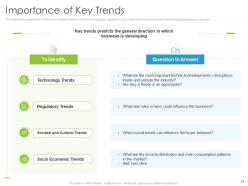
Slide 12: This slide shows the importance of the key environmental trends to identify technological, regulatory, socio-cultural, and socio-economic trends affecting the business environment.
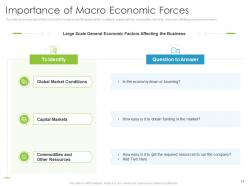
Slide 13: This slide shows the importance of the macro economic forces to identify global market conditions, capital markets, commodities, and other resources affecting the business environment.
Slide 14: This slide illustrates the Table of Contents depicting the steps involved in the environmental analysis.
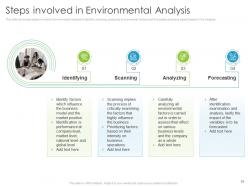
Slide 15: This slide shows key steps involved in environmental analysis to identify, scan, and analyze the environmental factors and forecast business impact based on this analysis.
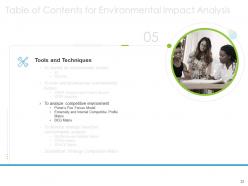
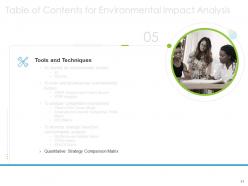
Slide 16: This is a Table of Contents slide depicting tools and techniques to identify all environmental factors.
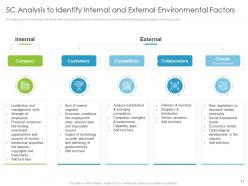
Slide 17: This slide shows 5C analysis to list all the internal and external environmental factors which influence the business activities of an organization.
Slide 18: This slide shows PESTEL analysis to identify the political, economic, social, technological, environmental, and legal factors influencing the business model.
Slide 19: This is a Table of Contents Slide that illustrates tools and techniques to scan and prioritize key environmental factors.
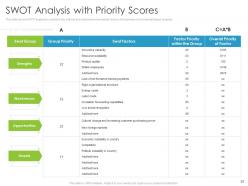
Slide 20: This slide shows SWOT analysis to prioritize key internal and external environmental factors for business environmental impact analysis.
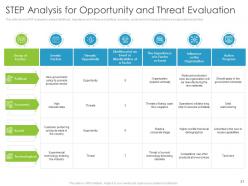
Slide 21: This slide shows STEP analysis to illustrate the likelihood, importance, and influence of the political, economic, social, and technological factors in organizational activities.
Slide 22: This is a Table of Contents slide that illustrates the environmental impact analysis to analyze the competitive environment.
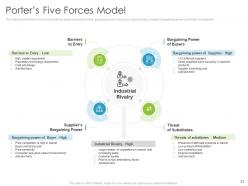
Slide 23: This slide shows Porter’s Five Forces Model to analyze barriers to entry, bargaining power of buyers, industry rivalry, supplier bargaining power, and the threat of substitutes.
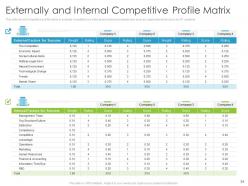
Slide 24: This slide shows a competitive profile matrix to evaluate the competitors on internal and external competencies such as the organizational structure and IT systems.
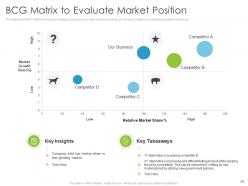
Slide 25: This slide shows BCG Matrix for long-term strategic planning and to help businesses consider growth opportunities by reviewing its portfolio of products.
Slide 26: This is a Table of Contents slide that illustrates steps to develop a strategy based on environmental analysis.
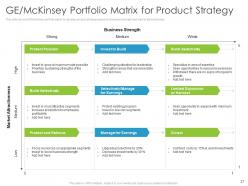
Slide 27: This slide shows GE/McKinsey portfolio matrix to develop product strategy based on business strengths and market attractiveness.
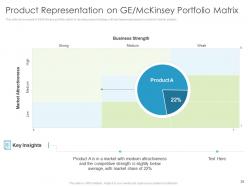
Slide 28: This slide shows the result of the GE/McKinsey portfolio matrix to develop product strategy with key takeaways based on product A’s market position.
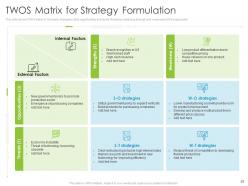
Slide 29: This slide shows the TWOS matrix to formulate strategies, utilize opportunities, and tackle threats by analyzing the strengths and weaknesses of the organization.
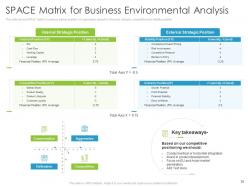
Slide 30: This slide shows the SPACE matrix to analyze the market position of an organization based on the financial, industry, competitive, and stable position.
Slide 31: This is a Table of Contents slide that illustrates the quantitative strategy comparison matrix.
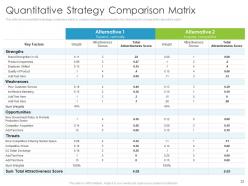
Slide 32: This slide shows a quantitative strategy comparison matrix to compare strategies by evaluating key factors and choosing a better alternative option.
Slide 33: This is a Table of Contents slide that illustrates the forecasted impact of the environmental variables.
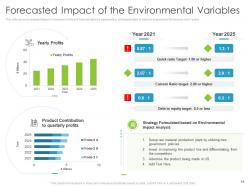
Slide 34: This slide shows the forecasted impact on business profits and financial ratios by implementing strategic steps to improve business performance in the next five years.
Slide 35: This is a Table of Contents slide that illustrates the financial dashboard for business impact tracking.
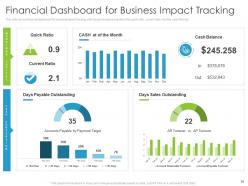
Slide 36: This slide shows a financial dashboard for business impact tracking with key performance indicators like quick ratio, current ratio, monthly cash flow, etc.
Slide 37: This is a 100% editable environmental analysis icon slide.
Slide 38: This template illustrates the additional slides of this presentation.
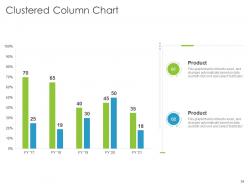
Slide 39: This slide illustrates a clustered column chart to link the excel and changes automatically based on data.
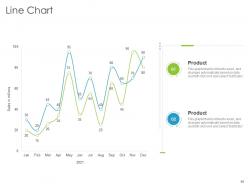
Slide 40: This is a line chart template that can be linked to excel and be changed automatically based on data.
Slide 41: This is a team information slide, including the employee name and designation.
Slide 42: This is an about us slide including information on the target audience, value clients, and more.
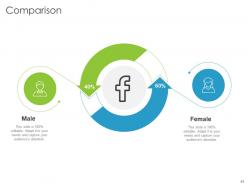
Slide 43: This is a comparison slide that illustrates information on the male and female follower base.
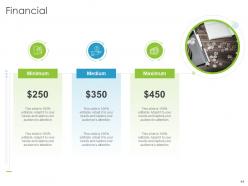
Slide 44: This slide presents the financial data with the data’s numbers at minimum, medium, and maximum percentages.
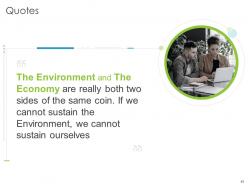
Slide 45: This slide illustrates the quote, “The Environment and The Economy are really both two sides of the same coin. If we cannot sustain the environment, we cannot sustain ourselves.”
Slide 46: This slide is a Timeline template to showcase the progress of the steps of a project with time.
Slide 47: This slide is the Idea Generation slide. It is used to brainstorm ideas for a project.
Slide 48: This slide presents the overall and smaller target of the company within that main target.
Slide 49: This is a 100% editable puzzle slide.
Slide 50: This is a Thank You slide where details such as the address, contact number, email ID are added.
Environmental analysis powerpoint presentation slides with all 50 slides:
Use our Environmental Analysis Powerpoint Presentation Slides to effectively help you save your valuable time. They are readymade to fit into any presentation structure.


FAQs for Environmental analysis
So you'll need to hit five main things: physical stuff like climate and geography, biological components (ecosystems, biodiversity), chemical aspects like soil and water quality, plus socio-economic impacts. Oh and regulatory frameworks - honestly those policy pieces matter just as much as the science side, which people always forget. Start by figuring out which parts actually matter for your project instead of trying to tackle everything at once. The real trick is showing how they all connect rather than treating each as a separate thing. Makes way more sense that way.
Honestly, you've gotta weave environmental scanning into your planning right from day one. Track regulatory changes, climate stuff, sustainability trends - whatever could mess with your industry. Yeah it's annoying extra work, but beats getting hit out of nowhere later. Watch both immediate threats AND the slow-burn changes like carbon taxes or people wanting greener products. Here's what actually works: pick your top 3 environmental risks and opportunities first. Then work those findings straight into your strategic plan. Don't just collect data and let it sit there gathering dust.
Honestly, good data collection is everything when it comes to environmental analysis. Without solid baseline measurements and consistent monitoring, you're basically flying blind. You've got to track the stuff that actually matters - air quality, water conditions, wildlife populations, whatever fits your project. It's like a doctor trying to help someone without checking their pulse first, you know? The better your data collection process, the more people will trust your results. Oh and definitely figure out your key metrics upfront before you start collecting everything randomly. That'll save you tons of headaches later.
Look, regulatory frameworks are literally your bible for environmental analysis - they tell you what to measure, how to collect data, and when you need to freak out about certain thresholds. NEPA, Clean Air Act, state regs, all that stuff. Working across state lines? Total nightmare because every jurisdiction has different rules. But honestly, following these protocols saves your ass legally if something goes sideways later. Here's what I always do: check the specific requirements for your project area before you touch a single sample. Sounds boring but trust me on this one.
Ok so there's a bunch of methods but don't get overwhelmed by all the acronyms lol. PEST analysis is probably your best starting point - covers Political, Economic, Social, and Tech factors. Pretty straightforward. SWOT's the classic one for internal/external stuff, and scenario planning helps you think through different future possibilities. Environmental scanning is where you're constantly monitoring trends. Oh and there's stakeholder mapping too if you want to dig deeper into who's affected. Honestly most teams stick to 2-3 max or you'll just get stuck analyzing forever. I'd say start with PEST, then maybe add scenario planning once everyone gets the hang of it.
So first thing - do an environmental audit of your whole operation. Energy use, waste, water, emissions, all that stuff. Life Cycle Assessments are actually really useful here since they track everything from raw materials to disposal. Carbon calculators and systems like ISO 14001 give you good frameworks to follow. The data collection is honestly such a pain but you need it. Compare yourself to industry standards and set actual targets you can measure. Oh, and don't try to tackle everything at once - pick energy or waste first, then build from there. Way less overwhelming that way.
Oh man, there's actually a bunch of stuff you can use! Python and R are solid if you're into coding - R's perfect for stats, Python handles everything else like air quality data and satellite images. For mapping stuff, ArcGIS is great but pricey, so maybe try QGIS since it's free. Google Earth Engine is honestly amazing for huge datasets, total game changer. The learning curve sucks at first though, not gonna lie. If you just need something simple, Excel works fine for basic trends. I'd honestly just pick whatever feels doable right now and work up from there.
Look, you've gotta get stakeholders involved from the start or you're setting yourself up for failure. Communities, regulators, industry people - they'll give you data you'd never find on your own and catch blind spots early. People who feel included actually back your recommendations instead of fighting them later. Short sentences work. But getting the right voices in the room before you've already made decisions? That's where the magic happens. I watched a whole project crash because they thought they could just handle everything internally first. Map out who's affected by your environmental work, then loop them in way sooner than feels comfortable. You'll thank yourself later.
So here's the thing - when you do environmental analysis, it's like holding up a mirror to see where you're bleeding money and resources. You'll catch waste patterns that were totally invisible before. Honestly, I think it's one of the best diagnostic tools out there for this stuff. The data forces you to get creative because suddenly the old ways look pretty terrible. Pick one product line or process to start with - don't try to boil the ocean. You'll be shocked at what pops up. Plus stakeholders start breathing down your neck once they see the numbers, which actually helps push innovation forward.
SWOT's actually perfect for environmental stuff - you get the full picture of what you're working with. Map out your strengths (existing green tech, passionate team) against weaknesses like outdated equipment or tight budgets. Then look outside: opportunities might be new grants or consumer demand, while threats could be changing regulations or supply chain issues. Honestly, most orgs lie to themselves about their actual capabilities, which kills projects before they start. The framework itself is pretty straightforward, but you'll be surprised what comes up when you're really honest about it. Use whatever you find to figure out which sustainability moves will actually stick given your real situation.
Look, doing environmental analysis is like having radar for your business. You'll catch regulatory changes before they smack you, plus spot market shifts and competitor moves early. Most companies are terrible at this tbh - they just scramble when stuff happens instead of planning ahead. Set up quarterly scans of political, economic, social, and tech trends. Build some scenarios from what you find. That way you know which risks need fixing now versus what can wait. It's basically your early warning system, though I've seen plenty of smart people ignore the warnings anyway. Start small but stay consistent with it.
Honestly, the data stuff is gonna be your biggest headache. Cities are just chaotic - you've got pollution from cars, buildings, construction all mixing together, plus weird microclimates everywhere. Good luck isolating what's actually causing what! Getting access is brutal too. Private buildings will shut you out, and you can't sample everywhere you need to. Wind patterns get all wonky between skyscrapers, noise changes completely from block to block. Oh, and definitely start schmoozing with building owners and city people early - sounds dumb but access really is half your project right there.
Honestly, environmental analysis is a game changer for CSR - it stops you from just throwing money at random green projects that look good but don't actually matter. Look at your carbon footprint, waste, resource usage first. Figure out where you're genuinely screwing up the environment and tackle those problems instead of doing performative stuff. Your stakeholders will notice you're being real about it too, not just greenwashing. Oh and don't try measuring everything at once - that's overwhelming. Pick one area and really dig into the data there first.
A few cases really stick out to me. The Netherlands did this smart thing called Room for the River - instead of just building bigger walls, they analyzed flooding patterns and gave rivers more space to spread out. Costa Rica's forest payment program is pretty cool too, they used environmental data to pay people for keeping forests intact and actually doubled their forest cover. Singapore's water strategy is solid since they really had to think through their water problems comprehensively. Oh and honestly, Singapore's approach might be most relevant depending on what you're working on - their analysis was super thorough. I'd pick whichever one matches your project's challenges best.
So basically climate change and biodiversity loss mean you can't just focus on your local area anymore - which honestly sucks because it makes everything more complicated. Temperature shifts, changing rainfall patterns, species moving around - all that stuff affects your specific site. I'd start by figuring out which global trends actually matter for your study area first. Then you can layer in climate models with your local data. The whole cumulative impacts thing across different scales is where it gets tricky, but your analysis will be way stronger for it. My professor always said this part trips people up the most.
-
Perfect template with attractive color combination.