


Export Trading Company Profile Powerpoint Presentation Slides




Try Before you Buy Download Free Sample Product
 Impress Your
 Audience
 100%
100% Editable
 Save Hours
 of Time


A Company profile summarizes all the relevant elements of an entity, which helps the investors and stakeholders evaluate the business value and performance. Check out our professionally designed Export Trading Company Profile PowerPoint presentation. Firstly, this profile covers an agribusiness trading company executive summary, company overview, offices, processing center details, key products, commodities, and the company timeline. Additionally, it covers the business model, organization structure, and management team with total staff numbers per country. Moreover, the presentation includes product brands with key locations, company trading routes, international clients, and their reviews and testimonials. Further, it mentions the strategic partnerships, financial highlights revenue, profit, sales split by region and commodities, global exports by-products, and competitive analysis. In the end, this profile includes the international trade marketing strategy, global expansion strategy, CSR initiatives, corporate environmental footprint, and agribusiness trading business case study. Download our 100 percent editable and customizable deck to know more in detail.
People who downloaded this PowerPoint presentation also viewed the following :
Content of this Powerpoint Presentation
Do you run an export trading company or are planning to start one? And are you getting all geared up to introduce your company to potential partners or investors? Then you should know, “you never get a second chance to make a first impression”.
So you need a good company profile to impress your investors and stakeholders from the get go. The company profile will help your investors evaluate your business value and performance and will keep you as their top choice. With special emphasis on agribusiness export trading companies, our slides are sure to make you the top notch export company in the line.
A comprehensive and a well structured company profile will establish credibility and drive trust of your partners, investors and clients. It will showcase your strengths, achievements, expertise and knowledge in the international export trading market. It will also give you a strong market presence highlighting your selling points and distinguishing you from your competitors.
Our 100% ready-to-use and customisable templates for export trading company profiles, with a special emphasis on agribusiness, will help you achieve a comprehensive profile showcasing your capabilities and commodities to a global audience. It will open new doors for you by helping you mitigate the risks of mismanagement in the logistics and supply chain.
On the other hand, if you are in the import-export trading business, these templates are gonna be the best guide for you.
Let's explore the templates
Template 1: Agribusiness Trading Company Executive Summary
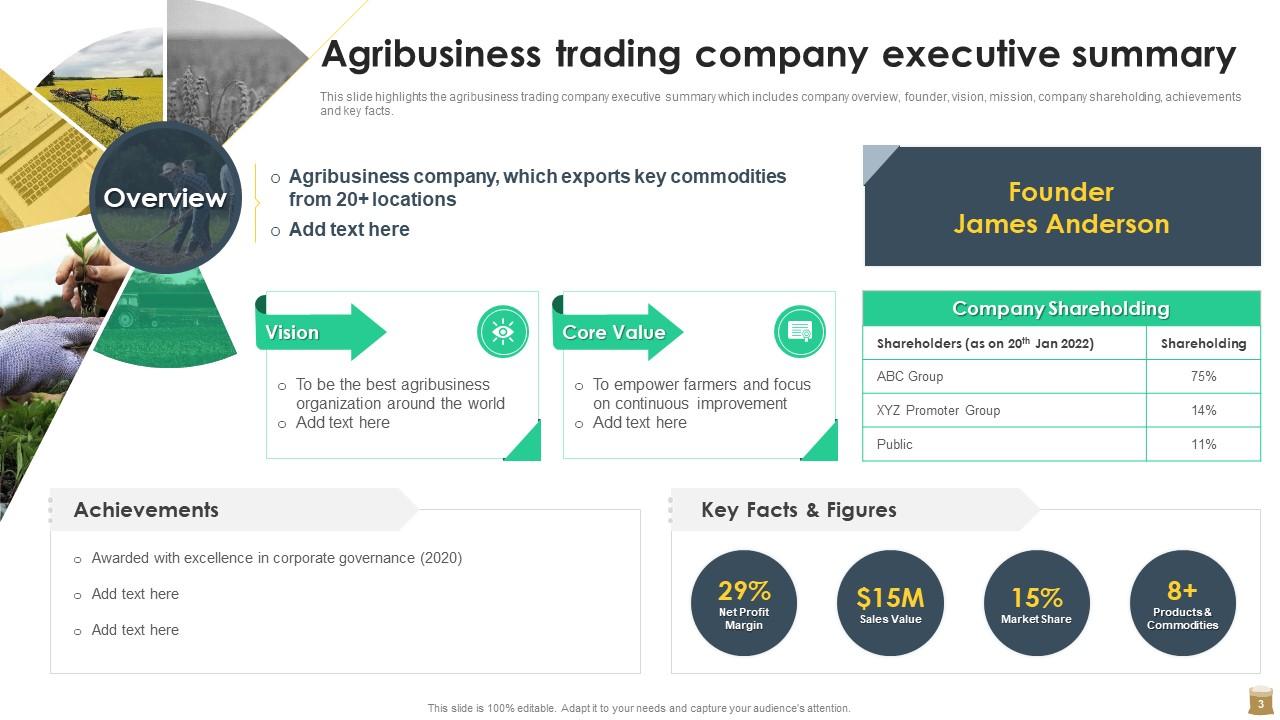
The objective of an agribusiness trading company is to attract clients and investors to grow its business and reach the top. Use this PPT Template with an executive summary that will help you illustrate your company’s mission, vision, and core values and highlight its achievements. It also emphasises on key facts and figures such as net profit margin, sales value, market share, and products and commodities so that your investors can have a clear view of your company and make informed decisions. Download Now!
Template 2: Commodity trading business model
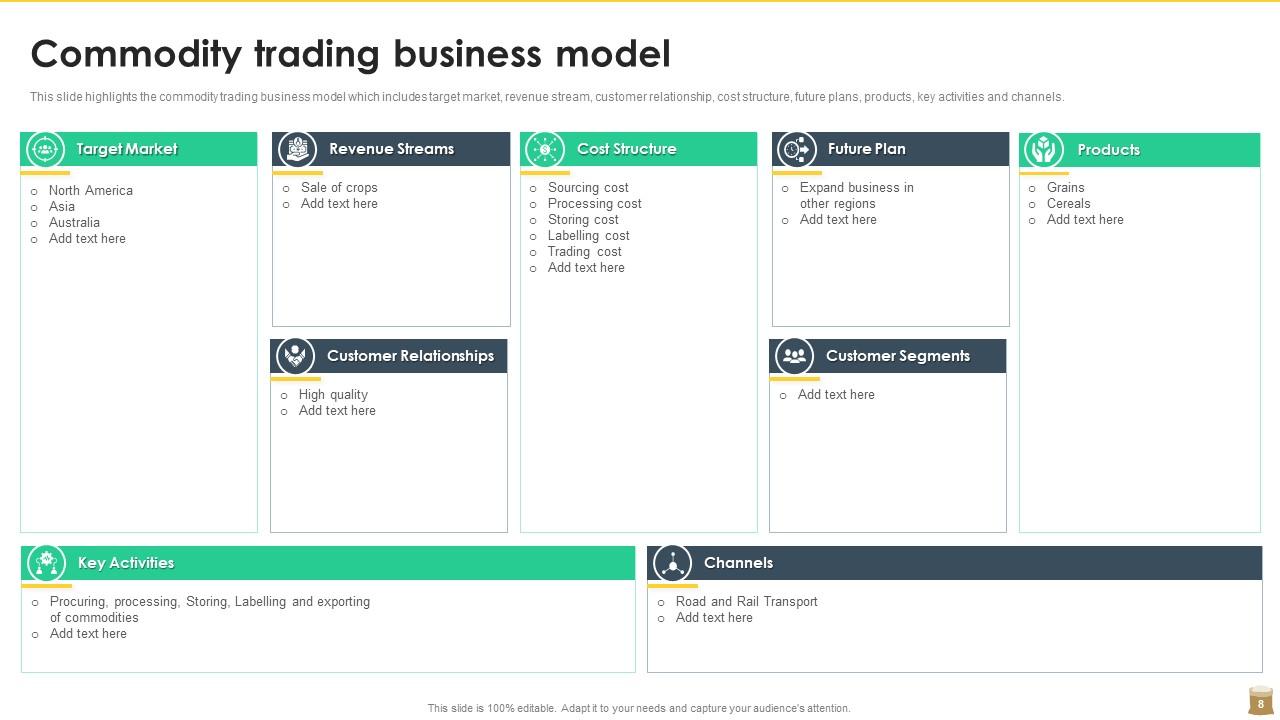
To be a successful commodity trading company, you will need to leverage your expertise in supply-demand fundamentals, risk management and market trends in order to generate profits in the market. This business model Template will help you attain that. You can have an efficient management of all the processes with the model including procuring, processing, storing, labelling and exporting your commodities. It will help specify your target market as to which country you wanna target for your commodities, you can build good customer relationships, have an idea of the cost structure beforehand, plan your future prospects and decide your routes to destinations. Get access today!
Template 3: Trading Enterprise Organisational Structure
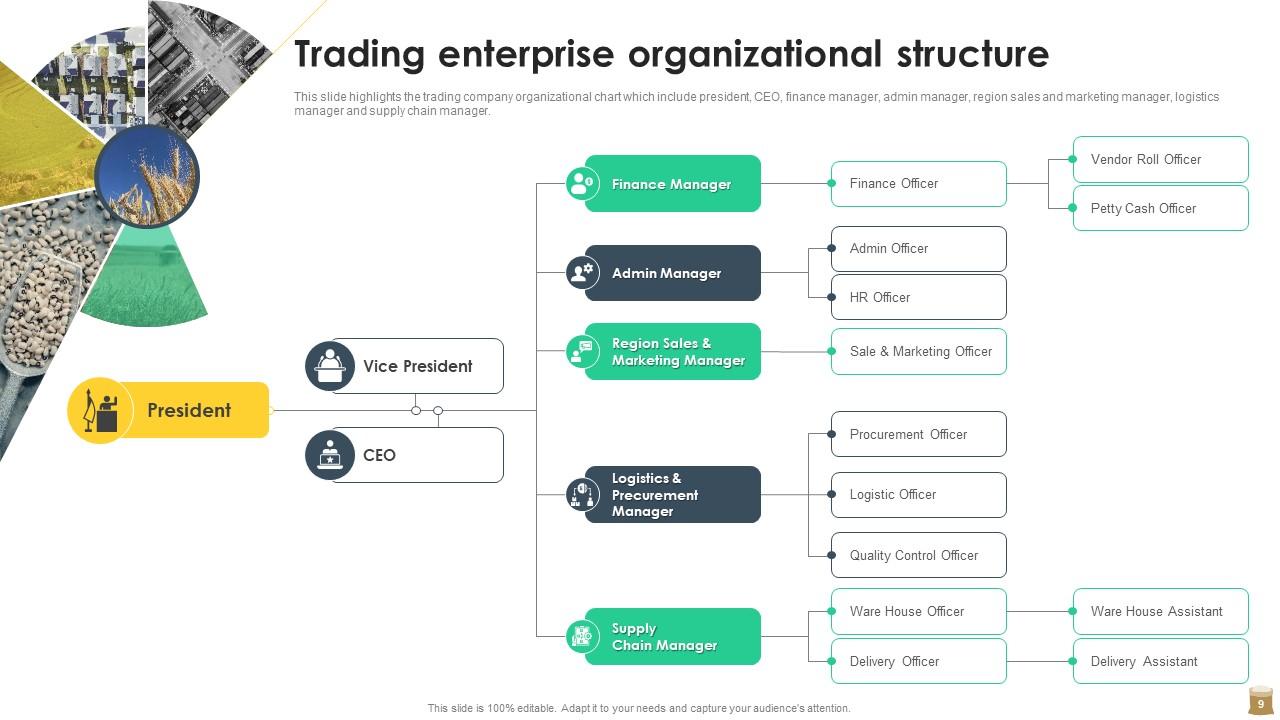
An organisational structure lays the framework for the effective management of an organisation. This PPT Template will enable you to present a set framework of your organisation's structure ensuring adaptability and preparedness towards new market conditions. The slide will provide clarity of all the roles of the company members including the president, vice president, CEO, finance manager, regional sales and marketing manager, logistics and procurement manager, supply chain manager and all their subordinates. A clear organisational structure will ensure maximum efficiency through minimisation of efforts. Get your hands on this template now!
Template 4: Commodity and Product Branding with Key Location
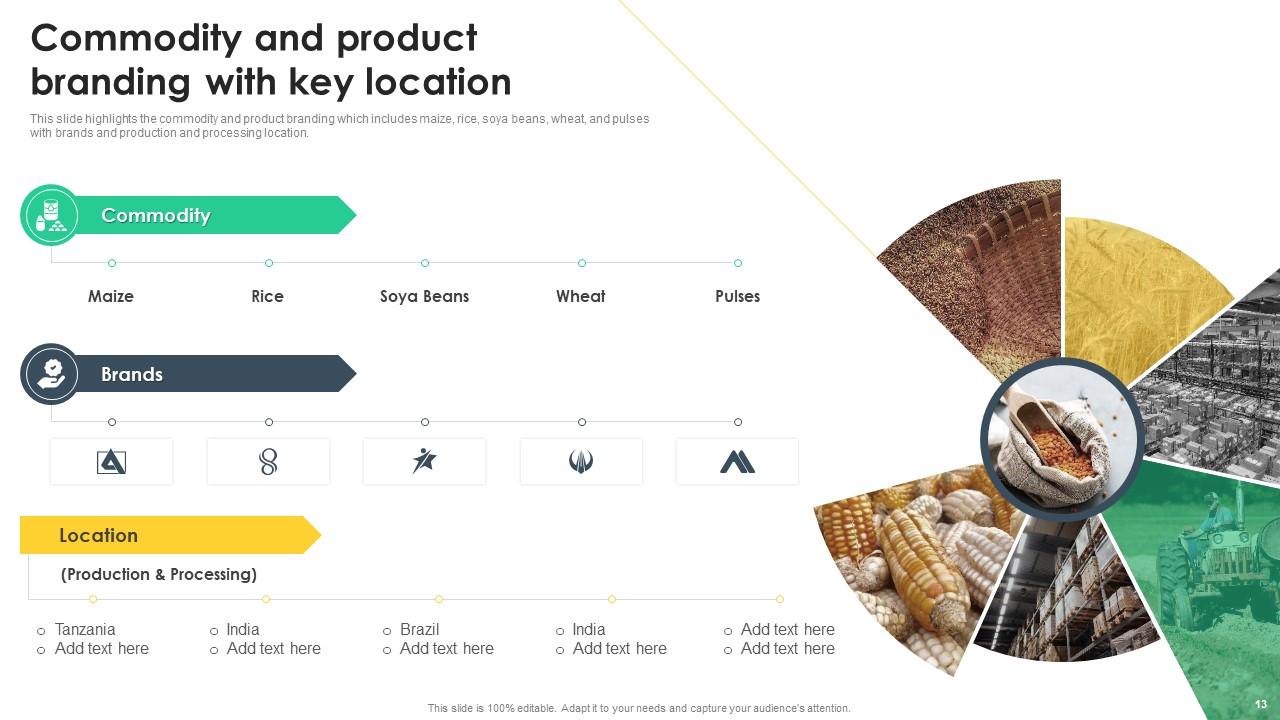
Commodity and product branding are essential strategies that will help you capture the market share and foster your brand’s loyalty. This template will help you link products and commodities with brands. The template displays the brand logos, you can further add the brand details like name below the icons. In the next column you can specify the production and processing location on the commodities. Download Now!
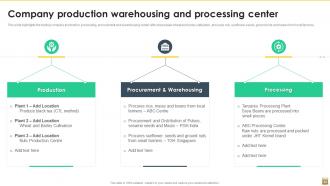
Template 5: Company Production Warehousing and Processing Center
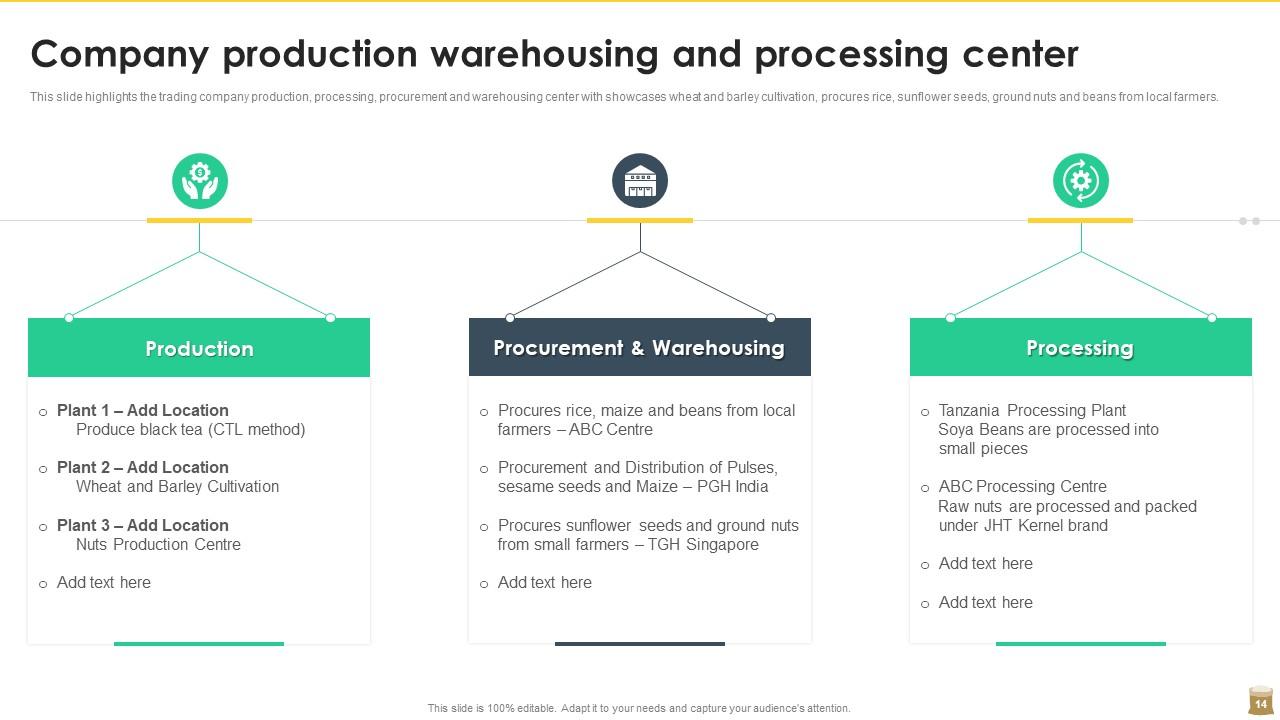
This PPT Template will give your audience a detailed overview of production, warehousing and processing centres. These centres are the operational nucleus that transform raw materials into finished products. With this template you can give a breakdown of each centre, like the multiple locations of the production plants, process of procurement and warehousing, processing plants, and processing centres. Download Now!
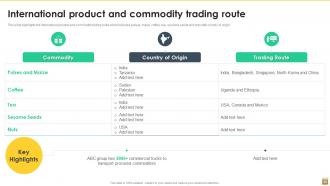
Template 6: International Product and Commodity Trading Route PPT Template
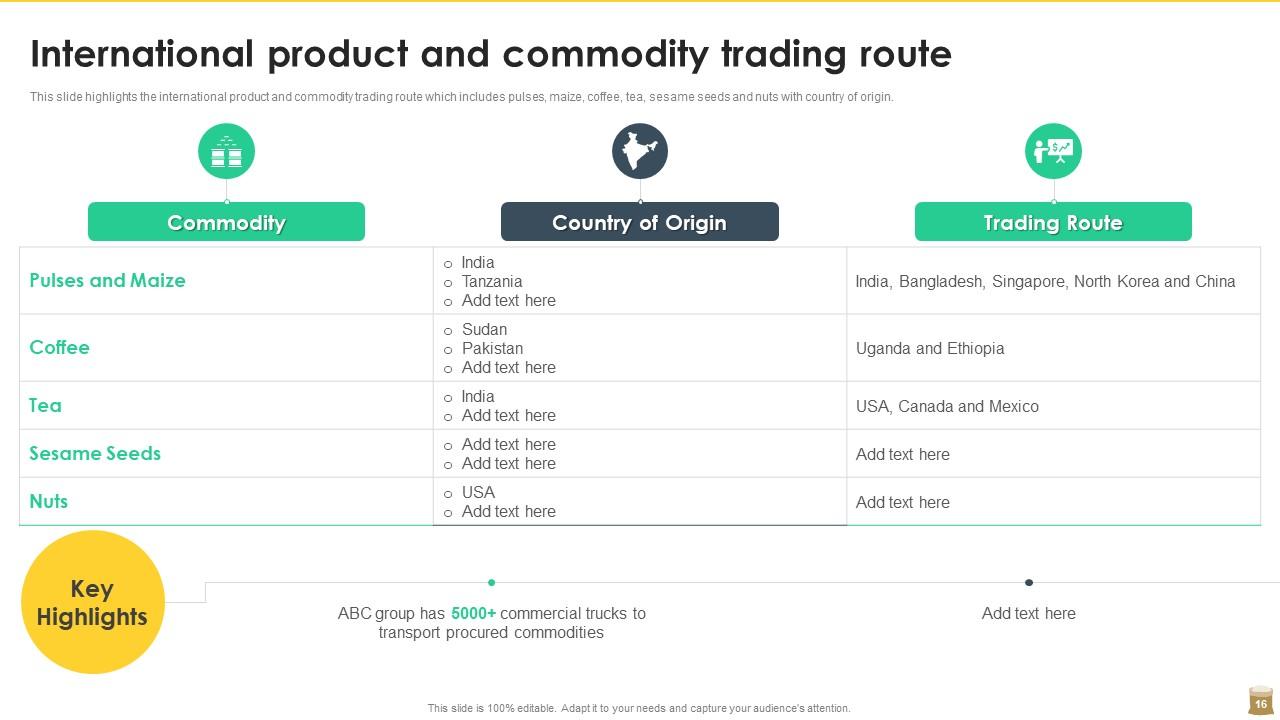
A well planned international product and commodity trading route will help you build a strong global presence with well-managed logistics. This template records the commodities sold, their countries of origin and the trading routes they would follow. This PPT Layout will help ensure smooth product flow and help you gain reliable suppliers, decide transportation routes and coordinate the logistics and supply chain. Download Now!
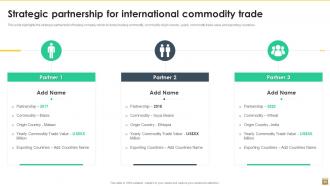
Template 7: Strategic Partnership for International Commodity Trade
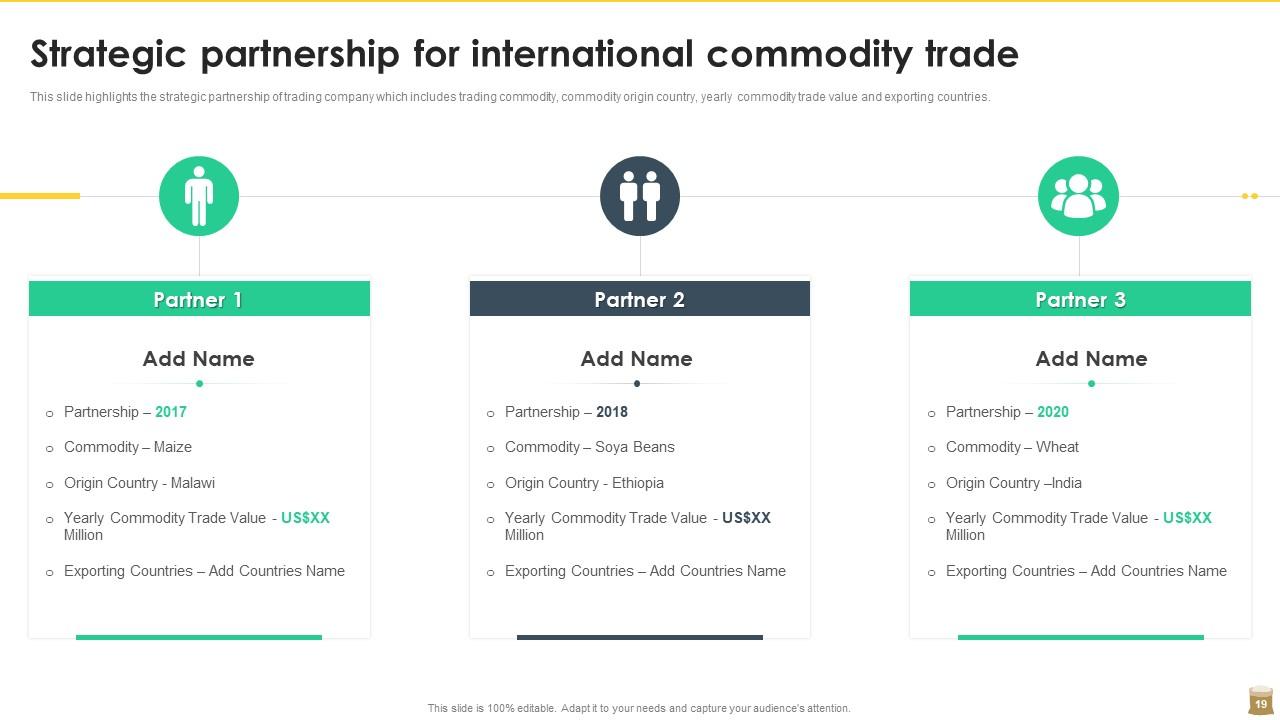
Strategic partnerships drive growth in international commodity trade as it helps to maximise collaboration and opportunities for expansion. This template will help you and your team know your partners, the commodities you trade with them, their countries of origin, the yearly commodity trade value, the countries they export to. Having a comprehensive view of all these put together will help you streamline operations and maximise resource utilisation. Download Now!
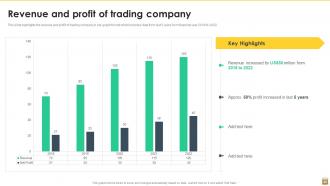
Template 8: Revenue and Profit of Trading Company
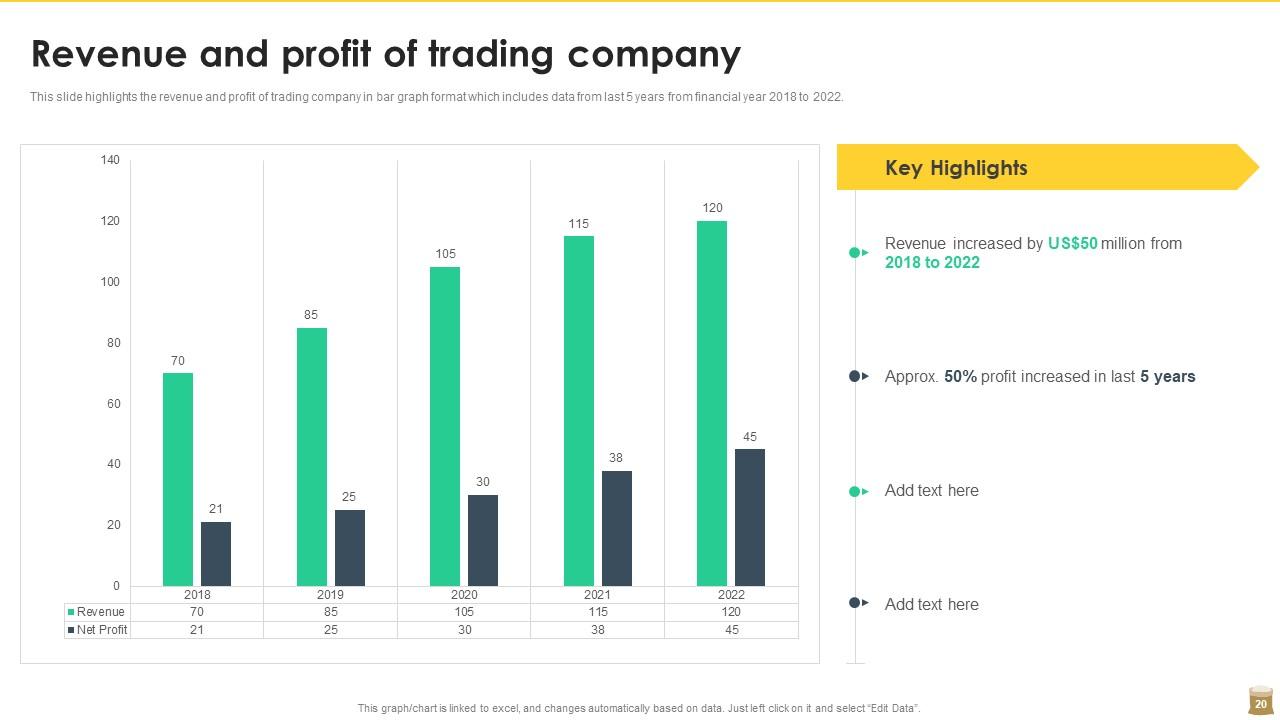
Tracking your revenue and profit is crucial to your company. It will give a detailed knowledge of your yearly graph of growth, expenditure and thus help manage your finances and implement changes in your system accordingly. This Graph Template will enable you to present the increase or decrease in the revenue over the years and the profit margins in the past years. Download Now!
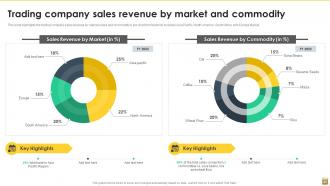
Template 9: Trading Company Sales Revenue by Market and Commodity
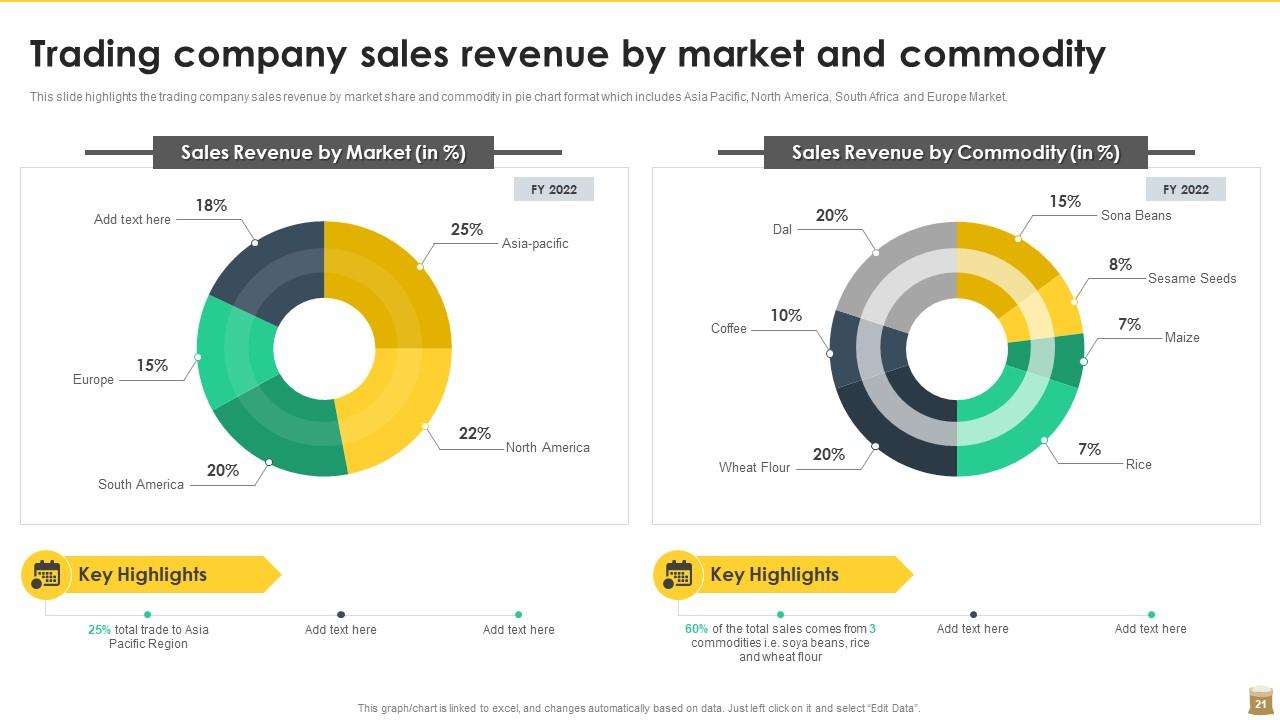
Whether you are investing in the right commodity or trading with the right country, this template will foster informed decision making. The pie chart of sales revenue by market offers information on revenue generated by each country. The pie chart of sales revenue by commodity will tell you the revenue generated by each commodity. The template also records the statistics of the total trade to a particular region and the commodity with the highest sales value. To get insightful data, download now!
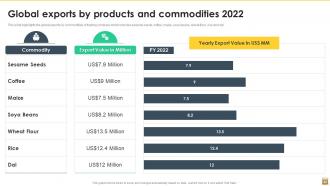
Template 10: Global Exports by Products and Commodities PPT Template
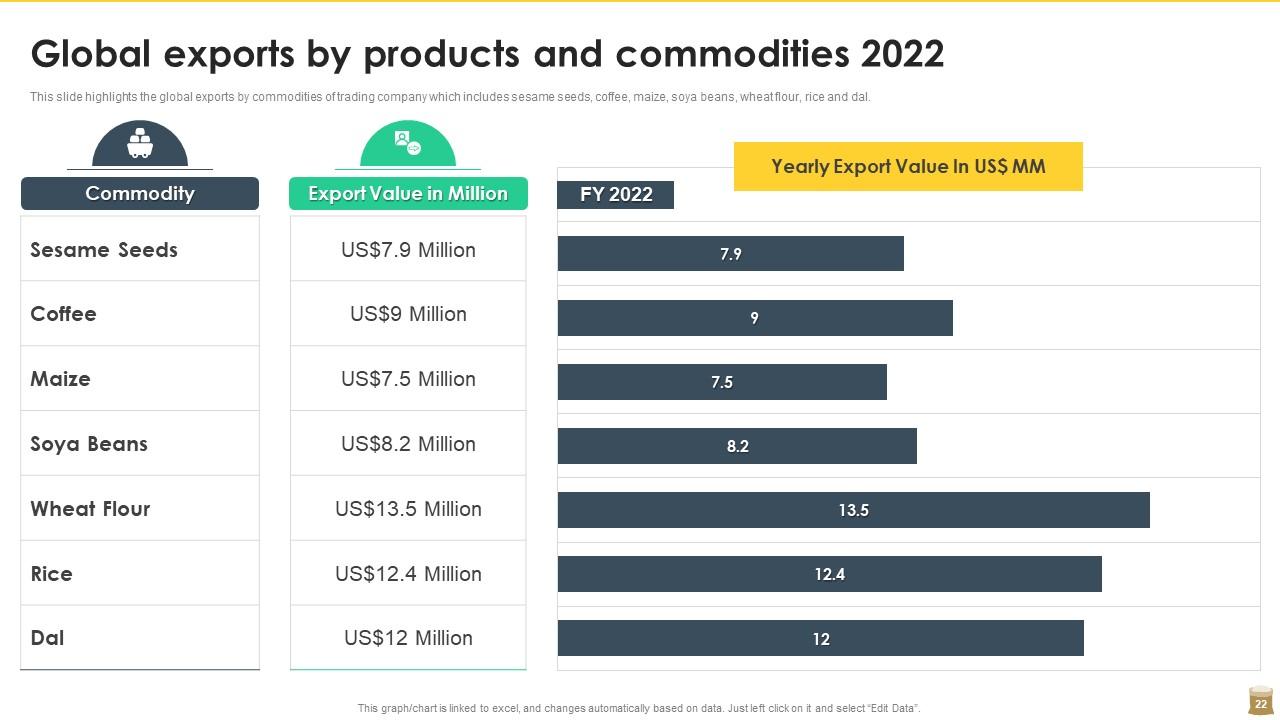
Understanding the global export trends is important as it shows the changing demands of commodities. With this template you can track the commodity that has the highest export value in the current financial year. The bar graph offers insights on export value at a glance, making it easy for your clients and investors to understand and interpret. Download Now!
Conclusion
Altogether, a good export trading company profile will be beneficial for your brand development, enhancing your reputation in the market thus expanding its reach and securing you a top position in the global marketplace.
P.S. keep a track on how your company’s products will fit into a particular market and where they will acquire the most transactions with customers by evaluating your target customer profiles.
Export Trading Company Profile Powerpoint Presentation Slides with all 44 slides:
Use our Export Trading Company Profile Powerpoint Presentation Slides to effectively help you save your valuable time. They are readymade to fit into any presentation structure.
-
Export Trading Company Profile
-
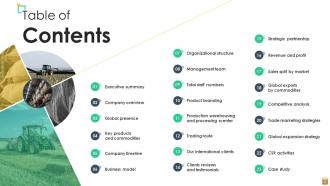
Table of Contents
-
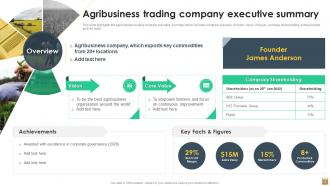
Agribusiness trading company executive summary
-
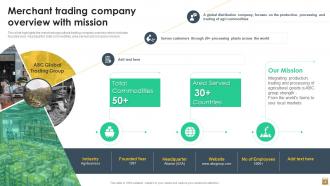
Merchant trading company overview with mission
-
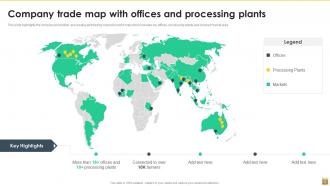
Company trade map with offices and processing plants
-
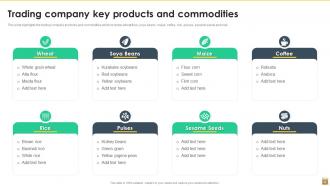
Trading company key products and commodities
-
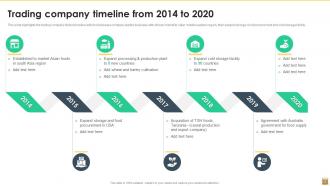
Trading company timeline from 2014 to 2020
-
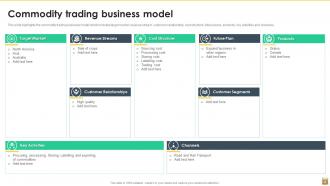
Commodity trading business model
-
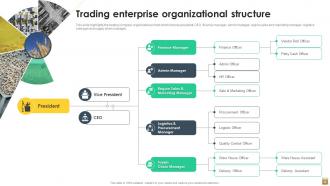
Trading enterprise organizational structure
-
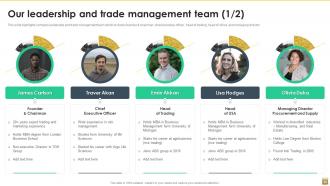
Our leadership and trade management team 1 2
-
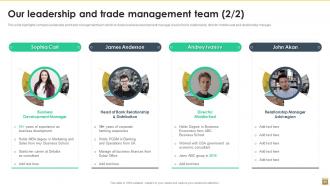
Our leadership and trade management team 2 2
-
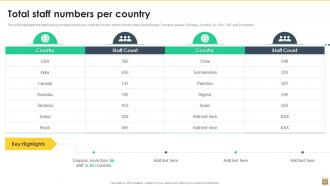
Total staff numbers per country
-
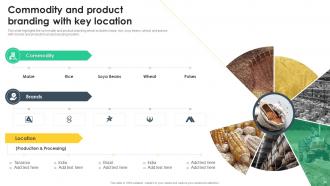
Commodity and product branding with key location
-
Company production warehousing and processing center
-
Warehousing center with total capacity and size
-
International product and commodity trading route
-
Our international clients
-

Our clients reviews and testimonials
-
Strategic partnership for international commodity trade
-
Revenue and profit of trading company
-
Trading company sales revenue by market and commodity
-
Global exports by products and commodities 2022
-
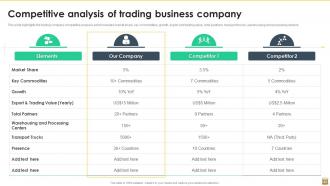
Competitive analysis of trading business company
-
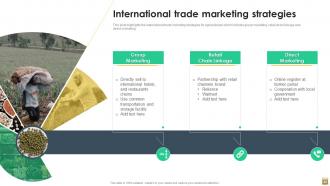
International trade marketing strategies for agribusiness
-

Global trading expansion strategy
-
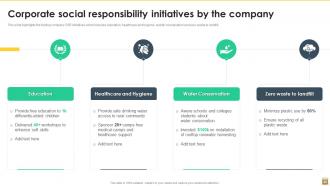
Corporate social responsibility initiatives by the company
-
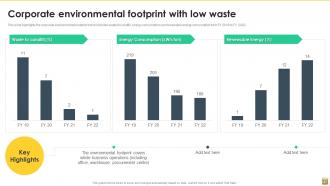
Corporate environmental footprint with low waste
-
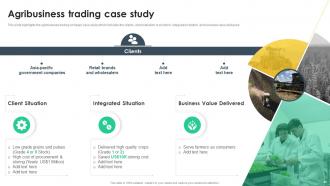
Agribusiness trading case study
-

Icons slide for export trading company profile
-

Additional slides
-
Target
-
Roadmap
-
Post it Notes
-
Timeline
-
Venn
-
Mind Map
-
Puzzle
-
Magnifying Glass
-

Export Trading Company Profile
-

-

-

-

-

FAQs for Export Trading Company Profile
So export trading companies are basically middlemen between your domestic suppliers and overseas buyers. They handle sourcing, contracts, shipping logistics - all that tedious paperwork nobody wants to touch. Plus they deal with different countries' regulations, which honestly sounds like a nightmare. Think of it like having a global sales team that also coordinates your shipments. They'll give you market insights, help with financing, and handle currency fluctuations too. If you're looking to go international but don't have the expertise or cash upfront, an ETC could save you major stress.
So basically, export trading companies are just middlemen. You don't actually make anything or own the products - you're connecting local suppliers with overseas buyers. Regular exporters? They're selling stuff they actually made or own. It's kinda like being a broker, honestly. You make money from commissions instead of selling your own products. The cool part is you can work with tons of different suppliers and product types, so you're not stuck with just one thing. If you're thinking about it, I'd probably start by figuring out which markets you want to hit, then find some solid suppliers to work with.
Dude, you basically get a shortcut to selling worldwide without hiring your own export team. These companies already know all the international buyers and regulations - saves you from drowning in customs paperwork. They'll often just buy your stuff upfront too, which is nice because chasing payments from some company in Germany sounds like a nightmare. It's kinda like having salespeople everywhere without paying their salaries. I mean, the fees aren't nothing, but way cheaper than building that capability yourself. Hit up a few in your space if you're serious about going global.
Honestly, most export companies just dig into market data first - looking for spots where there's demand but not tons of competition. Trade shows are where the magic happens though, you meet actual partners and get the real scoop on what's working. Before jumping in, research the regulations and what locals actually want (cultural stuff matters way more than people think). Start with one market and do small test shipments instead of betting the farm right away. Oh, and don't forget your existing contacts - suppliers or customers might know people in markets you're eyeing. Better to validate demand first than learn expensive lessons later.
Dude, you HAVE to get your tech sorted from day one. Manual processes will destroy you once you start scaling. Digital platforms handle everything - shipment tracking, customs docs, supplier coordination across different time zones. Those supply chain visibility tools are honestly lifesavers; they catch delays before they wreck your whole schedule. Automated compliance systems deal with regulations (trust me, there's a ton). Digital payment platforms make international transfers so much easier too. I learned this the hard way - don't cheap out on infrastructure early on.
Honestly, most export companies either hire compliance people in-house or work with local law firms in each country. You really can't mess around with international regs - the fines will destroy you. Documentation is huge too. Everything needs tracking, from import licenses to product certs. A lot of companies use compliance software that updates automatically when rules change, which is pretty clutch. Oh, and customs brokers are gold - they know all the weird local quirks. My advice? Start small with maybe two markets, nail those processes down tight, then expand. Way less headache that way.
So basically, most export companies lock in exchange rates ahead of time with forward contracts - saves you from nasty surprises. Currency options and swaps work too. Spreading your exposure across different markets is pretty smart risk management. Some folks try invoicing in their home currency when clients will accept it, though good luck with that depending on who you're dealing with. Oh, and there's natural hedging - matching your foreign income with expenses in the same currency. Don't put all your eggs in one basket though. Mix these strategies up.
Think of export trading companies like hiring an international sales team, but without all the employee costs. They've got the connections already - buyers, shipping contacts, the whole network. Plus they actually understand all that regulatory stuff that would make your head spin. Look for ones that focus on your specific industry and the markets you want to hit. Most work on commission, so you're not throwing money away upfront if it doesn't pan out. Your local trade office or industry groups are good places to start hunting for the right one. Way easier than figuring it all out yourself.
Oh man, shipping delays will drive you crazy - like, constantly. Documentation gets screwed up all the time, and freight rates jump out of nowhere. Customs rules? They change every five minutes, I swear. Plus you're dealing with damaged stuff, lost packages, and freight forwarders who just vanish on you. Currency swings can totally wreck your budget too, which sucks. Here's what I'd do though - find 2-3 good logistics partners in each area you work with. Always add extra time for delays, maybe 15-20%. Trust me on that one.
Honestly, it's all about showing up consistently and doing what you say you'll do. Hit up trade shows and browse Alibaba - that's where most people start. Reply to emails fast because dealing with time zones is already a nightmare. Once you get a buyer, don't disappear until the next sale. Send them market updates or just random check-ins. I learned this the hard way - trust takes forever to build. Maybe grab a basic CRM so you don't forget to follow up with people. Oh, and ask your current contacts for referrals. They're usually happy to help if you've been solid with them.
Most export trading companies work on commission - usually 2-15% depending on how messy the deal is. Some buy goods outright then flip them for profit, others just charge flat fees for handling paperwork or shipping stuff. Commission's probably your best bet if you're just getting started. Way less risky than buying inventory upfront (that requires serious cash). Plus when everyone gets paid based on results, things tend to work out better. The buy-sell model can be lucrative but you'll need deep pockets for working capital. I'd honestly stick with commission until you figure out what you're doing, then maybe expand from there.
So export trading companies basically hire locals who actually know the culture - native speakers, local partners, that whole deal. They figure out if your target market wants to jump straight into business or schmooze first over dinner. Contract terms, meeting times, even how direct you can be in negotiations - they adapt all of it. It's honestly way trickier than most people think. Oh, and definitely go with an ETC that's already got connections in your markets. You don't want them figuring it out as they go.
Honestly, start with finding a good ETC that already knows your target markets inside and out. They're basically your sales team over there, so don't just pick the cheapest option. Give them proper marketing materials and pricing info - the whole package. Sure, good ones will run trade shows and handle local ads, but you can't just throw your products at them and disappear. That never works out well. Set up clear goals from day one and actually check in regularly to see how each market's doing. Oh, and definitely stay involved in the bigger strategy decisions.
So here's what works - start with super detailed specs and quality standards right off the bat. Regular supplier audits are a must. Always get samples before placing big orders, and do random checks while they're making your stuff. Third-party inspectors help too, though they add cost. Honestly, I've seen too many people get burned chasing cheap suppliers instead of building solid relationships with reliable ones. The trick is setting up quality agreements with actual penalties from the start. Skip any of these steps and you'll probably end up dealing with headaches later.
Trade agreements are huge for export businesses - they literally determine your tariff rates and which markets you can even access. Some deals wipe out duties completely, others pile on new compliance headaches. The annoying part? They're always changing, so you've got to track updates for your specific products and regions. Honestly, I'd just set up Google alerts for trade news in your key markets - saves you from missing something that could tank your margins. Oh, and certain product categories get way better treatment than others under most agreements.
-
“Thanks to SlideTeam. Now I can make smart presentations in a fraction of time without any hassle.”
-
It makes easy work of my work presentations. I’ve never had to be nervous about my presentations for meetings.