


Trading company profile powerpoint presentation slides




Try Before you Buy Download Free Sample Product
 Impress Your
 Audience
 100%
100% Editable
 Save Hours
 of Time


Trading Company Profile Powerpoint Presentation Slides features cutting-edge graphics developed using the best industry tools. Use this commercial undertaking profile PPT slideshow to present a crisp company overview comprising background, vision, mission, accreditation, etc. Our trading venture portrayal PowerPoint presentation features a dashboard diagram to consolidate financial highlights. Take advantage of state-of-the-art data visuals and showcase key personnel. This trading firm PPT theme helps to outline your organizational framework. Elaborate on your company’s offerings to the clients. There is a world map diagram to represent your commercial enterprise’s geographical reach. Employ this PowerPoint template deck and portray your market share within the industry using pie graphs. Compile your business model with a dash of visual excellence. Explain transportation modes like the ocean, air, road, and rail with the help of a neat tabular format. Reflect goods trading details like quantity, time consumption, and cost. Hit the download button now and begin instant personalization. Our Trading Company Profile Powerpoint Presentation Slides are explicit and effective. They combine clarity and concise expression.
People who downloaded this PowerPoint presentation also viewed the following :
Content of this Powerpoint Presentation
With healthy competition the key characteristic of today’s current market scenario, it is important for trading companies to differentiate themselves. To do this, the first need is to create a strong company profile wherein you can lay out your objectives, financial mission, goals, and what your team looks like. Once done, this lays the foundation for building a strong company profile but also helps consumers and clients understand your business better. By presenting such credible and factual information, you can gain customer loyalty and draw more investors.
For example, a renowned brand like Prada has created a strong company profile that shows how its raw materials are sourced and made exclusively for the brand. This brand awareness exercise generates an appreciation among customers on why Prada has a higher price point. A connection and bond with the brand is also a key result. Thus, it is a good idea to build a strong reputation for your trading company with a profile and ensure you send a strong message to your audience.
Trading Company Profile Templates
With the advent of online marketing and content, it is now easier to present and disseminate company information online. And the same goes for trading company profiles. To help you out, we have crafted sleek and modern templates with diagrams, graphs, columns, visuals, and block charts to help you present a creative and appealing overview of your trading company. You can use our templates to describe your financial highlights, organisation chart, product offerings, market shares, and more. The slides are 100% editable and customisable, and hold your audience’s attention.
We also have more trading templates designed for you, such as our Trade marketing and Export Trading Company Profile slides.
Let’s explore!
Template 1 Financial Highlights
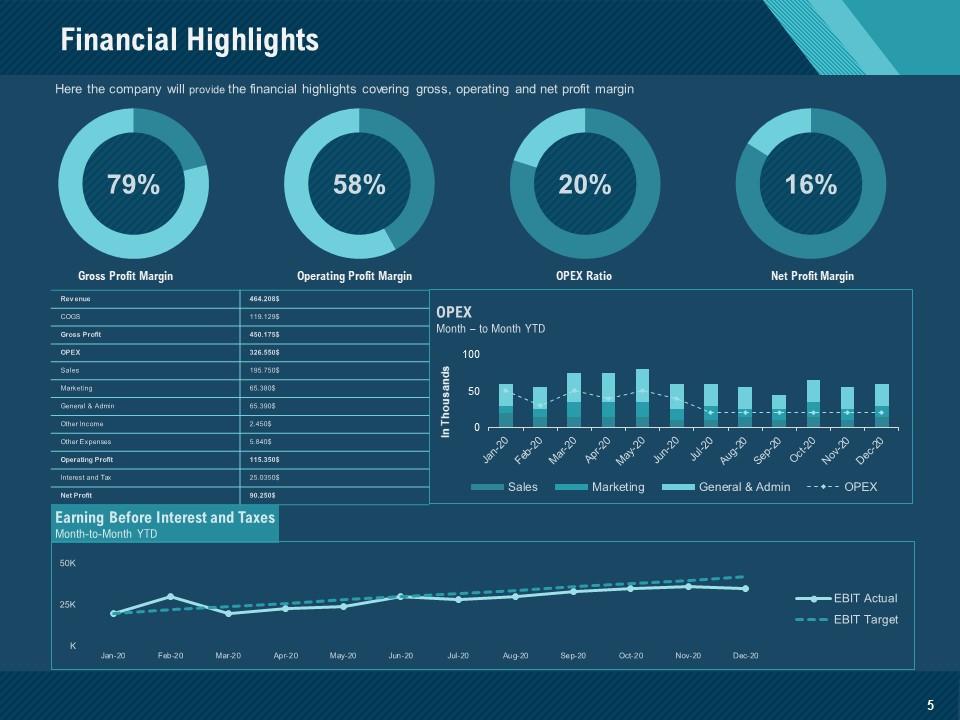
To make your trading company profile more effective, it is important to outline the financial projections you have for the upcoming years. With this financial highlights template, you can do just that and describe your gross profit margin, operating profit margin, net profit margin, and OPEX ratio. You can also present your earnings before taxes in a graphical form to see how much you are actually earning and how much your company is growing or planning to grow over the years.
Template 2 Organisation Chart

To help your trading company clearly demarcate and visualise its hierarchy, you can use this organisation chart template. It helps you show all the positions and departments of your company in an easy and organised manner. With the help of this organisation chart, your stakeholders and employees can understand who handles what areas and whom to contact when they need help. You can easily share these templates with members of your organisation to keep everyone informed of any changes.
Template 3 Our Offerings
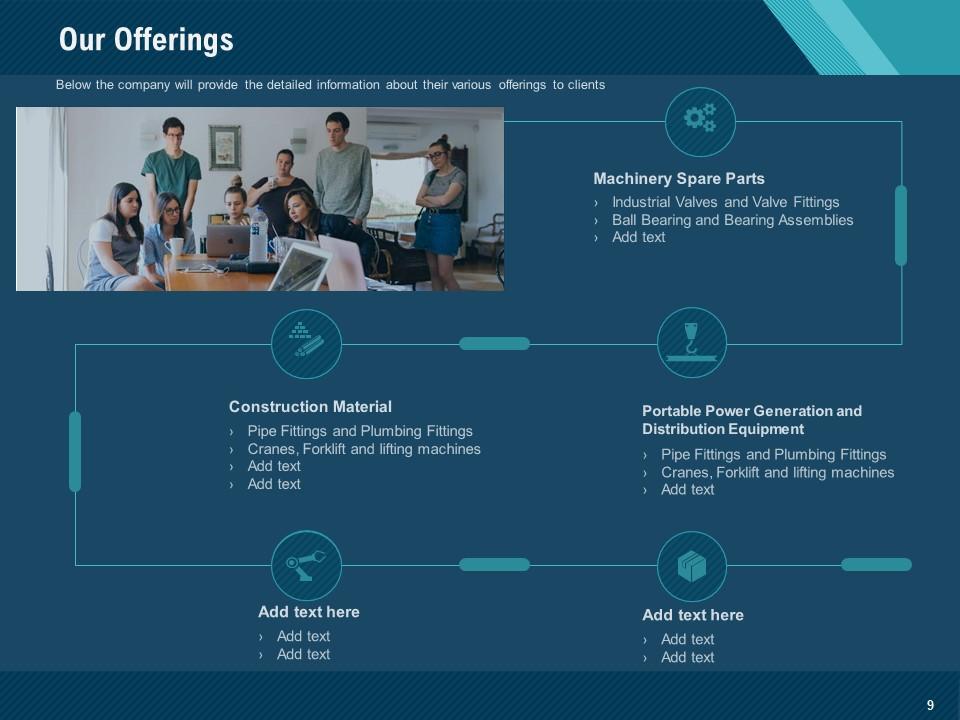
With any trading company, it is important to emphasise what services and products they provide. This will help the consumers and stakeholders understand what is their product and service specialisation so that they can make an informed decision. This “Our offerings” template helps your business describe visually what you offer like machinery spare parts, construction material, and power generation and distribution equipment. You can even describe the details of the products in bullet points under the main heading and include images to make the presentation more appealing.
Template 4 Market Share in Industry
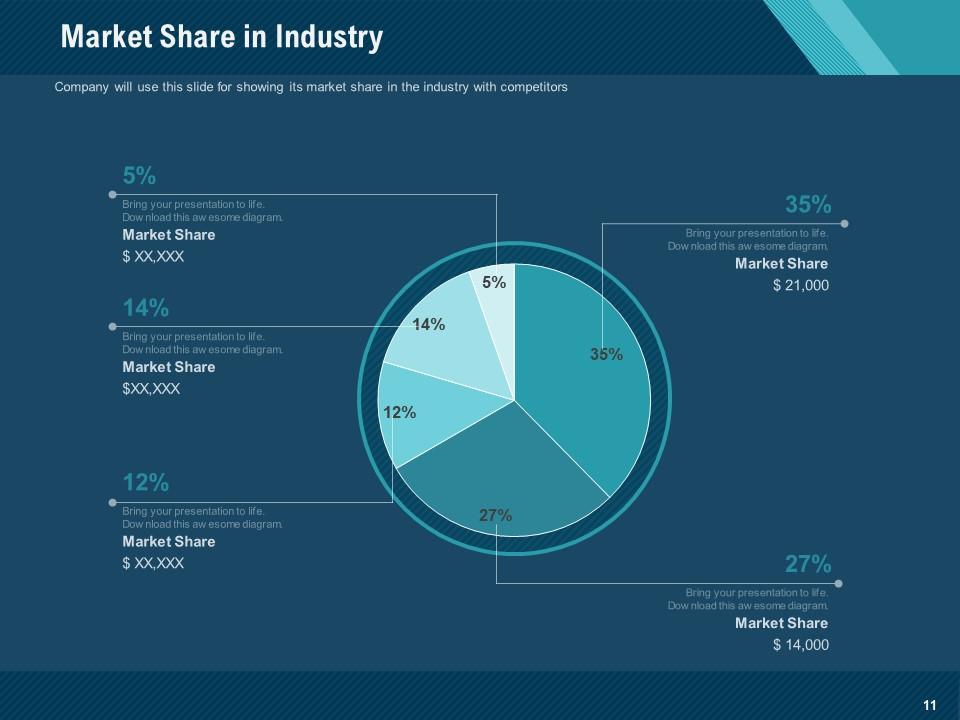
To help your business progress, it is necessary to know the market you are operating in well. This means you must have a fair idea of who your competitors are, what their market share is, and how much market share is available for your company to harness. With the help of our template, you can easily display your company’s market shares in the industry as compared to your competitors in a pie chart design. With this simple and sleek design, you can create effortless presentations for your sales and marketing team meetings.
Template 5 Our Business Model

A successful business should always be transparent and accountable at all stages of growth. To make this effective, you can use this business model template that helps define your company’s key elements like the manufacturer, wholesaler, traders, and consumers. This will give you a distinct idea of who your customer base is, how your company operates, channels of customer relationships and distribution, and key advantages. You can present your business model in a clear and visual manner with this customisable template.
Template 6 Our Transportation Modes
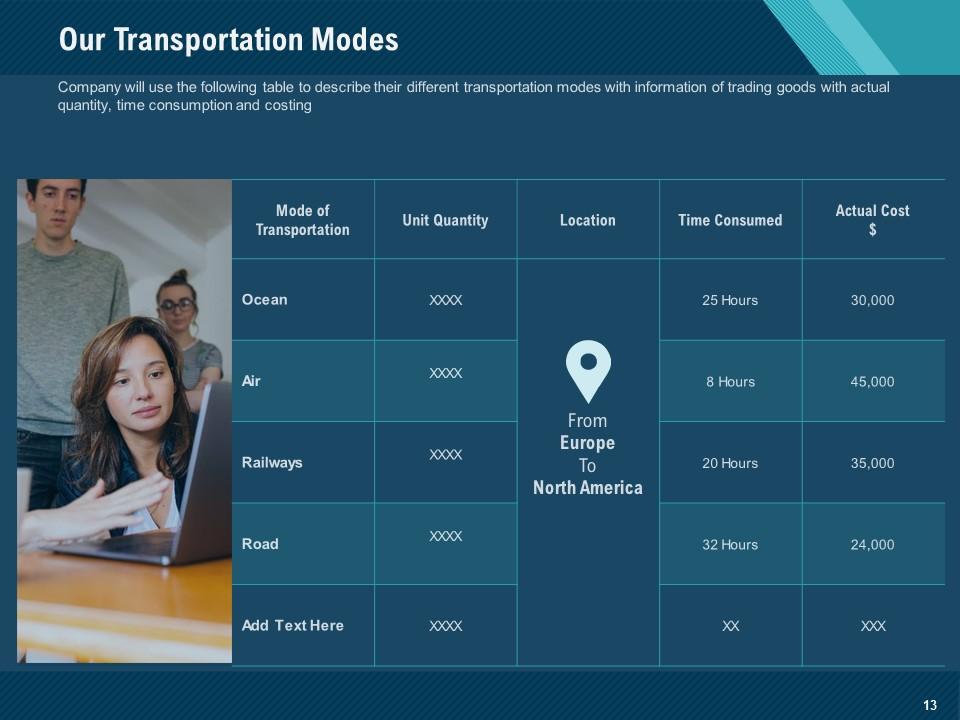
When it comes to transporting goods in a safe and timely manner, trading companies need to manage their transportation mediums so that they can beat their competitors. The best way to do this is to use this presentation template, where you can clearly spell out in columns what your modes of transportation are, like rail, air, and road, as well as the quantity, location, time consumed, and actual cost. This will help in building a robust supply chain and ensure your goods are delivered in a speedy manner.
Template 7 Income statement
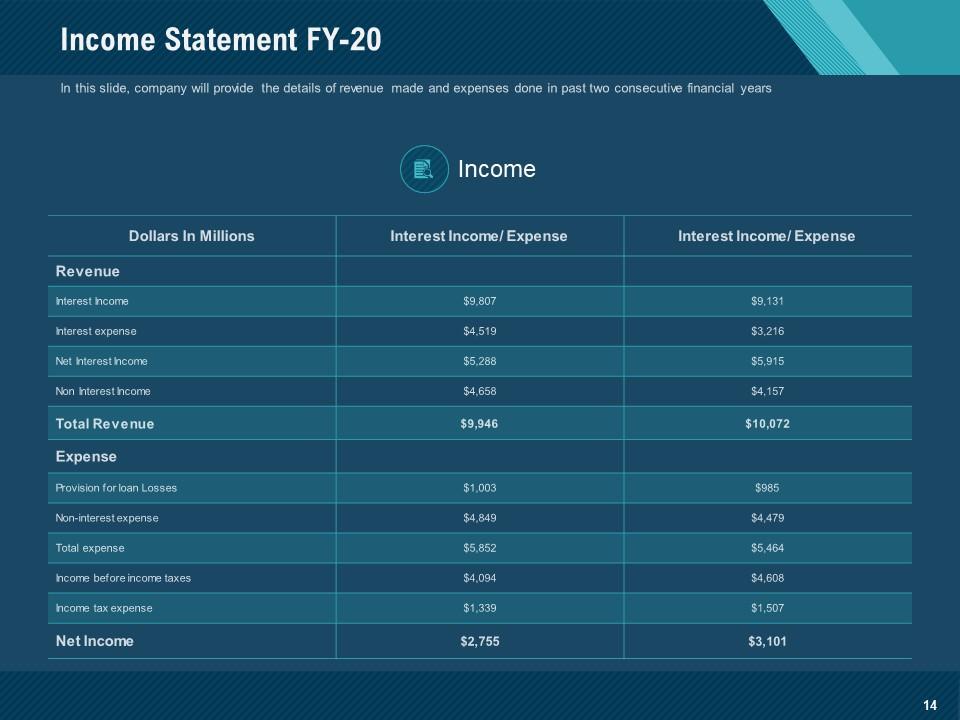
It is important for any trading company to track revenue and expenses. This gives them an idea that they are on the right track and are making a profit or need to make some changes to cut down their expenses. One of the best ways to track and present this information is using this template, where your company can clearly list its total revenue and expenses in the last two consecutive financial years. These columns help to compare the numbers over time and note how much net income the company is earning.
Template 8 Balance Sheet
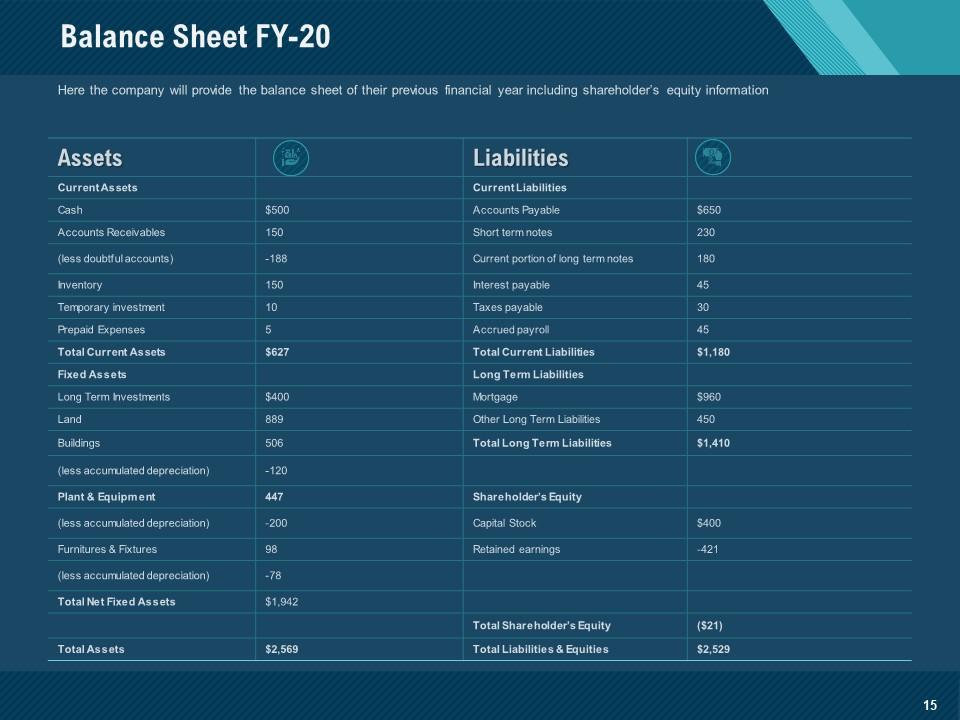
To best understand and present your current financial status and health, you can use this balance sheet template. The slide lists your company’s assets, capital and liabilities as well as shareholder’s equity. This clutter-free design helps you to depict a financial snapshot of your company.
Template 9 Financial Projections
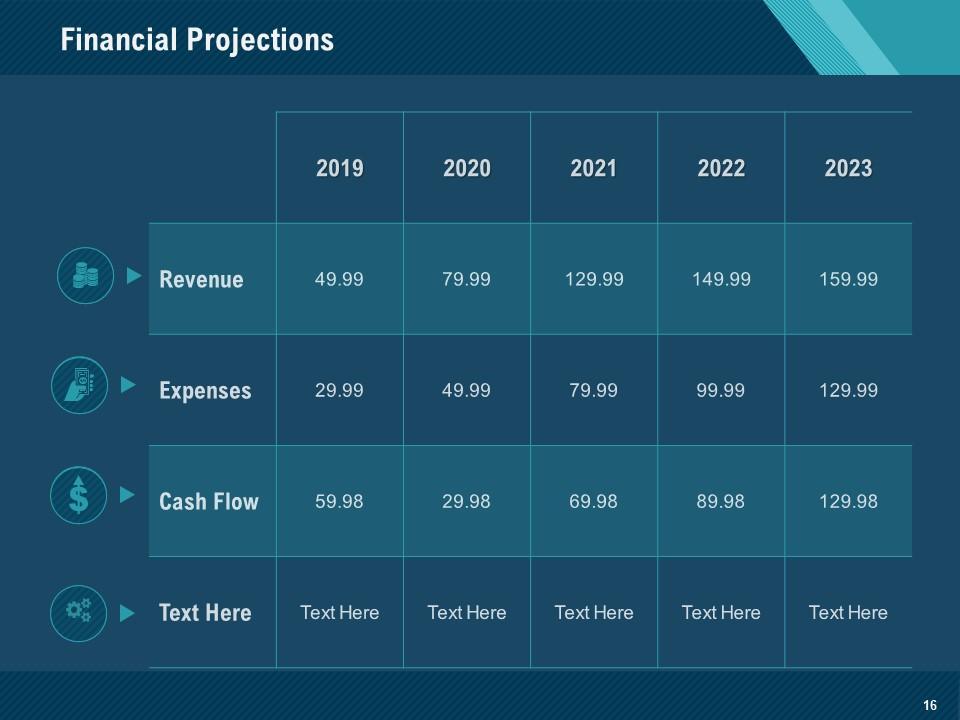
In order to keep your business secure, you must ensure that you prepare for all financial expenses, and revenue streams. This can be done with the use of this Financial Projections template, wherein you can project your future revenues and expenses like the cash flow and more. Using this organised structure, you can easily make informed financial decisions, plan your budget, and also identify and prepare for future expenses and risks.
Template 10 List of Clients

To understand your customers and their profiles, you need to have a well-planned client list. This template helps you organise your clients with their logos and names in a line format. With these sleek visuals, you can see who your customers are and whether they are your target audience. This can help determine your customer retention rate and your repeat rate and also help you concentrate your marketing and production efforts to keep your customers happy.
Trading Profile is a Necessity
With the help of our trading PPT templates, you can easily build your company profile and talk about your financial highlights and financial goals. You can also use sleek visuals and diagram formats to highlight your expenses and revenue foresight and describe your customer graph as well as your organisational hierarchy for your stakeholders and clients. Our tabular template also allows you to describe your transportation modes used for trading and how long each mode generally takes. With these precise and clear templates, you can create a detailed and precise overview of your trading company, track its performance and help improve.
P.S: You can also combine the above trading templates with these Global Trading Expansion Strategy Export Company templates for a solid presentation.
Trading company profile powerpoint presentation slides with all 29 slides:
Use our Trading Company Profile Powerpoint Presentation Slides to effectively help you save your valuable time. They are readymade to fit into any presentation structure.
-
Trading Company Profile
-
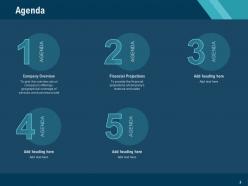
Agenda
-
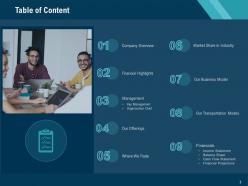
Table of Content
-
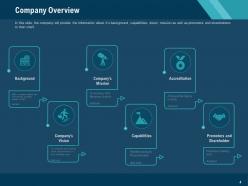
Company Overview
-
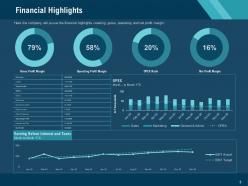
Financial Highlights
-
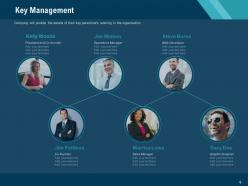
Key Management
-
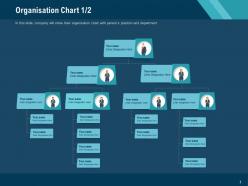
Organisation Chart 1 2
-
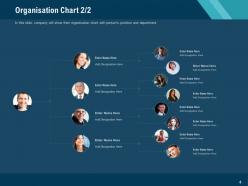
Organisation Chart 2 2
-
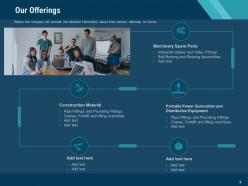
Our Offerings
-
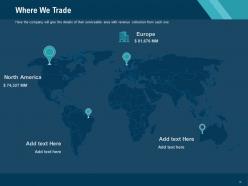
Where We Trade
-
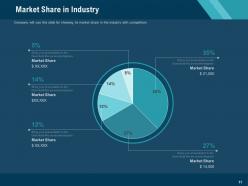
Market Share in Industry
-
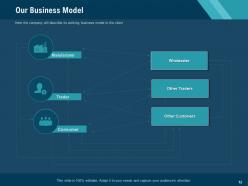
Our Business Model
-
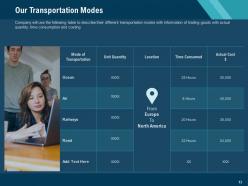
Our Transportation Modes
-
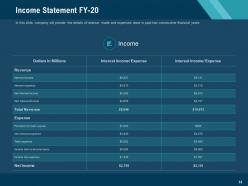
Income Statement FY 20
-
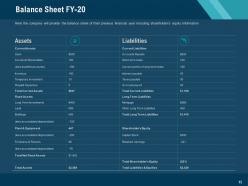
Balance Sheet FY 20
-
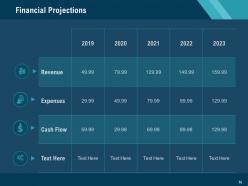
Financial Projections
-

List of Clients
-
Trading Company Profile Icons Slide
-
Additional Slides
-
30 60 90 Days Plan
-
Meet Our Team
-
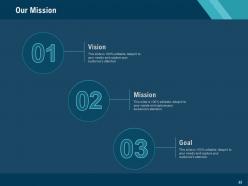
Our Mission
-
About Us
-

Comparison
-
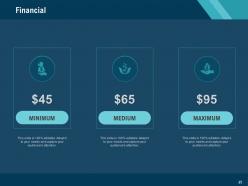
Financial
-
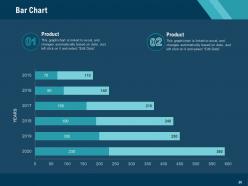
Bar Chart
-
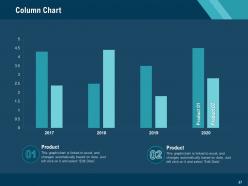
Column Chart
-
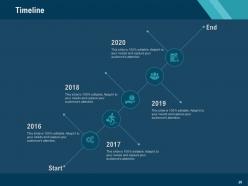
Timeline
-
Thank You
FAQs for Trading company profile
Hey! So we crush it on speed - like 40% faster execution because of our direct supplier partnerships. We've got actual teams in 12 countries who know the local markets inside and out, not just some remote setup. Our risk management gives you real-time intel that other houses nickel and dime you for. Honestly though? The flexible contracts are probably our biggest win. Most places force you into their standard terms, but we'll structure deals around your cash flow. Oh and the cultural thing matters more than people think - language barriers kill deals. I'd definitely lead with speed and flexibility when you're talking to prospects.
So we basically streamline all the vendor stuff and keep inventory levels smart - no more sitting on piles of random stock or panic-ordering at the last second. The predictive analytics thing is pretty solid for forecasting what you'll actually need, so you can plan ahead and get better bulk deals. Honestly though, the real money-saver is our logistics platform that tracks everything live. You'll spot bottlenecks way before they turn into expensive headaches. Most clients see around 15-20% cost cuts in the first quarter just from having better visibility into what's happening.
So we've got three main areas - consumer electronics, automotive parts, and industrial machinery. Electronics is where the money's at right now, honestly the demand is crazy. Automotive covers brake systems, interior stuff, you know the drill. Industrial machinery is manufacturing equipment and tools mostly. Each one has different supply chain headaches and regulations to deal with. Start with electronics though - way faster turnaround times so you can actually build trust with clients without waiting forever. Plus it's easier to get your foot in the door there.
Look, compliance is basically layers of protection covering your regulatory bases. Get automated screening for sanctions lists and export controls - doing it by hand is honestly stupid. Documentation has to be rock solid too. Track your classification codes, licenses, all that stuff at every step. Don't forget regular audits and training so your team stays up to date. My biggest tip? Buy decent compliance software from day one and find customs brokers who actually know what they're doing. Trust me, it'll save you so much stress later.
Dude, tech is everything in trading now. Our automated systems handle market analysis and execute trades in milliseconds - honestly the speed difference is insane compared to doing it manually. The algorithms catch arbitrage opportunities you'd never spot on your own. We've got data platforms that track all your performance metrics too, which helps you figure out what's actually working. I spent way too much time last week tweaking our risk management settings, but it's worth it. Bottom line - get comfortable with these tools because they'll make or break your profits.
Honestly, we've got your back with a bunch of different safety nets. Position limits get set based on how big your portfolio is and what kind of risk you can handle. Real-time monitoring tracks everything across all your trades - plus stop-losses are pretty much required because, yeah, we've all been burned before! The system stress-tests your positions against old market data too. Diversification rules stop you from going all-in on one thing (smart move). Oh, and the risk dashboard refreshes every few minutes so you can actually see what's happening and bail if needed.
Dude, video calls are everything - way better than just shooting emails back and forth. I made this massive mistake once where our Vietnam supplier thought we'd basically disappeared for weeks because I was only emailing! Also, learn their holidays and business customs. Shows you actually give a damn, you know? Meeting face-to-face when you can is huge for building real relationships. Oh, and get some basic CRM going to track conversations and little personal details about contacts. Makes your follow-ups feel less robotic and more genuine.
Honestly, start small with local partners - they know way more about their markets than you do. Found that out the hard way when we tried going solo in Southeast Asia, lol. We usually do three things: find good distributors, run pilot programs in a few regions, then test demand with digital marketing before committing big money. Data analytics helps us pick the right markets instead of just throwing darts at a map. There's actually a solid template in our shared drive that breaks down the whole process if you want to check it out.
Honestly, we just spread our money across different sectors and don't get too locked into one thing. Cash reserves are way bigger now than they used to be - learned that lesson the hard way! Daily market monitoring helps, but really it's about having backup suppliers so we're not screwed if one falls through. I mean, nobody saw half this stuff coming anyway, right? Short contracts work better than those massive rigid deals. Basically we focus on staying flexible instead of pretending we can predict what's next, because let's be real - nobody's that good at forecasting anymore.
So we track carbon footprints on all our shipments now, plus we only work with suppliers who actually meet environmental standards. Setting up that supplier vetting was honestly such a headache at first. But it's smooth now. We've gone mostly digital too - cut paper waste by like 70%. Shorter shipping routes when we can swing it, consolidated shipping to reduce emissions. Oh, and there's this sustainability dashboard in the portal that's actually pretty useful. Shows real-time metrics for your trades and you can pick greener shipping options from there.
So they track three things mainly: P&L (duh), risk stuff like VaR and drawdowns, plus operational metrics - execution speed, client satisfaction, all that. Risk-adjusted returns matter way more than raw profits for your bonus, trust me on that one. Monthly one-on-ones keep you posted so no nasty surprises come year-end. They also care about consistency across different market conditions and whether you're sticking to position limits. Oh and definitely keep your own tracking spreadsheet - helps you catch patterns before they become problems. The whole process is pretty transparent once you get used to it.
So there's a bunch of different stuff depending on what you want to get into. New people start with the basic trading fundamentals course. Then everyone rotates through market analysis workshops and risk management training every quarter - that part's actually pretty useful. Obviously the compliance training is required and kinda boring, but the market strategy sessions? That's where you'll learn the real stuff that matters. They also pair you up with senior traders as mentors, which is cool. Plus there's money for outside certifications if you find something you want to dive deeper into. I'd just chat with your manager first about what makes sense for where you're headed.
So I basically pull historical prices, volume data, and volatility stuff to find patterns that aren't obvious from just eyeballing charts. Data helps me figure out position sizes and when to set stop-losses too. The trick is mixing different sources - price action, sure, but also economic indicators, weather (weird but true), and geopolitical drama. Sometimes it feels like having a crystal ball that doesn't completely suck! I'd say start simple though. Track maybe 3-4 metrics that actually matter for your trades. Don't overcomplicate it right away.
So we're getting these new AI risk tools that actually predict market stuff pretty well. Game changer honestly. The automated trading cuts down on screw-ups and processes way faster too. Everyone's still figuring it out - bit messy at first but working now. Oh, and blockchain for supply chain tracking went live, so clients can see their shipments move in real-time which is cool. Mobile platform drops next month so you can trade from literally anywhere. Definitely check out the new risk dashboard before your next meeting though.
Look, you absolutely need cultural awareness if you want global partnerships to work. Germans are super direct while Asian cultures tend to be more indirect - totally different approaches. This stuff affects everything from how you negotiate contracts to building relationships. Without understanding these differences, you'll offend people or completely miss what's actually happening in meetings. I learned this the hard way once, honestly. Short sentences work sometimes. Research local customs before jumping into new markets, and maybe get some cultural training for your team if you can swing it.
-
Nice and innovative design.
-
Very unique, user-friendly presentation interface.
-
Best way of representation of the topic.
-
Amazing product with appealing content and design.
-
Graphics are very appealing to eyes.