


Facilities Management Functional Organizational Chart Global Facility Management Services




Try Before you Buy Download Free Sample Product
 Impress Your
 Audience
 100%
100% Editable
 Save Hours
 of Time


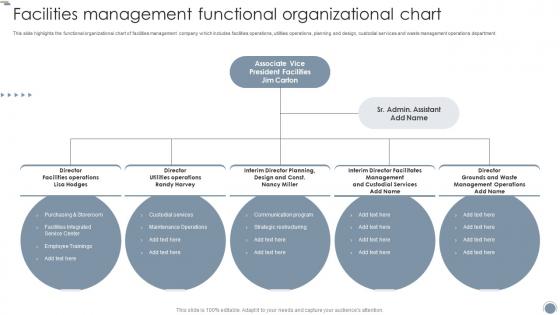
This slide highlights the functional organizational chart of facilities management company which includes facilities operations, utilities operations, planning and design, custodial services and waste management operations department.
People who downloaded this PowerPoint presentation also viewed the following :
Facilities Management Functional Organizational Chart Global Facility Management Services with all 6 slides:
Use our Facilities Management Functional Organizational Chart Global Facility Management Services to effectively help you save your valuable time. They are readymade to fit into any presentation structure.





FAQs for Facilities Management Functional Organizational Chart Global
So you'll need space planning, maintenance management, vendor relationships, and budget oversight as your main pieces. Data analytics is huge too - seriously, most people skip this and then wonder why they're bleeding money. Compliance and safety protocols are non-negotiable, obviously. Communication channels with stakeholders matter more than you'd think. The trick is making all these work together instead of having them scattered everywhere. I'd start by looking at what you've got now, then figure out which gaps are actually costing you. Oh, and don't try to fix everything at once - that never works.
Dude, IoT sensors are a game changer - they'll track your HVAC and occupancy in real-time so you catch problems early. CMMS software ditches all that messy paperwork for digital maintenance schedules. Your team can report issues instantly through mobile apps from wherever they are. The predictive analytics piece is honestly where it gets interesting, telling you when equipment's about to crap out. Oh, and don't try to go all-in at once - pick one system first then expand. Way less overwhelming that way.
Dude, sustainability isn't optional anymore in facilities - it's pretty much expected now. Energy efficiency, waste reduction, water stuff, air quality... all core parts of your job. The pressure from bosses AND employees has ramped up big time lately. LEED certifications actually affect property values and how happy tenants are. Oh and don't get me started on ESG reporting - those sustainability numbers matter for compliance now. Honestly? Start with an energy audit first. That's where you'll see the biggest impact and can actually show some real ROI to justify everything else.
Dude, monthly safety walks are a must - just build them into your calendar. Documentation is boring as hell but trust me, you'll thank yourself later when compliance shows up. Get your team trained on the latest regs and actually encourage them to speak up about problems. I swear, half the issues get caught by the people doing the work daily. Oh, and set up those automated reminders for equipment checks and renewals because there's always that one thing you'll forget. Checklists help too - fire safety, ergonomics, all that stuff. It's tedious but beats getting fined.
Honestly, you need to figure out how people actually use your spaces instead of just guessing. Get some occupancy sensors or do headcounts - track the real patterns throughout different days and times. Trust me, the results will probably shock you. Most offices think they know their usage but they're way off. Once you have that data, resize everything based on actual demand. Make areas flexible so they can do double duty. Hot-desking works great for those barely-used offices too. Oh and don't set it and forget it - space needs shift constantly, so review this stuff regularly. Seriously, start tracking this month.
So you'll want to track everything from construction through demolition - operations, maintenance, utilities, the whole deal. Grab historical data from similar buildings first, then adjust for current rates and inflation. Tech upgrades are brutal - they sneak up every few years and cost way more than you think. Break everything into annual chunks so you can actually see your cash flow patterns. Here's the thing: most people totally lowball maintenance after year 10, so bump those numbers up. Apply a 3-7% discount rate for present value. Oh, and build this as a reusable spreadsheet template because you'll definitely need it again.
Honestly, predictive maintenance with AI is huge right now. Same with making offices work for hybrid teams - nobody knows who's showing up when anymore. Smart sensors are literally tracking everything (air quality, who's using what space) and yeah, it's overwhelming at first but actually makes life easier. Oh, and sustainability isn't optional anymore - clients expect it. My advice? Don't try to do everything at once. Pick one smart system, get comfortable with it, then expand. Flexible space design is key too since headcounts change daily. Trust me on the start-small approach.
Dude, good facilities management is honestly a game-changer for productivity. Your team can't focus when they're dealing with terrible lighting or freezing temps. Trust me, I've worked in those places - it's the worst. Clean spaces and working equipment keep everyone happy instead of constantly annoyed. Quick example: broken coffee machines that sit unfixed for weeks? Morale killer. Smart space design helps collaboration flow better too. Oh, and decent tech support saves so much wasted time on random frustrations. Just ask your people what facility stuff drives them crazy - you'll find easy fixes fast.
Dude, the worst part is trying to keep track of everything at once. Different contractors, building codes, compliance stuff - it's chaos. Each location has its own weird issues that always blow up at the worst possible moment. Service quality gets inconsistent because you can't be everywhere. Oh and don't get me started on scheduling maintenance across multiple sites. Communication between locations? Forget about it, something always gets lost. Get yourself decent facility management software ASAP and make your processes the same everywhere. Trust me on this one - it'll keep you from losing your mind.
Look, you need a game plan that kicks in when things go sideways. Figure out if it's actually dangerous or just annoying first - seriously, people will lose their minds over the dumbest stuff. Life safety comes first, obviously, then whatever's screwing up operations. Have your emergency contacts ready to go and get spending limits approved ahead of time. Last thing you want is waiting for budget approval while the place floods. Document everything as it happens for insurance later. Oh, and maybe keep extra coffee on hand - that one's learned from experience.
You definitely want to track both money stuff and operational metrics. Financial ones like cost per square foot, energy bills, and maintenance spending are obvious. Response times for work orders matter too, plus equipment uptime and those satisfaction surveys (though honestly, people complain about everything). Space utilization is massive - why pay for conference rooms that sit empty half the time? I'd also look at your preventive vs reactive maintenance ratio since that shows if you're staying ahead of problems. Don't go crazy though. Pick 3-4 metrics that actually matter to your company first, then add more once you've got solid data coming in.
Honestly, clear communication is what keeps facilities from turning into a total shitshow. You know those "wait, I thought YOU were doing that" disasters? Yeah, communication prevents those. Regular team check-ins are clutch - even if they feel pointless sometimes. Set up shared dashboards so everyone can see maintenance schedules and vendor stuff. When emergencies hit, people actually know who to call instead of running around like headless chickens. Don't let duplicate work happen because someone forgot to mention they already called the HVAC guy. Quick responses save your sanity.
Dude, vendor management can totally make or break you. I'm talking cleaning crews, HVAC people, security - the whole circus. When our main cleaning company started slacking, we didn't notice for weeks and it was a disaster. You've got to set up solid contracts from day one and actually check their work regularly. Costs spiral fast if you're not watching. Oh, and build real relationships with these people - they'll bail you out when things go sideways. Trust me on this one. Start by figuring out how you'll rate each vendor's performance consistently.
Look, facilities management isn't just about keeping the lights on - it actually drives your business forward. Your workspace directly impacts how productive people are and whether they actually want to work there. Smart space planning can cut costs while boosting company culture, which honestly is harder to find than you'd think. Design flexible areas for hybrid work or go sustainable if that matches your goals. The right setup attracts talent too. I'd start by comparing what you have now against your 3-5 year business plan. You'll probably spot some obvious gaps where better facilities could push you toward those bigger objectives faster.
IoT sensors are clutch for tracking HVAC and occupancy - total game changer for catching issues before they blow up. CMMS software handles your work orders and asset tracking, plus mobile apps let technicians update everything in real time. Those smart building platforms that connect all your systems? The dashboards honestly do look straight out of a movie. Space management tools are solid for optimizing layouts too. AI's really useful for spotting energy usage patterns you'd never notice otherwise. My advice though - pick one or two things that fix your worst headaches first instead of going crazy trying to do it all.
-
Keep doing the good work guys. Surpass the needs and expectations always!!
-
Great templates that you can use in your next keynote or conference. They are perfect for quick and visually-engaging delivery.