


Facilities Management Functional Organizational Chart Strategic Facilities And Building Management




Try Before you Buy Download Free Sample Product
 Impress Your
 Audience
 100%
100% Editable
 Save Hours
 of Time


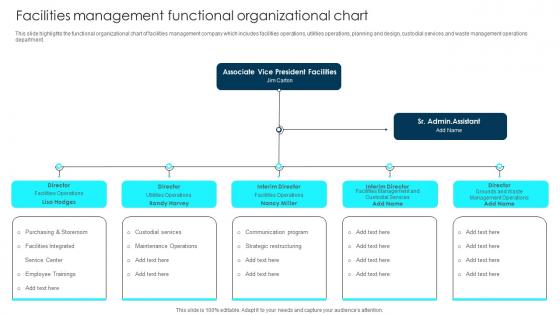
This slide highlights the functional organizational chart of facilities management company which includes facilities operations, utilities operations, planning and design, custodial services and waste management operations department.
People who downloaded this PowerPoint presentation also viewed the following :
Facilities Management Functional Organizational Chart Strategic Facilities And Building Management with all 6 slides:
Use our Facilities Management Functional Organizational Chart Strategic Facilities And Building Management to effectively help you save your valuable time. They are readymade to fit into any presentation structure.





FAQs for Facilities Management Functional Organizational Chart Strategic Facilities
Honestly, most people totally screw up the maintenance part - they just wait for things to break instead of staying ahead of it, which gets expensive fast. Focus on four big areas: preventive maintenance, how you're using your space, managing vendors, and keeping up with safety stuff. Oh and definitely nail down your budgeting process early. You need good metrics to track what's working and a decent way for tenants to actually reach you when problems come up. I'd start by looking at what's currently driving you crazy, then build your systems around fixing those headaches first. Trust me on the proactive maintenance thing though - it's a game changer.
Dude, the tech side has totally changed how we handle buildings now. IoT sensors track air quality and space usage in real-time - honestly feels like sci-fi sometimes. Instead of fixing stuff after it breaks, AI actually predicts when equipment's about to fail. Pretty wild. Your team can report problems instantly through apps, and you get this unified dashboard for energy, access control, all of it. The biggest shift though? You're making decisions based on actual data instead of just winging it. Oh, and definitely start collecting building data ASAP if you haven't already.
Start with your HVAC - that thing's probably eating most of your budget. Get it serviced regularly and throw in a programmable thermostat if you don't have one already. LED bulbs are obvious but honestly worth it since you'll never replace them again. Oh, and check your weatherstripping - sounds boring but I've seen it make a huge difference. Building automation systems let you track everything in real time, which is pretty cool. Do an energy audit first though. Track your current usage, then go after whatever's costing you the most. Simple stuff like insulation gaps can be massive energy wasters.
Honestly, just get obsessive about documentation - everything safety-related needs to be written down. Create inspection checklists for different areas and actually stick to doing them weekly or monthly. The paperwork feels like overkill until inspectors show up unannounced (learned that one the hard way). Train your people properly and keep those certs updated. Someone on your team needs to watch for regulation changes because they pop up constantly. Oh, and do quarterly reviews to catch problems early. Trust me, it's way easier than dealing with violations later.
Track operational stuff like work order times and preventive maintenance rates, plus financial metrics - energy costs per square foot, facility costs per employee. Space utilization will probably blow your mind (most places waste SO much money on empty space). Also watch tenant satisfaction, safety incidents, vendor performance. Oh and honestly? Pick like 5-7 metrics max that actually matter to your business. I've seen teams track everything under the sun but never look at half of it. Better to consistently monitor fewer things than drown in useless data.
Good space planning saves you tons of wasted time - like, seriously, you wouldn't believe how much people walk around looking for stuff or trying to find teammates. Map out how your teams actually collaborate first, then design around that instead of just randomly filling rooms. You'll get way better use out of conference rooms too (no more empty ones while everyone fights for meeting space). Honestly the ROI on your real estate gets so much better when workflow actually makes sense. Short version: less walking, more working.
Okay so maintenance scheduling is basically like preventive care for your equipment. You catch problems early instead of waiting for catastrophic failures. Regular inspections let you swap out parts before they completely die on you - way cheaper than emergency repairs, trust me on that one. It's like car maintenance but for everything (and yeah, I'm terrible at remembering oil changes too). Your stuff runs smoother and lasts way longer. Plus you avoid those panic moments when critical equipment breaks down at the worst possible time. Worth the hassle honestly.
Honestly, start small with LED bulbs and fixing your HVAC - that stuff actually pays for itself pretty quickly. Then add recycling programs and maybe switch to those green cleaning products (they work just as well, despite what some people think). Track your energy bills to see where you're bleeding money. Low-flow fixtures help with water costs too. Don't try to do everything at once though - pick one thing your team can handle well, see how it goes, then build from there. The trick is measuring what's working so you can expand later.
Honestly? Money's always the first problem - convincing the suits upstairs that this stuff actually pays off takes forever. Your old systems definitely weren't built to work with fancy IoT gadgets, so expect some serious tech headaches. Training your people is rough too since they're basically learning a whole new job. Cybersecurity keeps everyone paranoid (rightfully so), and don't even get me started on all the data privacy rules you gotta follow. My advice? Pick one building and test everything there first. Way smarter than trying to do everything at once and watching it all blow up.
Look, tenant satisfaction is huge - happy tenants stay longer and pay more. They'll also refer people to your building, which honestly beats any marketing campaign. I'd run quarterly surveys about maintenance speed, cleanliness, amenities - the basics. Track your work order response times and how often people actually renew their leases. Net Promoter Score works too if you're into that. The key thing? Actually fix what they complain about. Tenants can tell when you're just collecting feedback for show versus when you're genuinely trying to improve things.
Dude, bad facilities management is like bleeding money. Your HVAC keeps crapping out? Those emergency repairs cost way more than just doing regular maintenance. Employees hate working in uncomfortable or messy spaces - they're less productive and more likely to quit. That turnover gets expensive fast. Equipment failures mess up your whole operation, which obviously pisses off customers too. Here's the thing though - all these problems just snowball over time. Honestly, spending money upfront on decent facilities management will save you a ton down the road.
Look, communication is basically everything in facilities projects - it stops most disasters before they happen. I learned this the hard way when a contractor "forgot" to mention a two-week delay. Now I do weekly check-ins religiously and put everything important in writing. Shared dashboards help too since everyone can see what's actually happening. The trick is staying ahead of problems instead of chasing them down later. Set expectations early and keep people updated constantly. Trust me, those "nobody told me" moments will kill your timeline faster than anything else.
Okay so facilities management - you're gonna want the basics down first. HVAC, electrical, plumbing systems, plus project management and budgets. Tech stuff is changing crazy fast though. CAFM software, IoT sensors, data analytics - all that matters now. Communication is probably the biggest thing since you're dealing with vendors, tenants, executives constantly. Oh and get certified - CFM or FMP will help. Honestly I'd pick one specialty area to focus on initially, then expand from there. My cousin did HVAC first then moved into the tech side.
Honestly, risk management is what makes or breaks facilities planning. You've gotta spot problems before they hit you. Our HVAC died last July and we had literally nothing - learned that lesson fast! Look at equipment failures, safety issues, natural disasters, security stuff. Build backup plans into your maintenance schedule and set aside emergency cash. Different scenarios need different protocols. Way better to be ahead of it than scrambling after. Oh, and start small - just assess your most critical systems first, then expand from there. Trust me on this one.
Hey! So the big things right now are smart building tech, going green, and making spaces super flexible. IoT sensors are literally everywhere - they track air quality, who's using what space, all that stuff. Way better than walking around with a clipboard like we used to lol. Hybrid work is still messing with how we design everything since people need spaces that can flip between different uses fast. Carbon targets are no joke either - there's real pressure there. Oh and predictive maintenance through data is getting pretty cool. Honestly though, don't go crazy trying to upgrade everything at once. Pick one smart system first, see how it goes, then expand from there.
-
Informative presentations that are easily editable.
-
I joined SlideTeam last month and there’s no doubt that I tend to find our bond only strengthening over time. Best place to find world-class themes, templates, and icons.