

Farm Planning And Budgeting Powerpoint Ppt Template Bundles




Try Before you Buy Download Free Sample Product
 Impress Your
 Audience
 100%
100% Editable
 Save Hours
 of Time


Introducing our comprehensive Farm Planning and Budgeting PowerPoint PPT presentation, designed to equip farmers with the knowledge and tools to optimize their agricultural operations. This dynamic resource covers a range of essential topics, including various Farm Budgeting Methods, Farm Product Marketing Budget and Plan, Whole Farm Budget, Small Farm Budgeting and Planning, and Farm Enterprise Budget. With this PPT, farmers can delve into the intricacies of budgeting, learn effective marketing strategies, and develop comprehensive plans for their farm enterprises. It provides valuable insights into maximizing profits, minimizing expenses, and making informed financial decisions. Whether you re a seasoned farmer or just starting out, this Farm Planning and Budgeting PPT is your go to resource for achieving financial success and sustainability in the ever evolving agricultural industry.
People who downloaded this PowerPoint presentation also viewed the following :
Farm Planning And Budgeting Powerpoint Ppt Template Bundles with all 22 slides:
Use our Farm Planning And Budgeting Powerpoint Ppt Template Bundles to effectively help you save your valuable time. They are readymade to fit into any presentation structure.
-
Farm Planning and Budgeting
-
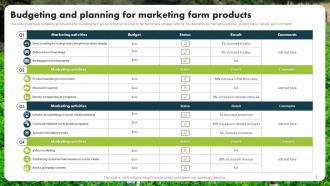
Budgeting and planning for marketing farm products
-
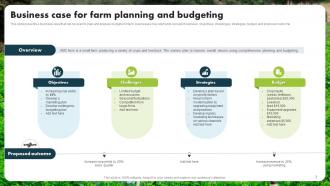
Business case for farm planning and budgeting
-
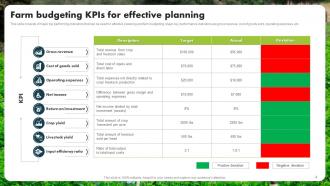
Farm budgeting KPIs for effective planning
-
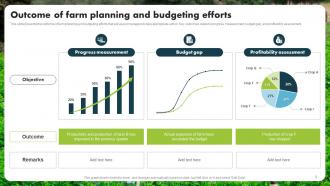
Outcome of farm planning and budgeting efforts
-
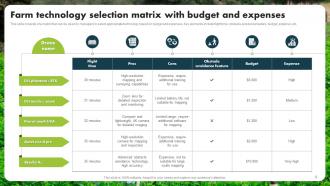
Farm technology selection matrix with budget and expenses
-
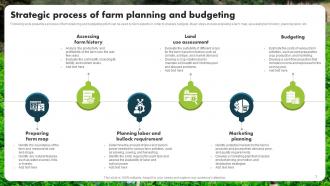
Strategic process of farm planning and budgeting
-
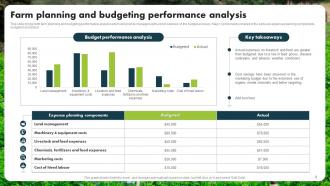
Farm planning and budgeting performance analysis
-
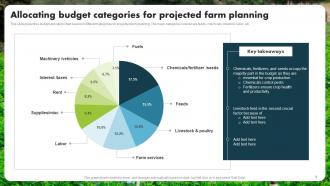
Allocating budget categories for projected farm planning
-
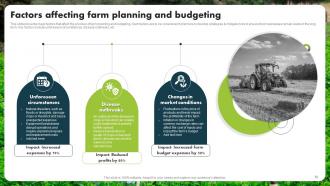
Factors affecting farm planning and budgeting
-
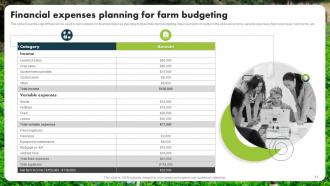
Financial expenses planning for farm budgeting
-
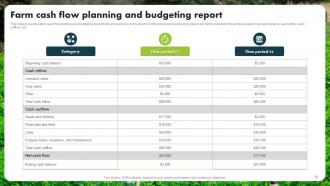
Farm cash flow planning and budgeting report
-
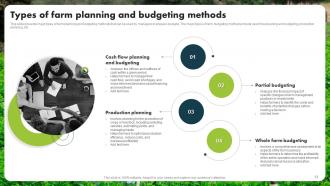
Types of farm planning and budgeting methods
-
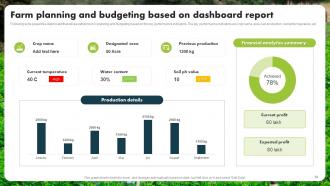
Farm planning and budgeting based on dashboard report
-
Farm input planning and budgeting icon
-
Planning and budgeting icon for farm technologies
-

Thanks for watching
-

-

-

-

-

FAQs for Farm Planning And Budgeting Powerpoint
You'll want three main things: production planning, financial projections, and some kind of risk management. Figure out what crops/livestock you're doing, timing, expected yields - the basics. Map out costs (seeds, labor, equipment) vs revenue. Cash flow timing is absolutely critical since farm income hits so seasonally. Build in backup plans for weather disasters, market swings, equipment breaking down - because something always goes wrong, right? Factor in long-term stuff like land improvements too. I'd review it quarterly since agriculture changes crazy fast. Your plan needs to actually help you make decisions, not just sit in a drawer.
Get a soil test first - check pH and nutrients across your different fields. Walk around and map out where water drains, sun hits, all that stuff. Honestly, I spend way too much time just wandering my property but you catch things you'd never notice from your truck. Note the problem spots and microclimates throughout the seasons. Some areas will be perfect for certain crops while others need work. Once you've got that baseline info, match your best land to the right plants and focus improvements where they'll actually make a difference.
Honestly, if you're running a small farm, just stick with basic cash flow tracking and break-even analysis. Enterprise budgeting is solid too if you've got multiple income streams going. But anything fancier? Total waste of time when you're already juggling everything. Bigger operations though - that's different. Comprehensive enterprise budgets make sense, partial budgeting when you're weighing changes, capital budgeting for the big stuff. When you're dealing with thousands of acres, those tight margins actually justify spending time on detailed financial models. My advice? Start simple based on where you're at now, then get more sophisticated as you grow. No point overcomplicating things early on.
Man, seasonal farming is brutal on cash flow. You're dropping serious money on seeds, equipment, and workers for months before you see a dime back. Then harvest hits and suddenly you're flush - until next planting season rolls around. Most farmers I know get caught off guard by this cycle every time. Set aside harvest money for those lean months ahead. Get a line of credit sorted before you're desperate. And honestly? Check your cash weekly during tight stretches. The timing never gets easier, but at least you can plan for it.
GPS tractors, field-mapping drones, soil sensors - farming tech has gotten pretty crazy. All that data flows into software that helps predict costs and optimize planting way better than the old guesswork method. Real-time info means you can model different scenarios and actually see where your money's going instantly. My neighbor swears by it, though honestly the learning curve looks brutal at first. Don't try to do everything at once though. Just grab one tool that fixes whatever's bugging you most about planning right now.
Honestly, just weave that stuff right into your regular budget tracking. Measure soil health, water use, energy costs - the usual suspects. Pick maybe 3-4 things that actually matter for your operation and buyers. Carbon footprint's a big one now, plus pesticide reduction if you're cutting back. Cover crops too if you're doing those. Sounds like a pain, but banks are starting to ask for this data anyway. Might as well get ahead of it. Plus a lot of these practices save money once you get going - less inputs, better soil, that kind of thing. Document everything now so you're not scrambling later when someone wants proof.
Man, the biggest mistake? Being way too optimistic about what you'll make vs what you'll spend. I did this hardcore my first couple years - ouch. Conservative estimates are your friend here. Also track when money actually comes in and goes out, not just totals. You might be profitable but still screwed when the feed bill hits and harvest is two months away. Oh and budget for random crap breaking! That tractor repair always happens at the worst possible time. I track everything monthly now so I can see where I'm going wrong before it's too late.
Dude, subsidies can totally change your farm's financial game. They're like a safety net plus growth booster combined. Factor them into your revenue forecasts AND risk planning. Crop insurance subsidies cut your input costs, conservation payments give you steady income that isn't tied to crazy commodity swings. The paperwork is absolutely horrible - I won't sugarcoat that. But here's the thing: build these into your cash flow early since payment timing is all over the place. Figure out what programs you qualify for first, then map their schedules.
Dude, rotation is honestly a game changer for your wallet. Breaking those pest cycles means way less money on pesticides - and legumes literally make their own nitrogen, so that's fertilizer savings right there. Your soil gets healthier each season, which bumps up yields. It's kinda wild how much better dirt performs when you treat it right. Plus you're not putting all your eggs in one crop basket, so when corn tanks or whatever, you've got other stuff bringing in cash. Don't just look at this year's numbers though - budget it out over 3-4 seasons to see the real picture.
Look at what's killing your cash flow first - that's where you put your money. Equipment that cuts labor costs or boosts efficiency usually pays itself back in 2-3 years, which is solid. I know that new tractor looks tempting, but honestly? Fix your bottlenecks instead. Storage and irrigation give you way better long-term bang for your buck than flashy equipment does. Don't forget maintenance costs either - sometimes older gear with cheap, available parts beats the newest model. Do the math on payback periods and don't go broke chasing upgrades. One big purchase per year keeps you sane.
Honestly, I'd focus on debt-to-asset ratio first - tells you if you're borrowing too much. Current ratio's clutch too since it shows whether you can actually pay your bills this year. Return on assets and operating profit margin are game-changers for seeing if you're making real money after variable costs. I'm probably obsessive about checking these monthly when things get crazy, then quarterly when it's slower. Oh, and don't sleep on gross revenue per acre - that one's surprisingly revealing for catching trends early. Start there and you'll know what's actually happening with your money.
Honestly, I'd start with tracking commodity prices over 3-5 years - that's your baseline. Weather patterns in major growing regions are huge too. USDA reports are boring but worth it for the crop forecasts. Here's what most people miss though: watch what big retailers are pushing. Organic, local, specialty stuff - that's where demand's heading next. Agricultural newsletters help, and definitely connect with other farmers nearby. You'll get insights you won't find online. Don't rely on just one source - I learned that the hard way. Pick 2-3 sources you'll actually read and build from there.
Honestly, don't put all your eggs in one basket - diversify what you're growing and how you make money. Insurance is huge for crops, livestock, equipment because weather's just insane these days. When you have good years, sock away cash for the inevitable rough patches. Forward contracts can help lock in prices before harvest, which saves you from market chaos. Keep solid records so you can actually see what's working. Oh and this is big - start small when testing new stuff. I've seen too many people bet the farm (literally) on something unproven and get burned hard.
Honestly, labor's probably gonna be your biggest headache after equipment costs. You've got the obvious stuff like wages, but then benefits and workers comp start adding up fast. Harvest season is brutal - you'll need way more hands than usual. I'd track how many hours you're spending per acre so you can see if you're being efficient or just burning money. The real trick is figuring out your actual hourly cost first (including all the random expenses), then work backwards to build budgets for each crop. Seasonal workers are weird to budget for but you kinda have to.
Honestly, start tracking your yields, costs, and weather patterns in a basic spreadsheet if you're not already. Historical data shows you which crops perform best on specific fields - way better than just guessing. You'll spot patterns for optimal planting and harvest timing too. Compare your input costs against industry benchmarks to see where money's getting wasted. I mean, even my neighbor who hates tech uses simple trend analysis now. Predicting profitable crops becomes pretty straightforward once you have a few seasons of data. Beat relying on hunches every time.
-
I am so thankful for all of the templates I've found on your site. They have saved me hours every week and helped make my presentations come alive. Keep up with these amazing product releases!
-
SlideTeam is a great place for PPT templates. They have many templates on a single topic. It has made my life a lot easier.