


Fashion Campaign Proposal Powerpoint Presentation Slides




Try Before you Buy Download Free Sample Product
 Impress Your
 Audience
 100%
100% Editable
 Save Hours
 of Time


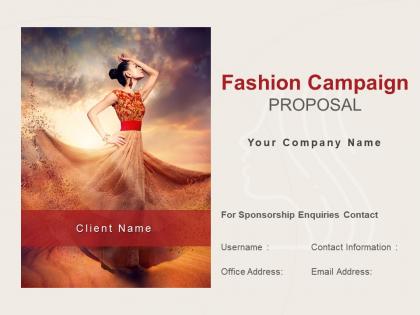
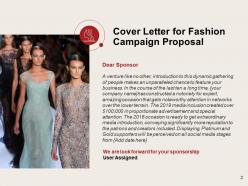
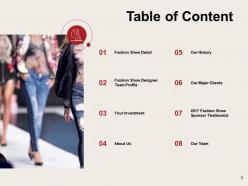
Influence sponsors and investors to obtain some monetary help from them using these Fashion Campaign Proposal PowerPoint Presentation Slides. Make your proposed event a success by attracting more financers towards your event by presenting yourself with this visually attention-grabbing fashion show event planning proposal PowerPoint complete deck. Design is the main element that persuades financers to invest. This beautifully designed fashion design proposal can help you in bringing new sponsors with its interesting theme and colors. Focus on the design element and also discuss about the designers who will be showcasing their talents. You can also mention that your organization encourages new budding designers which will leave a good impression on your sponsors. This will increase your chance of getting more funds. You can also mention what all benefits a financer would get if he invests in your event. This includes things like brand promotion, media coverage of the brand and others which will motivate your investors to fund your event. Along with this, you can include various sections like fashion show detail, fashion show designer team profile, our major clients, history, etc. Furthermore, showcase your previous successful fashion events that your organization has hosted. This can be done by adding a few client testimonials and feedbacks showcasing how great hosts you are. You can also talk about your team members and their hard work which has taken your company to such great heights. Acknowledge the efforts of your team members by stating their names and designations in this fashion show sponsorship proposal PowerPoint presentation. Hence make your fashion business stand out by downloading this budget proposal for fashion show PowerPoint visual.
People who downloaded this PowerPoint presentation also viewed the following :
Fashion Campaign Proposal Powerpoint Presentation Slides with all 19 slides:
Use our Fashion Campaign Proposal Powerpoint Presentation Slides to effectively help you save your valuable time. They are readymade to fit into any presentation structure.


FAQs for Fashion Campaign Proposal
Key elements include target audience analysis, brand positioning strategy, creative concept development, budget allocation, timeline planning, and performance metrics definition. These components work together by ensuring strategic alignment between brand identity and consumer preferences, enabling fashion brands to create compelling campaigns that drive engagement, boost sales, and establish competitive advantage in an increasingly crowded marketplace.
Market analysis enhances fashion campaign effectiveness by identifying target demographics, analyzing competitor strategies, understanding seasonal trends, and revealing consumer preferences and purchasing behaviors. Through comprehensive market research, fashion brands can tailor messaging, optimize timing, and allocate resources more strategically, ultimately delivering higher engagement rates and improved ROI while minimizing campaign costs.
Storytelling transforms fashion campaigns from product showcases into emotional experiences by creating compelling narratives, establishing brand identity, connecting with target audiences, and differentiating from competitors. Through strategic storytelling, luxury brands like Chanel and emerging designers craft memorable presentations that resonate with consumers, ultimately driving engagement, brand loyalty, and sales while building lasting emotional connections.
Target audience demographics should fundamentally shape campaign messaging, platform selection, visual aesthetics, and timing strategies. Younger demographics might respond to sustainable fashion narratives on Instagram and TikTok, while professional segments prefer LinkedIn campaigns emphasizing quality and versatility, with many brands finding that demographic-specific approaches deliver significantly higher engagement rates and conversion outcomes.
Best practices include coordinated timing across platforms, consistent visual storytelling, cross-channel customer journey mapping, unified brand messaging, and strategic budget allocation between digital and traditional touchpoints. Fashion brands like Zara and H&M successfully combine print advertising, influencer partnerships, social media campaigns, and in-store experiences, ultimately delivering enhanced brand visibility and customer engagement while maximizing reach across diverse demographics.
Influencer collaboration amplifies fashion campaigns by leveraging established audiences, creating authentic content, and driving engagement across multiple platforms. Through strategic partnerships, fashion brands can access diverse demographics, generate user-generated content, and build social proof, while influencers provide credible endorsements and storytelling capabilities, ultimately delivering expanded brand visibility and increased conversion rates.
Fashion campaign success metrics include brand awareness, engagement rates, conversion rates, return on ad spend, website traffic, and social media reach. These measurements enable fashion brands to track customer acquisition, assess creative effectiveness, and optimize budget allocation across channels, with many retailers finding that combining vanity metrics with sales data ultimately delivers comprehensive insights for future campaign strategies.
Sustainability can be effectively incorporated through eco-friendly material sourcing, transparent supply chain messaging, circular fashion initiatives, carbon-neutral production processes, and ethical labor practices storytelling. These approaches resonate with environmentally conscious consumers while enabling fashion brands to differentiate themselves in an increasingly competitive market, ultimately delivering enhanced brand loyalty and stronger consumer trust.
Creative methods to showcase fashion collections include interactive digital lookbooks, augmented reality try-on experiences, behind-the-scenes storytelling videos, influencer collaborations, and immersive pop-up installations. These approaches enhance brand engagement by creating memorable customer experiences, expanding social media reach, and driving authentic connections, with many fashion retailers finding that multi-platform campaigns ultimately deliver higher conversion rates and stronger brand loyalty.
Visual branding significantly influences consumer perception by establishing emotional connections, conveying brand values, and creating memorable experiences through consistent typography, color schemes, and imagery. Fashion brands like Chanel and Nike demonstrate how strategic visual elements enhance brand recognition, build customer loyalty, and drive purchasing decisions, ultimately delivering stronger market positioning and competitive advantage in an increasingly crowded marketplace.
Fashion campaign legal considerations include intellectual property rights, model contracts and releases, music licensing, trademark clearances, and advertising compliance regulations. These protections streamline campaign execution by securing usage rights, preventing infringement claims, and ensuring regulatory adherence, with many fashion brands finding that comprehensive legal frameworks ultimately deliver smoother launches and stronger competitive positioning.
User-generated content enhances fashion campaign engagement by creating authentic brand connections, encouraging social sharing, and building community trust through real customer experiences. Fashion brands leverage UGC through hashtag campaigns, styling contests, and customer photo features, with many retailers finding that authentic customer content drives higher conversion rates and brand loyalty than traditional advertising approaches.
Seasonal trends significantly influence fashion campaign timing by aligning product releases with consumer demand cycles, weather patterns, and industry calendar expectations. Brands strategically launch spring collections in February, fall lines in August, and holiday campaigns in October, with retailers like Zara and H&M finding that synchronized timing enhances sales velocity and maximizes seasonal purchasing behaviors.
Storytelling through visuals differentiates fashion brands by creating emotional connections, establishing unique brand narratives, conveying authentic values, and building memorable customer experiences that transcend product features. Through strategic visual storytelling, fashion brands like Patagonia and Nike communicate purpose-driven messages, foster community engagement, and cultivate brand loyalty, ultimately delivering competitive advantage in an increasingly saturated marketplace.
Running fashion campaigns in global markets presents challenges including cultural sensitivity across diverse regions, varying consumer preferences, complex regulatory requirements, currency fluctuations, and coordinating multi-timezone operations. These obstacles require strategic adaptation by localizing messaging for different cultures, navigating international compliance standards, and managing supply chain complexities, with many fashion brands finding that successful global campaigns ultimately deliver expanded market reach and competitive advantage.
-
Innovative and Colorful designs.
-
Unique research projects to present in meeting.
-
Much better than the original! Thanks for the quick turnaround.
-
Excellent Designs.
-
Graphics are very appealing to eyes.
-
Excellent products for quick understanding.
-
Nice and innovative design.
-
Designs have enough space to add content.
-
Unique design & color.