


Fintech Startups Powerpoint Ppt Template Bundles




Try Before you Buy Download Free Sample Product
 Impress Your
 Audience
 100%
100% Editable
 Save Hours
 of Time


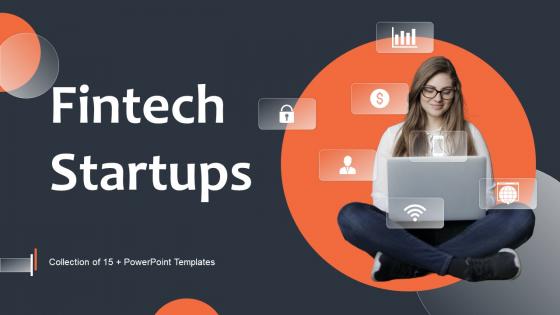
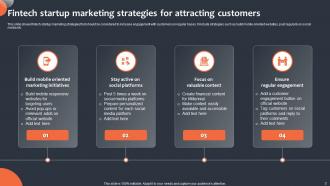
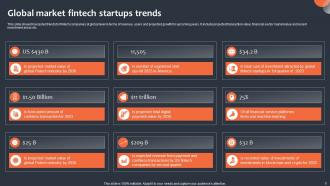
Discover the future of finance with our dynamic PowerPoint PPT presentation on Fintech Startups. Dive into the ever-evolving world of financial technology as we explore the latest global fintech market trends and insights. Whether you are an established player or a budding entrepreneur, this presentation offers invaluable guidance on effective financial technology marketing strategies. Learn how to harness the power of the ABCD model Acquire, Build, Convert, and Delight to drive customer acquisition, foster brand loyalty, and achieve sustainable growth. Unleash the potential of disruptive technologies, innovative payment solutions, and data driven approaches to revolutionize your fintech startups success. Stay ahead of the curve and secure your position in the competitive fintech landscape with our comprehensive PPT, designed to equip you with the knowledge and tools needed for unmatched achievements in the financial technology domain.
People who downloaded this PowerPoint presentation also viewed the following :
Fintech Startups Powerpoint Ppt Template Bundles with all 25 slides:
Use our Fintech Startups Powerpoint Ppt Template Bundles to effectively help you save your valuable time. They are readymade to fit into any presentation structure.















FAQs for Fintech Startups Powerpoint
Key trends shaping fintech startups in 2023 include embedded finance, AI-powered personalization, regulatory technology integration, sustainable finance solutions, and blockchain adoption for payments and security. These technologies streamline operations by enhancing customer experiences, reducing compliance costs, and accelerating transaction processing, with many financial institutions finding that strategic partnerships with innovative startups deliver competitive advantages in an increasingly digital marketplace.
Fintech startups navigate regulatory challenges by establishing dedicated compliance teams, partnering with local legal experts, and implementing adaptable technology frameworks that accommodate varying regional requirements. These companies often adopt a phased market entry approach, starting with regulatory sandboxes where available, while building relationships with regulators early, ultimately enabling faster expansion and sustainable growth across multiple jurisdictions.
Artificial intelligence drives fintech innovation by enabling automated decision-making, fraud detection, personalized financial recommendations, algorithmic trading, and regulatory compliance monitoring. Through machine learning algorithms, fintech startups deliver faster loan approvals, enhanced customer experiences, and reduced operational costs, with many financial institutions finding that AI-powered solutions provide significant competitive advantages in an increasingly digital marketplace.
Successful fintech business models include subscription-based platforms, transaction fee structures, embedded finance solutions, B2B software licensing, and marketplace commissions. These models streamline revenue generation by leveraging recurring payments, transaction volumes, and strategic partnerships with traditional financial institutions, with many startups finding that combining multiple revenue streams delivers sustainable growth and competitive advantage.
Fintech startups can effectively manage customer data privacy and security through multi-layered encryption, regular security audits, compliance frameworks like GDPR and PCI DSS, employee training programs, and robust access controls. These comprehensive measures enable startups to build customer trust while meeting regulatory requirements, with many financial institutions finding that proactive security strategies ultimately deliver competitive advantage and sustainable growth.
Fintech startups can differentiate through specialized niche targeting, superior user experience design, strategic partnerships with traditional institutions, innovative technology integration, and transparent pricing models. These approaches enable startups to streamline specific customer pain points, enhance operational efficiency, and deliver personalized financial services, with many finding that focusing on underserved segments ultimately creates sustainable competitive advantages.
Partnerships with traditional banks enhance fintech offerings by providing regulatory expertise, established customer bases, robust infrastructure, and capital resources that startups typically lack. Through strategic collaboration, fintech companies gain market credibility and distribution channels while banks access innovative technologies, ultimately delivering faster digital services, reduced operational costs, and enhanced customer experiences across financial services.
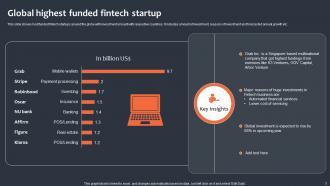
Funding options for fintech ventures include angel investors, venture capital firms, crowdfunding platforms, government grants, and strategic partnerships with established financial institutions. These funding sources enable startups to navigate regulatory requirements, develop secure technology infrastructure, and scale customer acquisition, with many fintech companies finding that combining multiple funding streams accelerates growth while maintaining strategic flexibility in an increasingly competitive market.
Fintech startups are addressing underbanked populations through mobile banking platforms, alternative credit scoring, micro-lending services, digital wallets, and blockchain-based remittances. These technologies streamline financial access by eliminating traditional banking barriers, reducing transaction costs, and leveraging smartphone connectivity, with many rural communities and small businesses finding faster loan approvals and affordable payment solutions.
Blockchain technology revolutionizes fintech by enabling decentralized transactions, enhancing security protocols, reducing operational costs, and eliminating intermediary dependencies. Through smart contracts and distributed ledgers, fintech startups streamline cross-border payments, accelerate loan processing, and deliver transparent financial services, with many institutions finding that blockchain ultimately provides competitive advantages while building customer trust.
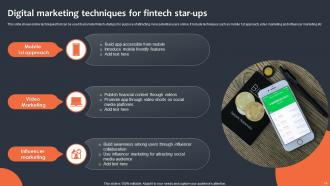
Fintech startups can leverage social media through educational content marketing, customer testimonials, real-time support channels, influencer partnerships, and community building initiatives. These strategies enhance brand visibility by demonstrating financial expertise, building trust through peer validation, and providing seamless customer experiences, with many fintech companies finding that authentic engagement ultimately delivers stronger customer acquisition and competitive differentiation.
Fintech startups face regulatory compliance complexities, cybersecurity threats, customer acquisition costs, funding limitations, and intense competition from established financial institutions. These challenges require strategic navigation through evolving regulations, robust security infrastructure, and differentiated value propositions, with many successful startups finding that partnerships with traditional banks and focus on niche markets accelerate sustainable growth.
Fintech startups prioritize intuitive interfaces, seamless onboarding processes, personalized dashboards, mobile-first design, and simplified transaction flows to enhance customer satisfaction. These design strategies streamline complex financial services by reducing friction points, accelerating user adoption, and building trust through transparency, with many digital banks and payment platforms finding that superior UX directly correlates with customer retention and competitive advantage.
Fintech startups should focus on customer acquisition cost (CAC), monthly recurring revenue (MRR), user retention rates, transaction volume growth, and regulatory compliance scores. These metrics enable startups to track scalability, profitability, and market penetration effectively, with many successful fintech companies finding that balancing growth indicators with operational efficiency ultimately delivers sustainable competitive advantage.
Global economic conditions significantly impact fintech startups through funding availability, regulatory changes, consumer spending patterns, and market demand fluctuations. During economic downturns, these companies often face reduced venture capital investment and tighter credit markets, while periods of growth enable expanded services and customer acquisition, with many fintech startups finding that diversified revenue streams and strong unit economics provide crucial resilience across varying economic cycles.
-
You guys are life-saver when it comes to presentations. Honestly I cannot do much without your services. Thank you!!!
-
SlideTeam is very efficient when it comes to saving time. I am happy that I chose them for my presentation.