


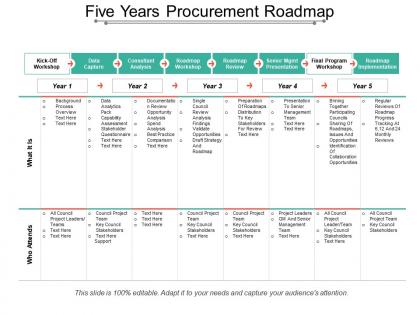
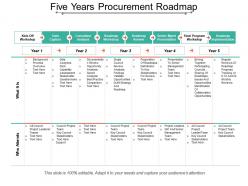
Five years procurement roadmap





Try Before you Buy Download Free Sample Product
 Impress Your
 Audience
 100%
100% Editable
 Save Hours
 of Time


Don't allow anyone to force your hand with our Five Years Procurement Roadmap. Be able to handle any brinkmanship.
People who downloaded this PowerPoint presentation also viewed the following :
Five years procurement roadmap with all 5 slides:
Extensively analyze every clause with our Five Years Procurement Roadmap. It helps examine every concern.

FAQs for Five
Start by figuring out where all your money's going - most companies are shocked at how messy their spending actually is. Then you need four other key things: group your suppliers by how important they are and how risky, create contracts that match what you're trying to accomplish, manage risks properly, and set up some KPIs to track if it's working. Performance metrics are boring but necessary. Honestly, just mapping your current spending first will tell you everything - you'll see patterns you never noticed and know exactly what needs fixing. That analysis alone is worth the effort.
Look, first thing - figure out what your company is *actually* trying to do beyond whatever's written on the lobby wall. Real priorities, real money targets. Once you know that, make your procurement choices match up. Innovation-focused? Find suppliers bringing cool new stuff. Cost-cutting mode? Hunt for savings but don't go so cheap you mess up quality elsewhere. Here's what really matters though - get procurement people in those strategy meetings from day one, not after everything's already decided. I've seen too many places screw this up. Your supplier deals and category plans should support where you're going, not where you've been.
Look, tech is what makes procurement actually strategic instead of just ordering supplies. E-procurement platforms handle your sourcing workflow, AI spots supplier risks you'd miss, and automation takes care of the boring stuff. Real-time analytics show you what's happening across your supply chain too. Without decent tech you're basically stuck doing everything manually - which honestly sounds like torture. I'd start by figuring out what tedious tasks are killing your team's productivity. That's where you'll get the biggest wins from new tools.
Dude, you gotta think about risks upfront when planning procurement - don't just wing it and hope for the best. Map out what could go wrong with suppliers: are they financially solid? Can they actually deliver on time? Quality decent? International sourcing adds political headaches too. Then work your backup plans right into the strategy. Multiple suppliers, contract penalties, the whole deal. I swear, half the procurement disasters I've seen happened because someone put all their eggs in one supplier basket. Keep a risk register and actually update the thing regularly - sounds boring but it'll save your butt later.
Stop treating suppliers like they're just there to fill orders - that's such a waste. Build actual relationships instead. Set up quarterly check-ins and be real about your forecasts with them. Their feedback is usually gold if you actually listen. Here's what works: rank your suppliers by how critical they are and how much you spend, then adjust how you work with each one. Honestly, most procurement teams mess this up completely. Quick win? Pick your top 5 suppliers and get face-to-face meetings scheduled this month. Talk about what you both want and what's driving you crazy.
Dude, data analytics basically shows you where your money's actually going instead of guessing from messy spreadsheets. You'll catch which suppliers are reliable vs the ones that flake on deadlines. Plus it helps predict when demand's gonna spike - super helpful for planning ahead. I swear, having real performance numbers makes contract negotiations way easier than just winging it. Market trends become obvious too. Start with your biggest 5 spending areas and you'll find some quick savings right away. Even simple analysis there pays off fast.
Honestly, sustainable procurement is like free marketing gold for your brand. Customers today really care about whether companies actually practice what they preach on environmental stuff. Source from ethical suppliers and use eco-friendly materials? You'll attract those conscious consumers who check if brands align with their values before buying. Trust builds naturally when people see you're not just chasing profits. The trick is being upfront about your sourcing practices - don't hide it! Share those stories across your marketing because, I mean, good PR that writes itself is pretty rare these days. Your reputation basically gets a boost without feeling forced.
Honestly, start with the obvious stuff - cost savings, how fast you're getting deliveries, and whether suppliers are actually doing what they promised. Those are your bread and butter metrics. But here's the thing - don't ignore the squishy stuff like whether people are happy with how procurement's running. I'd throw in some risk tracking too, maybe compliance rates if you're feeling fancy. The key is picking your benchmarks before you start, otherwise you're just making stuff up later. Grab maybe 4-5 metrics that actually matter to your business goals and check them every quarter. Keep it simple.
Honestly, getting everyone on the same page is your biggest nightmare - stakeholders will fight you on everything. Your spend data's probably a mess too, which makes finding savings nearly impossible. Market intel is another headache since you're flying blind on supplier pricing. Oh, and good luck balancing cost cuts with quality requirements - that's where things get messy fast. My take? Map out your current spending first (even if it's rough). Then drag your key people into a room and hammer out what "winning" actually looks like. Trust me, that conversation upfront saves you months of headaches later.
Look, don't think of cost vs quality as this big battle. They actually play nice together when you do it right. Here's the thing - focus on what something really costs you over time, not just upfront. Cheap suppliers? They'll bite you later with crappy products and missed deadlines. Trust me on this one. Pick fewer suppliers but build real relationships with them. That's where you get volume deals and better terms. Oh, and figure out your quality standards first - make those set in stone. Then let suppliers duke it out on price within those limits. Way less headache.
Honestly, procurement's changing fast right now. AI and automation are making supplier selection way easier - no more drowning in spreadsheets. Everyone's obsessed with sustainability too (ESG stuff isn't going anywhere). After all the supply chain chaos we've been through, resilience is everything. You can't just treat suppliers like vendors anymore; build actual partnerships. Oh, and get better analytics tools - you'll need solid data to spot risks early. I'd start by looking at your current tech setup and seeing where your sustainability game is weak. Those gaps will tell you exactly what needs fixing first.
So basically, pull in finance, IT, ops - whoever's relevant - right from the start of your procurement stuff. Game changer. Instead of just taking orders, your team becomes actual strategic partners. You'll catch problems before they explode, and honestly? Getting buy-in is way smoother when people feel included. Suppliers get clearer requirements too, which means less annoying change orders down the road. Your sourcing aligns better with what the business actually needs. Oh, and definitely set up regular stakeholder meetings for your next big procurement project - trust me on this one.
Dude, procurement isn't just about finding the cheapest option anymore. These past few years really showed us how fragile supply chains can be - remember all those shipping delays? You've gotta diversify your suppliers and map out where everything actually comes from. Look for backup options in different regions. Maybe consider suppliers closer to home too, even if they cost a bit more. Start by figuring out which suppliers would totally screw you if they disappeared tomorrow. Those are your biggest risks. It's basically trading some efficiency for peace of mind, but honestly? Worth it.
Ugh, regulatory changes are the worst - they can totally wreck your procurement plans overnight. Remember when GDPR hit? Complete chaos for anyone buying tech. You'll suddenly need different suppliers, new certifications, maybe completely rewrite contracts. My advice? Don't put all your eggs in one basket supplier-wise. Keep tabs on what's coming down the pipeline in your industry (boring but necessary). Build compliance stuff right into how you pick vendors from day one. That way when new rules drop, you're not running around like a headless chicken trying to fix everything.
Dude, you've got to get everyone on board before you make any big procurement moves. Talk to the actual users, finance people, legal - basically anyone who'll have to deal with your decisions later. They'll clue you into stuff you'd never think of, like weird budget rules or why the last vendor sucked. Trust me, springing procurement changes on people afterwards is a recipe for disaster. I learned that the hard way at my old job! Getting their input early means your strategy will actually work in the real world. Map out who you need to talk to and start scheduling those conversations ASAP.
-
Nice and innovative design.
-
Thanks for all your great templates they have saved me lots of time and accelerate my presentations. Great product, keep them up!