


FMEA Risk Assessment Scoring Matrix FMEA To Identify Potential Failure Modes




Try Before you Buy Download Free Sample Product
 Impress Your
 Audience
 100%
100% Editable
 Save Hours
 of Time


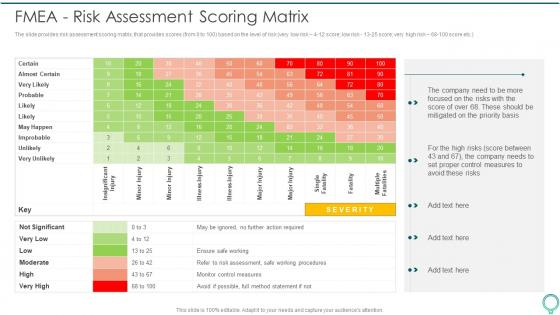
The slide provides risk assessment scoring matrix, that provides scores from 0 to 100 based on the level of risk very low risk 4 to 12 score low risk 13 to 25 score very high risk 68 to 100 score etc.
People who downloaded this PowerPoint presentation also viewed the following :
FMEA Risk Assessment Scoring Matrix FMEA To Identify Potential Failure Modes with all 6 slides:
Use our FMEA Risk Assessment Scoring Matrix FMEA To Identify Potential Failure Modes to effectively help you save your valuable time. They are readymade to fit into any presentation structure.





FAQs for FMEA Risk Assessment Scoring Matrix FMEA To Identify
So FMEA is basically about catching problems before they blow up in your face. You're hunting for all the ways things could go sideways - what might break, how bad it'd be, and the odds of it happening. Honestly, it's like productive paranoia. Once you map everything out, you can focus on the scary stuff first and figure out how to prevent it or at least soften the blow. The whole point is actually fixing things though - I've seen too many teams just make these fancy reports that nobody ever looks at again. Don't be those people.
So basically FMEA lets you catch failures before they blow up in your face. You go through your product systematically and figure out what could break, how likely it is, then rank everything by risk level. Think of it as failure prevention with extra paperwork (but worth it). Way better than scrambling after something goes wrong and customers are pissed. I always tell people to tackle the scariest stuff first - those high-risk parts that'll really mess you up. Then work down your list from there. It's honestly one of those boring tools that actually saves your ass.
Timing's the big thing here - DFMEA happens during design to catch what could break in your actual product. PFMEA comes after when you're figuring out manufacturing. So DFMEA is like "will this component fail or did we mess up the design somehow?" PFMEA's more about production problems - machines breaking down, workers making mistakes, that kind of stuff. Honestly, I always think of DFMEA as the "what" and PFMEA as the "how." You'll want to do DFMEA first while you're still designing, then use what you learned for your PFMEA when setting up the production line.
So basically you calculate the Risk Priority Number - just multiply Severity × Occurrence × Detection. Higher numbers = bigger problems to fix first. Most companies use 100-125 as their cutoff point, but honestly I'd also watch out for anything with crazy high severity even if the overall RPN isn't that bad. The math is super simple, which is nice. Start with your highest RPNs and just work down the list. Don't overthink it - this system exists because it actually works pretty well for prioritizing what'll hurt you most.
FMEA without a team? Don't even bother - you'll miss half the stuff that could go wrong. Get people from design, manufacturing, quality, maybe someone from field service too. Each person sees different failure modes based on their experience. Like, the manufacturing guy will catch assembly issues that design never thinks about. Brainstorming risks is so much better with multiple people throwing out ideas. Your risk ratings will actually make sense instead of being total guesswork. Plus everyone's more likely to buy into the action plan if they helped create it. Trust me, assemble the right mix upfront and you'll save yourself major headaches later.
Yeah, totally doable! Start with your big-picture stuff like risk registers or bow-tie analysis, then use FMEA to dig into the nitty-gritty failure modes. Works great with root cause analysis too - though honestly, I've watched teams spin their wheels doing RCA on things FMEA would've flagged from day one. Your FMEA risk numbers can flow right into whatever risk matrix you're already using, or even Monte Carlo sims if you're fancy. The trick is treating FMEA as your detailed detective work while keeping it tied to everything else. Maybe start by mapping your FMEA results to your current risk buckets?
Check your RPN reduction over time - that's your main indicator if risks are actually dropping. Implementation rates matter too because what's the point if nobody acts on recommendations? I track defects, complaints, and warranty claims before/after FMEA rollout. Cycle time's worth watching - how fast your team cranks these out and updates them. Honestly, creating a monthly dashboard makes the biggest difference. You'll spot patterns way easier that way. Some companies get obsessed with completion metrics but miss whether it's actually preventing problems. Focus on the stuff that shows real impact on your products.
Don't go too generic with failure modes - that's where most teams crash and burn. Get someone on your team who actually does the work every day, otherwise you'll sit there guessing at stuff (learned this the hard way). RPN scores can become a rabbit hole if you're not careful. Oh, and FMEA isn't something you write once and forget about. Make your failure descriptions specific enough that people can act on them. I'd start with the scariest risks first, then actually do something about the action items you come up with. Sounds obvious but you'd be surprised how often that last part gets ignored.
Update your FMEA whenever something big changes - design tweaks, process shifts, new suppliers, that kind of stuff. Don't just create it once and forget about it. Honestly, I've watched too many teams treat these like paperwork they can ignore after the first draft. Schedule formal reviews at major milestones like design reviews and pilot runs. Customer complaints are a dead giveaway you missed something. Set quarterly calendar reminders or you'll definitely forget. If warranty issues pop up that weren't on your radar? Time to dive back in immediately.
Start with brainstorming sessions - get your whole team together and just throw ideas around. Historical data is where the real gold is though, since the same stuff usually breaks again. I'd also map out your processes step by step to spot weak points. Root cause analysis from past incidents helps too. Oh, and don't underestimate just walking around the production floor - you'll catch things sitting in meetings never would. Customer complaints are another great source if you dig through them. Honestly, combine brainstorming with historical data and you'll nail most of the potential failure modes.
So basically, those high RPN scores tell you exactly where to panic first. Focus your budget and time on the scary stuff - design changes, backup systems, better controls. The low-risk items? Honestly just keep an eye on them or accept the risk exists. You literally can't fix everything (learned that the hard way), so FMEA forces you to be smart about where you spend resources. Start tackling your highest numbers first. Work down the list until you hit whatever risk level your company can stomach.
Honestly, FMEA software just handles all the annoying busy work for you. You get failure mode libraries, automatic RPN calculations, and way better tracking than those nightmare spreadsheets we all hate. The collaboration part is huge though - your whole team can jump in at once instead of emailing files back and forth like savages. Most tools play nice with whatever quality systems you're already using too. My advice? Run a small pilot first to figure out what features you'll actually use. No point paying for bells and whistles that'll just sit there collecting digital dust.
Dude, you NEED historical data for FMEA - it's like night and day. Instead of everyone just guessing at occurrence ratings, you can actually look at real failure rates and warranty claims. Trust me, I've sat through way too many meetings where people just wing it with random numbers. Your maintenance records and customer complaints are goldmines for this stuff. You'll catch failure patterns that would totally fly under the radar otherwise. Some failures happen way more than you'd think, others cause this crazy domino effect downstream. Honestly, spend like 30 minutes digging through your quality data before the next session - it'll save you so much headache later.
You need people who actually know the process inside and out, plus someone who gets FMEA basics. Cross-functional is huge - grab folks from design, manufacturing, quality, maybe field service. The methodology isn't that complex honestly, but different viewpoints are everything. Your facilitator should get proper FMEA training since they're running the show and keeping discussions on track. Oh, and make sure at least half your team has real experience with the failures you're trying to avoid - nothing beats having been there when stuff breaks.
So FMEA works great for both healthcare and automotive, but you're tackling different risks. Healthcare focuses on patient safety stuff - med errors, surgical complications, broken equipment that could hurt someone. Cars are more about component failures like brakes giving out or airbags not deploying properly. Both industries hate surprises (understandably!) so FMEA lets you hunt down problems before they happen. Map your process, brainstorm what could fail, rate how bad and likely each scenario is. Then tackle the scariest ones first. Honestly, it's pretty straightforward once you get the hang of it.
-
Great designs, really helpful.
-
Definitely recommend SlideTeam to all who need help with PowerPoint presentations. Their design team can create anything you need.