


Formulating On Job Training Program For Employees Skills Improvement Powerpoint Presentation Slides





Try Before you Buy Download Free Sample Product
 Impress Your
 Audience
 100%
100% Editable
 Save Hours
 of Time


The On job training programs help organizations enhance skills and improve the productivity of employees. The following presentation can help to conduct training in the organization and improve the satisfaction of the workforce. Formulating On Job Training Program for Employees Skills Improvement PPT is helpful for organizations intending to train employees for future positions or enhancement of skills. This presentation also showcases different on-job training methods such as job instructional training, job rotation, mentoring, coaching, apprenticeship, and understudy training. After selecting the training method, it showcases an action plan that can help the company to execute job training for employees. It also showcases feedback forms that can help the company to conduct surveys and evaluate the effectiveness of on job training program. This PPT also shows trainers needed for conducting on-the-job training and logs to keep track of the program. It also highlights budget allocation for on-job training and a checklist to keep track of the program. In the end, this presentation shows dashboards that can help to track the training program and evaluate its effectiveness. So, download this 100 percent editable template now.
People who downloaded this PowerPoint presentation also viewed the following :
Content of this Powerpoint Presentation
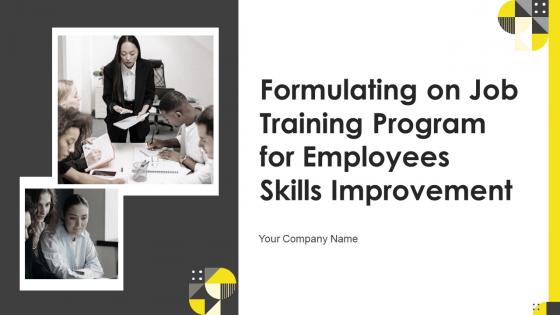
Slide 1: This slide displays the title Formulating on Job Training Program for Employees Skills Improvement.
Slide 2: This slide displays the Agenda.
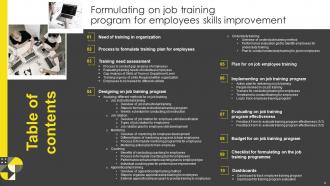
Slide 3: This slide exhibit table of content.
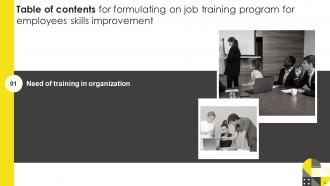
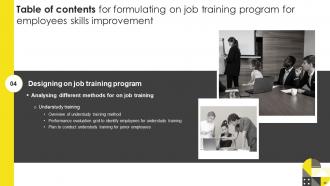
Slide 4: This slide exhibit table of content- Need of training in organization.
Slide 5: This slide showcases need of training for employees in organization.
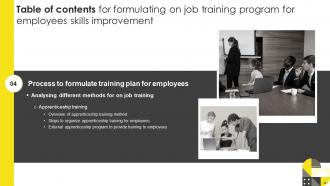
Slide 6: This slide exhibit table of content- Process to formulate training plan for employees.
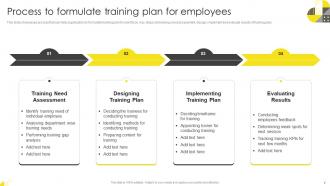
Slide 7: This slide showcases process that can help organization to formulate training plan for workforce.
Slide 8: This slide exhibit table of content- Training need assessment.
Slide 9: This slide showcases process that can help organization to conduct training gap of employees in organization.
Slide 10: This slide showcases assessment and evaluation of training needs of individual employees in organization.
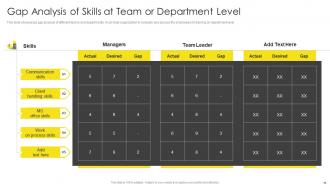
Slide 11: This slide showcases gap analysis of different teams and departments.
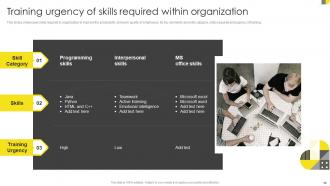
Slide 12: This slides showcases skills required in organization to improve the productivity and work quality of employees.
Slide 13: This slide showcases employee that needs training for skill enhancement and improve the productivity of individual employee.
Slide 14: This slide exhibit table of content- Designing on the job training program.
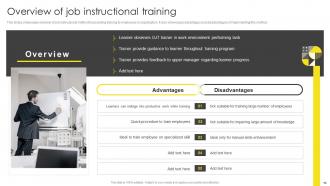
Slide 15: This slides showcases overview of job instructional method for providing training to employees in the organization.
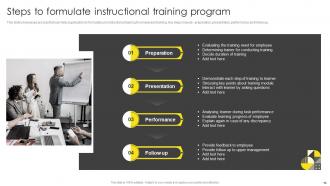
Slide 16: This slide showcases process that can help organization to formulate job instructional training for employees training.
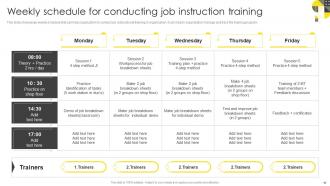
Slide 17: This slide showcases weekly schedule that can help organization to conduct job instructional training in organization.
Slide 18: This slide exhibit table of content- Job rotation.
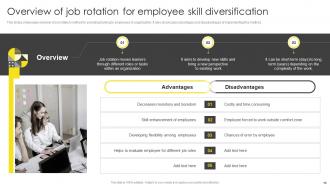
Slide 19: This slides showcases overview of job rotation method for providing training to employees in organization.
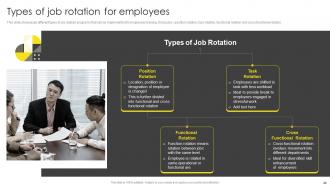
Slide 20: This slide showcases different types of job rotation programs that can be implemented for employees training.
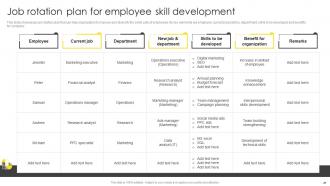
Slide 21: This slide showcases job rotation plan that can help organization to improve and diversify the skills sets of employees.
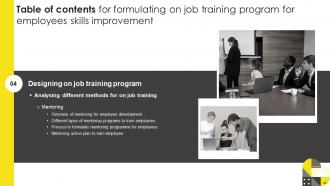
Slide 22: This slide exhibit table of content- Mentoring.
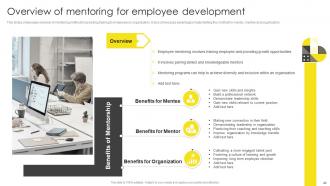
Slide 23: This slides showcases overview of mentoring method for providing training to employees in organization.
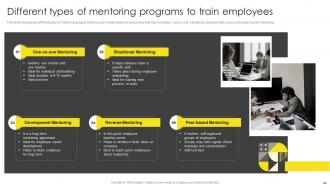
Slide 24: This slide showcases different types of mentoring programs that can be implemented for employees training.
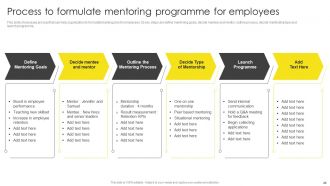
Slide 25: This slide showcases process that can help organization to formulate training plan for employees.
Slide 26: This slide showcases action plan that can help organization to impart mentoring training in organization.
Slide 27: This slide exhibit table of content- Coaching.
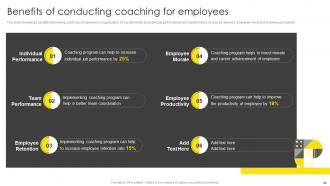
Slide 28: This slide showcases benefits of providing coaching to employees in organization.
Slide 29: This slide showcases process that can help organization to formulate coaching plan for training employees.
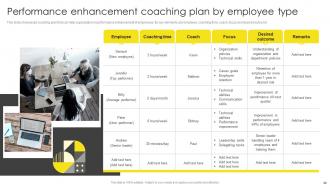
Slide 30: This slide showcases coaching plan that can help organization in performance enhancement of employees.
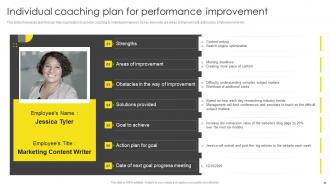
Slide 31: This slide showcases plan that can help organization to provide coaching to individual employee.
Slide 32: This slide exhibit table of content- Apprenticeship training.
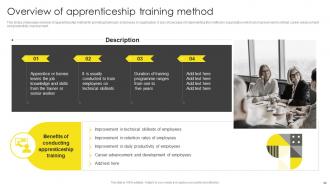
Slide 33: This slides showcases overview of apprenticeship method for providing training to employees in organization.
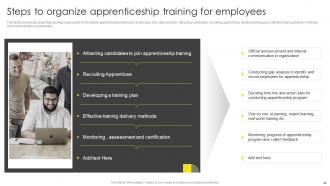
Slide 34: This slide showcases steps that can help organization to formulate apprenticeship training for employees.
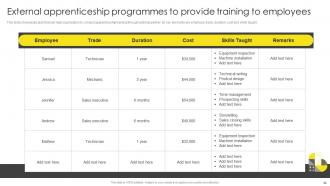
Slide 35: This slide showcases plan that can help organization to conduct apprenticeship training through external partner.
Slide 36: This slide exhibit table of content- Understudy training.
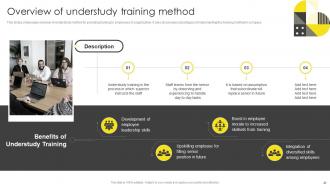
Slide 37: This slides showcases overview of understudy method for providing training to employees in organization.
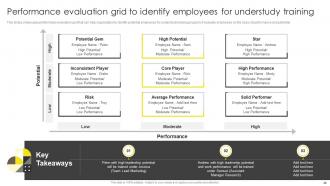
Slide 38: This slides showcases performance evaluation grid that can help organization to identify potential employees for understudy training program.
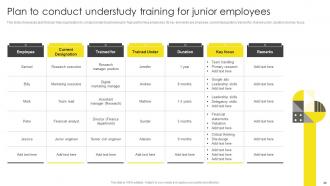
Slide 39: This slide showcases plan that can help organization to conduct understudy training for high performing employees.
Slide 40: This slide exhibit table of content- Plan for on job employee training.
Slide 41: This slide showcases plan that can help organization to conduct on job training for employees.
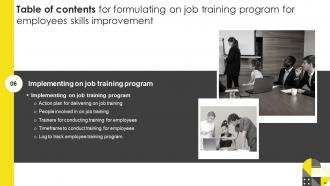
Slide 42: This slide exhibit table of content- Implementing on job training program.
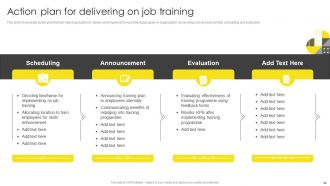
Slide 43: This slide showcases action plan that can help organization to deliver and implement on job training program in organization.
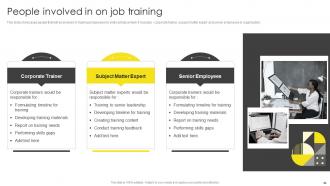
Slide 44: This slide showcases people that will be involved in training employees for skills enhancement.
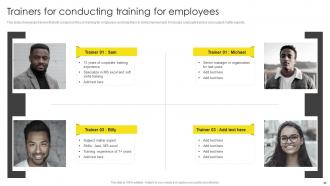
Slide 45: This slide showcases trainers that will conduct on the job training for employees and help them in skills improvement.
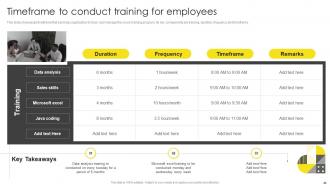
Slide 46: This slide showcases timeframe that can help organization to track and manage the on job training program.
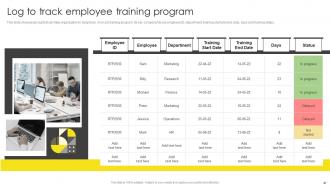
Slide 47: This slide showcases log that can help organization to keep track of on job training program.
Slide 48: This slide exhibit table of content- Evaluating on job training program effectiveness
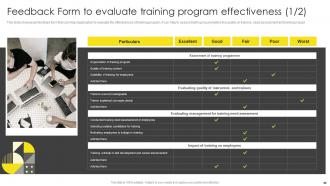
Slide 49: This slide showcases feedback form that can help organization to evaluate the effectiveness of training program.
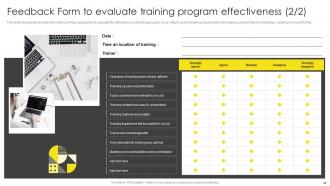
Slide 50: This slide showcases feedback form that can help organization to evaluate the effectiveness of training program.
Slide 51: This slide exhibit table of content- Budget for on job training program.
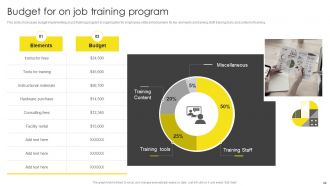
Slide 52: This slide showcases budget implementing on job training program in organization for employees skills enhancement.
Slide 53: This slide exhibit table of content- Checklist for formulating on the job training programme.
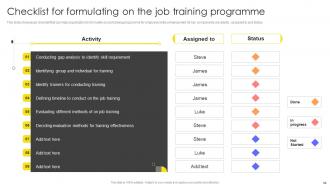
Slide 54: This slide showcases checklist that can help organization to formulate on job training programme for employee skills enhancement.
Slide 55: This slide exhibit table of content- Dashboard to track employee training program and program evaluation.
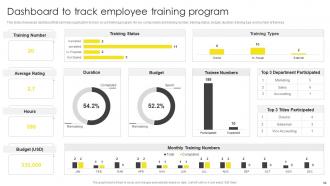
Slide 56: This slide showcases dashboard that can help organization to track on job training program.
Slide 57: This slide showcases dashboard that can help organization to evaluate the training program implemented in organization.
Slide 58: This is the icons slide.
Slide 59: This slide presents title for additional slides.
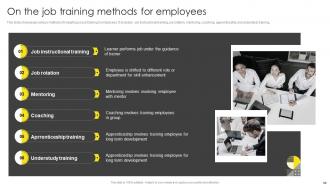
Slide 60: This slide showcases various methods of imparting on job training to employees.
Slide 61: This slide presents your company's vision, mission and goals.
Slide 62: This slide showcases Our goal.
Slide 63: This slide showcases Roadmap.
Slide 64: This slide showcases Financial.
Slide 65: This slide display Company introduction.
Slide 66: This slide showcases Venn diagram.
Slide 67: This slide showcases Our goal.
Slide 68: This slide showcases Timeline.
Slide 69: This is thank you slide & contains contact details of company like office address, phone no., etc.
Formulating On Job Training Program For Employees Skills Improvement Powerpoint Presentation Slides with all 74 slides:
Use our Formulating On Job Training Program For Employees Skills Improvement Powerpoint Presentation Slides to effectively help you save your valuable time. They are readymade to fit into any presentation structure.


















FAQs for Formulating On Job Training Program For Employees Skills Improvement
Honestly, the money you'll save is huge - people learn way faster when they're actually doing the job instead of sitting in some boring training room. Your experienced workers become mentors, which is awesome for team morale. I mean, who doesn't want to feel valued for their expertise? You can tailor everything to your actual equipment and processes too, not some cookie-cutter program. The hands-on learning sticks better. Start by pairing newbies with your best people who don't mind teaching - makes all the difference.
Honestly, hands-on training is way better than sitting in a classroom for most stuff. You'll actually remember like 70% more when you're doing the real work instead of just listening to someone talk at you. Plus you can ask questions right when weird situations pop up, and your supervisor gives you instant feedback. Classroom stuff works fine for basic concepts and those boring compliance trainings we all have to sit through. But for technical skills? Learning while doing the actual job just makes more sense. If you can mix both approaches though, that's probably your best bet.
Focus on hands-on stuff that's impossible to teach in a classroom. Technical procedures, customer service scenarios, troubleshooting broken equipment - that's where shadowing really shines. People pick up communication skills naturally when they're working alongside seasoned colleagues (way better than those awful PowerPoint sessions about teamwork, honestly). Company-specific software is huge too since every place does things differently. Just make sure you pair newbies with mentors who actually know their stuff. Skip anything you could easily cover in training videos. Real-world context is everything.
Honestly, you gotta track this stuff on two levels. Right after training, test if people actually learned anything - quick assessments or have them show you what they picked up. Then the real test comes later. Check their actual work performance over like 3-6 months - are they more productive? Making fewer mistakes? Don't skip the feedback surveys either. People will straight up tell you if it was worthwhile or just corporate BS they had to sit through. Oh, and higher retention usually means your training didn't suck. Just make sure you know what you're aiming for upfront, otherwise you'll be guessing later.
Honestly, having a mentor changes everything with job training. They'll teach you the actual shortcuts and warn you about stuff that'll trip you up - way better than sitting through another PowerPoint. My mentor saved me from so many rookie mistakes I would've made otherwise. You get feedback right away instead of waiting months for reviews. Office politics becomes way less confusing too (and yeah, that matters unfortunately). The biggest thing is they help connect what you're doing now to where you want to end up career-wise. Definitely worth asking HR about getting paired up if you don't have one.
Dude, VR and AR are game changers for workplace training. You can practice risky stuff without actually breaking anything expensive - like surgeons doing procedures or techs working on machinery. AR's cool because it puts instructions right over the real equipment while you're using it. With VR, you get these crazy realistic scenarios that'd be impossible to set up otherwise. Honestly, the repetition factor is huge - people can mess up and try again until they get it right. Plus managers can see exactly where someone's struggling and adjust training accordingly. Way better than those boring PowerPoints we used to sit through.
Honestly, the training quality gets super inconsistent when different people are teaching - some are amazing, others... not so much. Your best workers usually make the worst teachers too, which is frustrating. Plus you're pulling them away from actual work to train people, so productivity takes a hit. Most employees feel totally overwhelmed trying to learn new stuff while doing their regular job. There's never enough time for anything. What helps is rotating trainers so one person doesn't get stuck with it all, and having some basic structure - doesn't need to be fancy, just consistent.
Mix up your formats right from the beginning - videos with captions, written stuff, demos people can actually touch. Don't assume what works. Ask trainees straight up "what do you need to make this training actually useful?" Then listen to what they tell you. Physical spaces matter too, obviously. Short sentences work. But also think about timing and whether you're accidentally putting up walls with weird prerequisites or whatever. People usually know exactly what accommodations help them learn best - we just forget to ask. Honestly, that simple question at the start fixes like 80% of accessibility issues.
Don't just have them shadow you all day - that's brutal honestly. Switch it up with some actual hands-on stuff, quick feedback chats, maybe even let them mess up a little (that's how you really learn anyway). Give them real work with clear goals, but don't breathe down their neck constantly. I'd set up some easy wins they can knock out in the first week so they feel useful right away. Check in regularly though. The whole point is making them feel like part of the team, not some intern just taking notes in the corner.
Honestly, on-the-job training is a game changer for keeping people around. When you actually invest in training someone properly, they feel like you want them to stick around long-term instead of just figuring it out as they go. Makes them way less stressed about screwing up too. The mentorship aspect is huge - they build real connections with coworkers during training, which makes the whole workplace feel less isolating. I've seen companies track their retention before and after adding structured training programs, and the difference is pretty dramatic. Usually takes about six months to really see the impact, but it's worth it.
So first thing - figure out what your industry actually cares about. Healthcare? You're drowning in compliance stuff and patient safety protocols. Manufacturing is all about equipment and safety procedures. Tech companies love their software tools and agile whatever (good luck keeping up with their flavor-of-the-month frameworks). Financial services means regulatory headaches and protecting customer data. Construction requires actual safety certs and hands-on equipment training. Here's what works: audit the skills people genuinely need on day one, then build everything around your industry's safety requirements and regulations. Don't overthink it.
Look at your current onboarding schedule and find spots where hands-on stuff makes sense. Don't dump all the theory upfront - that's just painful for everyone. Mix in real tasks during orientation week, like having newbies shadow someone on day two instead of making them wait forever. Throughout the first month, bounce between classroom sessions and actual work. Oh, and set up a proper buddy system where mentors walk them through real job tasks. Make it part of the official checklist so it actually happens. I've watched too many companies treat the practical stuff as optional when it's honestly the most valuable part.
Okay so first thing - safety protocols and industry regs have to be covered, that's non-negotiable. Document literally everything though, like who got trained and when, because auditors are obsessed with paper trails (learned that the hard way). Your training also needs to be accessible to everyone - can't discriminate on disabilities or who gets development opportunities. Some industries have specific certifications you'll need to build in too. Honestly, I'd just make a compliance checklist for each role so you don't accidentally miss something important later.
Start with weekly check-ins, then dial back to monthly once things smooth out. Honestly, anonymous peer feedback is where you'll get the real dirt - people actually tell the truth that way. Quick corrections work way better than formal reviews later, so get mentors comfortable giving feedback in the moment. Oh and make sure it goes both ways! Trainees need to feel safe saying "this part's confusing" or "we're moving too fast." I'd probably just pick one method first though - maybe simple surveys or short one-on-ones. You can always add more feedback loops once you see what sticks.
Look at McDonald's - they've trained over 80,000 managers through Hamburger University (yeah, that's actually a thing). GE's rotational programs were legendary for creating executives. Amazon does something crazy bold: pays 95% of tuition for employees even if they quit afterward. That's confident. Siemens cut hiring costs 40% with apprenticeships and saw way better retention. The pattern here? These companies don't treat training like some budget drain. They give people actual career paths. Focus on what your team struggles with daily instead of boring generic courses. Build around real problems, not theoretical stuff.
-
Requested a complete pitch deck. Delivered immediately and with high quality well researched content.
-
I loved the hassle-free signup process. A few minutes and, I had this giant collection of beautiful designs.