

Four Project Funnel For Achieving Business Targets




Try Before you Buy Download Free Sample Product
 Impress Your
Audience
 100%
Editable
 Save Hours
of Time


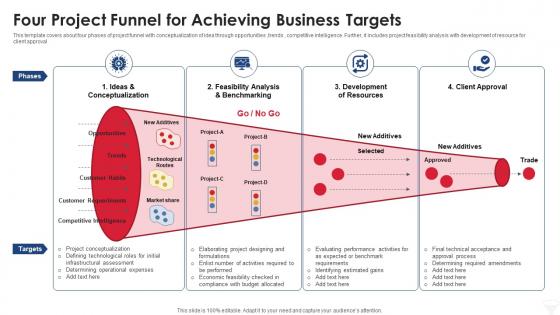
This template covers about four phases of project funnel with conceptualization of idea through opportunities ,trends , competitive intelligence. Further, it includes project feasibility analysis with development of resource for client approval
People who downloaded this PowerPoint presentation also viewed the following :
Four Project Funnel For Achieving Business Targets with all 6 slides:
Use our Four Project Funnel For Achieving Business Targets to effectively help you save your valuable time. They are readymade to fit into any presentation structure.






FAQs for Four Project Funnel For
So basically there are five phases: initiation, planning, execution, monitoring, and closure. Most projects fail because people skip steps - I've seen it happen so many times. First you figure out what you're actually trying to do. Then comes planning your timeline and resources (this is where people usually rush). Execution is the actual work, but you've got to monitor things constantly or stuff goes wrong fast. Closure wraps everything up and - this part's underrated - captures what you learned. Honestly? Triple your planning time. Seriously, it'll save you from wanting to punch walls later.
Honestly, stakeholder communication can totally make or break your project. I've seen it happen so many times. When you keep people in the loop, they actually buy into what you're doing and make decisions faster. Random scope changes? Way less likely. Trust me, stakeholders who feel heard will have your back when stuff hits the fan. Their feedback helps you catch problems early instead of scrambling later. Oh, and definitely set up regular check-ins right from the start - don't wait until there's drama. Always follow up on their concerns too.
Look, risk management is honestly just your safety net for the whole project. You'll want to start identifying what might go sideways during planning - map out those potential roadblocks early. But it doesn't stop there. During execution, keep monitoring because new problems always surface (they just do). Even closure has its risks to watch for. The trick? Stay ahead of issues instead of scrambling to fix them later. I always tell people to build those risk registers from day one and actually review them with your team regularly. Way better than playing firefighter when everything's already burning.
Honestly, start with daily standups - they're game changers. Everyone just shares what they're doing and where they're stuck. I've watched teams go from total radio silence to actually knowing what's happening across projects. Sprint planning and retrospectives help too, but standups are where the magic happens. Oh, and get a Kanban board going where people can see the whole pipeline. Makes it way easier to jump in when someone needs backup. Don't overthink it though - if you're just getting into Agile stuff, daily standups alone will make a huge difference in how much your team actually talks to each other.
Ugh, the worst ones are definitely unrealistic deadlines and scope creep. Resource conflicts too - when everyone needs the same person at once. My go-to fixes: pad your time estimates with buffer (I learned this the hard way), get people to actually sign off on scope before starting anything, and map out who needs what early. Breaking big stuff into smaller pieces helps you catch issues faster. Oh, and have those awkward conversations upfront about what's realistic. I know it sucks saying no, but it beats scrambling later when everything falls apart.
Honestly, you've gotta nail down that scope in writing first - get everyone to actually sign off on it. Set up a real change control process too. When clients inevitably ask for new stuff (and trust me, they always do), don't just cave to make them happy. Run it through your formal process and show them exactly how it'll mess with timeline and budget. Give them options - add more time/money, or we swap out something else. The key is documenting everything and keeping your whole team in the loop immediately when things shift.
Asana's probably your best bet for project management, though Monday.com and Trello are solid too. I've wasted so much time jumping between different platforms over the years - don't make my mistake! Toggl's perfect if you need time tracking for clients. Slack will save your team from email hell, trust me on that one. Google Drive or Dropbox handles all the file sharing stuff pretty seamlessly. Oh, and whatever you pick? Make sure everyone actually uses it consistently. Half your team on one platform, half on another = total chaos.
Dude, get that project charter locked down - it'll save your sanity later. Your team won't be constantly asking "wait, what exactly are we building again?" which honestly happens more than it should. When stakeholders inevitably try adding random stuff mid-project, you can just wave the charter around and shut that down. It spells out who's doing what so people aren't bumping into each other. Oh, and make sure it clearly defines what "done" actually looks like. Trust me, those upfront conversations about goals and scope will prevent so many headaches down the road.
Okay so first thing - map out everything you've got. People, money, equipment, the works. Then figure out what projects actually matter most. I swear by making a resource matrix because honestly, who can remember all that stuff? Check that you're not burning anyone out across multiple projects. Build in buffer time too - something always goes sideways. Track it all in real-time so you can pivot when your boss inevitably decides Tuesday that last month's priority is now critical. Weekly check-ins help you catch problems before they explode.
Oh man, cultural stuff will totally mess with your project if you're not careful. Some people are brutally direct, others dance around problems for ages - drives me nuts sometimes but you just gotta roll with it. Your "urgent deadline" might not feel urgent at all to someone in a different timezone or work culture. Hierarchy is another big one. Half your team wants clear orders from the top, the other half expects everyone to have a say in decisions. Best thing? Figure out these differences upfront and create communication rules that actually work for everyone's style.
Track your schedule and cost variance first - those are the basics you can't ignore. Quality stuff like defect rates matter too, but honestly they're a pain to measure sometimes. If you're doing agile, definitely watch team velocity and scope creep. Resource utilization is huge for catching bottlenecks early. Oh, and customer satisfaction scores if you can get them. Just don't go crazy - pick maybe 3-5 metrics that actually make sense for your project. I've seen teams drown in dashboards they never use.
So basically, lessons learned are like your project planning cheat codes. You can spot risks way earlier and stop making the same dumb mistakes over and over. Use them to build better timelines based on what *actually* happened, not your overly optimistic original estimates. Figure out which team setups worked and where communication always seems to fall apart - honestly, it's usually the same spots every time. The trick is writing this stuff down while it's still fresh in your head, then actually using it when you start your next project. Just make a simple template and stick it in your project wrap-up process.
Honestly, start with celebrating the small wins publicly - it matters way more than most managers realize. Give people real ownership over their work and let them figure out how to get there. I'd do regular check-ins but focus on clearing roadblocks, not breathing down their necks. Also explain the reasoning behind your decisions. People actually care about understanding the bigger picture and will work harder when they get it. Oh, and trust them to handle their stuff without you hovering. Pick one thing to try this week and see how it goes.
Look, changes are gonna hit your project no matter what - that's just reality. Having a proper change management process saves you from total mayhem when they do. You'll be able to assess what each change actually means for your timeline and budget instead of scrambling around confused. Get a change control board set up from day one (seriously, don't wait). That way when stakeholders want to add "just one tiny thing," you've got a system to evaluate it properly. I've seen too many projects go off the rails because people just said yes to everything. Document the process and make sure your team knows it exists.
Think of project docs as your insurance policy - when stuff hits the fan, you'll be so glad you have them. Include your charter, scope, timelines, risk stuff, and all stakeholder emails. Meeting notes are clutch too (seriously, people forget what they agreed to constantly). Oh, and decision logs! Start documenting right away and keep it somewhere people can actually find it. I learned this the hard way on my last project when our PM left suddenly. We spent weeks just figuring out what was decided and why. Trust me, it's worth the extra effort upfront.
-
Very well designed and informative templates.
-
Colors used are bright and distinctive.