


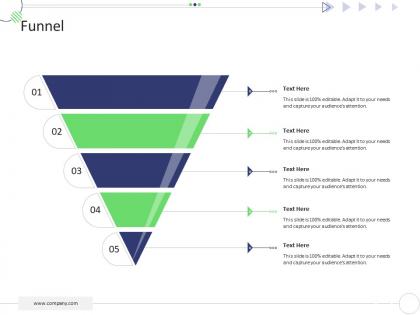
Funnel mckinsey 7s strategic framework project management ppt diagrams




Try Before you Buy Download Free Sample Product
 Impress Your
 Audience
 100%
100% Editable
 Save Hours
 of Time


Our Funnel Mckinsey 7s Strategic Framework Project Management Ppt Diagrams are topically designed to provide an attractive backdrop to any subject. Use them to look like a presentation pro.
People who downloaded this PowerPoint presentation also viewed the following :
Funnel mckinsey 7s strategic framework project management ppt diagrams with all 2 slides:
Use our Funnel Mckinsey 7s Strategic Framework Project Management Ppt Diagrams to effectively help you save your valuable time. They are readymade to fit into any presentation structure.
FAQs for Funnel mckinsey 7s strategic framework project
So McKinsey's 7S thing breaks down into hard and soft elements. Hard stuff - Strategy, Structure, Systems - you can actually measure and tweak pretty easily. Soft elements though? Skills, Staff, Style, and Shared Values are trickier to pin down but matter just as much. Here's the thing - they're all connected. Change your strategy and watch it mess with your structure, systems, people, everything. I learned this the hard way at my last job actually. You can't just fix one piece and call it done. When you're planning changes, think through how all seven will get hit or you'll end up with some serious headaches later.
So first thing - map out those seven McKinsey elements (strategy, structure, systems, shared values, style, staff, skills). Then hunt for where they don't match up. That's where problems usually live. Like if you're pushing innovation but your systems are stuck in 1995, well there's your answer. Get people from different levels involved too since they'll catch stuff you miss. Oh and don't try to fix everything at once - that's a recipe for burnout. Just pick the 2-3 biggest disconnects that are actually screwing you over and start there.
Look, the 7S Framework is like having a checklist so you don't forget anything major when you're changing things up. Map out where you are now across all seven areas - strategy, structure, systems, plus the softer stuff like skills and culture. Then figure out where you want to be. What I love about it is how it stops you from just fixing one thing and crossing your fingers. You'll spot those annoying misalignments before they bite you later. Honestly, most people skip the culture piece and wonder why everything falls apart. Use it as your diagnostic tool to keep all the moving parts in sync during transitions.
So shared values are basically your company's personality - the stuff that actually drives how people act day-to-day. They're way more powerful than whatever motivational poster is hanging in the break room. Good values guide everything from who gets promoted to how your team handles problems. But here's what I've noticed - if what you preach doesn't match what actually happens, people call BS immediately. Like, they can smell fake values from a mile away. You've got to regularly gut-check whether your team's real behavior lines up with what you say matters. Otherwise you're just fooling yourself.
Honestly? Leadership style is everything - it's like the actual DNA of how your company operates. You can slap together the prettiest mission statement ever, but if your bosses are micromanaging while claiming they want to "empower" people... yeah, that's not gonna work. People aren't stupid - they watch what leaders actually do, not the corporate speak they put out. When you're trying to change an organization, start by getting real about your current leadership style first. What do you actually need to succeed? Once you nail that down, aligning all the other moving pieces becomes so much easier. Trust me on this one.
Take each process you've got and run it through those seven S's - strategy, structure, systems, shared values, style, staff, skills. Look for spots where things don't line up with your goals. Like if you're pushing innovation but your reward system punishes people for taking risks? That's a problem right there. Start with the concrete stuff - strategy, structure, systems - since they're way easier to fix than changing culture. Honestly, most companies miss these obvious disconnects because they're so used to how things work. Don't treat this as a one-and-done thing either. Keep checking alignment regularly.
Honestly, I'd start with a baseline across all seven areas first - that's your starting point. Hard metrics are easier to track: org chart accuracy, process efficiency, skills assessments. The soft stuff gets messier though. Employee surveys help with engagement and culture fit. Leadership ratings too. But here's the thing - the real value comes from watching how well everything connects. Cross-functional collaboration rates tell you more than individual scores sometimes. Decision-making speed is another good one. I'd probably focus quarterly on whatever's your weakest link and just... see what improves from there.
Think of systems and processes as your company's plumbing - when they work, nobody notices, but when they don't, everything backs up. You've got your IT stuff, reporting tools, workflows, all that jazz. Most places I've seen totally neglect this part though. They'll spend forever on strategy but ignore that their expense approval process takes three weeks (seriously?). Good systems mean people aren't constantly waiting around or jumping through hoops to get basic work done. Bad ones create those annoying bottlenecks where simple tasks become major headaches. Worth doing a quick review every so often to spot what's actually slowing your team down.
Honestly, the 7S thing falls apart when you're in crisis mode or everything's changing super fast - who has time for comprehensive analysis then? For startups with like 5 people, mapping out "systems" is just silly. Works way better for bigger, established companies with actual hierarchies. If you're pivoting strategy or dealing with external stuff like new regulations, it won't help much. My take? Skip it when you need quick answers. Maybe just pick 3-4 elements that actually matter instead of doing the whole framework - saves time and you'll actually finish it.
Honestly, the 7S Framework gets way more powerful when you mix it with other models. I'd start with Porter's Five Forces or SWOT to map out what's happening externally, then dive into 7S for the internal stuff. PESTEL upfront works too - there's tons of combos once you figure it out. Think of 7S as your org health check while other frameworks tackle the outside world. Next time you're doing strategic planning, try throwing in a capability assessment or value chain analysis alongside it. You'll catch things that would totally fly under the radar with just one approach. The layering effect is pretty solid.
Most people treat it like a checklist instead of something you actually use regularly. Classic mistake? Everyone obsesses over strategy and structure - the obvious stuff - but totally ignores culture and skills because honestly, that's the messy part that's impossible to measure. Teams also try fixing everything at once, which is... ambitious but dumb. Here's the thing though - if your company values don't match your strategy, you can restructure all you want and it won't matter. Map out where you actually are first across all seven areas. Then figure out how they're connected before you start changing anything.
So basically the outside world keeps messing with your internal setup. Market shifts happen, competitors do something crazy, new rules drop - suddenly your strategy needs changing. But here's the thing: you can't just update strategy and ignore everything else. Your whole structure might need tweaking, systems have to catch up, maybe you're hiring totally different people now. Leadership style? Yeah, that's gotta shift too. Sometimes even your core values need a refresh if you're really pivoting hard (which honestly feels weird but happens). External pressure basically forces you to rebalance the entire thing, not just fix one piece.
Staff is where most companies totally drop the ball - they think about hiring like it's just filling seats. But it's actually about looking at your people from every angle: skills, growth potential, whether they're even in the right spots. You're checking if there are gaps in your talent pipeline and how your workforce fits with your bigger strategy. It sounds obvious but honestly? Most places treat this stuff as an afterthought instead of being strategic about it. The framework helps you spot these mismatches before they blow up into real problems.
Yeah, McKinsey 7S totally works for nonprofits! Just tweak "strategy" to focus on your mission instead of profits. For "systems," think donor databases and volunteer management - that kind of stuff. The people elements are honestly huge in nonprofits since everyone's there for the cause. I've seen so many well-meaning orgs that feel completely scattered because their structure doesn't match what they're trying to do. Map out where you are now across all seven areas, then figure out what's blocking your mission work. It's really good at showing you why things feel chaotic even when everyone cares.
Yeah, so GE did this during their whole digital thing - they basically restructured everything around new tech instead of just saying "we're going digital now." Toyota's probably the best example though when they went global. They kept their core values but adapted structures for different countries, which is honestly pretty smart. IBM pulled it off too when they ditched hardware for services. The key thing (and this is where most companies screw up) is tackling those "soft" elements - like company culture and staff skills. Those are way harder to change than just shifting your strategy on paper. Don't skip that part.
-
Great designs, really helpful.
-
Visually stunning presentation, love the content.
-
Innovative and Colorful designs.
-
Use of different colors is good. It's simple and attractive.
-
Attractive design and informative presentation.