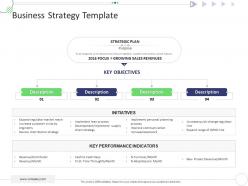
Business strategy template mckinsey 7s strategic framework project management ppt template
Try Before you Buy Download Free Sample Product
Audience
Editable
of Time
Our Business Strategy Template Mckinsey 7s Strategic Framework Project Management Ppt Template are topically designed to provide an attractive backdrop to any subject. Use them to look like a presentation pro.
People who downloaded this PowerPoint presentation also viewed the following :
Business strategy template mckinsey 7s strategic framework project management ppt template with all 2 slides:
Use our Business Strategy Template Mckinsey 7s Strategic Framework Project Management Ppt Template to effectively help you save your valuable time. They are readymade to fit into any presentation structure.
FAQs for Business strategy template mckinsey 7s strategic framework project
So there's these seven parts - Strategy, Structure, Systems (the "hard" stuff), then Shared Values, Skills, Style, and Staff (the "soft" ones). Shared Values is right in the middle because it's like your company's DNA that touches everything else. What's cool is how they all connect - mess with one piece and you'll feel it everywhere else. Honestly took me forever to really get this when I first learned it. But now when there's any big change happening, I just run through this list to see what else might get thrown off. Saves so much headache later.
So basically you gotta look at all 7 pieces - strategy, structure, systems, shared values, style, staff, and skills - then figure out where they're not clicking together. Pick whichever one seems the most screwed up first, then see how it's messing with everything else. Like if your strategy shifted but your systems are still stuck in the past, that gap is probably creating chaos downstream. Honestly, it's kind of like when one thing breaks and suddenly everything's falling apart. The cool thing about this framework is spotting those domino effects. Once you map it out, you can actually prioritize what needs fixing and in what order.
So shared values are basically the backbone of the whole 7S thing. They filter into your strategy decisions, show up in how you structure teams, and your staff ends up living them out daily. Systems and processes? They reinforce these values too - kinda wild how everything connects, honestly. Leadership styles develop around them over time, same with the skills people prioritize. Here's what I'd actually focus on though: whenever you're tweaking any part of the 7S model, just double-check it matches your core values first. Saves you headaches later.
Honestly, the 7S Framework is clutch for change management because it makes you think about how everything connects. Leaders always mess this up - they'll change their strategy but ignore that their team doesn't have the right skills or their systems are totally outdated. Map out where each S sits right now, then figure out which ones are most out of whack with your goals. Structure might be fine, but maybe your shared values are completely misaligned. I've watched so many change projects crash because people thought they could just flip one switch. The framework basically stops you from forgetting the obvious stuff that'll bite you later.
Totally! Small businesses actually get more out of the 7S Framework than big companies do. Everything's more visible when you're not dealing with layers of bureaucracy. Just don't get hung up on the formal stuff. Your "structure" might be whoever's free handles it, and that's fine. Systems can be as basic as a shared Google doc - doesn't have to be fancy. The skills part is huge though, since everyone does like five different jobs. And honestly? The values thing matters way more in small teams. If the culture's off, you'll feel it immediately. I'd map where you are now first, then figure out what's obviously broken.
Dude, you can't just pass this off to someone else and cross your fingers. Leadership has to be all over the 7S thing - like actually championing how all those elements work together. Trade-offs are gonna get ugly (they always do), so you need to model those shared values and explain why the structural changes actually matter. Be real about whether your team and their skills match your direction. Without visible commitment from leadership, people will just ride it out or fake it. Honestly, I'd focus on getting your leadership crew aligned on the "why" first. That part's crucial before you even touch the execution stuff.
Honestly, I'd start with a quick survey asking if people think the company actually "walks the talk" - that question cuts through BS fast. Employee surveys work great for checking if teams get the strategy and feel connected to company values. Performance stuff matters too - engagement scores, turnover, whether people hit their goals. Cross-functional collaboration is huge to track, plus how fast decisions get made (slow decisions usually mean misalignment somewhere). Oh, and don't just look at hard numbers. Cultural vibes matter just as much. Pick one approach first though - don't try measuring everything at once or you'll drown in data.
Honestly, the 7S Framework kinda falls apart when things move fast. Digital transformation, market crashes, sudden disruptions - it's just too slow for that stuff. You need quick tactical moves, not some deep dive into all seven elements. Plus it completely ignores what's happening outside your company - competitors, regulations, customer shifts, all that. The whole thing feels pretty outdated for how businesses actually work now. When you're in crisis mode or dealing with rapidly changing markets, I'd probably mix it with SWOT or Porter's Five Forces instead. At least then you're getting the external picture too.
Cultural differences totally mess with how the 7S framework plays out, especially the softer stuff like values and leadership style. Japanese management tactics? They'll flop hard in Brazil - seen it happen. What motivates your team in one country might mean nothing somewhere else. You can't just copy-paste the same approach everywhere and expect it to work. Instead, you've got to tweak how you look at each element based on local culture. Oh, and maintaining some organizational consistency while doing this? Yeah, that's the real challenge. Bottom line: customize your assessment for each region.
SWOT analysis pairs really well with the 7S Framework - helps you spot external threats and opportunities that affect your internal setup. Porter's Five Forces is solid too for understanding competitive pressures. Oh, and stakeholder mapping makes everything way more practical (learned that the hard way). The 7S thing is amazing for internal stuff, but honestly you're flying blind without understanding what's happening externally. I'd start with SWOT to get the big picture, then dig into those 7S elements. Makes the whole strategic process actually make sense.
Tech changes literally everything in the 7S framework, which is kinda overwhelming when you think about it. Strategy becomes way more data-focused. Structure flattens out since communication tools work better. Systems get completely rebuilt - that's the obvious part though. What trips up most companies? The soft stuff. Staff needs totally different skills, your values have to actually support going digital (not just say they do), and leadership styles don't work the same in remote setups. Skills gaps pop up everywhere too. You can't just upgrade systems and call it done. Map out how each tech change affects all seven areas at once.
Honestly, most people treat it like a checkbox exercise - do it once and you're done. Wrong move. The soft stuff like culture gets ignored while everyone obsesses over strategy and systems. That's backwards tbh, since culture issues kill most change efforts anyway. Don't try fixing everything simultaneously either. Pick 2-3 misaligned elements and focus there first. Oh, and actually follow through! So many teams diagnose problems then... nothing. Start small, understand how things connect, then build from there.
Honestly, if your team isn't engaged, the whole 7S thing just crumbles. You can map out perfect strategy and structure all day long, but disengaged people will tank it every time. I've watched companies get the framework looking gorgeous on paper, then face-plant because nobody actually cared enough to make it work. Engaged employees? They become your secret weapon - they'll push changes forward and make everything gel naturally. The disengaged ones just create drama and push back on everything. My advice: get people genuinely excited about where you're heading first. Then worry about aligning all those other elements.
IBM's probably your best bet to study first - they totally nailed it switching from hardware to services in the '90s using all seven elements. Southwest Airlines is another solid example, though honestly they're just weirdly good at everything culture-related. Netflix did something similar going from DVDs to streaming, had to completely rebuild their systems and skills. The IBM case has way more documentation though, plus it shows what happens when things get misaligned. Start there and you'll get a good feel for how it actually works in practice.
So basically, the 7S thing checks if your team's goals actually match what the company wants. You look at all seven parts - strategy, structure, systems, shared values, skills, style, and staff. Map out how each one either supports your objectives or totally doesn't. It's honestly pretty revealing when you see the gaps. Like maybe you've got solid skills but your systems are garbage, or your strategy's great but everyone has different values. The cool part is it makes you think about the softer stuff like culture, not just the obvious strategic pieces. Start by figuring out where your current setup doesn't match company priorities.
-
Out of the box and creative design.
-
Excellent products for quick understanding.
-
Visually stunning presentation, love the content.