


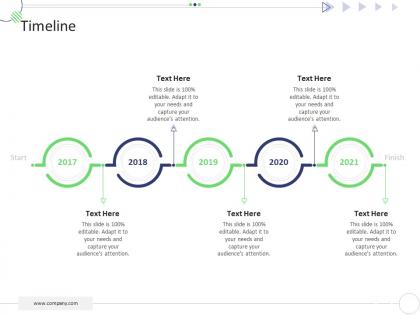
Timeline mckinsey 7s strategic framework project management ppt microsoft




Try Before you Buy Download Free Sample Product
 Impress Your
 Audience
 100%
100% Editable
 Save Hours
 of Time


Our Timeline Mckinsey 7s Strategic Framework Project Management Ppt Microsoft are topically designed to provide an attractive backdrop to any subject. Use them to look like a presentation pro.
People who downloaded this PowerPoint presentation also viewed the following :
Timeline mckinsey 7s strategic framework project management ppt microsoft with all 2 slides:
Use our Timeline Mckinsey 7s Strategic Framework Project Management Ppt Microsoft to effectively help you save your valuable time. They are readymade to fit into any presentation structure.
FAQs for Timeline mckinsey 7s strategic framework project
So the 7S Framework basically splits into hard and soft elements. Hard ones are Strategy, Structure, and Systems - stuff you can actually touch and measure. Soft elements? That's your Shared Values (sits in the middle), Skills, Style, and Staff. Honestly, the soft stuff is where companies usually mess up because it's harder to see. Here's the thing though - all seven have to work together. You can't just reorganize your structure and call it a day. Change one piece and the others will probably need tweaking too. Think of it like a checklist when you're making big changes, so you don't forget about the people side of things.
You can map both companies against those seven elements - structure, strategy, systems, skills, staff, style, and shared values. This gives you a solid way to compare how each one actually operates before trying to merge them. Honestly, I've watched so many M&As crash because teams got obsessed with the numbers but totally ignored culture stuff. Document where each organization stands across all seven areas first. The biggest gaps are usually in shared values and management style - those are nightmares to fix later. Make a heat map showing easy wins versus problem areas. Then focus your energy where it'll matter most.
Think of the 7S Framework as your change management checklist - honestly, it's saved me from so many headaches. Most change efforts bomb because people get tunnel vision on strategy and structure, completely ignoring the human stuff. This thing makes you look at all seven pieces: strategy, structure, systems, shared values, skills, style, and staff. Here's the thing though - it's really about spotting where things don't match up. Like if your new strategy needs teamwork but you're still rewarding lone wolves. Run through it before any big change to see what else you'll need to fix.
Honestly, you've gotta look at all seven pieces together - if one's broken, the whole thing falls apart. Make sure your values actually mean something to people, not just generic wall art. Structure-wise, tear down those silos because nobody wants to work in isolation (learned that the hard way at my last job). Your systems should help people do their jobs better, not make everything a nightmare. Invest in skills development so people know you care about their growth. Leadership style matters too - just be real with people. Right people, right roles. And connect daily work to something bigger. Audit everything at once.
So the 7S thing is pretty smart - it makes you look at all seven parts of your company and see how they fit together. You'll catch stuff like when your big strategy sounds amazing but your actual systems are garbage and can't handle it. Or when leadership talks about "collaboration" but the culture is totally cutthroat. Think of it as a full body scan for your organization, I guess? The cool part is seeing where your "hard" stuff (strategy, structure, systems) doesn't match your "soft" stuff (people, culture, skills). Just rate each area and find your biggest weak spots.
So the 7S Framework is pretty useful - it maps how your culture (the "soft" stuff like values and skills) actually connects to strategy and structure. Basically shows you where things don't line up. Like when your company preaches teamwork but only rewards individual performance... classic disconnect, right? What you do is compare your current state to where you want to be across all seven elements. Don't look at them separately though - they all influence each other. Start with the biggest culture-strategy gaps first since those usually hurt the most.
So Toyota's probably the most famous example - they used the 7S Framework when doing their whole lean manufacturing thing, making sure structure, systems, and values all lined up around continuous improvement. Jack Welch did something similar at GE back in the 80s and 90s. Oh, and Microsoft's another good one - when Nadella took over, they shifted from this "know-it-all" mentality to "learn-it-all" for their cloud pivot. Pretty smart if you ask me. The pattern you'll see is none of these companies just changed one thing. They went through all seven elements systematically. I'd start by figuring out where you currently stand on each S.
Okay so if you're at a startup, focus on the soft stuff first - values, skills, leadership style. Way easier to change those quickly while you're still figuring out what works. Keep your structure and processes super flexible for now. I've honestly watched too many startups waste months perfecting systems that don't even matter yet. Bigger companies? Total opposite problem. Your systems and structure matter way more because you're managing actual scale. But changing culture becomes this massive uphill battle. Startups can literally redesign everything overnight - enterprises have to slowly evolve what's already there. Figure out where you sit on that startup-to-enterprise spectrum first, then work backwards from there.
So the 7S Framework is solid but combine it with SWOT to catch external stuff it misses. Stakeholder mapping helps too - shows you who actually gets hit by changes. For the bigger picture, PESTLE's your friend for macro trends. Here's the thing though - employee surveys are clutch for those "soft S" elements. What executives think the culture is? Yeah, that's usually way off from reality. I've seen it so many times. Stick to 2-3 tools max or you'll just overthink yourself into a corner. Trust me on that one.
So basically, tech has completely flipped how your systems work now. Most stuff that used to be manual is digital - like approving budgets through software instead of those awful paper forms. Your decision-making, info systems, communication channels, they all run through digital platforms now. The upside? Everything's way faster and more transparent. But here's the catch - you're totally dependent on it working. CRM crashes? Your whole sales team's stuck. I learned this the hard way last month when our main system went down for three hours. You've gotta build systems that are efficient but also have solid backups ready.
Honestly, the worst part is trying to analyze all seven elements at once - it's like mental overload. Everything's connected, so when you change one thing, it messes with everything else. Where do you even start? And good luck measuring those "soft" elements objectively... skills and shared values are so subjective. The framework basically dumps this complex web in your lap without telling you what to tackle first. Super helpful, right? My take would be to pick maybe two elements that seem most out of whack and go from there. Don't try to boil the ocean on this one.
So the 7S thing is pretty clever - it makes teams actually see how their work connects to everyone else's. You map out strategy, structure, systems, skills, staff, style, and shared values all at once. Suddenly departments realize they're not working in separate bubbles anymore. It gives people a shared way to talk about problems across different areas, which honestly is half the battle right there. Short version: run a workshop with reps from each department and you'll spot where collaboration breaks down. Then you can build those bridges between teams that actually stick.
Honestly, tracking 7S stuff depends on what you actually changed. Hard metrics are easier - employee engagement scores, productivity numbers, revenue growth, time-to-market. The soft metrics are way trickier but sometimes tell you more than the numbers do. Pulse surveys help with cultural alignment, plus you can measure skills gaps and how effective your leadership actually is. Oh, and definitely track if people are using those new processes you rolled out. I'd pick maybe 2-3 metrics that match your specific changes and check them quarterly. Don't go overboard or you'll drown in data.
So the 7S Framework is basically your gap-finder between what the market actually wants and how you're running things. Map each of the seven elements against what customers are demanding - like do your people have the right skills? Is your structure too slow to respond? That kind of stuff. Honestly, it can be a brutal wake-up call sometimes. Go through strategy, structure, systems, skills, staff, style, and shared values one by one. Ask your team straight up: "does this help us or screw us over when we're trying to respond to the market?" You'll spot the disconnects pretty fast - and some might surprise you.
Honestly? If you've got the budget, McKinsey's workshops are worth it - those people actually created the framework so they get all the weird nuances. But if money's tight (and let's be real, it usually is), Coursera or LinkedIn Learning have decent change management courses that cover it. I've actually seen teams just grab "In Search of Excellence" and figure it out as they go, which totally works if someone experienced is running point. Oh, and here's the thing - make sure everyone gets how all seven elements connect before you start. That's huge. Maybe try a small pilot first? You don't want people analyzing in silos.
-
Great product with effective design. Helped a lot in our corporate presentations. Easy to edit and stunning visuals.
-
Very unique and reliable designs.