


Mckinsey 7s Strategic Management Powerpoint Presentation Slides




Try Before you Buy Download Free Sample Product
 Impress Your
 Audience
 100%
100% Editable
 Save Hours
 of Time


Let McKinsey 7s PowerPoint templates help your organization achieve its intended goal. Assess and evaluate the internal changes in an organization using Mckinsey 7s Strategic Management PPT slides. This readymade slideshow is based on the soft and hard key elements which determine the organization success. Use these professionally designed Mckinsey 7s model PowerPoint templates to improve organizational performance. Analyse and assess the impact of future changes on the organization. These templates will also help you implement the strategic plan of action. The Mckinsey 7s strategic management presentation provides a pathway to for reaching from the current state to the desired organizational state. Templates on seven interdependent elements position the organization to achieve its desired future state. Assess your organization’s any internal changes with the help of Mckinsey 7s strategic management PowerPoint presentation. Work towards getting a desired future state by aligning all the elements of the 7s. Get access to this complete presentation on Mckinsey 7s framework to create a strategic plan of action for an organization to reach to its goal.
People who downloaded this PowerPoint presentation also viewed the following :
Content of this Powerpoint Presentation
“Control your own destiny or someone else will,” Jack Welch, former CEO of General Electric
One useful step when you want to control your company’s destiny is using the popular McKinsey 7S Model. For the uninitiated, it refers to a tool for efficiently analyzing an organization's organizational design.
This model aims to portray how effectiveness can be achieved in an organization by focusing on the interactions of seven key elements. The 7 elements are as follows:
-
Structure
-
Skill
-
Strategy
-
Shared Values
-
System,
-
Staff
-
Style
Looking for a simpler and stylish slide explaining the McKinsey 7s Strategic Change Management Model.
If you want to delve into the details of the McKinsey 7S Model or want to present its usefulness to an audience, SlideTeam slides will come in handy. The slides are created by our highly-skilled content experts, who are familiar with the McKinsey 7S Model and have simplified it. Each of the slides is 100% editable and customizable, you can use them after making any edits you want or need. It only takes a few seconds.
Want a more concise option? Check out the McKinsey Seven S with System and Shared Value Slide.
Let’s explore!
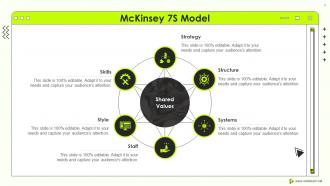
Template 1- McKinsey 7S Model
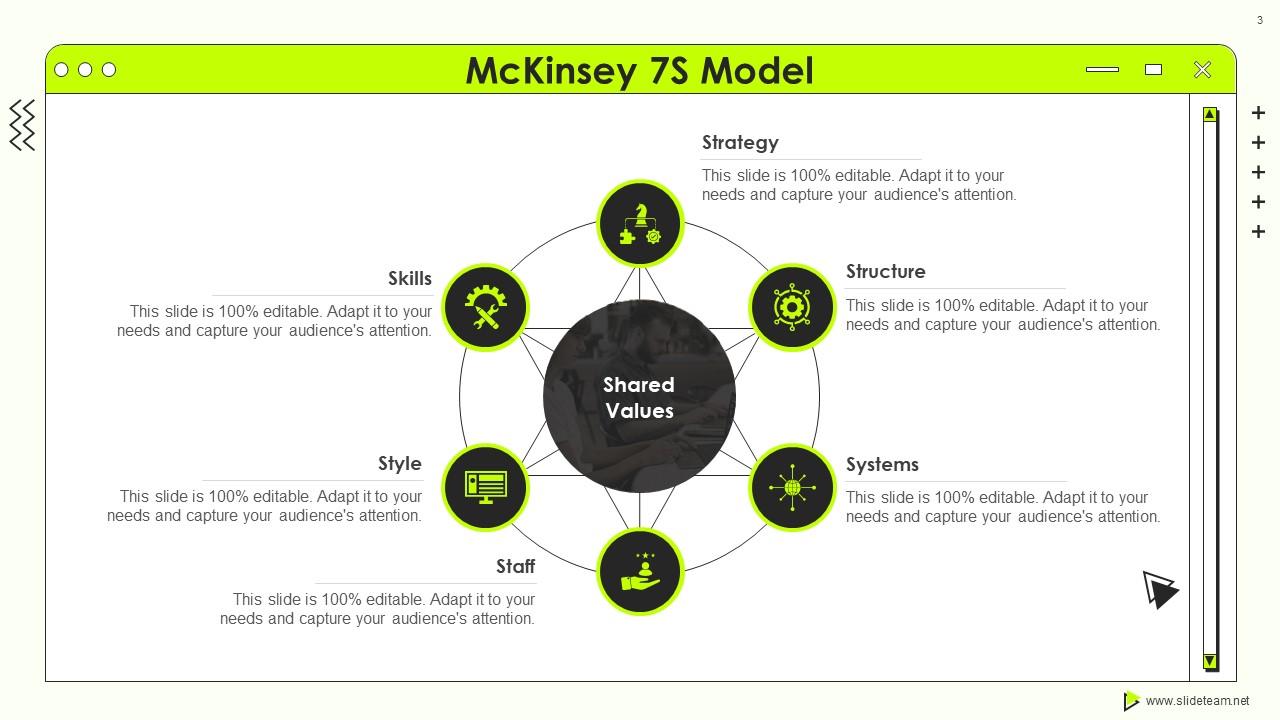
This creative slide focuses on McKinsey’s 7s model and names each element. From strategy to skills, structure to style, and systems to staff, everything is highlighted. The 7th element, shared values, is the focus. You can edit the design according to your understanding and ensure you catch the attention of the audience. You can also add a bit of text to explain each element.
Template 2- McKinsey 7S Model- Seven Elements
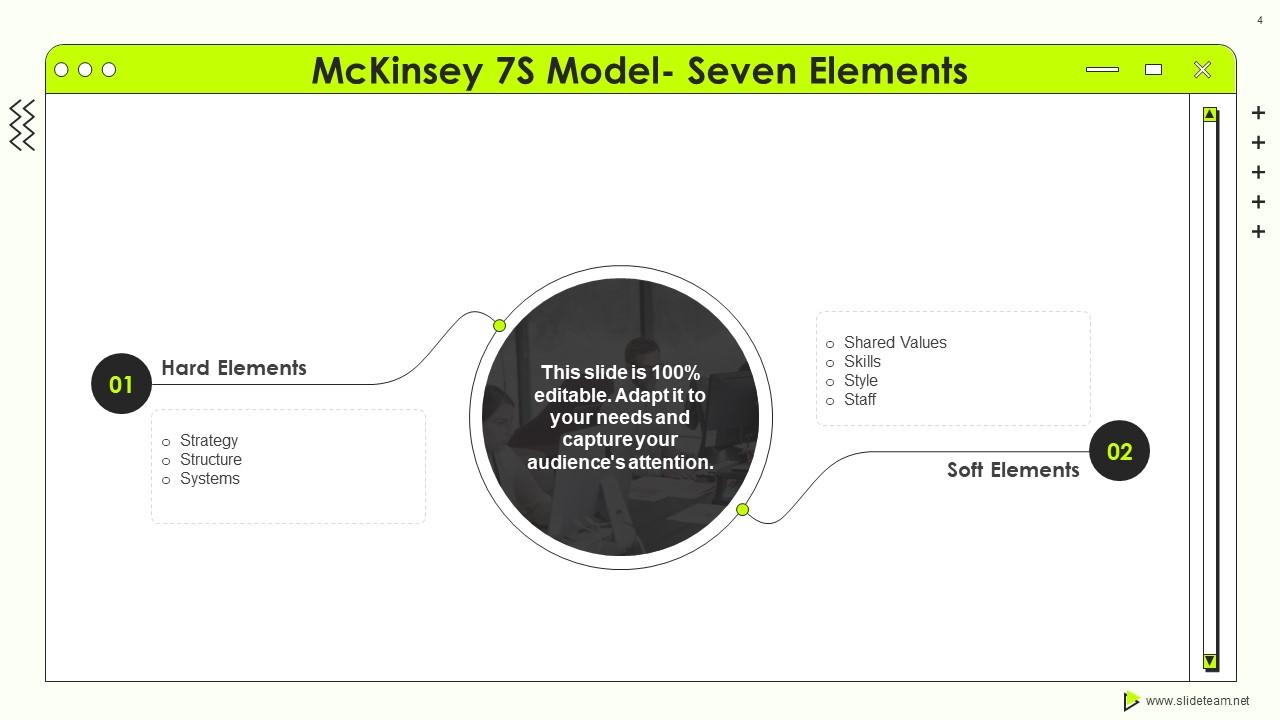
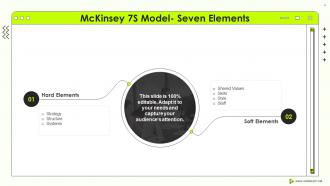
Some elements of the McKinsey 7S Model are categorized as hard elements, while others are categorized as soft elements. This slide focuses on defining which elements fall into which category. Elements like Systems, Structure, and Strategy are Hard Elements. Similarly, elements like Staff, Skills, Style, and Shared Values come into the soft elements category.
Template 3- Overview – Hard Ss
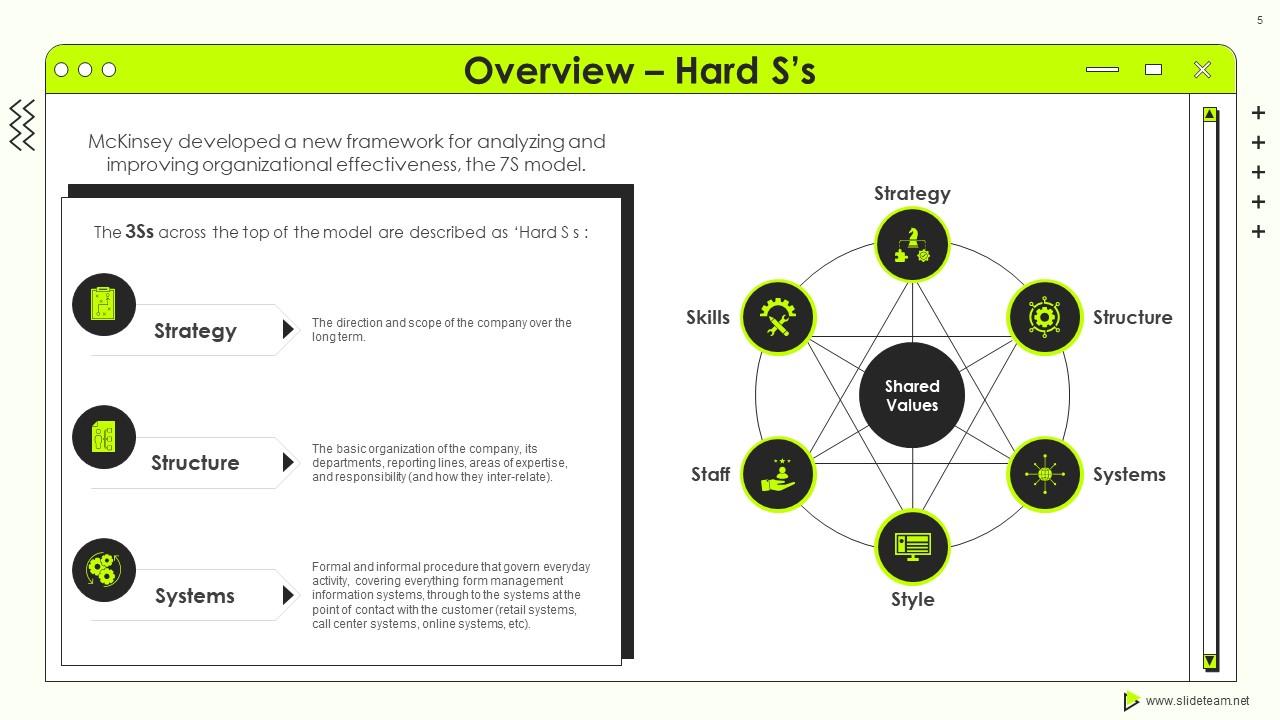
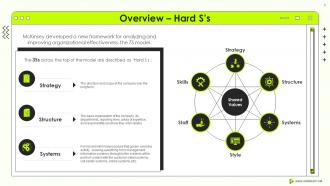
Among the McKinsey 7S Model, the top 3S are described as hard Ss. They are Strategy, Systems, and Structure. Each of these elements is briefly explained.
Template 4- Strategy Checklist Questions
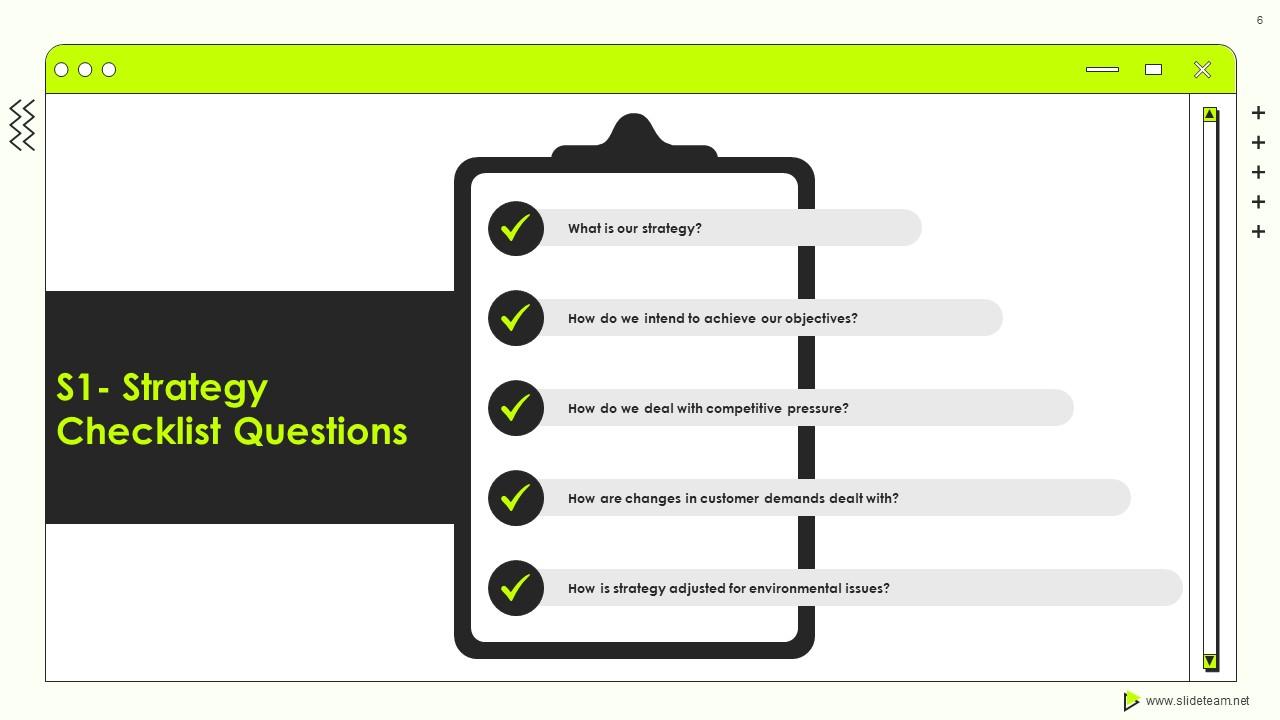
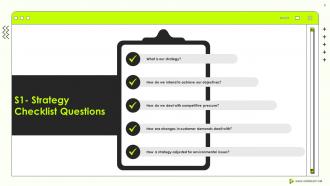
Strategy simply means defining the actions required to achieve a goal or a specific set of goals. When explaining the McKinsey 7S Model, you need to focus on strategy, and the strategy checklist questions mentioned above can be of great help. Examples of the questions we have added here are how objectives will be achieved or how the strategy will be adjusted for key environmental issues. You can use these or create your own questions that are more in line with your brand.
Template 5- Business Strategy Template

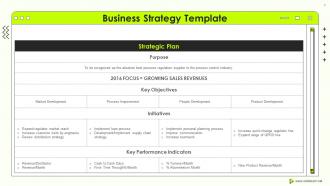
Most people define business strategy as an organization's master plan. So, when creating a strategy, the focus must be on essentials like Purpose, Prime Objectives, Initiatives, and Key Performance Indicators that measure the success or failure of specific strategies. The above template defines these components. It aims to help you create smart and successful business strategies.
Template 6- Structure Checklist Questions
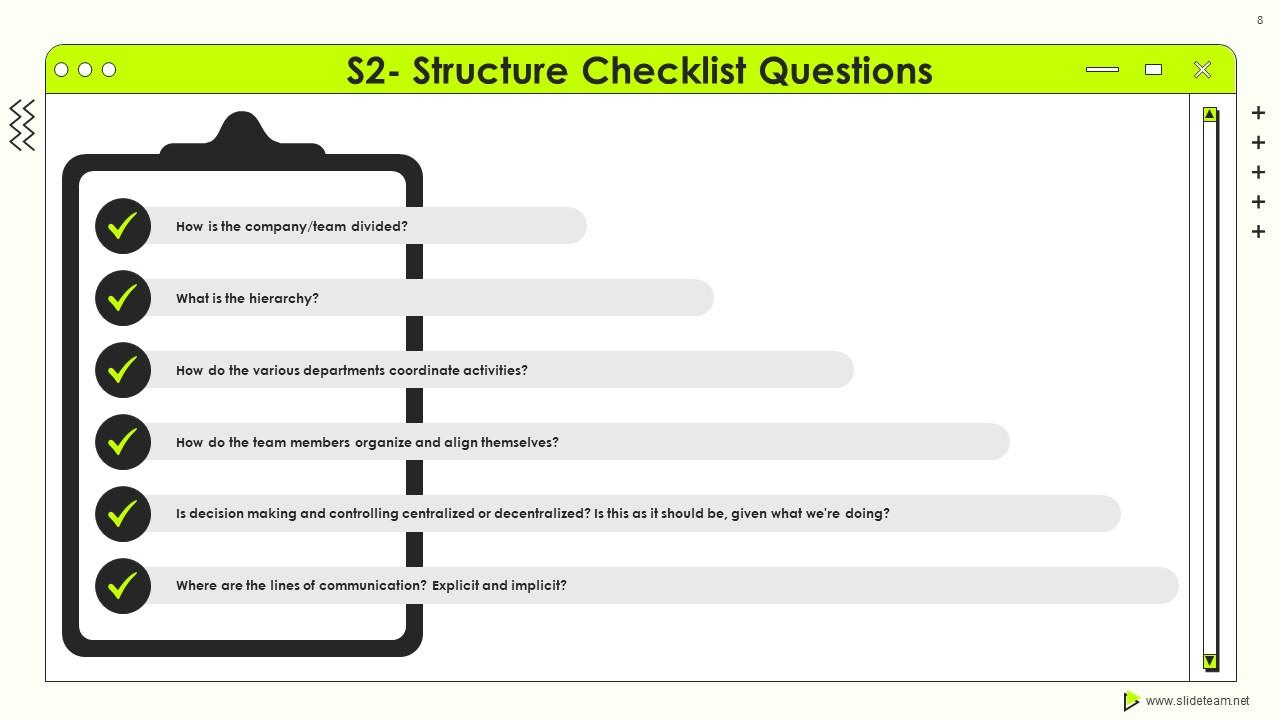
This slide focuses on another critical element of the McKinsey 7S Model: Structure. When creating a structure, it’s vital that you ask important questions like what the hierarchy will be like or how the team members will organize and align themselves. Questions like these will help define the organization's structure and help avoid any confusion or miscommunication regarding decision-making and decision-makers.
Template 7- System Checklist Questions
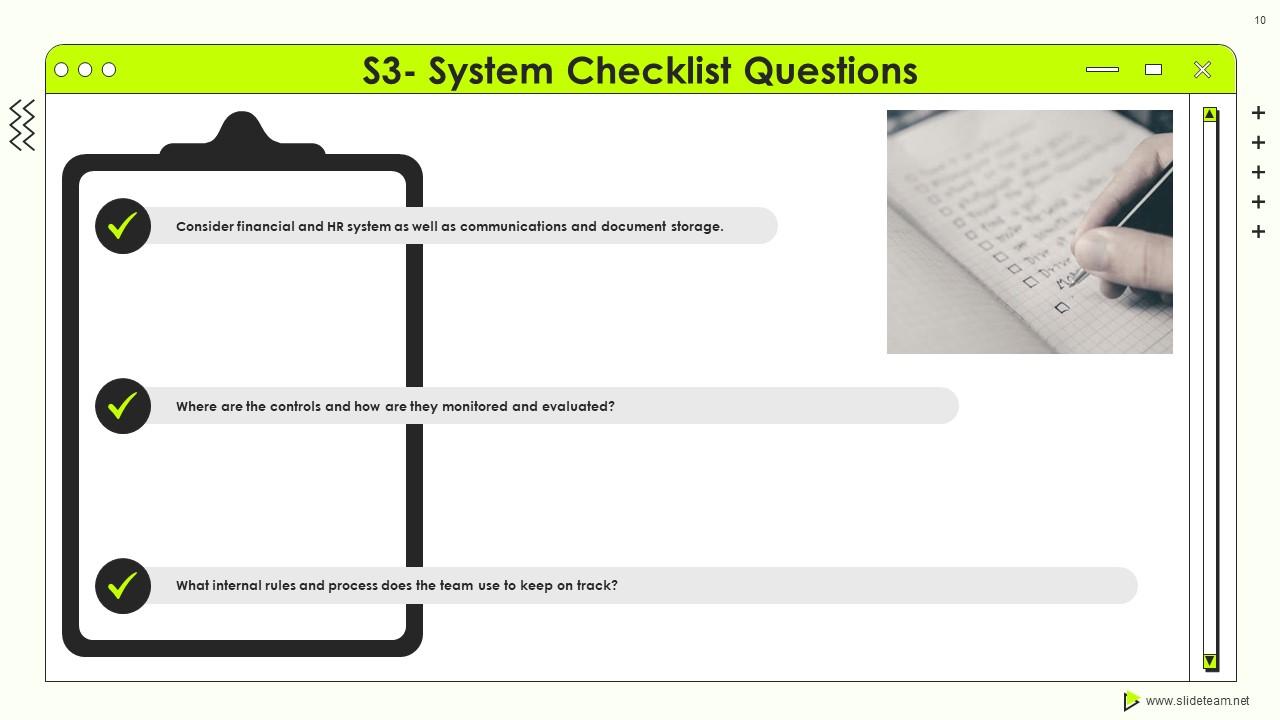
After strategy, the focus of organizations following the McKinsey 7S Model shifts to the System. Again, a few questions can help refine a system and establish a good one. Examples of such questions include where the controls are or which internal process a team needs to follow to stay on track. When a system is established, chaos is avoided.
Template 8- Overview- Soft Ss
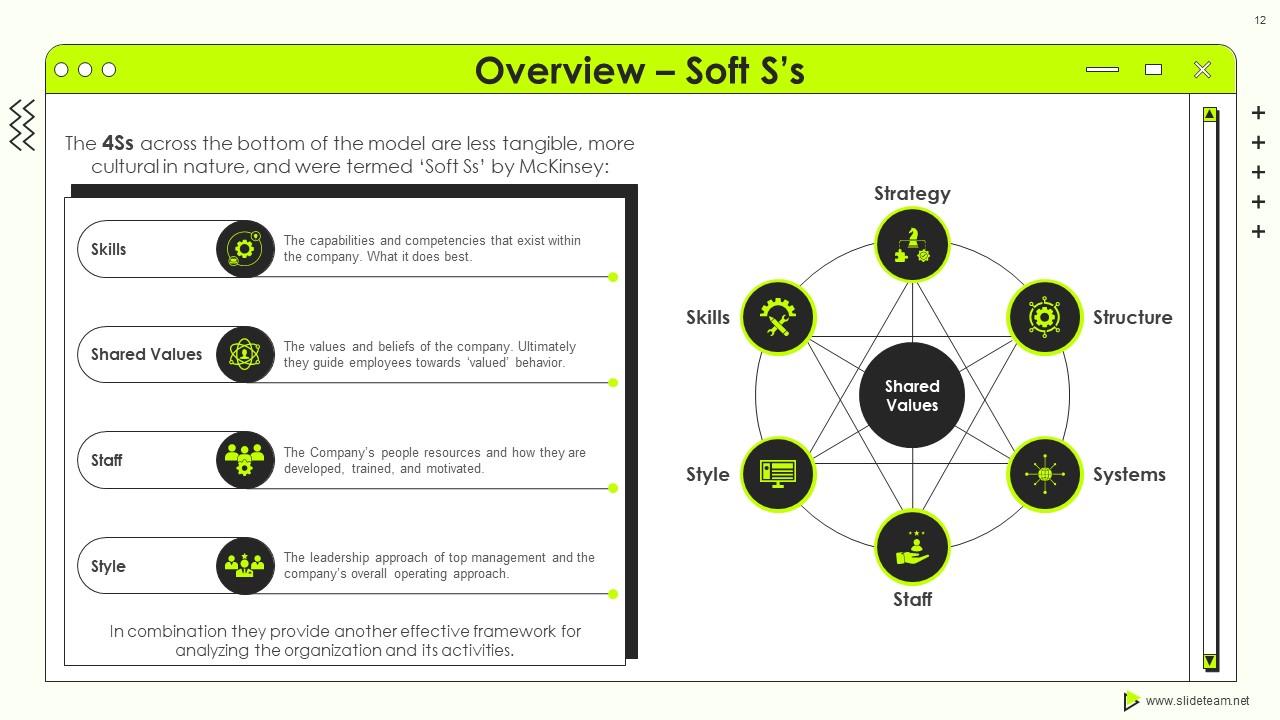
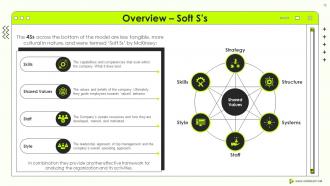
Once you have explained the hard Ss of the McKinsey 7S Model, you can focus on the soft Ss. These are Staff, Shared Values, Skills, and Style. Again, you can edit the slide above to make the content unique and more representative of your organization. Overall, the goal of soft Ss is to provide an effective framework for analyzing an organization and its core activities.
Template 9- Shared Values Checklist Questions

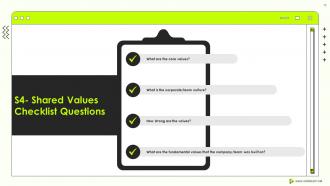
The core values of an organization are usually a set of guiding principles and fundamental beliefs that help people in that organization work towards common business goals. This slide focuses on key questions associated with shared values, such as how strong these values are, what the team culture will be like, etc. Answering these questions will help define shared values that help bring everyone in an organization together.
Template 10- Style Checklist Questions
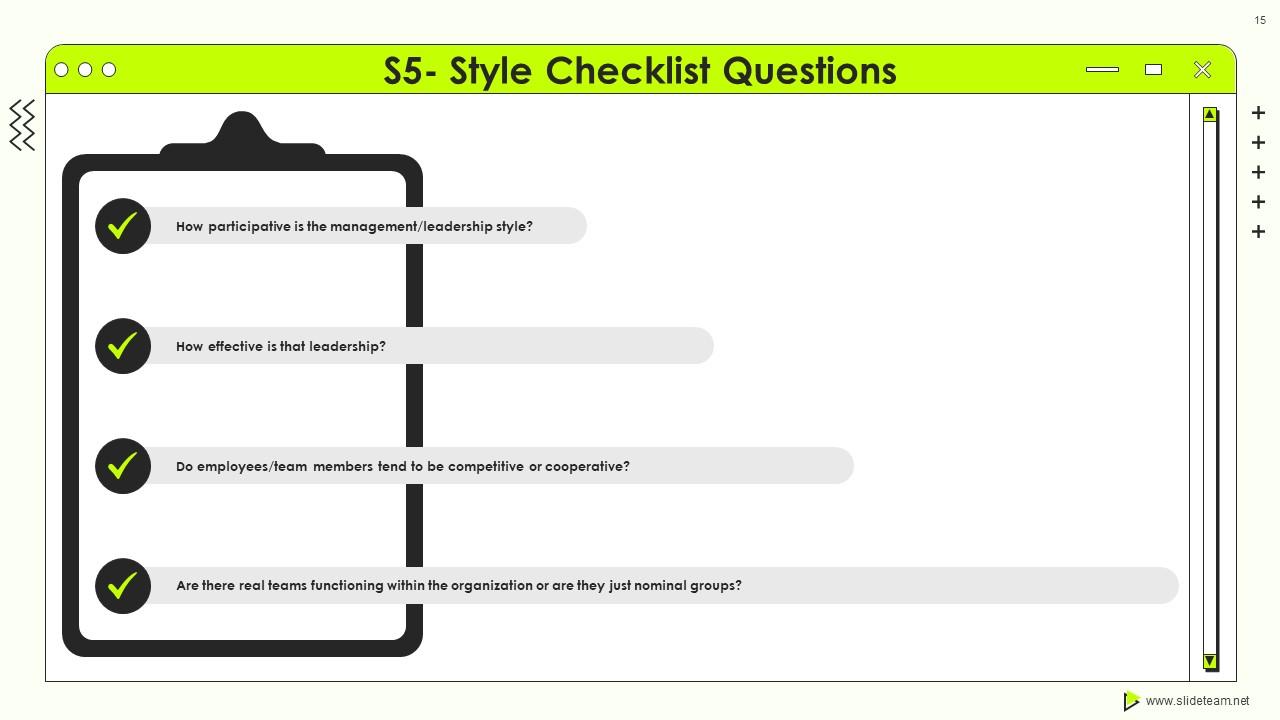
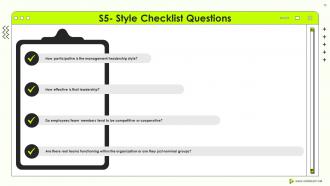
Leadership style is perhaps the most important S of the McKinsey 7S Model. This slide allows you to explore it further by highlighting key questions like what the leadership style will be, how effective it is, and whether teams or team members are more competitive or cooperative.
********
GET COMPLETE STAKEHOLDER BUY-IN
In essence, it can be said that the McKinsey 7S Model is quite interesting. It is useful and has many advantages like it lets parts of an organization act in a coherent and synced manner and helps you to ensure the effective tracking of the impact when there is a change in any of the seven elements. When thinking of adopting it, you must explain it completely to each stakeholder. The creative slides created by SlideTeam can be a big help with that. Use them as they are, or edit them instantly. Get them now!
PS Also, please remember to look at the Strategic Management Planning Process PowerPoint Presentation Slides, as they help make strategy-making simpler than you can imagine!
Mckinsey 7s Strategic Management Powerpoint Presentation Slides with all 33 slides:
Institute an inquiry with our Mckinsey 7s Strategic Management Powerpoint Presentation Slides. Formulate guidelines for establishing the facts.
-
Mckinsey 7s Strategic Management
-
Agenda Slide
-
McKinsey 7S Model
-
McKinsey 7S Model Seven Elements
-
Overview Hard S s
-
S1 Strategy Checklist Questions
-
Business Strategy Template
-
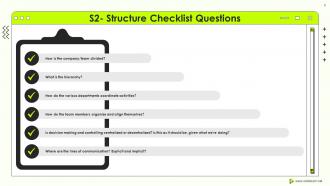
S2 Structure Checklist Questions
-
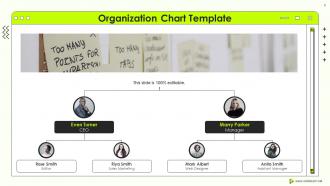
Organization Chart Template
-
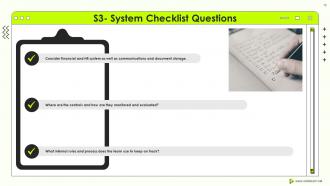
S3 System Checklist Questions
-
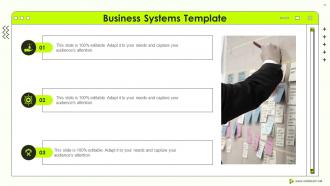
Business Systems Template
-
Overview Soft S s
-
S4 Shared Values Checklist Questions
-
Our Shared Values Template
-
S5 Style Checklist Questions
-
Leadership Style Template
-
S6 Staff Checklist Questions
-
Resource GAP Analysis Template
-
S7 Skills Checklist Questions
-
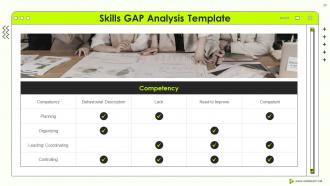
Skills GAP Analysis Template
-

Summary Your Company s 7Ss
-
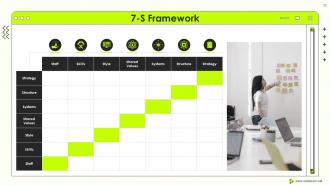
7 S Framework
-
Icons Slide for McKinsey 7s Strategic Management
-
Mckinsey 7s Strategic Management
-
About Us
-
Our Mission
-
30 60 90 Days Plan
-
Our Team
-
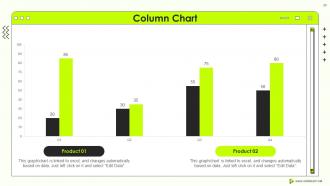
Column Chart
-
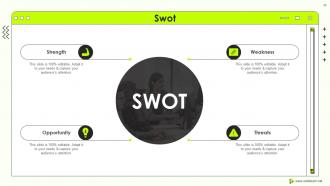
SWOT Analysis
-
Post It Notes
-
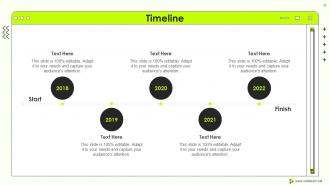
Timeline
-
Thanks for Watching
FAQs for Mckinsey 7s Strategic Management
So McKinsey's 7S Model breaks things into hard and soft elements. Hard stuff - Strategy, Structure, Systems - you can change pretty easily. Soft elements are trickier: Shared Values, Skills, Style, and Staff. Most companies totally bomb on the soft side, which is why transformations fail. The whole point? All seven need to work together. Can't just flip your strategy without thinking about whether your team has the right skills or if leadership style matches. It's like a web - mess with one part and everything else shifts. Oh, and always map out how changes hit all seven areas before you start anything major.
Start by figuring out where you actually stand on all seven elements - strategy, structure, systems, shared values, style, staff, and skills. Honestly, get an outside person to run surveys and interviews because people won't be brutally honest with their own bosses about what's broken. Look for those awkward gaps between what you claim to do and what really happens day-to-day. The disconnect between hard stuff (strategy, structure, systems) and soft stuff (values, style, people, skills) is usually where things fall apart. Map it all out visually so leadership can see which fires to put out first. Trust me, there'll be more gaps than you expect.
Dude, the Soft S's are where change projects actually crash and burn. Skills, leadership style, staff, shared values - it's all about whether people are actually on board. Perfect strategies mean nothing if your team doesn't have the right capabilities or if nobody believes in what you're doing. Leadership style has to match the moment too. I always tell people to honestly audit each Soft S first - like, brutally honest - before rolling anything out. Saves you so much pain later. The human stuff is what makes or breaks everything, not your fancy org charts.
So the 7S Model is like a health check for your company when you need to move fast. Map out where you are now across all seven areas - structure, strategy, systems, skills, staff, style, and shared values. Then see what's actually slowing you down. Maybe your hierarchy takes forever to make decisions, or your tech can't keep up with changes. Honestly, most companies think they know their weak spots but this forces you to look at everything systematically. Once you spot the bottlenecks, you'll know exactly what needs fixing to respond quicker to whatever the market throws at you.
So the 7S Model is like giving your company a full body scan. First, audit all seven pieces - strategy, structure, systems, shared values, style, staff, and skills. Then map how they connect to each other. You'll catch weird disconnects fast, like having an innovation strategy while your reward systems still favor playing it safe (which honestly happens way more than it should). Don't just look at each element alone though. The real insights come from seeing where they clash or support each other. Rate each S, then literally draw connections between them. Those broken links? That's where you're bleeding efficiency and missing your goals.
Honestly, the 7S Model can be painfully slow when everything's changing fast. Markets shift while you're still mapping out all seven elements - strategy, structure, systems, the whole thing. By the time you finish aligning everything, your competition has already pivoted twice. Focus on the "soft S's" first (skills, staff, shared values) since restructuring your entire org takes forever. The closet-during-an-earthquake analogy is pretty spot-on actually. Works great when things are stable, but who has that luxury anymore? I'd treat it more like a diagnostic tool than a step-by-step playbook.
So the 7S Model basically gives everyone the same language to work with during changes. No more vague complaints about "culture stuff" - you can actually point to specific things like Systems or Structure and explain what's shifting. Pretty smart, honestly. It cuts through all that usual mess when companies try to transform. People get way less freaked out when you clearly show what's staying put vs. what's changing. Oh, and here's a random tip - try making the 7S elements your section headers next time you write change communications. Makes everything so much clearer.
Oh man, IBM's transformation in the 90s is probably the best example - they went from hardware to services and had to realign literally everything. Southwest Airlines uses it too for keeping their low-cost thing consistent while growing like crazy. Toyota's another one with their lean manufacturing stuff. Honestly though? It works way better for big shake-ups than small changes. All seven pieces have to move at once or you're kinda screwed. I'd start with IBM's case since it shows how messy it gets when you're changing everything. Pretty fascinating read actually.
Honestly, if you're running a startup, the "soft stuff" is what really matters - shared values, skills, and leadership style are everything when you're small. Don't worry about fancy org charts or complex systems yet, keep it simple. But established companies? Totally different game. They've got the resources and complexity where solid structure and systems actually make sense. Oh, and hiring differs too - startups should go for culture fit and people who can wear multiple hats, while bigger companies can afford specialists. Just figure out where you actually are on the maturity scale first, then focus on what matters most for that stage.
SWOT analysis is clutch when you combine it with the 7S Model - catches all those external factors you'd otherwise miss. Balanced Scorecard helps track the actual numbers across each S. Stakeholder mapping is honestly underrated for understanding who gets affected by changes in each area. Oh, and culture surveys are perfect for digging into the soft stuff like shared values. Just don't go crazy with too many tools at once. I'd stick to 2-3 max or you'll end up drowning in data instead of actually doing anything useful with it.
Cultural assessment basically lives in that "Shared Values" box right at the heart of the McKinsey 7S thing. You're digging into what people actually believe and how they act - not the BS on the wall poster, you know? This stuff influences everything else: your strategy, structure, systems, all of it. I always think of it like getting your company's DNA tested, honestly. Here's the thing though - you can't just change your strategy or restructure without figuring out if your culture will fight you on it. So map out what your people really value first. That's where I'd start the whole 7S analysis.
Honestly, the 7S model is clutch for M&A work. It helps you dig into cultural fit instead of just staring at balance sheets all day. Map out both companies' systems, structures, and skills - but pay special attention to the soft stuff like values and leadership style. That's where deals actually blow up, not the financial projections. Run assessments on both orgs before you announce anything (learned that one the hard way). You'll spot integration headaches early and figure out what needs fixing immediately versus what can wait. The framework basically becomes your roadmap for not screwing up the merger.
Track the obvious stuff first - employee engagement, turnover, productivity numbers. That's your baseline. But honestly? The cultural piece is way harder to measure and probably more important. Send out surveys about values alignment, see if people actually use the new systems you rolled out. Communication flows better when things click - you'll notice it in meetings. The shared values thing is almost impossible to quantify, which is annoying but true. Just compare your metrics every quarter so you're not flying blind. Oh, and definitely measure before you change anything or you'll have no clue if it worked.
Don't just do the 7S thing once and forget about it. Check in quarterly to see if your strategy, structure, and systems still match up with your people, skills, leadership style, and company values. Honestly, I've seen too many teams skip this step and regret it later. Markets shift, new people join, priorities change - you get the idea. Give each "S" to a specific leader so someone's actually watching it. Build simple dashboards to track everything, and set up feedback loops so you catch problems early. Way better than dealing with major misalignments down the road.
Your leadership style hits the "Style" part of 7S obviously, but it doesn't stop there. It actually spreads into other areas too - like how you hire people (Staff) and what skills you focus on building. Think about it: a hands-off leader creates totally different systems than someone who micromanages everything. I've seen this play out so many times. Don't just check off the Style box when you're doing your 7S analysis. Map out how your leadership connects to the other elements. You'll get a way more complete picture of what's actually happening in your organization.
-
Good
-
VERY GOOD AND USEFULL
-
Simple and usefull
-
Nice presentation, very useful
-
Great slides
-
Presentation Design is very nice, good work with the content as well.
-
Innovative and attractive designs.