

Gdp economy ppt slide templates




Try Before you Buy Download Free Sample Product
 Impress Your
 Audience
 100%
100% Editable
 Save Hours
 of Time


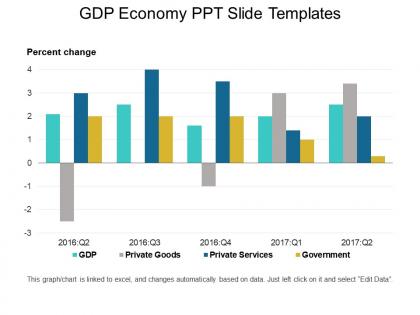
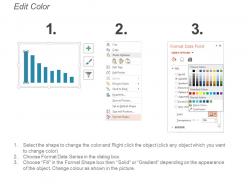
When you want to deliver an informative presentation on gross domestic product, you can take the help of this professionally designed GDP economy PowerPoint template. The gross domestic product PPT slide design acts as a vital indicator that depicts the overall health of the economic condition of a country. The GDP economy sample presentation slideshow describes the overall services value provided by a country as well as products manufactured by it. A user can demonstrate economic performance, imports, exports, value, services, and many more at micro and macro level through this readily available GDP economy example slide for PowerPoint. You can use the gross domestic product economy presentation template to make your viewers understand that either an expenditure approach or an income approach needs to be followed to calculate the GDP economy. The GDP economy design PPT slide is ideal for every economist because they know how essential this concept is. Thus, almost every individual who would like to give an incredible presentation on GDP can go for this gross domestic product design slide. Influence the impression folks build with our Gdp Economy Ppt Slide Templates. Ensure all the good aspects are included.
People who downloaded this PowerPoint presentation also viewed the following :
Gdp economy ppt slide templates with all 5 slides:
Eschew gibberish with our Gdp Economy Ppt Slide Templates. Focus on what deserves attention.
FAQs for Gdp economy
So GDP breaks down into four parts: consumer spending (C), business investment (I), government spending (G), and net exports (X-M). Consumer spending's usually the biggest piece - basically all the random stuff we buy every day. Here's where it gets interesting though: they're all connected. More consumer spending means businesses invest more to keep up with demand. That creates jobs, which gives people money to spend again. Government can jump in during recessions to keep things moving. Net exports are kinda weird since imports actually hurt your GDP number. It's like this whole chain reaction - change one thing and you'll see ripples everywhere else.
So GDP is what gets made inside your country's borders. GNP tracks what your citizens produce anywhere in the world. Wild example - Toyota's Kentucky plant counts for US GDP but Japan's GNP. I always found that kinda backwards at first. GDP tells you about domestic stuff like jobs and local economic health. But GNP? That's the real picture of how much wealth your people are actually creating globally. Policy folks usually want GDP for local analysis. Though honestly, if you're trying to figure out a country's true economic power, GNP gives you way more insight.
Yeah so GDP's got some major blind spots tbh. Like, it only tracks total economic output but tells you nothing about whether people are actually doing better. Environmental damage? Nope, doesn't count. All that unpaid caregiving work? Completely ignored. Plus here's the weird part - rebuilding after hurricanes technically boosts GDP even though it obviously sucks. A country's GDP could be rising while inequality gets worse and most people's lives tank. You'll want to look at unemployment rates, income inequality, and other social stuff alongside GDP to get the real picture of what's happening economically.
GDP per capita is way more useful than just looking at total GDP. Like, China's economy is huge but spread that across 1.4 billion people and suddenly it's not that impressive per person. Luxembourg has a tiny economy but their per capita is insane. It basically shows you what the average person's slice of the economic pie looks like. That's honestly what matters if you're trying to figure out actual living standards. Always check both numbers when you're looking at this stuff - totally changes which countries you'd actually want to live in, you know?
So basically when GDP goes up, companies hire more people to handle the extra business. Makes sense, right? But here's the thing - unemployment usually lags a few months behind because employers are pretty cautious about adding staff. During recessions, even stable industries can see hiring freeze up completely. Growth periods though? Jobs can appear way faster than you'd expect. I actually think GDP trends are probably your best bet for timing career moves - way better than trying to read tea leaves in job postings. It's just supply and demand for workers.
So inflation makes GDP numbers look way better than they actually are - you're just seeing bigger dollar amounts, not actual growth. Real GDP fixes this mess by stripping out the price changes using 2012 as the baseline year. Pretty neat system honestly. The math gets kinda complex but basically economists remove that "inflation layer" so you can actually compare different time periods fairly. Always double-check whether you're looking at nominal vs real GDP though - real GDP tells you what's genuinely happening with the economy, not just inflated numbers.
So basically when the government spends money, it creates this ripple effect that boosts GDP. Like if they build roads or fund programs, that cash flows through the economy and people spend it again elsewhere. Pretty cool how one dollar can generate more than a dollar in total activity. But here's the thing - too much spending can actually hurt private investment and rack up debt (which honestly feels like where we're heading sometimes). Short sentences work better here. You'll want to watch government spending trends closely since it's probably the fastest way politicians can actually move the GDP needle.
So trade balance hits GDP directly through net exports - exports minus imports. A trade deficit literally pulls your GDP number down since you're importing more than you're selling abroad. But deficits aren't always terrible, honestly. Sometimes they just mean people have money to spend and the economy's humming. Though if you've got huge, ongoing deficits, that might signal you're losing competitiveness or people are spending beyond their means. What matters most is figuring out what's driving the deficit in the first place. Context is everything with this stuff.
Yeah so basically when GDP shoots up fast, it usually hammers the environment pretty hard. More factories running, way more energy getting burned, resources getting stripped faster - the whole deal. I mean, makes sense right? Production goes up, pollution follows. But here's the thing - some economists think rich countries eventually get their act together and start investing in cleaner tech once they have the cash. It's called the environmental Kuznets curve or something like that. Bottom line though: don't just look at growth numbers. HOW they're growing matters way more.
Developing countries usually grow way faster - like 5-7% per year compared to developed ones at 1-3%. It's kinda like that awkward growth spurt phase vs. being fully grown, you know? Poor countries can build from scratch - new roads, factories, all that stuff. Rich countries are already there, so they're just tweaking things and innovating. Actually reminds me of how my little cousin shot up like 6 inches last year while I haven't grown since high school lol. But yeah, those high growth rates in developing places? They come with way more ups and downs if you're thinking investments.
Hey! So basically tech drives GDP growth by making everything more productive - workers can pump out way more value per hour. New industries pop up too (like how smartphones created the whole app world). Automation in manufacturing is huge for this. Honestly, I think the ripple effects are the coolest part - one breakthrough just cascades through everything else. You'll want to watch emerging tech in your field since jumping on it early usually pays off big time in the actual numbers. The efficiency gains alone are pretty insane.
Look, it's pretty straightforward - people feeling good about the economy means they'll actually spend money. And since consumer spending is like 70% of GDP, that matters a ton. Confidence drops? Everyone tightens up, businesses suffer, growth tanks. Honestly it becomes this self-fulfilling prophecy thing where being worried about a recession basically creates one. You can see it coming through retail sales and those consumer confidence surveys they do. Employment numbers too. But yeah, if you're tracking economic stuff, consumer sentiment is probably your best heads-up before GDP starts moving.
Look for the yield curve inverting first - that's when short rates beat long ones. Major red flag. Employment data hits next, especially jobless claims trending up. Consumer confidence usually crashes before people actually cut spending, which is kinda fascinating honestly. Stock volatility goes nuts and companies start slashing earnings forecasts left and right. Manufacturing PMI drops below 50. Housing permits? They fall off fast. Don't wait for quarterly GDP numbers - these monthly indicators give you like 3-6 months warning. Way more useful than waiting around for the "official" recession call.
Yeah, so GDP growth doesn't automatically fix income inequality - sometimes it makes things worse actually. The gains don't spread evenly at all. You'll see GDP go up but most of that money flows to people who were already doing well, while everyone else stays stuck. Politicians love waving around those GDP numbers like they mean everything, which is honestly annoying. What really matters is *how* the growth happens. Is it creating decent jobs for regular people, or just padding the wallets of investors? I always check median income data too - that's where you see what's really going on.
So there's a few ways economists try to predict this stuff. Econometric models dig into past data trends. Leading indicators track things like jobs and spending. Surveys ask businesses and experts what they think will happen. Then there's just straight-up educated guessing by people who've been doing this forever. Honestly though? They're all pretty unreliable when weird stuff happens - nobody saw COVID coming. Short-term forecasts (like next quarter) are decent, but anything longer gets sketchy fast. I'd check multiple sources instead of trusting just one.
-
Use of different colors is good. It's simple and attractive.
-
Unique and attractive product design.