

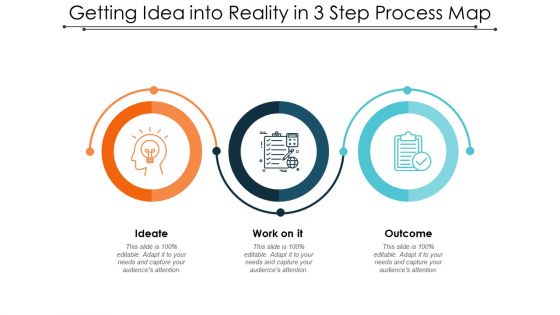
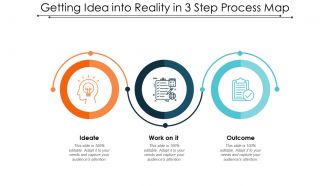
Getting idea into reality in 3 step process map





Try Before you Buy Download Free Sample Product
 Impress Your
 Audience
 100%
100% Editable
 Save Hours
 of Time


Bring about fabulous cheer with our Getting Idea Into Reality In 3 Step Process Map. The atmosphere will become extremely festive.
People who downloaded this PowerPoint presentation also viewed the following :
Getting idea into reality in 3 step process map with all 5 slides:
Highlight the influence of individual bias with our Getting Idea Into Reality In 3 Step Process Map. Expose jaundiced approaches.
FAQs for Getting idea into reality in 3
Honestly, the "worst possible idea" thing is my favorite trick - sounds weird but it actually works because people stop overthinking. Classic brainstorming's still solid though. Set a timer, quantity over quality, don't judge anything yet. Mind mapping's great for those random connections your brain makes. Switch up where you're sitting or do a walking meeting if you can. The biggest thing? Make sure nobody feels stupid for throwing out wild ideas. I've seen teams completely freeze up when someone shoots down the first suggestion. Oh, and building on each other's thoughts usually leads somewhere interesting you wouldn't have found alone.
Honestly, visual stuff makes such a huge difference for brainstorming. Mind maps and sticky notes give everyone the same starting point instead of just staring at a blank wall. Templates like "How Might We" questions keep people from going completely off-track - though sometimes those random detours are where the best ideas happen. Different people think differently too. Some need to actually see ideas laid out spatially before things click. I swear, throw up even a basic template instead of leaving the whiteboard empty and suddenly everyone's actually participating instead of sitting there quietly.
Honestly, mixing up who's in your brainstorms is a game changer. People from different backgrounds just think differently, you know? Like, if everyone on your team has the same experience, you'll keep hitting the same ideas over and over. It's kinda obvious when you think about it. Different perspectives make people question stuff and connect dots in weird ways. I've seen it happen - someone from accounting will suggest something that completely flips how the marketing team was thinking. Next time you're planning a session, grab people from random departments. Trust me on this one.
Honestly, counting raw ideas is pretty useless - I'd rather have 10 solid concepts than 50 trash ones. What actually matters is how many survive your screening process and get implemented. Check if you're getting real diversity or just the same idea in different packaging (happens more than you'd think). Engagement levels during sessions tell you a lot too. But here's what I really watch for: which ideas people still talk about weeks later? That's your gold. Oh, and definitely track business impact after 6 months - some brilliant-sounding ideas totally flop in reality.
Honestly, the worst thing is when someone shuts down ideas before they're even fully explained - like, give it two seconds at least! Also watch for that one person who talks over everyone else. I've been in sessions where we just went with the first okay idea instead of really exploring. Write everything down too because trust me, you won't remember that amazing concept from later in the session. Oh and make sure the quiet people actually get to speak. Sometimes they have the best insights but never jump in. Set a timer so it doesn't drag on forever.
Honestly, remote brainstorming got so much better once we started using the right tools. Digital whiteboards like Miro are game-changers for visual stuff - way better than trying to describe ideas over video calls. Slack keeps conversations going between meetings too. The async thing is actually my favorite part. People can jump in when they're feeling creative instead of forcing everyone into some random 2pm slot when half the team is in a post-lunch coma. Notion helps organize everything so brilliant ideas don't just disappear into chat hell. I'd start with one visual tool first, then add others as you figure out what works.
For quick wins, try the impact vs. effort grid thing - you just plot ideas based on how much bang you'll get vs. how hard they are to pull off. Dot voting works great too, especially with bigger groups. Everyone gets like 3-5 dots and votes for their favorites. There's also MoSCoW (Must have, Should have, etc.) but honestly that one feels a bit corporate sometimes. The real trick is just picking something and going with it instead of debating methods forever. I'd start with dot voting if your team hasn't done this before. Super easy to explain and people actually enjoy it.
So feedback loops are basically this ongoing cycle where your team bounces ideas back and forth instead of waiting until everything's "done" to give input. You throw out an idea, get quick reactions, tweak it, then share again. Keeps things moving instead of letting stuff sit there getting stale. Also saves you from that brutal moment when someone's spent weeks on their pet project only to discover it's totally off-base - honestly, we've all been there. Try setting up quick 15-minute check-ins or maybe a shared board where people can drop reactions. Start with just one feedback round per session and see how it goes.
Honestly, frameworks actually make you more creative, not less. Jazz musicians are incredible at improv precisely because they know the rules first. Your brain stops wasting time on "how do I even start this?" and jumps straight to the good stuff. Design thinking, SCAMPER - whatever you pick just gives you a roadmap past all the boring, obvious ideas. I've watched teams come up with way better concepts when they follow some kind of process instead of just... hoping inspiration strikes, I guess? Pick any framework and use it for your next few brainstorming sessions. You'll definitely notice the difference.
Dude, customer insights are pure gold for ideas. They show you real problems people have, not what you assume they struggle with. I love digging into user interviews - those pain points are perfect for brainstorming sessions. Behavioral data's great too for spotting market gaps. Honestly? Some of my favorite product ideas came from customers just venting about stuff that bugged them. Their feedback helps you figure out which ideas are actually worth building vs the ones that sound awesome but nobody would buy. Next time you're stuck, start by reading through recent customer complaints first. Works every time.
Honestly, storytelling is a game-changer for brainstorming sessions. Instead of dry bullet points, frame problems like "Sarah the busy mom can't find time to..." - suddenly everyone's thinking about real people, not just features. I love using the classic setup-conflict-resolution structure when pitching ideas. Those "what if" scenarios are gold too, especially for exploring crazy possibilities. Oh, and user journey narratives work really well - just walk through how someone actually discovers and uses your solution. Next time you're facilitating, try opening with "Tell me the story of..." Trust me, it'll spark way better discussions than your typical ideation format.
Dude, multiple brainstorm sessions are way better than cramming everything into one mega-meeting. Your brain actually keeps chewing on problems between sessions, so you'll come back with connections you totally missed the first time. Most people are mentally fried after 30 minutes anyway - I know I am. Breaking it into 3-4 shorter rounds means you can actually refine ideas instead of just drowning in sticky notes. You can bring different people in at different stages too, which helps a ton. Trust me, you'll end up with way more solid, realistic concepts this way.
Honestly, you've gotta tailor everything to the industry you're working with. Healthcare folks need patient safety baked in from day one - they're obsessed with compliance (for good reason). Tech people? They want rapid prototyping and UX focus. Manufacturing sessions work way better when you bring actual physical stuff - I've done product teardowns that were amazing. Financial services will drive you crazy with all their risk assessment needs, but that's their reality. Before you even start brainstorming, ask what industry constraints they're stressed about. Research your audience first, then adjust your whole approach accordingly.
Change your environment first - pack up and work somewhere completely different. Your brain just gets stuck when you're in the same spot every day. Set a timer for 10 minutes and dump every idea out, especially the crappy ones. Those usually lead somewhere good actually. Oh, and take breaks between brainstorming sessions. Your brain keeps working on stuff even when you're not thinking about it. Talk it through with someone else too, even if they don't know anything about your project. Sometimes that outside perspective is exactly what you need to get unstuck.
Honestly, your space makes such a difference for brainstorming. I'm way more creative by a window than under those awful office fluorescents - natural light just hits different. Clutter kills ideas, but flexible furniture you can move around actually helps thoughts flow better. Plants and cool visuals on walls don't hurt either. Here's the game changer though: get writable surfaces everywhere. Whiteboards, glass, whatever. Ideas vanish so fast if you can't jot them down immediately. Next time you're stuck, try just rearranging everything first. Sounds silly but it works.
No Reviews