

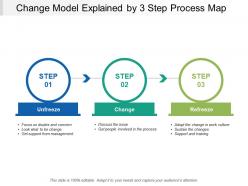
Change model explained by 3 step process map






Try Before you Buy Download Free Sample Product
 Impress Your
 Audience
 100%
100% Editable
 Save Hours
 of Time


Have all the answers available with our Change Model Explained By 3 Step Process Map. They keep the data coming along.
People who downloaded this PowerPoint presentation also viewed the following :
Change model explained by 3 step process map with all 5 slides:
Change mindsets with our Change Model Explained By 3 Step Process Map. Penetrate through with your innovative thoughts.


FAQs for Change model explained by 3
So basically there's three main phases - prep, rollout, and making it stick. Most frameworks get way more detailed but that's the gist. Start by getting everyone on board and creating some urgency around why this change matters. Communication is huge here - your team needs to actually understand the vision. Then you do the actual implementation, rolling things out bit by bit while supporting people through it (this part's messy, just warning you). The last phase is where things usually fall apart though - you gotta reinforce those new behaviors until they become habit. Seriously, don't rush past this step like most teams do.
Here's what I'd do - survey your team first about how they feel about change. Most people hate it more than they'll admit upfront. Check if your current systems can actually handle whatever you're planning. Look back at how past changes went - did they work or just create drama? Leadership buy-in matters huge here too. Honestly, I'd make a simple scorecard rating people, processes, and culture from 1-10. Sounds nerdy but it works. Fix your lowest scores before you dive into anything major, trust me on this one.
Dude, communication really is everything here. People will literally make up the worst possible stories if you don't tell them what's happening - I've watched it kill perfectly good changes. You gotta be super clear about WHY you're doing this stuff and actually listen when they push back. Multiple ways for people to reach out helps too. The thing that drives me nuts? Leaders who think everyone just "gets it" without explanation. Be honest about the good AND the messy parts coming up. Then keep checking in so nobody feels left in the dark.
Track the obvious stuff first - productivity numbers, turnover rates, customer scores. But here's the thing: those only tell half the story. People can hit their numbers while secretly hating everything, you know? So definitely do pulse surveys and just... talk to people. Like actually talk to them. Get your baseline before changing anything, then check back every few weeks. Oh, and make a simple dashboard with maybe 4-5 key things you're watching. Trust me, you don't want to be drowning in spreadsheets trying to figure out what's working.
Oh man, people hate change - that's your biggest problem right there. Fear of losing control, not understanding what's happening, you know the drill. Plus leadership never seems to care until it's too late. Resource issues are brutal too. There's always ten other "urgent" things competing for attention (story of my life, honestly). Here's what actually works though: Get the influential people on your side first. They'll do half the convincing for you. Explain WHY you're doing this constantly - I mean it, keep repeating it. Let people help plan stuff so they feel invested. Don't ignore the complaints either, address them upfront or they'll just get worse.
Talk to your team constantly - seriously, more than you think you should. Tell them what's changing and why, even if you don't have all the answers yet. People actually handle "I don't know" way better than radio silence. Listen when they freak out (because they will) and let them help figure out solutions. Set up different ways for people to give feedback - some hate speaking up in meetings but will write essays in anonymous surveys. Oh, and don't pretend change isn't scary. It totally is. Your job is being their guide through the mess, not just dropping news bombs.
Don't just blast out an announcement and expect people to fall in line. Figure out who's actually impacted first, then pull them into conversations about why this change matters. I've watched so many projects crash because leaders thought buy-in would just magically happen. Get ahead of the pushback - ask what worries them before they start digging in their heels. Communicate way more than feels necessary (seriously, like double what you're thinking). Let people shape how it rolls out, not just what happens. Oh, and when you get those early wins? Make noise about them. Skeptics become your best advocates once you fix their real problems.
Culture makes or breaks your whole change strategy, honestly. Risk-averse companies need way more buy-in from leadership and take forever to move. But places that love trying new stuff? You can just start small pilots and let things spread naturally. I watched this one consulting firm - same exact approach worked at their Austin office but totally bombed in their Boston branch. The Boston team was super traditional while Austin was all about experimenting. Don't fight your company's personality. Figure out how people usually react to change, then work with that instead of against it.
Start early and explain the "why" first - nobody likes change when they don't get the reasoning. I'd break training into smaller chunks instead of those soul-crushing all-day sessions. Make it hands-on too since people actually retain stuff when they're doing it, not sitting through PowerPoint hell. Find a few enthusiastic people on each team who can help others out. Create spaces where it's okay to mess up while learning - that's huge. Oh, and don't just train once and disappear. Check back in a few weeks because there's always questions that come up later when people are actually using what you taught them.
Honestly, tech can be a lifesaver for change management if you don't go overboard with it. Slack or Teams keeps everyone updated without endless meetings. Survey tools help you figure out if people are actually buying in or just nodding along. Project management dashboards show you real progress instead of just hoping things are working. E-learning platforms are clutch too - people learn better when they can pause and rewatch stuff at 2am if they want to. I've seen too many companies pile on fancy tools that just confuse everyone though. Pick simple ones that actually make life easier, not harder.
Ugh, change is brutal on people mentally. Even good changes freak employees out because our brains hate uncertainty - it's like a weird survival thing. You'll notice productivity drops, more sick calls, general grumpiness. Honestly, I think we underestimate how draining it is to constantly learn new processes. Their stress and pushback? Totally normal reactions. Just be super patient during transitions and overcommunicate everything that's happening. Give them extra support too. Takes time for people to adjust - like, their brains literally need to form new pathways or whatever.
Honestly, the biggest mistake I see is treating change like a project with an end date. You've got to bake it into how you actually work every day - update your processes, keep training people, celebrate the small wins. Leadership commitment is huge too. I can't tell you how many times I've watched executives get distracted by the next shiny thing and everything falls apart. Set up quarterly check-ins to see what's actually sticking. And don't be afraid to pivot when something isn't working - rigid plans are change killers.
You want both hard numbers and the touchy-feely stuff. Hard metrics: adoption rates, how fast people get up to speed, productivity before/after. Soft stuff matters too though - employee surveys, who's pushing back, engagement levels. Training completion is huge because people can't use what they never learned. Budget and timeline tracking too, since projects that drag on forever just die a slow death. Oh, and don't go crazy with like 15 different metrics. Pick 3-4 you'll actually look at regularly.
Honestly, your leadership style can totally make or break any change you're trying to push through. Collaborative leaders usually get way better buy-in - people actually feel heard instead of steamrolled. Sure, being autocratic gets things done fast, but you'll deal with pushback later when everyone's pissed about being left out. I've seen this happen so many times. Transformational leaders who actually inspire people and paint the bigger picture? They get the most lasting results. You gotta match your approach to how urgent the change is and what your team actually needs right now.
Honestly, most change initiatives crash because of people stuff, not the technical side. Leadership has to actually mean it - can't just pay lip service. I've watched so many good ideas die because execs weren't really committed. Communication matters way more than you'd think. People will fight changes they don't understand the "why" behind. And seriously, don't rush the timeline. Rushed rollouts are a disaster waiting to happen. Best changes I've seen? They got key people involved in planning instead of just dropping announcements from corporate. Get your stakeholders excited first, then everything else flows better.
No Reviews