

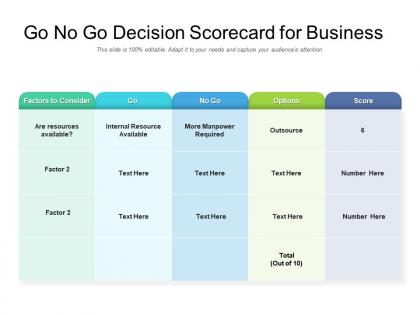
Go no go decision scorecard for business




Try Before you Buy Download Free Sample Product
 Impress Your
 Audience
 100%
100% Editable
 Save Hours
 of Time


Our Go No Go Decision Scorecard For Business are explicit and effective. They combine clarity and concise expression.
People who downloaded this PowerPoint presentation also viewed the following :
Go no go decision scorecard for business with all 2 slides:
Give your audience a fulfilling experience. They will find our Go No Go Decision Scorecard For Business elevating.
FAQs for Go no go decision
Alright, so for your Go/No-Go scorecard you definitely need the basics: financial stuff (ROI, budget), market conditions (demand, competition), and whether you can actually pull it off operationally. Risk assessment is huge too - I've seen so many projects crash because nobody thought about what could go wrong. Strategic alignment with company goals matters, plus you need stakeholder buy-in or you're dead in the water. Oh, and set clear scoring thresholds for each thing so you're not just making it up as you go. Keep it to like 5-7 criteria max though - more than that and you'll be stuck in analysis paralysis forever.
Look at your past projects first - what actually killed them vs what made them work? That's your real data right there. Software stuff? Focus on whether users will actually adopt it and if it's technically doable. Construction is totally different - environmental impact and getting approvals matter way more. Most scorecards are honestly too generic and miss the actual risks. Weight the make-or-break factors heavier. Don't be scared to toss criteria that don't apply to your situation. The whole point is catching what'll trip you up before it happens, not checking boxes on some template someone else made.
Your stakeholders are the people giving you data and signing off on decisions. They'll feed you market insights, tech feasibility, resources - all that stuff for your scorecard. Plus they have to deal with whatever you decide, so getting their buy-in matters. I totally messed this up once by rushing past stakeholder input. Big mistake! Get everyone identified upfront and give them real deadlines for feedback. Document their concerns in your scorecard too. Short sentences work better for this stuff. When people feel heard, you'll get way better decisions out of it.
Look, these scorecards basically stop you from making dumb decisions based on gut feeling alone. You score stuff like budget, timeline, and whether everyone's actually on board against set benchmarks. Catches problems while you can still bail or fix things instead of burning cash on a disaster. Short sentences work. Longer ones help break up the rhythm so it doesn't sound robotic. Honestly, the documentation part is huge too - shows your boss you weren't just winging it when you killed their pet project. Just make sure you weight the criteria that actually matter for your specific situation, not some generic template you found online.
Mix hard numbers with your gut feelings for this. ROI projections, budget needs, timelines, and risk scores are obvious must-haves. But don't skip the squishy stuff - strategic fit, team readiness, stakeholder support, market timing. Those soft factors kill projects even when spreadsheets look perfect. Competitive landscape matters too, and honestly? Your org's actual bandwidth is huge. I always underestimate how stretched we already are. Weight everything based on what matters most to your situation, then score consistently so you can compare opportunities fairly. Simple beats complex here.
Just shoot them a quick message with your Go/No-Go call first, then send the scorecard breakdown after. Nobody wants to be guessing what happened. Point out which criteria really made the difference - like if budget was the dealbreaker or whatever. If it's a No-Go, definitely set up a meeting because those decisions always need more talking through. I learned this the hard way when I just sent an email once and people were confused for days. Be straight about your reasoning so the team gets why you made that choice. The transparency thing really matters here.
The worst mistake? Making criteria super vague. "Good market potential" means nothing when you're actually scoring options. You need specific, measurable stuff or you'll argue forever about ratings. Don't weight everything equally either - some factors obviously matter way more than others. Keep it short too, like 5-7 criteria max. I've seen people create these massive 20-point scorecards that nobody uses after week one. Oh, and definitely test it on past decisions first. If your scorecard wouldn't have picked the right choice before, it won't help you now.
Quarterly reviews are usually fine, but honestly it depends how fast your industry moves. Monthly might be better if things change quickly. Here's what I watch for - when I'm constantly ignoring the scorecard or good-scoring projects keep flopping anyway. That's when you know the criteria are stale. Also trigger a review when entering new markets or products (learned that one the hard way). Short sentences work. Longer ones need to actually flow naturally when you read them out loud. Set a calendar reminder right now though - these scorecards get forgotten super easily and then you're stuck with outdated criteria that don't help anyone.
Honestly, Excel or Google Sheets are still my go-to for most Go/No-Go scorecards - they're dead simple and everyone knows how to use them. Just set up a weighted scoring matrix. If your team wants something more polished, DecisionLens or SmartDraw have fancier decision frameworks. Monday.com and Asana also have scoring templates that work pretty well. But here's the thing - I've seen teams overthink this and pick some complicated tool nobody ends up using. Sometimes a shared Google doc with your criteria and scores does the job perfectly fine. Start with whatever your team's already comfortable with.
Look at your past 10-15 projects and see what patterns jump out. I bet you'll find stuff like projects under 70 on market readiness totally flopped, or anything above 8 on technical complexity blew the budget. It's honestly kind of wild how clear these patterns become once you actually look for them. Track which scorecard criteria matched up with real outcomes - successes and failures. Then tweak your thresholds based on what you find. Your historical data is basically telling you exactly how to make better calls going forward, you just have to dig into it.
Look for the stuff that would absolutely torpedo your project if it went wrong - that's where you put your highest weights. Revenue hits, compliance issues, whether you can even build the thing technically. Those are non-negotiable. Everything else gets ranked below that. Nice-to-haves versus must-haves, you know? Definitely loop in your main stakeholders when you're doing this weighting thing. They'll spot stuff you completely missed, plus you need them bought in anyway. Oh, and here's something that actually works - take a couple old projects and run them through your new scoring system. See if the results match what you actually decided back then. Pretty good reality check.
So the Go/No-Go thing basically forces everyone to use the same scorecard instead of just going with their gut. You know how meetings usually turn into people arguing over random stuff? This cuts through that. Everyone sees the same metrics and understands why decisions get made - not just what got decided. Honestly, it's kind of genius because people can't really complain when they helped score everything themselves. Way less drama afterward. You should try it with a simple scorecard next time you're picking between projects. Game changer.
Honestly, start simple with just tracking your "Go" project success rate - like how many actually hit their targets vs what you projected. Decision speed matters too (nobody wants meetings that drag on forever). The big one that'll surprise you? False positives - all those projects you should've axed way earlier but didn't. Resource efficiency is solid to measure if you're not already swamped with data. Oh, and stakeholder confidence scores are goldmine if you can get people to actually fill them out. Pick maybe 2-3 that fit your situation first, then add more once you've got some baseline numbers to work with.
Just add a "lessons learned" section after each decision and track how your initial scoring matched reality. Do quarterly reviews - look back at old Go/No-Go calls and see what criteria actually mattered vs what was total BS. Then adjust your scoring weights accordingly. Honestly, most people create these things once and never touch them again, which is pointless. Add new criteria you missed, dump the useless ones. Oh and don't be afraid to completely overhaul sections that aren't working. The whole thing should evolve as you get smarter about what drives real outcomes.
Check out Netflix ditching DVDs for streaming - that's a perfect example. They actually used scorecards to weigh market timing against their internal capabilities. Amazon did something similar when they jumped into cloud computing with AWS. Apple's another good one - they killed the iPod line by scoring declining demand versus cannibalization risks. Honestly, the Netflix case is probably your best bet to study. These companies didn't just wing it with gut instincts (though I'm sure those played a part). If you can find Netflix's investor letters from like 2007-2010, they actually explained their scoring criteria pretty openly.
No Reviews