


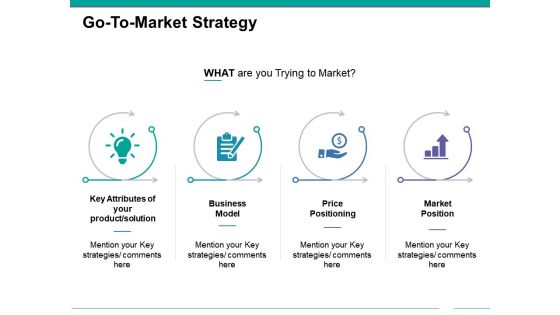
Go to market strategy ppt presentation examples




Try Before you Buy Download Free Sample Product
 Impress Your
 Audience
 100%
100% Editable
 Save Hours
 of Time


Folks get inspired from the first instance due to our Go To Market Strategy Ppt Presentation Examples. They will immediately join.
People who downloaded this PowerPoint presentation also viewed the following :
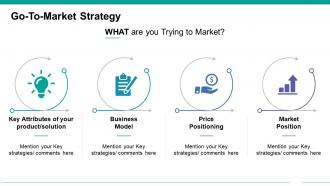
Go to market strategy ppt presentation examples with all 5 slides:
Give a huge boost to feelings of bonhomie with our Go To Market Strategy Ppt Presentation Examples. It helps increase camaraderie.
FAQs for Go to market strategy
So you'll need the obvious stuff first - who you're targeting, your value prop, pricing, and how you'll sell it. Marketing plan and timeline are must-haves too. Here's what trips people up though: they totally forget metrics and success indicators, which honestly makes the whole thing look amateur. Budget breakdown and resource needs should be in there, plus risks (everyone loves asking about what could go wrong). Oh, and competitive positioning - can't skip that. Keep it data-heavy where you can, but don't make it boring. End with actual next steps and assign owners, otherwise it just sits there collecting dust.
Honestly, segmentation is a game changer because you're not just throwing stuff at the wall hoping something sticks. Your sales team actually knows who they're pitching to and what problems matter to them. Generic pitches are dead anyway - people see right through that BS. Focus your budget on the segments that'll actually convert first instead of spreading yourself thin everywhere. You can customize pricing, messaging, even which channels you use for different groups. Oh and don't go crazy with this - pick like 2-3 main segments to start and build specific value props for each one.
Honestly, competitive analysis is like your sanity check before launching anything. Look at what your competitors are actually doing - their pricing, messaging, which channels work for them. Customer reviews are gold for this stuff. You'll find gaps you can jump into and avoid their obvious screwups. I always start with 3-5 direct competitors and just stalk their websites and pricing pages first. The whole point? Figure out how to sound different from everyone else instead of blending into the noise. Trust me, most companies skip this step and wonder why their launch fell flat.
Look at who's actually buying from you first - seriously, this part always surprises people because it's rarely who they expected. Check their demographics, what problems they're solving, how they behave. Then build detailed profiles that go way deeper than just age and income. What keeps them up at night? How do they make decisions? Survey them or do quick interviews to double-check you're not making stuff up. The whole point is getting specific enough that your message hits hard with the right people instead of being generic fluff that appeals to nobody.
Look, start with the big ones - customer acquisition cost, conversion rates through your funnel, and lifetime value. Monthly recurring revenue growth is obvious but still critical. Time to revenue matters too, especially if you're burning cash. Honestly, your business model changes everything though. B2B SaaS companies obsess over different stuff than e-commerce does. Sales cycle length becomes huge for enterprise deals. Don't try tracking everything at once - you'll go crazy. Pick maybe 3-5 metrics that actually move the revenue needle, then add operational ones later. Market penetration and product-market fit indicators are solid additions once you've got the basics locked down.
Honestly, pricing is like the foundation of your whole GTM thing. Get it wrong and everything else falls apart. High prices? You're talking enterprise deals with fancy sales teams. Go cheap and you'll need self-serve flows that actually work (easier said than done, trust me). The model matters too - selling subscriptions is totally different from one-time sales conversations. Different channels make sense at different price points. Your positioning changes. Even your ideal customer shifts based on what you're charging. That's why I always tell people to figure out pricing first, then build everything else around it.
Look, your UVP is what stops customers from picking your competitors instead of you. Without it, you're basically invisible in a packed market. Think about your customer's worst problem - then figure out how you solve it differently than anyone else. That becomes your north star for everything else. Pricing, messaging, where you advertise, all of it flows from there. I mean, if you can't explain why someone should care about your product over the dozen other options, you're already behind. Get super specific about what makes you different, then shout it from every rooftop.
Honestly, just force them into the same room regularly - weekly meetings work best. Same goals, same metrics, otherwise they'll keep working against each other which is so annoying to watch. Have marketing sit in on sales calls sometimes so they actually hear what prospects are saying. Sales needs to know what marketing promised in those emails too. Joint buyer personas help a ton here. Set up dashboards where everyone can see the whole pipeline, not just their piece of it. Once marketing gets why leads aren't converting and sales understands the messaging strategy, things start clicking way better.
Honestly, the worst thing you can do is skip validating your market early. I've seen too many people build stuff nobody wants. Don't spread yourself thin either - pick one customer type and crush it there first. Sales cycles? Yeah, they'll take way longer than you think. Your marketing and sales teams better be saying the same thing too, or you're screwed. And please test your pricing with actual people, not just Excel fantasies. Focus on nailing one segment before you even think about expanding. Way easier to build from something solid.
So map your digital stuff to each step of how customers find you. SEO, content, and socials get you discovered first. Then targeted ads and email sequences move people through the "thinking about it" phase - honestly, most businesses screw this up by jumping straight to the hard sell. Landing page optimization plus retargeting will close deals. After that, don't ghost them! Onboarding emails and social proof keep people coming back. Oh, and pick like 2-3 channels where your people actually are instead of trying to be everywhere at once.
Customer feedback is your sanity check - it'll show you where your assumptions are totally off. I'd collect it everywhere: product testing, post-launch, user interviews, surveys. People will surprise you with insights your team never thought of. Some of the smartest pivots happen when customers use your product completely differently than expected. Set up those feedback loops early so you can actually pivot your messaging or pricing quickly. The worst thing? Collecting tons of feedback then ignoring it because it doesn't match what you wanted to hear. Trust what they're telling you.
Honestly, you can't just copy-paste your strategy everywhere - each market is totally different. I learned this the hard way watching companies bomb in Japan because they ignored cultural stuff. Research your local competitors first, then figure out how people actually make decisions there. Germans communicate way differently than Americans, you know? Your pricing needs to match what people can actually afford, and sometimes you'll need local partners instead of going solo. Oh, and don't blow your whole budget at once - test small batches first. What crushes it here might be a total disaster over there.
Dude, timing can literally make or break everything. I've watched amazing products completely bomb just because they launched at the wrong moment. You're looking for that goldilocks zone - demand is there but it's not oversaturated yet. Jump in too early and nobody cares, wait too long and someone else already owns it. Check what's happening with seasons, the economy, what competitors are doing. Is your audience even paying attention right now? Honestly, flexibility matters more than having the "perfect" plan. Build wiggle room into your timeline so you can adjust if things shift. Do the research first though - don't just wing it.
New tech and trends totally flip your GTM approach - they create fresh channels, shift what customers expect, sometimes whole new markets pop up. AI lets you personalize outreach without losing your mind doing it manually. Social commerce is changing where people actually buy stuff now. I'm obsessed with Google alerts for staying current, plus a couple good industry newsletters. Don't jump on everything shiny, but don't wait until everyone's already doing it either. Pick 2-3 trends your audience cares about. Run small tests first - way less risky than going all-in.
So here's what works - tailor everything to your audience. Executives want the big picture stuff and ROI numbers. Sales teams need actual playbooks they can use day-to-day. I'm obsessed with making visual one-pagers because honestly, nobody reads long docs anymore. Same core message everywhere, but adjust how deep you go based on who you're talking to. Oh and definitely do regular check-ins since these strategies change fast. Start with a big kickoff meeting to get everyone aligned, then create specific resources for each team. Trust me, the sales folks will thank you for real customer profiles instead of generic fluff.
-
Easily Editable.
-
Visually stunning presentation, love the content.