


Marketing strategy sample ppt presentation





Try Before you Buy Download Free Sample Product
 Impress Your
 Audience
 100%
100% Editable
 Save Hours
 of Time


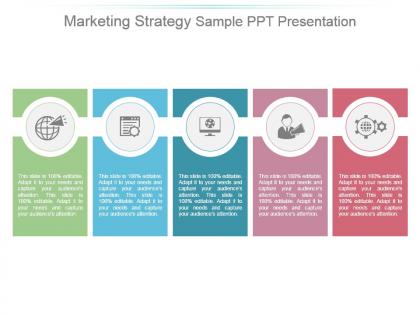
SlideTeam presents its Marketing Strategy Sample PPT Presentation. Using this business template, you can easily show your marketing goals in one comprehensive plan in form of a PPT. By using this professionally designed deck of seven high quality slides, you can make an outline of the specific actions to be taken over time to accomplish the objectives. This PowerPoint slideshow includes a five-stage process. This colorful tabular representation of marketing strategic planning is must for all business professionals if they want their employees to understand business strategies more appropriately. By using our strategy template, more profits can be earned as it represents your data in the most simple and understandable manner. Just following the instructions given in the sample slides of the deck will help you alter the size and orientation of the diagrams used to show various strategies. So to enjoy these benefits and bring your presentation to life, download this PPT slide. Be early off the blocks with our Marketing Strategy Sample Ppt Presentation. Get in the lead from the word go.
People who downloaded this PowerPoint presentation also viewed the following :
Marketing strategy sample ppt presentation with all 7 slides:
Decorate the chamber with our Marketing Strategy Sample Ppt Presentation. Folks will be happy to attend any event.


FAQs for Marketing strategy
Honestly, marketing comes down to four main things. Know exactly who you're selling to first - that's your foundation. Then figure out why they'd pick you over the competition (your value prop). Channel selection is where people mess up though - stop following trends and actually go where YOUR customers are. Oh, and don't forget to set up KPIs you can actually track. I swear half the marketers I know just throw stuff at the wall and hope it sticks. Start with nailing your audience, then everything else falls into place way easier.
Start by checking out who's already buying from you - what do they have in common? Don't just look at basic demographics though. Their actual behaviors matter way more, plus where they spend time online. Social media insights are super helpful here, and honestly just asking your customers directly works best. They'll straight up tell you what problems you're fixing for them. Once you've got that info, build some buyer personas - but seriously, don't go crazy with like 15 different types. Pick maybe 2-3 main groups and test your messaging on them first. You can always expand later once you nail those core audiences.
Okay so market research is like having GPS instead of just winging it with directions. Helps you actually find your customers rather than guessing where they hang out online. You can figure out what problems they're dealing with, what gaps exist in the market, and honestly - what messaging doesn't make them want to roll their eyes. Skip it and you're basically throwing money at campaigns that'll probably flop. Plus you get to see what competitors are doing. Even simple surveys or digging into your analytics works. I always tell people to do at least some basic research before planning their next campaign - saves so much headache later.
Honestly, stop trying to shout at everyone and actually talk *with* people instead. Pick one platform - seriously, just one - and get good at it before jumping around everywhere. Post stuff that actually helps or entertains your audience, not just random promotional garbage. Instagram Stories and TikTok trends are gold if you use them right. Comments and shares matter way more than likes btw. The key thing? Reply to people fast and don't sound like a robot when you do it. I've seen so many businesses fail because they treat social media like a billboard instead of a conversation.
Look, start with the basics - conversion rates, customer acquisition cost, and return on ad spend. Those actually matter. Then add lifetime value and engagement rates from your main channels. Brand awareness scores too if you're doing that kind of tracking. Don't get sucked into vanity metrics like follower counts unless they're genuinely driving sales (spoiler: they usually aren't). Pick maybe 5-7 metrics max that match what you're trying to accomplish. Set up a dashboard so you can see trends without digging through spreadsheets every time. Keep it simple and stick with it consistently.
Honestly, you've gotta check your data way more often - like weekly, not those useless quarterly reviews everyone does. Test small first before dumping money into big campaigns. When something's clearly flopping, just pivot already. I know it's tempting to jump on every new platform, but stick to where your people actually hang out. Track your main metrics more frequently so you can catch problems early. Also yeah, keep tabs on competitors and trends, but don't chase everything shiny. The whole market moves crazy fast now, so your strategy needs to move with it.
Honestly, multi-channel marketing is just about being where your customers actually are. Some people live on Instagram, others check email religiously, and some still prefer browsing your actual website (crazy, right?). Don't put everything into one channel though - I learned that the hard way when Facebook killed my organic reach overnight. The cool part is watching how they all connect. Someone sees your TikTok, joins your email list, then buys after you send a discount. But seriously, start with just 2-3 channels you can handle well. You'll burn out trying to be everywhere at once.
Honestly, just start with your customers' actual experiences - that's where the gold is. Share how they went from problem to solution using your stuff. Your founder's origin story works too, or any behind-the-scenes moments that feel real. Statistics are boring anyway - people connect with stories way more. I'd pick like 2-3 main narratives that show what you're really about, then tweak them for different platforms. Oh, and don't just dump features on people. Focus on the journey instead. Use these stories everywhere - content, social, sales pitches, whatever. Makes everything feel less salesy.
Start with the problem you solve that others don't tackle well. Map your audience's pain points first - then figure out what makes you genuinely different (not just "faster and cheaper" - ugh, everyone says that). Focus on the actual transformation customers get, not boring feature lists. Test different versions with real people to see what clicks. Oh, and make sure your final statement is clear enough for a kid to understand but specific enough that it couldn't describe your competitor down the street. You'll know it's right when it feels impossible to copy.
Analytics shows you what's actually working vs what you think is working. Track which channels get conversions, what content hits with different audiences, where you're burning money. Test stuff in real-time and switch direction fast. Your customers' actual behavior tells you way more than guessing - purchase patterns, engagement, timing, all that. Honestly, most people overthink this at first. Just get proper tracking set up on your current campaigns. Even basic Google Analytics will show you what's actually moving things forward. Way better than flying blind.
Honestly, it all comes down to three big things: no money, no clue what you're doing, and zero time. Like, you're already juggling everything from accounting to customer service - when are you supposed to learn Facebook ads? Meanwhile, your competitors have whole marketing departments. Budget-wise, you can't afford to mess up, but you also don't know which platforms actually work. My advice? Pick one or two places where your customers actually hang out. Don't spread yourself thin trying to be on every social platform - that's a recipe for burnout.
Honestly, emotional intelligence is like having a cheat code for marketing. Instead of just throwing stuff at the wall based on age groups or whatever, you actually get what makes people tick. We all know people buy with their feelings first - I mean, how many times have you impulse-bought something then scrambled to justify it? Once you tap into those emotional triggers and pain points, your messaging just hits different. Way better than boring feature lists that nobody cares about. Try mapping out your customer's whole emotional journey from discovery to checkout. Trust me, it works.
Honestly, AI and automation are changing everything right now - you can't ignore them in your strategy anymore. Personalization at scale? That's expected now, not impressive. Privacy laws are finally making companies get serious about first-party data (which is overdue if you ask me). Voice search is huge, plus social commerce is taking off. Your audience wants real, purpose-driven stuff that actually helps them - not just ads disguised as content. Oh, and sustainability messaging matters more than ever. Don't chase every trend though. Figure out what actually matches how your people behave first.
Don't just collect feedback once and call it done - make it a regular thing. Your sales team probably hears the most honest stuff anyway, so tap into that. Set up surveys, monitor social media, whatever works. Here's the thing though: actually look for patterns instead of just celebrating the compliments (we all do this lol). Those insights can shift your messaging or help you find new customer segments. Oh, and definitely tell people when you've made changes based on what they said. Pick one feedback method this week and review it monthly. Trust me, it's worth the effort.
Honestly, digital marketing isn't optional anymore - it's where everyone spends their time scrolling anyway. The cool thing is you actually get real data instead of just guessing if your ads worked (unlike those old newspaper ads my dad still swears by). You can target super specific people and tweak stuff immediately when it's not working. Don't try to be on every platform though - that's exhausting and expensive. Figure out where your actual customers hang out first. Then go all-in there.
-
Use of different colors is good. It's simple and attractive.
-
Awesome presentation, really professional and easy to edit.