


Go To Market Product Strategy Powerpoint Presentation Slides






Try Before you Buy Download Free Sample Product
 Impress Your
 Audience
 100%
100% Editable
 Save Hours
 of Time


Our Go To Market Product Strategy Powerpoint Presentation Slides are topically designed to provide an attractive backdrop to any subject. Use them to look like a presentation pro.
People who downloaded this PowerPoint presentation also viewed the following :
Content of this Powerpoint Presentation
Slide 1: This slide displays title i.e. 'Go-To-Market Product Strategy' and your Company Name.
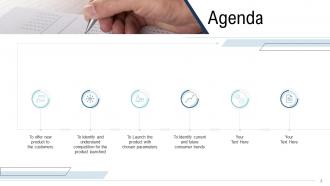
Slide 2: This slide presents agenda.
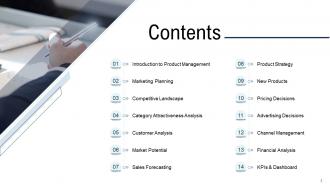
Slide 3: This slide exhibits table of contents.
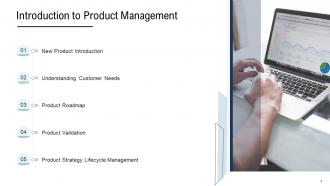
Slide 4: This slide shows title for five topics to be covered next in the template.
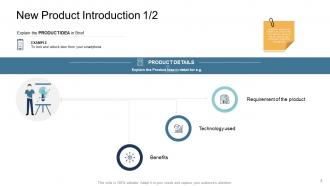
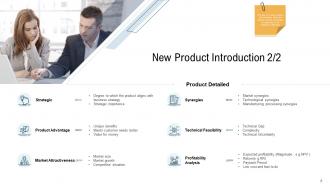
Slide 5: This slide explain your product idea in an effective manner so that the audience gets immersed in it right from the beginning.
Slide 6: This slide ensure that unsuitable ideas are rejected as soon as possible as ideas need to be considered objectively.
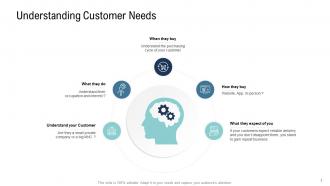
Slide 7: This slide showcase 'Understanding Customer Needs'.
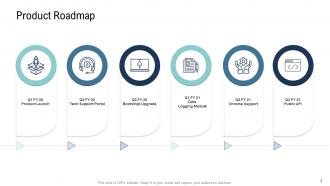
Slide 8: This slide depicts Product Roadmap.
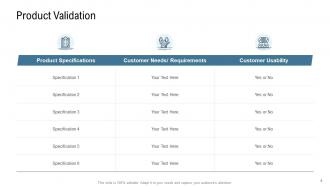
Slide 9: This slide highlights Product Validation.
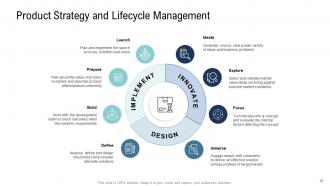
Slide 10: This slide illustrates Product Strategy and Lifecycle Management.
Slide 11: This slide displays title for next two topics to be covered in the template.
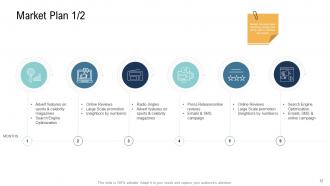
Slide 12: This slide presents Market Plan.
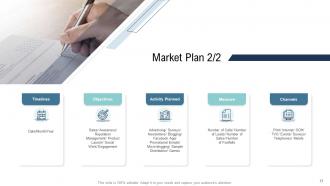
Slide 13: This slide exhibits continued content.
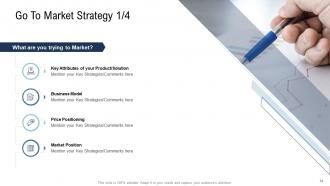
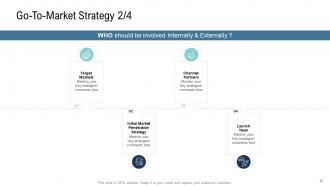
Slide 14: This slide shows Go To Market Strategy.
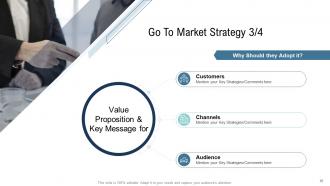
Slide 15: This slide exhibits continued content.
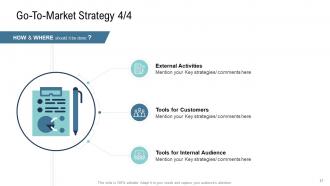
Slide 16: This slide depicts continued content.
Slide 17: This slide highlights continued content.
Slide 18: This slide illustrates title for next four topics to be covered.
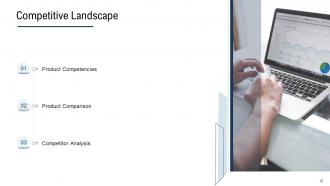
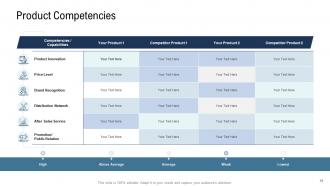
Slide 19: This slide displays Product Competencies.
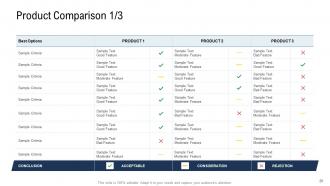
Slide 20: This slide shows Product Comparison.
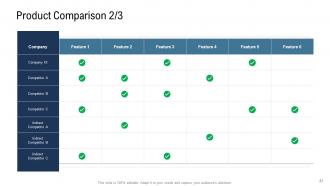
Slide 21: This slide exhibits continued content.
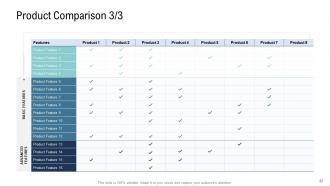
Slide 22: This slide depicts continued content.
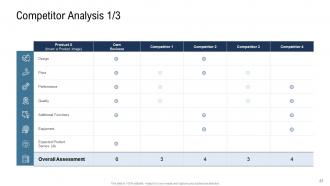
Slide 23: This slide presents Competitor Analysis.
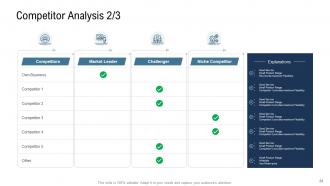
Slide 24: This slide exhibits continued content.
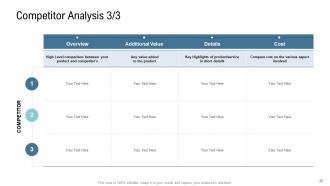
Slide 25: This slide shows continued content.
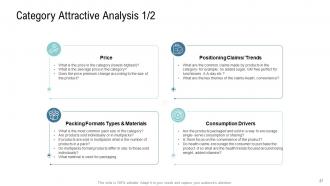
Slide 26: This slide highlights Category Attractiveness Analysis.
Slide 27: This slide displays Category Attractive Analysis.
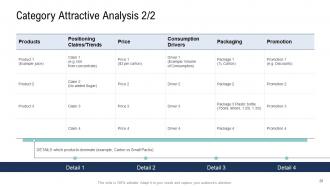
Slide 28: This slide exhibits continued content.
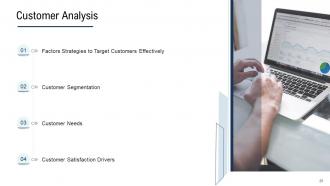
Slide 29: This slide presents title for next six topics to be covered in the template.
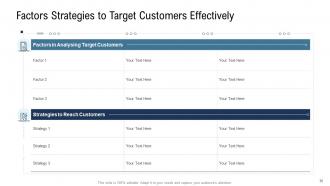
Slide 30: This slide shows Factors Strategies to Target Customers Effectively.
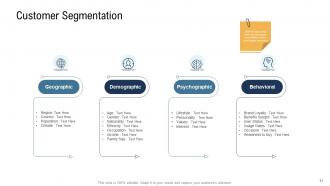
Slide 31: This slide depicts Customer Segmentation.
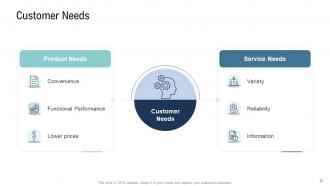
Slide 32: This slide highlights Customer Needs.
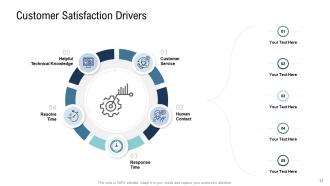
Slide 33: This slide presents Customer Satisfaction Drivers.
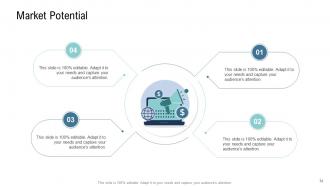
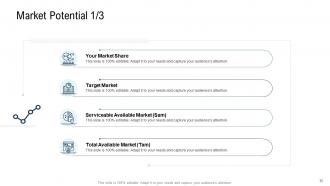
Slide 34: This slide exhibits Market Potential.
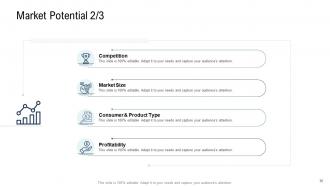
Slide 35: This slide exhibits continued content.
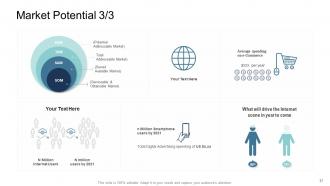
Slide 36: This slide shows continued content.
Slide 37: This slide depicts continued content.
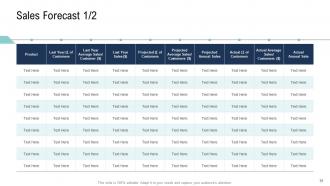
Slide 38: This slide displays Sales Forecast.
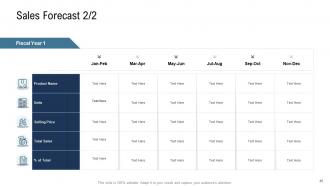
Slide 39: This slide exhibits continued content.
Slide 40: This slide depicts continued content.
Slide 41: This slide presents title for 'Product Strategy'.
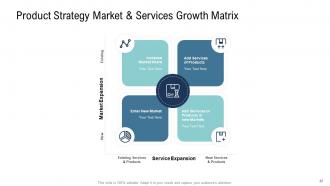
Slide 42: This slide displays Product Strategy Market & Services Growth Matrix.
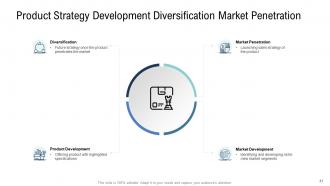
Slide 43: This slide exhibits Product Strategy Development Diversification Market Penetration.
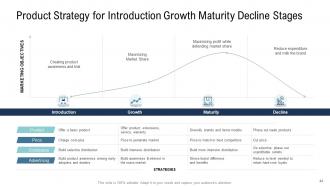
Slide 44: This slide presents Product Strategy for Introduction Growth Maturity Decline Stages.
Slide 45: This slide shows title for New Products.
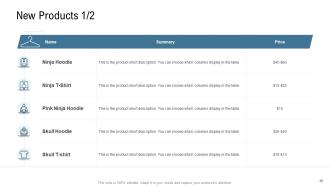
Slide 46: This slide exhibits continued content.
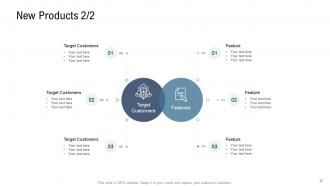
Slide 47: This slide shows continued content.
Slide 48: This slide depicts title for 'Pricing Strategies'.
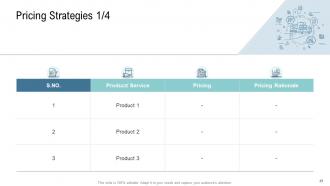
Slide 49: This slide exhibits continued content.
Slide 50: This slide displays continued content.
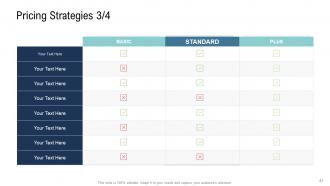
Slide 51: This slide shows continued content.
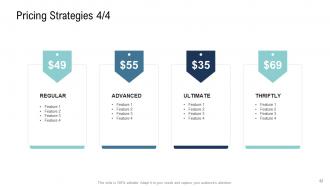
Slide 52: This slide depicts continued content.
Slide 53: This slide highlights title for next four topics to be covered in the template.
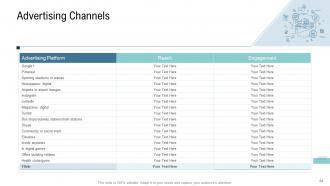
Slide 54: This slide illustrates Advertising Channels.
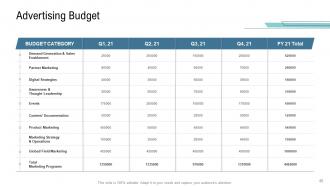
Slide 55: This slide displays Advertising Budget.
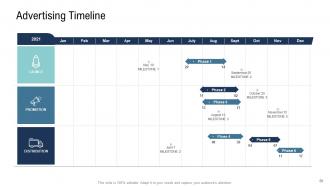
Slide 56: This slide presents Advertising Timeline.
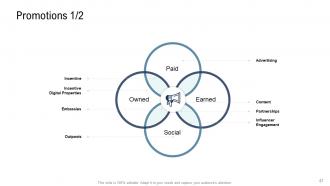
Slide 57: This slide shows Promotions.
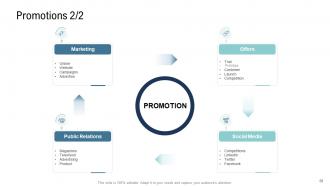
Slide 58: This slide exhibits continued content.
Slide 59: This slide depicts title for next three topics to be covered in the template.
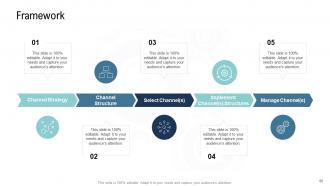
Slide 60: This slide illustrates Framework.
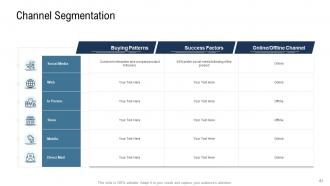
Slide 61: This slide highlights Channel Segmentation.
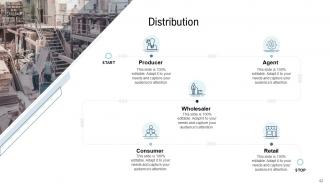
Slide 62: This slide displays Distribution.
Slide 63: This slide presents title for 'Financial Analysis'.
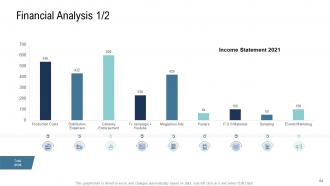
Slide 64: This slide shows financial analysis using bar chart.
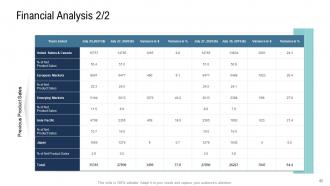
Slide 65: This slide exhibits continued content.
Slide 66: This slide depicts title for next four topics to be covered in the template.
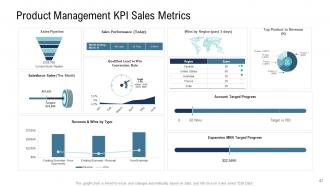
Slide 67: This slide highlights Product Management KPI Sales Metrics.
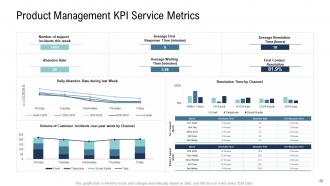
Slide 68: This slide illustrates Product Management KPI Service Metrics.
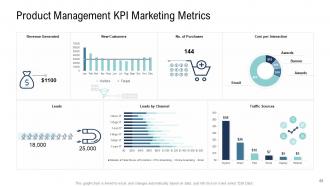
Slide 69: This slide displays Product Management KPI Marketing Metrics.
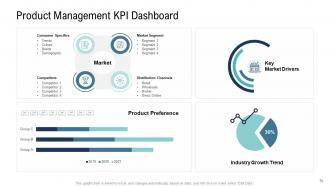
Slide 70: This slide presents Product Management KPI Dashboard.
Slide 71: This is the icons slide.
Slide 72: This slide presents title for additional slides.
Slide 73: This slide shows about your company, target audience and its client's values.
Slide 74: This slide presents your company's vision, mission and goals.
Slide 75: This slide depicts goals.
Slide 76: This slide shows details of team members like name, designation, etc.
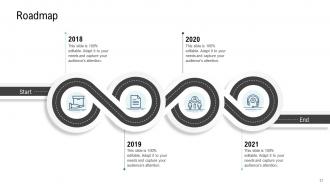
Slide 77: This slide shows roadmap.
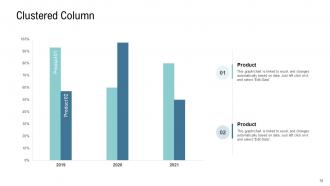
Slide 78: This slide exhibits yearly clustered column charts for different products. The charts are linked to Excel.
Slide 79: This slide depicts mind map.
Slide 80: This slide displays puzzle.
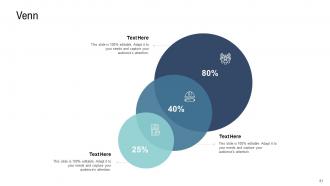
Slide 81: This slide displays Venn.
Slide 82: This slide exhibits ideas generated.
Slide 83: This slide depicts posts for important notes.
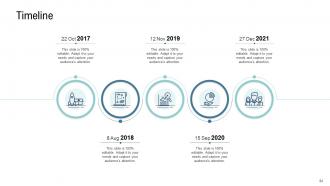
Slide 84: This slide exhibits yearly timeline.
Slide 85: This slide presents circular process.
Slide 86: This is thank you slide & contains contact details of company like office address, phone no., etc.
Go To Market Product Strategy Powerpoint Presentation Slides with all 86 slides:
Use our Go To Market Product Strategy Powerpoint Presentation Slides to effectively help you save your valuable time. They are readymade to fit into any presentation structure.










FAQs for Go To Market Product Strategy
So you need to figure out who you're actually selling to first - that's where most people mess up tbh. After that, nail your value prop and pricing strategy. Find the right sales channels where your customers are already hanging out (not just where you think they should be). Oh and competitive positioning matters too. The messaging part is huge - skip the corporate speak and talk like a human. I know it sounds obvious but seriously, so many businesses just guess at their audience and wonder why nothing works. Get that part right and everything else becomes way easier.
Look, market research is literally your GPS for GTM strategy. It shows you who to target and how to position everything. Customer interviews are gold - you'll uncover pain points and messaging that actually hits. Competitive analysis comes next (honestly my favorite part because finding gaps competitors missed feels like winning the lottery). Without this stuff? You're throwing darts blindfolded at pricing and channels. Those two things - customer interviews and competitor research - will give you like 80% of what you need. Way better than just winging it and hoping something sticks.
Honestly, pricing is everything for your go-to-market strategy. It shapes which customers you can even go after, how you stack up against competitors, plus what sales channels actually make sense. I've watched teams try to figure out messaging first, then pricing later - total disaster. Short sentences work. Your price point basically decides if you need self-serve signup, inside sales, or full enterprise deals. Different price tiers mean completely different customer acquisition costs too. My advice? Figure out what people will actually pay first (like, do real research), then build everything else around that number. Way easier than doing it backwards.
Honestly, just dig into your current customer data first - see who's actually buying vs who you think should be. That gap can be eye-opening! Pull in some surveys and check what competitors are doing too. Focus on stuff that actually matters for your product: job titles, company size, budget, how they make decisions. Don't go crazy with segments though. I'd stick to maybe 3-5 buyer personas max. Any more and you'll lose focus. Once you've got them mapped out, test different messages with each group. Some will click, others won't - that's how you know you're onto something.
Honestly, most people try to appeal to everyone and that's a disaster. Talk to 10-15 potential customers first - seriously, this will save you so much time and guesswork later. Don't launch without knowing what success actually looks like (hint: it's usually revenue, not just "getting your name out there"). Your pricing needs to match what people can actually afford and how they buy stuff. B2B sales take forever, way longer than you think. Oh, and everyone does terrible competitive research or just skips it entirely. That's basically shooting yourself in the foot before you even start.
Honestly, digital marketing can supercharge your entire go-to-market plan. Build awareness through targeted ads and content. Then nurture those leads with email sequences - people love seeing social proof too. The best part? You'll actually know what's working in real-time instead of guessing like those ancient billboard days. Pick where your customers actually spend time online and show up there with good content. Here's what I'd do: start with maybe 2-3 channels tops, test your messaging, then go all-in on whatever converts. Don't make the mistake of trying to be everywhere - you'll just burn out.
Track both leading and lagging indicators - conversion rates, cost per acquisition, time to close for the front end. Revenue stuff like MRR, deal size, customer lifetime value obviously. User engagement is honestly where most people mess up though - activation rates, feature adoption, retention rates. Also keep an eye on sales cycle length and how fast deals move through your pipeline. Set up a dashboard that shows real-time data, not just last quarter's numbers. I'd pick maybe 5-7 core metrics max and check them weekly. Don't overthink it.
Think of competitive analysis like checking out what everyone else is doing before you make your move. Look at 3-5 direct competitors - their pricing, messaging, what they're missing. That's how you figure out where you actually fit in. Without this stuff, you're basically throwing darts blindfolded and hoping something sticks. The research will shape everything from your pricing to which customers you go after first. I always tell people to find one thing you can own that's different from everyone else. It's honestly the difference between standing out and getting lost in the noise.
Start with getting everyone on the same page about what counts as a qualified lead. Sales and marketing need to agree on handoff processes too - sounds boring but it's where most teams fall apart. Weekly check-ins work well, gives sales a chance to complain about lead quality (kidding, but not really) and marketing can tweak campaigns based on feedback. Don't try to fix everything at once though. Pick one simple process change first. Oh, and make sure your CRM and marketing tools actually talk to each other - you'd be surprised how often they don't.
Look, customer feedback is gold for your GTM strategy. First thing - use early feedback to nail your messaging before launch. Trust me, beats doing awkward pivots later when everyone's watching. Feed those insights into your sales materials so your team knows what actually works. Pricing and features? Let feedback drive those decisions too. Beta customers are perfect for testing your whole market approach - keep that loop going. Oh, and positive feedback makes killer social proof for marketing. Just make sure you're collecting feedback at different customer touchpoints and actually do something with it. Most people collect it then let it sit there, which is totally useless.
Your product dev basically shapes your entire go-to-market plan. Target audience, pricing, messaging - it all flows from what you're actually building. New products need way more educational content and longer sales cycles. I've watched teams launch too early and it's painful every time. Existing feature updates? Way easier since you already have customers and channels that work. Oh and don't fall for wishful thinking on timelines - match your GTM to real development milestones. That's where most people mess up.
Honestly, I'd start with some basic market research first - figure out what locals actually want and what regulations you're dealing with. Partnering with local distributors is pretty smart since they already have the connections and know the weird quirks of doing business there. Testing things digitally is probably your best bet initially. Way less risk than jumping straight into physical locations. Pick one city or region to focus on though, don't spread yourself too thin trying to tackle everything at once. I've seen companies mess this up by going too broad too fast. Get it right in one spot, then expand from there.
Partnerships are honestly a game-changer for speeding up your go-to-market. You get warm intros instead of cold outreach, which is huge. Plus you're borrowing their credibility with customers who already trust them. Look for companies targeting your same audience but not competing directly - they might have distribution channels or use cases you haven't thought of yet. The trick is making sure there's real value for both sides. I've seen too many "partnerships" that are basically just one company trying to piggyback off another. Start by mapping out who serves your customers but offers something totally different.
Distribution channels will totally reshape your whole approach to customers and what you'll need resource-wise. With direct sales, you get control and better margins, but honestly you're looking at a bigger team and those painfully long sales cycles. Partners help you scale way faster and cut upfront costs - just know you're giving up some control over how customers experience your product. Digital's obviously the most scalable route, though it really works best for simpler products. Here's the thing though - each channel pulls in different types of customers. Enterprise folks expect that direct sales treatment, while smaller businesses usually just want to figure it out themselves. Match your channels to your product's complexity and who you're actually trying to reach.
Honestly, stories just stick in people's heads way better than boring feature lists. Your GTM needs that emotional hook - when prospects can actually relate to your narrative, you're golden. Look at Apple (yeah, overused example but whatever) - they don't sell phones, they sell "think different." Build your story around the transformation your product creates. Then thread that narrative through everything - your pitch, website, sales calls, all of it. Creates this consistency where prospects start seeing themselves in your solution. People buy into stories they can picture themselves in, not spreadsheets full of specs.
-
Appreciate the research and its presentable format.
-
Colors used are bright and distinctive.
-
Nice and innovative design.
-
Innovative and Colorful designs.
-
Easily Editable.
-
Great quality slides in rapid time.
-
Good research work and creative work done on every template.
-
Easily Editable.
-
Awesome use of colors and designs in product templates.
-
Very unique, user-friendly presentation interface.
-
Page:
- You're currently reading page 1
- Page 2
-
