


Hair Transplant Clinic Brochure Trifold




Try Before you Buy Download Free Sample Product
 Impress Your
 Audience
 100%
100% Editable
 Save Hours
 of Time


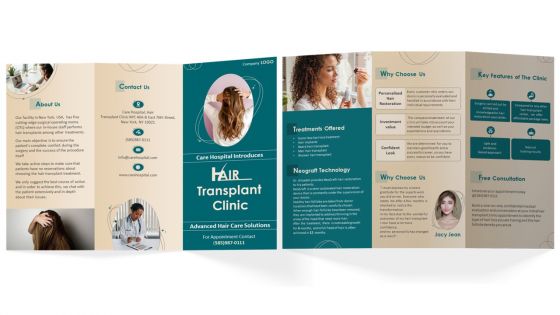
Promote your Medical Business, using this eye-catching Hair Transplant Clinic Trifold Brochure Template. Utilize this brochure presentation template to provide basic information about the Clinics contact, expertise and services offered. This Medical theme brochure PowerPoint can be employed to emphasize the Clinics special NanoGraft Technology used in hair transplantation. Leverage this professionally produced PPT brochure to highlight clinics key features, safe environment and qualified staff. To attract clients, use this brochure PowerPoint template to showcase customer reviews, medical staff testimonials and specialization.
People who downloaded this PowerPoint presentation also viewed the following :
Hair Transplant Clinic Brochure Trifold with all 1 slides:
Use our Hair Transplant Clinic Brochure Trifold to effectively help you save your valuable time. They are readymade to fit into any presentation structure.
FAQs for Hair Transplant
Definitely find someone board-certified who does hair transplants full-time, not just as a side thing. Their before/after photos should be legit patients - some places use fake stock photos which is sketchy as hell. I'd check reviews everywhere, not just their site. A good consultation means they'll actually look at your hair loss and be honest about what's realistic. Don't cheap out on this one, seriously. Your head isn't worth saving a few bucks over. Oh, and talk to at least 2-3 places before you decide anything.
Dude, the surgeon's experience is everything. I'm talking night and day difference in results. A good one won't damage your follicles during extraction and knows exactly how to angle each hair so it looks natural - not like some weird doll head situation. Bad surgeons? Total nightmare fuel, trust me. They also get how different hair types work with your face shape, which matters more than you'd think. When you're looking around, definitely ask to see their actual before/after pics and find out how many procedures they've personally done. Don't just go with whoever's cheapest.
So there's basically two ways they do it - FUE and FUT. Most people go with FUE these days because they pluck out individual follicles, so no nasty scar line. FUT is where they slice off a whole strip from the back of your head (ouch, right?). You get more hair in one go but you're left with this permanent line scar. FUE costs more but honestly, it's worth it for the minimal scarring. When you're shopping around, definitely ask which one they're best at and make them show you real before/after pics from their patients.
So they'll examine your scalp and check out your donor area to see if you're even a good candidate. The surgeon should explain which technique fits your situation and show you realistic before/after pics. Costs, timeline, aftercare - they'll cover all that stuff too. Some places honestly feel super pushy with their sales tactics, which is annoying. Good clinics focus more on educating you first. Don't just look at their glossy marketing photos either. Ask about complication rates and push to see actual patient results from regular people.
Dude, the aftercare is honestly pretty simple but you can't slack on it. Keep everything clean and dry the first couple days - no hair washing until they say it's cool, usually day 2 or 3. Sleep propped up on pillows to avoid looking like a pufferfish (you will anyway, but whatever). Don't work out, stay out of direct sun, and seriously don't pick at the scabs even though it's torture. Oh, and that care sheet they give you? Actually follow it this time instead of winging it like usual. Your scalp will thank you later.
Dude, hair transplant prices are all over the place - like $4K to $15K+ for basically the same thing. Location matters a ton (Manhattan's gonna cost way more), plus surgeon experience and which technique they use. FUE runs pricier than FUT since it takes forever. Some clinics hit you with random fees while others are upfront about everything. Here's the thing though - expensive doesn't always mean better, and cheap isn't necessarily sketchy. I'd honestly just get quotes from maybe 3 or 4 places and see what they actually include. Makes comparing way easier.
Bleeding, infection, and scarring are the main ones to watch for. Your head's gonna be swollen and numb for a while after - that's expected. What really throws people off is when their existing hair falls out at first, but it grows back. Honestly, the worst outcomes are when grafts don't take or it looks totally fake. Some folks need multiple rounds if they didn't set realistic expectations upfront. Oh, and occasionally people get lingering pain or weird little cysts. Find a board-certified surgeon for sure. Don't just look at those perfect photos on their site though - ask to see real patient results, including the less-than-perfect ones.
So they'll basically check out your donor hair first - that's the back and sides where they harvest from. Your scalp health matters too, plus how much you've actually lost so far. Age can be tricky though - sometimes younger guys have to wait if their hair loss pattern isn't set yet, which sucks but makes sense. They'll dig into your medical history to see if anything might mess with healing. Honestly, most decent places do free consultations anyway, so just book one. Every situation's different and you won't know until someone actually looks at your head.
Dude, the tech for hair transplants is insane now. They've got these robotic systems that can pluck individual follicles super precisely - way less scarring than the old methods. The imaging stuff maps your whole scalp first, then they use special software to actually design your hairline before starting. Honestly, the microscopes they use are wild too. Oh, and there's apps now that track how you're healing, which is kinda cool I guess. If you're seriously thinking about it, definitely ask what equipment they're using. Makes a massive difference in how it turns out.
First thing - check if they're board certified by the American Board of Hair Restoration Surgery. Online reviews are huge, but don't just look at their website (duh, those are handpicked). Hit up multiple review sites. Ask to see real before/after pics and get references you can actually call. I'd also verify their medical license through your state's board - that stuff's public anyway. During consultations, ask tons of questions about their experience and success rates. Good clinics won't get weird about being transparent. Honestly, if they seem dodgy about any of this, run.
Honestly, those first 48 hours are everything - don't even think about washing your hair. After that, be super gentle for weeks. Sleep propped up and resist the urge to scratch (hardest part IMO). Take whatever meds they give you religiously. Your clinic will want to see you at certain points to check how things are healing. I'd say weeks 1-2 are make-or-break time for whether those grafts actually take. Don't bail on appointments even if you think it looks good - sometimes issues aren't obvious to us regular people.
Robotic FUE systems are getting crazy precise these days. PRP treatments have basically become standard - kinda surprised how fast that happened tbh. Stem cell therapy is showing real promise for actually stimulating new growth, which is huge. DHI is another technique that's picking up steam since they don't have to pre-punch the recipient holes. Hair cloning research sounds amazing but that's still years away from being real. Oh, and definitely ask whatever clinic you're looking at what new tech they're actually using - some places just talk a big game.
Good clinics will straight up show you scar photos from real patients during your consult. FUE leaves these tiny dots that you can barely see, but FUT gives you a line scar - though it's usually covered by your hair anyway. They should explain your healing patterns and scalp type too. Honestly, the sketchy places try to dodge the scar conversation entirely. Don't let them do that. Ask for specific examples and what their aftercare looks like. Also get details on their post-op protocols before you decide anything.
Dude, so the transplanted hair is permanent which is great. But your natural hair? Still gonna keep doing its thing unfortunately. Genetics are ruthless like that. You'll probably need to stay on minoxidil or finasteride to stop losing more hair around the transplant area. PRP sessions help too - some people swear by them. Start your maintenance routine early, like within a few months after surgery. Don't wait around thinking you're all set forever. Your clinic should hook you up with a long-term plan before you bounce.
So they'll basically use the Norwood scale for guys and Ludwig for women to figure out your hair loss pattern. Most places now have digital imaging instead of those weird old mirror things (thank god). They check your scalp under magnification, look at donor area density, and see how fast it's progressing. Your age and family history matter too when they're deciding between FUT or FUE. Honestly, don't go anywhere that just looks at photos - you need someone who'll actually examine your scalp in person. That hands-on assessment is what separates the good consultants from the ones just trying to sell you something.
-
A beautiful, professional design paired with high-quality images and content that is sure to impress. It is a must-use PPT template in my opinion.
-
Huge collection of high-quality templates. Worth each penny.