


Hr Team Monthly Calendar For Year 2023




Try Before you Buy Download Free Sample Product
 Impress Your
 Audience
 100%
100% Editable
 Save Hours
 of Time


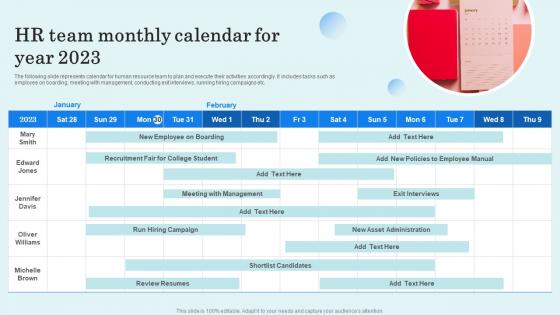
The following slide represents calendar for human resource team to plan and execute their activities accordingly. It includes tasks such as employee on boarding, meeting with management, conducting exit interviews, running hiring campaigns etc.
People who downloaded this PowerPoint presentation also viewed the following :
Hr Team Monthly Calendar For Year 2023 with all 6 slides:
Use our Hr Team Monthly Calendar For Year 2023 to effectively help you save your valuable time. They are readymade to fit into any presentation structure.





FAQs for Hr Team Monthly Calendar
Start with last year's calendar and just update the dates - way easier than starting over. Block out your big compliance stuff first: performance reviews, benefits enrollment, regulatory deadlines. Then add recruiting pushes if you do seasonal hiring. Oh and don't skip the team building events - I know they seem cheesy but they actually work for keeping people around. Training rollouts and policy updates need spots too. One thing I learned the hard way: build in buffer time around holidays when everyone's checked out mentally.
Dude, get Calendly or When2meet - seriously game changers for team meetings. Sync everything to one shared Google Calendar so nobody's confused about what's happening when. The automated reminders are clutch, trust me on this one. For recurring stuff like reviews or all-hands meetings, just set those to repeat automatically. Your HRIS probably integrates with your calendar too, which is super handy for blocking interview slots. Oh, and pick ONE platform and make everyone actually use it. Otherwise you'll still be drowning in scheduling emails forever.
Honestly, people are terrible at checking calendar invites so you gotta hit them from multiple angles. Email the announcement first, then drop it in your team Slack. Put everything on the shared calendar with solid descriptions - include time zones and meeting links because someone always asks. The 48-hour reminder is clutch. Oh, and make one central HR calendar everyone can subscribe to. Saves so much back-and-forth later. Use the same naming format for events so people don't have to decipher what "Q4 thing" actually means. Trust me on that one.
Honestly, I'd say weekly if you can manage it. Once a month is the bare minimum but things are constantly shifting - people getting hired, training dates moving around, random policy stuff popping up. What works for me is setting aside like 15 minutes every Monday morning to scan through everything. Maybe that's overkill but whatever. Also get your team to give you a heads up the second something changes instead of waiting around. Oh and definitely set a recurring reminder or you'll totally forget about it!
Oh man, definitely block out open enrollment first - that's always a nightmare in October/November. Performance reviews too, obviously. Mark your big recruitment pushes for whenever you guys are hiring like crazy. Compliance training deadlines will absolutely sneak up on you (they always do), and don't skip the diversity months or employee appreciation stuff. Leadership development programs are worth noting too. Mental health awareness weeks have gotten pretty big lately, so throw those in. Honestly, I'd color-code everything by which departments it hits hardest - makes it way easier to see what's gonna wreck everyone's schedule each month.
So I'd grab that 2023 HR calendar and mark out the big stuff first - Employee Appreciation Week, Mental Health Awareness Month, major holidays. Having it visual is a total game changer, trust me. Pick like 3-4 themes you actually care about and build around those. The trick is spacing things out so you're not doing everything in December (we've all been there). Budget planning gets way easier when you know your dates upfront. Start with recognition events and wellness challenges - those usually hit well. Honestly beats scrambling last minute.
Okay so D&I totally changes how you approach the HR calendar. Survey your team first - find out what holidays and observances actually matter to them. You'll probably discover stuff you never thought about! Then when you're planning, don't just block out the usual Christmas/Thanksgiving dates. Add Diwali, Ramadan, Juneteenth, Hispanic Heritage Month, whatever reflects your actual workforce. I learned this the hard way when we scheduled a big launch during Eid. Also map out your D&I training sessions and awareness campaigns so they don't clash with important cultural dates. Makes such a difference.
Start by syncing your HR calendar with whatever big goals the company's chasing in 2023. Growth targets, culture changes, new ops stuff - figure out what leadership actually cares about. Then build your HR timeline around theirs. Say there's a major product launch in Q2? Get your hiring and training lined up to hit before then. Honestly, I think of the HR calendar as what keeps the whole company from falling apart. Block time for the fires you'll inevitably need to put out, but also the strategic projects that matter. Oh, and definitely review it with leadership every quarter so you're not working in a vacuum.
Honestly, just go with Google Calendar or Outlook since they already work with your email setup. Color-coding is a game changer - like blue for interviews, red for deadlines, whatever works. Your team will actually see what's coming up without digging through emails. If you need fancier stuff later (automated reminders, HRIS integration), then look at Calendly or maybe Asana. But seriously, pick whatever everyone's already comfortable with. I've seen too many teams switch to some "perfect" system that nobody bothers updating. The one they'll actually use beats the fancy one sitting empty.
Honestly, just ask them what they actually want! I'd start with a simple Google form - like top 3 event ideas they're into. Team building, lunch sessions, wellness stuff, whatever. Get a small committee going too. They'll know way better than you what'll actually get people excited (trust me on this one). Throughout the year, do quick polls before spending money on events. The whole point is making them feel heard instead of just... planning at them, you know? It's not rocket science but makes a huge difference.
Definitely track attendance vs actual participation - there's a huge difference between warm bodies and engaged people. Post-event surveys are honestly your best friend for gauging if anyone actually cared or learned something useful. I always check if people follow through afterward too, like did they download those resources or try implementing stuff? Cost per person matters (boring but true), plus whether you hit any diversity goals. The real magic happens when you can connect events back to bigger picture things like retention rates. Oh, and don't overthink the metrics - sometimes you just know when something clicked with people.
Oh nice, so the HR calendar has these little markers showing which days are remote/hybrid friendly. Super useful honestly - saves you from accidentally showing up when everyone's working from home. You can filter events by location type, and hybrid stuff gets tagged with "attendance mode" so you'll know if you need to be there physically or can just hop on a call. Oh and it syncs with your WFH schedule if you set one up. Definitely peek at the hybrid guidelines first though, you can customize how everything displays. Makes planning way less of a headache.
So basically, the calendar shows you all your hiring timelines and when different departments usually need people. Super useful for seeing campus recruitment seasons coming up. You can spot scheduling conflicts too - like holidays that'll mess with your interview process. Honestly, the onboarding part is probably the most helpful bit. Instead of doing orientations whenever someone starts, you can batch them monthly. Way less chaotic. Oh, and it blocks out time for training sessions so you're not constantly firefighting. I always forget about company events screwing up my schedule, so having that visual really helps.
Honestly, don't do what we did and cram all reviews into December - what a disaster that was! Space them out quarterly or every six months instead. I usually block off entire weeks on my calendar just for reviews, and never during crazy times like budget season. Managers need at least 2-3 weeks heads up to actually prepare decent feedback. Oh, and definitely send those reminder emails with all the prep stuff attached beforehand. Makes everything run so much smoother and people don't show up totally unprepared.
Oh totally! Seasonal stuff is perfect for HR planning. January's great for wellness programs since everyone's on that New Year health kick anyway. Summer holidays? Prime time for team building when people aren't stressed about deadlines. And honestly, themed company events during holidays just hit different - people actually show up and have fun. One thing though - you gotta start planning way ahead because those busy periods sneak up fast. I'd map out your big seasonal moments first, then build everything else around them. Makes the whole year feel more natural instead of random.
-
I'm happy to discover your PowerPoint presentations and templates. They met my expectations precisely. Very innovative!
-
The presentations are very helpful. I am always able to get appropriate templates for the different topics related to my profession.