


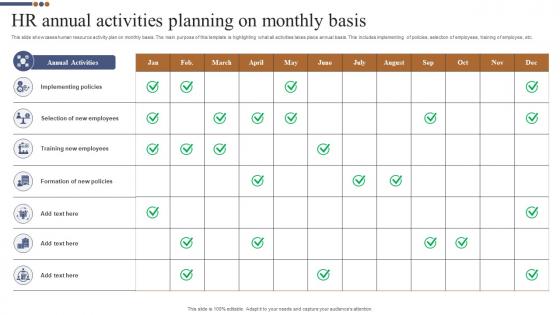
HR Annual Activities Planning On Monthly Basis




Try Before you Buy Download Free Sample Product
 Impress Your
 Audience
 100%
100% Editable
 Save Hours
 of Time


This slide showcases human resource activity plan on monthly basis. The main purpose of this template is highlighting what all activities takes place annual basis. This includes implementing of policies, selection of employees, training of employee, etc.
People who downloaded this PowerPoint presentation also viewed the following :
HR Annual Activities Planning On Monthly Basis with all 9 slides:
Use our HR Annual Activities Planning On Monthly Basis to effectively help you save your valuable time. They are readymade to fit into any presentation structure.









FAQs for HR Annual Activities Planning
Start by looking at what bombed last year vs what actually worked - that'll save you tons of headache. Map out your hiring forecasts and employee development stuff first. Performance reviews, compliance training, comp reviews... honestly the benefits planning always catches everyone off guard so get that on the calendar early. I'd break everything into quarters so you're not scrambling later. Don't skip the engagement initiatives either - people notice when you forget that stuff. Policy updates and any big org changes need their own timeline too. Oh, and tie it all back to your headcount projections and whatever strategic goals leadership is pushing this year.
So basically, data analytics stops you from just winging it with HR stuff. Pull your hiring data from the last 2-3 years and look for patterns you probably missed. Like when do you always end up scrambling for people? Which job boards actually bring in good candidates vs the expensive ones that suck? Honestly, most teams wait way too long to do this - it's such a game changer though. You'll spot seasonal trends, see which departments have crazy turnover, that kind of thing. Then instead of guessing you need more people, you can actually show your boss exactly when demand hits.
First thing - actually dig into your company's strategic plan (yeah, I know it's probably boring as hell). Map everything you do back to those goals. Company expanding? Focus on hiring and getting new people integrated. Budget cuts happening? Double down on keeping good people around and streamlining processes. Honestly, this sounds obvious but most HR teams just do the same stuff year after year. Skip the generic training programs unless they're tied to something specific the business needs. Set up quarterly reviews to see if you're actually making a difference or just spinning your wheels.
Honestly, you've gotta nail down your KPIs before you start anything. Employee engagement scores, retention rates, time-to-hire - whatever fits your goals. I made this mistake once and felt like an idiot when my boss asked for results and I had... nothing concrete. Just my "feelings" about how it went, which doesn't fly in boardrooms. Mix hard numbers with surveys or focus groups for the full picture. Oh, and don't wait until December to check how things are going - build in regular touchpoints throughout the year. Make sure your metrics actually tie back to business goals so you can prove HR isn't just throwing pizza parties.
Honestly, anonymous surveys work best - people actually tell you the truth when they're not worried about getting in trouble. After that, do some focus groups to dig deeper into what they said. Oh, and definitely get different departments involved in the planning committees early on. That's huge because they know what'll actually work day-to-day. The timing matters too though - you've gotta ask while you can still change things, not after you've already decided everything. People can smell fake consultation from a mile away. Give them real input and they'll actually care about making it work.
Honestly, you've got to bake compliance into your annual planning right from the start. Do a full audit of where you stand with FMLA, ADA, wage laws - all that fun stuff. I'd set up quarterly check-ins so you're not panicking come December. Get your legal team involved early to catch regulatory changes before they bite you. Here's what works: create a compliance calendar that runs alongside your regular HR timeline. Have someone actually watch for new legislation in your area - maybe set up alerts or whatever. The whole point is staying ahead of problems instead of playing catch-up later. Trust me, proactive beats reactive every single time.
Look, talent development is basically the backbone of HR planning - affects everything from who gets promoted to how much you're spending. First thing? Audit your current skill gaps because that'll shape your whole strategy. Map out training programs and leadership stuff that actually matches where the company's headed this year. Honestly, most people think it's just fluff but it drives real results when you don't half-ass it. You'll want to spot your high-potential people early and create clear development paths for them. Oh, and budget for both internal workshops and external training - you'll need both.
Don't treat D&I like some separate thing you check off. Weave it into everything - recruitment targets, manager training, pay audits. Pick 2-3 solid goals that actually connect to your business needs and fund them properly. Track your numbers every quarter, not once a year when someone remembers. Honestly, I'm so tired of seeing companies do a couple diversity workshops and think they're done. That's not how change happens. Tie manager reviews to inclusive leadership too - people won't prioritize what doesn't affect their performance rating.
Ugh, remote HR planning is such a pain. Time zones mess everything up and people constantly bail on meetings. Getting everyone pumped about yearly goals through Zoom? Good luck with that. Those random hallway chats where the best ideas happen? Gone. Your main headaches will be guessing headcount when teams are scattered everywhere, creating virtual events that don't make people want to die, and making sure managers don't ghost their direct reports on development stuff. Oh, and start planning way earlier than normal - like, annoyingly early. Build in tons of check-ins too.
Honestly, tech can save you so much time on annual planning - I wish I'd figured this out sooner. HRIS platforms automatically pull workforce data and generate reports, so you're not stuck doing everything manually (seriously, death by spreadsheet is real). Project management tools are great for mapping timelines and getting tasks to the right people. Survey platforms make gathering employee feedback way easier too. AI tools can spot trends and help predict what you'll need down the road. My advice? Figure out which parts of your process are the biggest time sucks first, then find tools to fix those.
Okay so obviously you've got venue, catering, speakers, materials - the basic stuff. But employee time is where it gets pricey. Pull 50 people for half a day? That's actual payroll dollars. Travel and hotels add up crazy fast too, especially anywhere decent. Get quotes early because good venues book out like months ahead. Oh and seriously, pad your budget by at least 10-15%. Something always costs more than you think it will - learned that one the hard way. The sneaky costs are what'll bite you.
Definitely use employee feedback as your foundation - way better than just winging it. Pull all your survey data, exit interviews, pulse checks, whatever you've got. Look for the patterns that keep showing up across different teams and figure out what's actually bugging people most. Honestly, I've watched so many HR folks plan stuff nobody wanted and then act surprised when it bombs. Group everything into maybe 3-4 big themes you can tackle this year. The trick is turning those complaints into real goals you can measure. Don't try to fix everything at once though - focus on what'll actually help retention.
Definitely track turnover rates, time-to-hire, and engagement scores - those are your bread and butter. Performance review efficiency and training completion rates matter too. Cost-per-hire will save you headaches during budget season, trust me on that one. Internal mobility is honestly one of my favorites because it shows if people actually want to grow there or just escape. Oh, and diversity hiring metrics if you've got targets set. Pull this stuff monthly though, not quarterly - you'll thank yourself later when you're not panicking trying to find patterns in December.
Build this into your annual planning right from day one. I subscribe to industry reports and join HR networks to see what competitors are doing talent-wise. Honestly, I waste way too much time scrolling LinkedIn but it's weirdly good for catching trends early. Google alerts are your friend - set them up for key sector terms. Then actually schedule quarterly reviews to see what's heading your way. The trick is making it formal, not just something you'll get to "when you have time" (spoiler: you won't). I block out monthly time to dig into what I'm seeing because otherwise it just sits there.
PowerPoint or Google Slides are the usual suspects, but honestly? Canva's HR templates are actually pretty decent and will save you a bunch of work. I'd start by dumping everything into a basic Excel sheet first - just brain dump all your activities by quarter. Makes it way easier to see what you're working with. Then maybe use Miro or Lucidchart to map out your timeline visually before you jump into slides. I always get carried away trying to make things look perfect right off the bat, but it's better to nail down your structure first. You can make it pretty later.
-
I looked at their huge selection of themes and designs. They appeared to be ideal for my profession. I'm sure I'll grab a few of them.
-
It makes easy work of my work presentations. I’ve never had to be nervous about my presentations for meetings.