


Human Resource Team Functioning Timeline




Try Before you Buy Download Free Sample Product
 Impress Your
 Audience
 100%
100% Editable
 Save Hours
 of Time


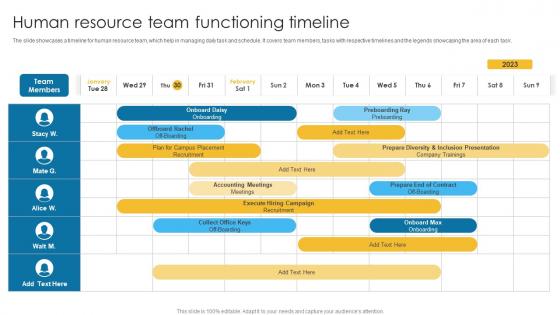
The slide showcases a timeline for human resource team, which help in managing daily task and schedule. It covers team members, tasks with respective timelines and the legends showcasing the area of each task.
People who downloaded this PowerPoint presentation also viewed the following :
Human Resource Team Functioning Timeline with all 6 slides:
Use our Human Resource Team Functioning Timeline to effectively help you save your valuable time. They are readymade to fit into any presentation structure.





FAQs for Human Resource
Hey! HR timelines usually break down into four phases. First up is planning and setup - defining roles, processes, all that foundational stuff. Recruitment and onboarding comes next (this part honestly drags on forever sometimes). Then you hit development and maintenance where you're juggling performance reviews, training sessions, employee drama - the daily grind basically. Last is evaluation and optimization. Here's the thing though - those last two phases? They just keep cycling. You're constantly switching between keeping things running smoothly and tweaking what's broken based on whatever feedback comes your way.
Honestly, most HR teams live in their own little world and wonder why nobody takes them seriously. Start having real conversations with department heads - not just formal meetings, but actual check-ins about what's keeping them up at night. Figure out what the business actually needs, then build your programs around that. Like if everyone's talking about innovation, your hiring better reflect that vibe. Oh and make a simple dashboard showing how your stuff connects to real business results. Makes everything way more obvious when you're fighting for budget later.
Onboarding starts right after you hire someone and basically determines if they'll stick around or bail early. First 90 days are crucial - that's when people go from being totally lost about benefits to actually doing useful work. Good onboarding gets people productive faster and stops them from quitting, which honestly saves you from having to recruit all over again (such a pain). I'd set up checkpoints at 30, 60, and 90 days so you can track how well they're settling in. It really does make or break whether someone becomes a solid team member.
Oh definitely - training programs work great for keeping people around! You'll start seeing real results after about 6-12 months though, so don't expect instant magic. The stats are pretty solid: employees getting regular training are 42% less likely to bail within two years. But here's the thing - it can't just be random workshops about whatever. Connect it to actual career paths or people will see right through it. I'd track your current retention numbers first so you can prove it worked later (your boss will love having those numbers). Honestly, when people feel like they're actually growing somewhere, they tend to stay put.
Track both leading and lagging stuff - recruitment metrics like time-to-fill, cost-per-hire, plus candidate satisfaction. Employee engagement scores are huge, along with retention rates and performance ratings. Honestly, those last ones show if you're actually making a difference or just shuffling papers all day. HR case resolution time matters too, and don't sleep on training completion rates. I'd throw in some team productivity metrics and maybe stakeholder surveys. Set up a basic dashboard you check monthly - that way you'll catch problems before they blow up. Way easier than playing catch-up later.
Honestly, timing changes everything with employee feedback. You'll want pulse surveys early to spot gaps and figure out your team priorities. Mid-implementation is where things get messy - that's when you're course-correcting strategies that totally missed the mark. Most teams either nail the pivot here or just keep digging that hole deeper, which is painful to watch. Later on, feedback shifts to fine-tuning and tracking long-term results. Annual reviews work better for big-picture strategic stuff. Just set up those feedback loops now so you're not guessing your way through decisions.
Oh man, recruitment is brutal honestly. Time pressure is the worst part - everyone wants people hired yesterday but then complains when candidates aren't perfect. You're basically competing with every other company for decent talent, which sucks. Plus hiring managers have these crazy unrealistic expectations... like wanting senior-level skills for intern pay, you know? The sourcing part kills me too. Set clear expectations early though - tell stakeholders what's actually possible timeline-wise and what the candidate pool really looks like. Trust me, it'll save you so many annoying conversations later.
Honestly, tech can save you so much time if you set it up right. Start with an ATS for recruiting and maybe an HRIS platform to automate onboarding stuff. Interview scheduling tools are a lifesaver too. Performance management software keeps track of goals year-round instead of that crazy scramble we all do during review time. Oh, and chatbots handle those repetitive employee questions that eat up your day. Analytics dashboards show you turnover patterns in real-time. My advice? Figure out what's eating most of your time first, then pilot just one tool before going overboard with the whole tech stack thing.
Performance reviews are honestly your best friend for planning everything else. They give you these perfect checkpoints to spot who needs training, figure out promotions, and catch problems early. I always tell people to think of them like getting your car inspected - annoying but super necessary. Space them out so you actually have time to fix stuff between cycles. Map out those review dates first, then build your other HR stuff around them. That way you're not scrambling or doing random initiatives that don't connect to anything. Trust me, it makes the whole year flow better.
Here's the thing - succession planning isn't really a project you start and finish. It's more like... always happening in the background? You're constantly spotting talent and figuring out who needs what development. The formal stuff happens during annual planning (Q4 usually) and performance reviews - that's when you actually update charts and pipeline assessments. But the real magic is in those random hallway conversations and just paying attention day-to-day. I'd suggest building it into quarterly leadership meetings though, otherwise it gets buried under whatever fire you're putting out that week.
Honestly, skip the big flashy stuff and just be consistent. Weekly one-on-ones beat those yearly surveys every time (though free pizza never hurts lol). When someone does good work, call it out in front of everyone. Actually listen when people complain about something and fix it if you can. People need to feel safe screwing up occasionally - that's huge. Your culture shifts super slowly, so don't expect changes overnight. I'd just pick one small thing you can realistically do every week and start there. Maybe it's just walking around asking how projects are going?
Honestly, most companies just wing it with HR stuff. You've gotta actually ask your people what they want - quarterly surveys work great. Track who's leaving and why (exit interviews are gold but everyone just ignores them afterward). Then actually DO something with that info. Pick the area where you're bleeding talent and try small tweaks first. Don't treat your strategy like it's written in stone - things change too fast for that. I've seen places turn around retention just by fixing one annoying policy everyone complained about.
So compliance is basically like having timeline rules you can't break. You know how you can't just fire someone on the spot? There's documentation periods and proper procedures to follow. FMLA stuff has crazy strict deadlines too - miss those and you're screwed. Honestly it's a pain sometimes but keeps you from getting sued. The trick is factoring these windows into your planning upfront. Otherwise you'll be that person thinking something takes three days when compliance makes it three weeks. Trust me, plan for the bureaucracy from the start.
Ugh, economic changes are the worst for HR planning. Budget cuts mean hiring processes drag on forever - what used to take weeks suddenly becomes months of waiting around. But then when the job market gets crazy competitive, you're scrambling to make offers before someone else snatches your perfect candidate. I swear, nothing kills a quarterly plan faster than some random economic announcement. Last year my team had to completely redo our timeline because of market volatility (still bitter about that). Always build in extra time though - like, way more buffer than you think you need. Trust me on this one.
Pick 3-4 metrics that actually matter for what you're trying to fix. Measure them before you start anything - that's your baseline. Turnover rates, engagement scores, time-to-hire are the usual suspects. Track quarterly so you can spot trends. Honestly, surveys can be total BS if people aren't being real with you. Mix in exit interviews and casual manager check-ins too. Focus groups work but they're kind of a pain to organize. The key is staying consistent with whatever you pick - same metrics, same timing. Otherwise you're just collecting random data that won't tell you much.
-
Amazing variety of PowerPoint slides. Really helpful in designing professional presentations.
-
Best Representation of topics, really appreciable.