


Human Resource Monthly Recruitment Report




Try Before you Buy Download Free Sample Product
 Impress Your
 Audience
 100%
100% Editable
 Save Hours
 of Time


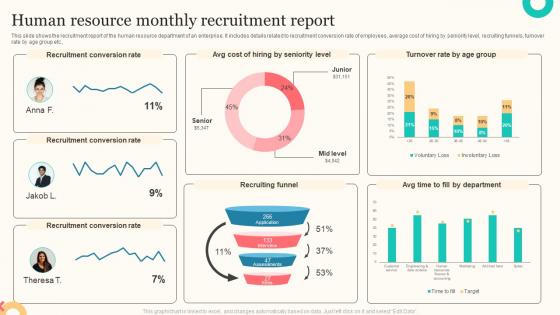
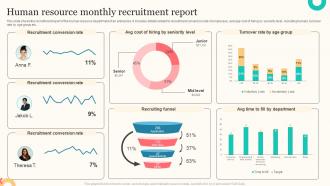
This slide shows the recruitment report of the human resource department of an enterprise. It includes details related to recruitment conversion rate of employees, average cost of hiring by seniority level, recruiting funnels, turnover rate by age group etc.
People who downloaded this PowerPoint presentation also viewed the following :
Human Resource Monthly Recruitment Report with all 7 slides:
Use our Human Resource Monthly Recruitment Report to effectively help you save your valuable time. They are readymade to fit into any presentation structure.





FAQs for Human Resource
Honestly, I'd focus on three big things. Can they actually do the work? Check their technical stuff and experience, but don't stress if it's not perfect - you can teach skills. Way more important is whether they fit your vibe and seem like they'd grow with you. I always look for good communication and genuine interest in what we're doing. Do they give solid examples when talking through problems? The questions they ask back tell you a lot too. Also, this might sound cheesy, but trust your instincts about working with them every day.
Honestly, tech can save you so much time if you're drowning in resumes. ATS systems automatically filter candidates by keywords - no more reading through hundreds manually. My favorite trick? Video screening tools that skip the whole "when are you free" email chain. Chatbots answer basic candidate questions (even at weird hours), and automated follow-ups keep people in the loop. Oh, and those analytics dashboards actually show you where you're losing people in the process, which is pretty eye-opening. Pick one tool that fixes your biggest headache first, then add more later.
Your company's reputation as a workplace is everything when it comes to landing great people. Top candidates aren't just salary hunting anymore - they're researching what it's actually like to work there. Culture matters. How you treat employees matters. Here's the thing: when your employer brand is solid, the best talent starts coming to you instead of the other way around. Way easier than constantly recruiting. Candidates who already dig your vibe are also much more likely to say yes to offers. My advice? Start being real about your workplace on social media and review sites. Authenticity wins.
Honestly, good job descriptions are like dating profiles - be specific about what you want or you'll get a mess of random applications. When you're detailed about requirements and daily tasks (even the boring stuff), people filter themselves out before applying. Sure, you'll get fewer resumes, but they're actually worth reading. I worked with a team that cut their screening time in half just by listing must-haves separately from nice-to-haves. Don't oversell the role either. Nobody wants to show up expecting creativity all day and end up doing data entry for six hours.
Honestly, blind resume screening is a game-changer - just strip out names, photos, and schools at first. Panel interviews help too since it's way harder for one person's random bias to take over the whole decision. I'd also suggest standardized questions so you're not accidentally asking different stuff based on who walks in. Oh, and try to mix up your interview panel if you can swing it. The whole point is forcing yourself to actually judge skills instead of going with whatever vibe you get in the first 30 seconds. Start with just one of these changes though - don't overwhelm yourself trying to fix everything at once.
Honestly, just pick one platform first - don't spread yourself too thin. LinkedIn's obviously great for most professional roles, but if you're hiring developers, they're probably on Twitter. Instagram works surprisingly well for creative positions. Post your jobs, sure, but the real magic happens when you show actual behind-the-scenes stuff. People are so tired of corporate BS - they want to see what working there actually looks like. Targeted ads help you zero in on the right skills and demographics. Your current employees are basically walking recruitment machines though. Get them sharing and referring people from their networks. That's where the good candidates usually come from anyway.
Track your basics first: time-to-fill, cost-per-hire, and quality of hire. Source effectiveness is huge - figure out which job boards or referrals actually work. Application completion rates will save you from losing great people to a crappy process (learned that the hard way). Candidate experience scores matter more than most people think. Offer acceptance rates tell the real story about whether your process sucks or not. Oh, and definitely check retention after 6-12 months - hiring fast doesn't mean you're hiring smart. Start there, then build out from what you're seeing.
Dude, cultural fit matters way more than people think. I've watched super talented people crash and burn because they just couldn't vibe with the team - it's brutal honestly. The friction spreads to everyone and kills morale fast. But don't confuse this with hiring clones of yourself, you know? Look for people who share your core values and can actually work with your style. Get your team involved in interviews too. You'll dodge so many headaches by catching mismatches early instead of dealing with the fallout later.
Honestly, just don't leave people hanging - that's like 80% of it right there. Keep your application under 15 minutes and make sure it works on phones. Send actual updates at every step, even when you're rejecting someone (I know, it sucks but do it anyway). Be real about timelines too. Quick thing - I've watched amazing candidates just disappear because companies go radio silent for weeks. So weird. Give them a honest preview of what the job's actually like, let them ask about culture stuff, not just technical skills. Oh and treat them like they're already on your team during interviews. The good ones will remember that.
Honestly, start by pulling your last six months of hiring data - see which sources actually gave you your best people. Most companies have this info just sitting there unused, which is crazy. Track stuff like time-to-hire and where candidates drop off in your process. Which job boards work? Are referrals better? Also look at interview-to-hire ratios and diversity metrics. You can even dig into which interview questions predict success (that one's pretty interesting). Don't overcomplicate it though. Begin simple and focus on what's actually driving results.
Honestly, the main thing is don't discriminate against protected groups - race, gender, age, disability, religion, sexual orientation. That's what'll land you in hot water legally. Focus your job posts and interviews on actual job skills, not random personal stuff. Unconscious bias is tricky though, it sneaks in even when you're trying to be fair. Document everything - your hiring decisions, why you picked someone, all of it. Save yourself the headache later if someone questions your process. When something feels sketchy, just run it by HR first. Way better than dealing with a lawsuit.
Look, D&I initiatives basically open up your hiring pool way more than you'd think. You're removing barriers that make good candidates from different backgrounds just... skip your job posts entirely. Inclusive job descriptions help, plus partnering with diverse orgs shows you actually care about equity. Diverse interview panels are game-changers too - they spot bias that solo interviewers totally miss. It's kinda wild how much difference it makes. You end up fishing in way better waters than your competitors. Quick tip? Audit your current job posts for weird exclusive language first. You'll probably be surprised what you find lurking in there.
So soft skills are actually super important when hiring for specific roles - they tell you way more about day-to-day performance than technical tests do. Client-facing jobs? Communication and empathy matter most. Leadership roles need strong conflict resolution abilities. I've watched brilliant people completely fail because they couldn't work with others or handle change (honestly happens more than you'd think). The trick is figuring out which soft skills actually matter for each role, then creating real ways to test them in interviews. Don't just rely on your gut.
Honestly, you've gotta go all-in on video interviews and online assessments now. Ditch the local-only mindset—this is your chance to recruit from literally anywhere. Make your job posts scream "remote-friendly culture" instead of those useless office perks. Try some collaborative online tasks during interviews to see how people actually work, not just how they interview. Oh, and do virtual office tours or casual team intros so candidates get the vibe. I mean, why limit yourself to whatever talent happens to live nearby when you can tap into way bigger pools? The whole process needs to be virtual-first now anyway.
Start with a welcome email before day one - logistics, schedule, maybe some swag if you're into that. Have their desk ready when they arrive. Pair them with a buddy who isn't their boss. Week one should be about meeting people, not cramming policy manuals down their throats (seriously, save that stuff for later). Give them actual work within the first week - something meaningful they can dig into. Check in at 30, 60, and 90 days to see how they're feeling. Oh, and set clear 90-day goals so they know what winning looks like. Makes a huge difference.
-
Extensive range of templates! Highly impressed with the quality of the designs.
-
SlideTeam is very efficient when it comes to saving time. I am happy that I chose them for my presentation.