


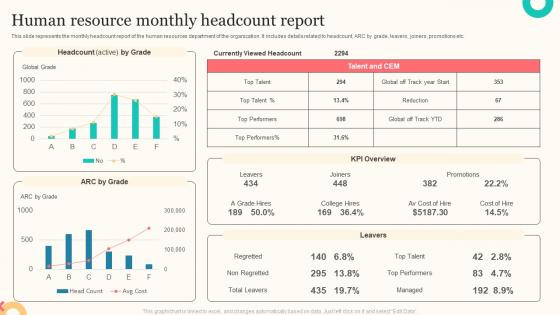
Human Resource Monthly Headcount Report




Try Before you Buy Download Free Sample Product
 Impress Your
 Audience
 100%
100% Editable
 Save Hours
 of Time


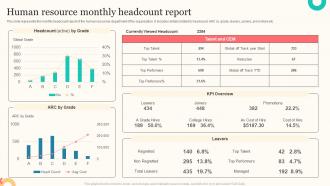
This slide represents the monthly headcount report of the human resources department of the organization. It includes details related to headcount, ARC by grade, leavers, joiners, promotions etc.
People who downloaded this PowerPoint presentation also viewed the following :
Human Resource Monthly Headcount Report with all 7 slides:
Use our Human Resource Monthly Headcount Report to effectively help you save your valuable time. They are readymade to fit into any presentation structure.





FAQs for Human Resource
Budget's usually the biggest factor, plus whether you're actually hitting your revenue targets. Growth projections matter too - like where the business is headed next year. I'd also look at your current team's workload capacity because sometimes you think you need more people but really you just need better processes (learned that the hard way lol). Market conditions can totally screw things up even when you desperately need hires. Compliance stuff might force headcount changes too. Build a solid case tying new hires directly to revenue impact. Come with real data when you pitch it!
Honestly, headcount is tricky - more people usually means more output but it's not always that simple. Overstaffing will wreck your margins while too few people just burns everyone out (and burned out teams are useless). Revenue per employee is a good metric to watch. If you're growing fast, coordination becomes a nightmare. Too slow and you'll miss opportunities while your current team gets overworked. The sweet spot really depends on where you are business-wise and what stage you're at. I've seen companies mess this up both ways honestly.
Honestly, three things have worked best for me: planning ahead, cross-training everyone, and actually using your data. I always forecast staffing needs like 6-12 months out - sounds excessive but trust me on this one. Cross-training is a lifesaver too, especially when someone calls out sick during your busiest week. Track stuff like productivity per person and turnover monthly so you can catch problems early. Oh, and contractors are great for those crazy peak periods instead of hiring permanent people you don't really need. Keep an eye on your headcount ratios and fix small issues before they get expensive.
Honestly, tech can be a game-changer for headcount stuff. Workforce analytics help you predict when you'll need more people based on past data and trends. Automated scheduling is clutch for covering shifts without hiring too many people. Real-time HR systems make spotting gaps super obvious - way better than those ancient spreadsheets we used to rely on. AI tools can even predict who's about to quit (kinda creepy but useful). Best part? You're not stuck doing manual headcounts anymore. Just pick something that plays nice with whatever HR system you're already using.
Ugh, turnover messes with headcount planning so badly. People leave unexpectedly and suddenly you're scrambling to fill critical spots while still hitting your growth targets. I always tell people to build in buffer capacity - hire more than you think you need because some will definitely bail. Track your turnover by department though, that's clutch. Different teams have totally different patterns. Once you know the rates, work them into your forecasts so you're not blindsided every time. Still annoying but at least you'll see it coming.
Look, revenue per employee is your best bet for a north star metric - tells you if hiring actually pays off. I'd also watch utilization rates and how long new people take to get productive. Span of control matters too (basically how many reports each manager has). Honestly? Most companies just obsess over growing headcount but totally ignore efficiency stuff, which seems backwards to me. Track cost per hire and turnover since replacing people gets pricey fast. But yeah, start with revenue per employee - if that's climbing while you're scaling, you're probably on the right track.
Look at your past data first - figure out when things get crazy busy. Mix permanent staff for regular times with temps for the rush periods. Seasonal workers are clutch, and temp agencies honestly make life so much easier. Cross-train your current people too so they can jump between roles when needed. Part-timers who can add hours during crunch time? Perfect. Oh, and contractors work great for some situations. Just don't wait until you're drowning to start hiring because that's when everyone else is scrambling for the same people.
So here's the thing - diversity totally changes how you approach headcount planning. You can't just randomly fill positions anymore. Most companies are tracking diversity metrics now (adds another headache to the whole process, tbh). When planning your hiring, look at where your current team has representation gaps. Then adjust your recruiting strategy to address those areas. The key is thinking about both the total numbers AND the actual mix of people you're bringing on board. It's way more strategic than just "we need 5 more engineers" - you need varied backgrounds and perspectives to build stronger teams.
Look, you gotta stop hiring based on what feels safe and start thinking about what actually makes sense for your business. Full-time people? Perfect for your core stuff that needs deep company knowledge. But contractors can be clutch for projects, busy seasons, or when you need someone who's just really good at one specific thing - honestly sometimes way better than your own team. Figure out which roles actually need someone who bleeds your company colors versus jobs where you just need solid work done. I'd start by looking at who you have now and asking which positions really move the needle for your business.
Honestly, the timeline thing gets everyone - hiring takes forever and you'll always underestimate it. Don't just throw numbers around without looking at your actual cash flow either. I learned that one the hard way. Seasonal stuff matters too, like do you really need permanent hires for project work? Oh, and factor in that some of your current people might leave while you're planning all this growth. Always build in extra time for hiring delays. Test your numbers against different revenue scenarios before you make any offers - saves you from looking like an idiot later.
Honestly, it's all about what industry you're in. Tech companies are wild - they'll hire like crazy then BAM, hiring freeze when things get sketchy. Healthcare and education? Way more predictable, just steady growth. Manufacturing ties everything to production cycles, so expect seasonal ups and downs. Same with retail but they go nuts during holidays obviously. The whole gig economy thing throws a wrench in everything since those aren't even real employees technically. My advice? Don't compare your headcount planning to random market data. Find companies in your actual industry - that's the only way the numbers will make sense for what you're dealing with.
Oh man, workforce changes are such a pain. If you're cutting 50+ people, WARN Act kicks in - that's 60 days notice to employees and local government. Super annoying but legally required. Check any employment contracts or union stuff first too. Hiring's honestly worse though - equal opportunity laws, background checks, making sure job posts don't accidentally sound discriminatory. Every state has different rules which makes it even more confusing. Definitely get your legal team involved before doing anything major, especially layoffs. Trust me on this one.
Honestly, collaboration tools are a lifesaver for this stuff. You can throw all your employee info into shared Google Sheets or something like Notion - who's on what team, start dates, roles, the whole deal. Real-time updates are clutch because nobody wants to deal with those ancient org charts that are completely wrong. Slack works great for quick headcount notifications too. Set up alerts so when someone joins or bounces, everyone knows right away. I've seen teams use basic spreadsheets and they work just fine - don't overthink it.
Dude, when you're short-staffed, people burn out so fast it's not even funny. Your team ends up juggling way too much and morale just tanks. Nobody wants to do three people's jobs forever, you know? Overstaffing's the opposite problem - people start feeling useless when there's not enough work to go around. Most places I've seen struggle with being understaffed though, honestly. You want that sweet spot where everyone's busy but not drowning. Check your engagement scores lately? If they're dropping, maybe look at workloads first before assuming it's something else entirely.
Look, headcount analysis basically shows you where all your people and money are sitting - by team, level, function, whatever. You'll spot the overstaffed areas pretty quick, plus any skill gaps that are hurting you. Some departments are gonna be manager-heavy (honestly, half these org charts look ridiculous). Pull your current data first - department, role, how long people have been there. Then figure out what actually matters for your strategy. You can run different scenarios before doing anything drastic. It's way better than just guessing where to cut or add people.
-
I faced no difficulty while searching for the slide I wanted. Honestly, the website’s interface is easy to use and can be navigated easily!
-
Understandable and informative presentation.