

Quarterly Update Dashboard For Employee Headcount And Promotions





Try Before you Buy Download Free Sample Product
 Impress Your
Audience
 100%
Editable
 Save Hours
of Time


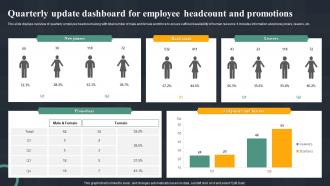
This slide displays overview of quarterly employee headcount along with total number of male and female workforce to ensure sufficient availability of human resource. It includes information about new joiners, leavers, etc.
People who downloaded this PowerPoint presentation also viewed the following :
Quarterly Update Dashboard For Employee Headcount And Promotions with all 7 slides:
Use our Quarterly Update Dashboard For Employee Headcount And Promotions to effectively help you save your valuable time. They are readymade to fit into any presentation structure.





FAQs for Quarterly Update Dashboard For Employee
Honestly, it's all about the math. Growing companies create new positions, so you'll have more shots at moving up. But most places right now? They're keeping headcount flat or cutting it. That means you're fighting everyone else for the same few spots. Smaller teams = fewer manager roles = way more competition. It sucks, but that's reality. Your best move is finding a company that's actually expanding. Or get creative - pitch some new responsibilities that could justify bumping you up and creating a role that didn't exist before.
Track promotion rates as a percentage of headcount and time-to-promotion by level. Internal fill rates matter too - shows if you're developing people internally. Check the retention of newly promoted folks because honestly, what's the point if they bail after six months? Look at promotion distribution across departments and demographics to catch any weird gaps. Compare high performers getting promoted vs just the people who've been around forever. Industry benchmarks help if you can find decent data. Set up quarterly dashboards so you can actually spot patterns instead of just guessing what's working.
Yeah, so when you're hiring more people, your current team sees actual promotion opportunities opening up. That's massive for keeping them around. Plus you can spread the workload better so people aren't burning out and quitting. But if you can't grow headcount - and honestly, most companies are pretty tight right now - you gotta find other ways to keep people interested. Lateral moves work. So do new projects or letting them learn different skills. The biggest thing though? Don't leave your team guessing about where the company's headed. People need to know if growth is coming or if they should look elsewhere.
Honestly, you've gotta separate promotions from whether there's an open spot. Judge people on their actual performance and skills instead of just "do we have room right now?" I've watched so many companies screw this up during hiring freezes. Good people bail because they feel stuck. Way better to promote someone even if it means temporarily having more senior people on the team. Document your decisions though - keeps everything fair. And definitely be upfront about how the whole process works. People hate being in the dark about this stuff, especially when headcount gets weird.
So basically, you can't do succession planning without knowing your headcount situation first. Like, how many leadership spots will you actually need to fill? When someone's retiring or you're expanding, that headcount data shows you exactly where to focus your energy - because yeah, training five people for two openings is just wasteful. Map out those career paths based on what your org structure actually looks like now and where it's headed. The real win is catching talent gaps before they bite you. Nobody wants to be that person scrambling when their star employee gives two weeks notice. I'd start by comparing current numbers to what you'll need in the next few years.
Okay so you gotta think sideways instead of just up, you know? Like give people "lead" titles where they mentor newbies without the formal manager headache. Cross-training is clutch - helps folks grow plus you get backup when someone's out sick. I'd also rotate cool projects around so everyone gets a shot at something different. Title bumps and salary increases work when you can't add another layer of management. Honestly though, the biggest thing is just being real with people about what's actually possible given your size. Have those career convos regularly so nobody's sitting there wondering what their future looks like.
Dude, don't fall into the over-promotion trap during growth spurts. You'll end up with people drowning in roles they can't handle yet - total recipe for disaster. Communication gets messy when you create too many layers. Plus it's kinda cruel setting someone up to fail like that. Short bursts work better anyway. Instead of just promoting everyone to fill spots, bring in some experienced folks at the right levels. I learned this the hard way at my last company - we promoted our best developer to manager and he was miserable for months. Mix internal promotions with strategic external hires.
Honestly, most teams totally mess this up - they don't map promotion timelines against their budget cycles at all. Start tracking who's promotion-ready like 6 months early. Then create a rolling forecast and treat those promotions exactly like new hires when you're doing capacity planning. Super basic but people skip it constantly! You'll need buffer time because this stuff always drags longer than you think. Oh and definitely loop in finance early about the costs coming down the pipeline. Have backup plans ready for when headcount freezes hit (and they will).
Honestly? Speed up those promotions and stop waiting for perfect candidates. I learned this one the hard way - when turnover's crazy, promote people with potential and then mentor the hell out of them. Cross-train several folks for important roles so you're not totally screwed when someone bounces. Be really upfront about what it takes to get promoted and when it'll happen. People stick around when they actually see others moving up. The trick is promoting fast but giving them tons of support afterward. It's messy but it works way better than playing it safe.
Yeah, headcount totally affects promotions. Smaller teams are brutal - fewer senior spots means you're basically waiting for someone to leave or they have to justify creating a whole new role just for you. Larger departments? Way more promotion tracks and they can usually absorb new senior people without drama. You might need broader skills in a small team to prove you're worth it. Honestly, I'd just ask your manager straight up about the promotion timeline and if they're planning any headcount changes. That's gonna tell you way more than guessing. Your chances really depend on which department you landed in - it's kinda unfair but that's how it works.
Set performance criteria based on the next level up, not just their current job. Quarterly reviews work great for growing teams. Document examples as they happen - trust me, you don't want to scramble later trying to remember what someone did six months ago. Look at results AND potential growth. Ask yourself "what would success look like with more responsibility?" Honestly, consistency is everything here. Same framework for everyone so promotions don't feel random or unfair. People can smell favoritism from a mile away.
Look, first thing - dig into your promotion data and see who's actually moving up. The patterns might shock you, honestly. Set real diversity targets for leadership spots and track where people are getting stuck. Create clear promotion criteria that cut down on bias, and don't let all-white panels interview for senior roles (that's just asking for trouble). Oh, and actively sponsor promising folks from underrepresented groups instead of waiting around for magic to happen. Build this stuff into your headcount planning from the start. Makes it strategic, not some random HR checkbox.
Ugh, the worst thing you can do is just promote whoever's been there longest or rush to fill an empty spot. Those managers aren't ready and honestly? It backfires hard. Don't automatically move your best workers into management either - I've seen amazing performers absolutely hate managing people and then you lose them completely. Focus on who actually has leadership potential instead of just technical skills. Oh, and be super clear about what you expect from them in the new role. Otherwise they're just guessing what success looks like.
Honestly, BambooHR or Workday are total lifesavers for this stuff. They automatically track all your metrics, goals, feedback - way better than relying on what managers remember or office favorites. You can set up review cycles that actually run themselves, spot your top performers through real data, and the AI features even flag who's ready for promotion based on patterns. My old company used Workday and it was night and day difference. The trick is making sure all your managers actually input their data consistently, otherwise you're back to the same old biased promotion decisions.
Dude, rushing promotions is such a trap. People get thrown into management roles before they've actually figured out how to handle the messy stuff or coach their teams properly. Your star employees end up drowning, which sucks for everyone involved. Nobody gets time to really nail their current job before getting pushed up the ladder. Teams suffer when their new boss can't make decent calls or doesn't know how to support them - I've seen this play out so many times. Honestly? Set some minimum time requirements and let people grow sideways first.
-
I am really satisfied with their XYZ products. Used their slides for my business presentations and now I am taking their help for my son's high-school assignments. Super satisfied!!
-
Illustrative design with editable content. Exceptional value for money. Highly pleased with the product.