


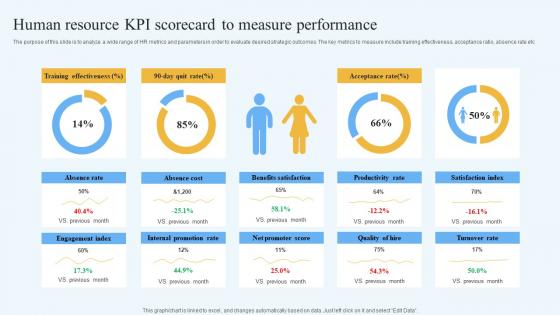
Human Resource KPI Scorecard To Measure Performance




Try Before you Buy Download Free Sample Product
 Impress Your
 Audience
 100%
100% Editable
 Save Hours
 of Time


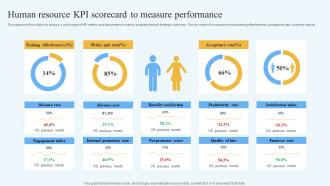
The purpose of this slide is to analyze a wide range of HR metrics and parameters in order to evaluate desired strategic outcomes. The key metrics to measure include training effectiveness, acceptance ratio, absence rate etc
People who downloaded this PowerPoint presentation also viewed the following :
Human Resource KPI Scorecard To Measure Performance with all 7 slides:
Use our Human Resource KPI Scorecard To Measure Performance to effectively help you save your valuable time. They are readymade to fit into any presentation structure.





FAQs for Human Resource KPI Scorecard
Honestly, start with the basics - turnover rates and eNPS scores will tell you a ton. Pulse surveys are great for catching satisfaction issues early. I always check internal mobility too because if people aren't moving up internally, that's a red flag. Absenteeism patterns are underrated - like you said, people vote with their feet. Oh, and don't sleep on training participation rates. When engagement drops, that's usually one of the first places you'll see it. The trick is actually reviewing this stuff monthly instead of letting it pile up. You want to catch problems while they're still manageable, not after half your team's already mentally checked out.
Honestly, don't just stare at that overall turnover percentage - it won't tell you much. Break it down by department and look at voluntary vs. involuntary exits. Which three departments are bleeding people the most? Start there. Track trends over like 12-18 months since some seasons are just naturally worse for turnover. Exit interviews are huge too - you'll start seeing patterns in why people actually leave. Oh, and definitely calculate what each departure costs you in recruiting and training. That number usually makes leadership pay attention real quick. Focus on the departments with the biggest problems first.
Look, employee satisfaction basically predicts everything else that matters in HR. Happy people stick around longer and actually get stuff done. Your retention goes up, productivity improves - the whole nine yards. I always tell people it's like your early warning system, you know? Problems show up in satisfaction surveys way before they hit your other metrics. Most teams do quarterly pulse checks or whatever. The trick is figuring out what actually makes your people happy, then you can connect those improvements directly to your bigger business goals. Low satisfaction = expensive turnover and crappy performance.
Skip the basic stuff like training completion rates - they're pretty useless honestly. What you actually want is revenue per employee, retention rates, and performance improvements. Compare your trained vs untrained people. I've seen too many companies just counting heads in training rooms, which tells you zilch about whether it's working. The real question is: are people applying what they learned? Track how training connects to customer satisfaction or sales bumps. Pick one business outcome that matters to you and work backwards from there to figure out which metrics actually move the needle.
Set up dashboards to track your funnel from job posts to offers - time-to-fill, cost-per-hire, source effectiveness, conversion rates between stages. Most people obsess over vanity metrics that don't actually matter though. Focus on what moves the needle for your hiring goals. Check your data weekly and hunt for where candidates are dropping off the most. Consistency matters here - same definitions, same timeframes so you can actually spot patterns. Oh, and start with just 3-5 key metrics instead of trying to measure everything. You'll drive yourself crazy otherwise.
Yeah, high absenteeism is like your early warning system for when things are going south. People don't just start calling out constantly for no reason - they're usually burned out or honestly just trying to avoid being there. I've noticed it tends to hit certain teams harder than others, which tells you a lot. Sunday scaries are real, but when half your department has them? That's a problem. Track it with your turnover numbers too - the combo will paint the real picture. If you're seeing weird spikes, definitely dig into why people are bailing.
So D&I metrics are basically becoming must-have KPIs now because they actually affect performance and retention. Track demographic representation, pay gaps, inclusion survey scores - that stuff matters. Companies finally figured out diverse teams just work better (took them long enough, right?). Don't go crazy measuring everything though. Pick maybe 3-4 that match what your leadership actually cares about. Recruitment pipeline diversity and promotion rates are good ones too. Honestly, it's way more strategic now than just ticking compliance boxes. Start small with what'll move the needle most.
Track completion rates first - you want 95%+ finishing on time. Employee satisfaction surveys after reviews are huge too. Are people actually getting useful feedback or just generic nonsense? That's the real question. Manager participation matters obviously, but I'd focus more on whether the conversations lead to actual goals and development plans. Honestly, the satisfaction piece is always the hardest to figure out. If less than 70% of your people rate their review experience positively, something's broken. Also check if reviews happen when they're supposed to - sounds basic but you'd be surprised how many places mess this up.
Honestly, retention data is like getting a report card on your company culture. Check which departments are bleeding people - that's your red flag right there. I always look at it quarterly because patterns tell you everything. High turnover in one team? Probably a manager problem or pay issue. New hires leaving fast? Your onboarding sucks. Use this stuff to figure out where to spend your HR budget first. Maybe it's better training for managers, maybe competitive salaries. Don't just track the numbers though - actually dig into why people are bailing.
You'll want to start with an HRIS system - cuts out all those manual data entry mistakes that mess everything up. Power BI and Tableau are solid for spotting trends you'd never catch otherwise. The AI prediction stuff is honestly getting a little creepy with how accurate it is for turnover rates. Performance management software keeps your managers from rating people all over the place with different standards. Oh, and ditch those yearly surveys - real-time pulse tools give you way better data. Clean up your messy data sources first though, then add the fancy analytics on top.
Honestly, just pick the metrics that actually matter to your business goals. Time-to-fill and quality of hire are solid starting points - they cover speed and whether you're getting good people. Cost-per-hire is worth tracking, but I'd rather pay extra for the right person than cheap out and regret it later. Candidate experience scores are huge now since everyone posts on Glassdoor. Oh, and don't fall into the trap of measuring everything - stick to maybe 4-5 KPIs that your leadership actually gives a damn about. Monthly check-ins work well to see what's actually making a difference.
Honestly, the data silo thing will drive you crazy - HRIS, payroll, performance systems never talk to each other. You're constantly switching between platforms just to get basic numbers. Manual entry is the worst part, so many mistakes happen. Half the time managers forget to update stuff anyway. Focus on maybe 3-5 metrics that actually move the needle, not just pretty dashboard numbers. I'd probably start there and figure out how to clean up those specific data streams first. Real-time data sounds nice but it's a pain when people don't fill out surveys or keep things current.
Honestly, most HR teams get this backwards. Start with what executives actually lose sleep over - revenue, customer happiness, keeping operations smooth. Then figure out which people stuff directly impacts those things. Like, faster hiring isn't just a nice metric - it's how you actually hit revenue targets when demand spikes. I'd pick maybe 3-5 KPIs max that clearly show how HR moves the needle on business outcomes. Work backwards from your company's big goals and ask "what would our people need to do to make this happen?" Oh, and definitely review quarterly because priorities change fast and your metrics should too.
So cost-per-hire is basically what you spend to fill each job opening. Add up everything - job postings, recruiter fees, interview time, all that stuff - then divide by how many people you actually hired. Honestly, the first time I calculated ours I was like... wow, that's higher than I thought! But it's super useful because you can see where you're wasting money or which departments are way more expensive to hire for. I'd check it monthly so you can tell if your recruiting strategy is working or if you need to switch things up.
Okay so benefits are basically your secret weapon for keeping people happy and actually staying at your company. Good health insurance, decent PTO, 401k matching - that stuff genuinely matters when people are deciding whether to stick around or jump ship. Flexible work is huge right now too, honestly probably more than most companies realize. You'll start seeing the impact in your satisfaction surveys and turnover numbers within like 6-12 months. Just make sure you're tracking which benefits people actually use because some perks sound great on paper but nobody cares about them.
-
My presentations were a bit amateur before I found SlideTeam’s designs. I’ve been able to find slides for nearly every topic I’ve had to present. Thanks, Slideteam!
-
The design is clean-cut, modern, and sleek, keeping the users' needs in mind. The multiple uses make this product worth every penny!