


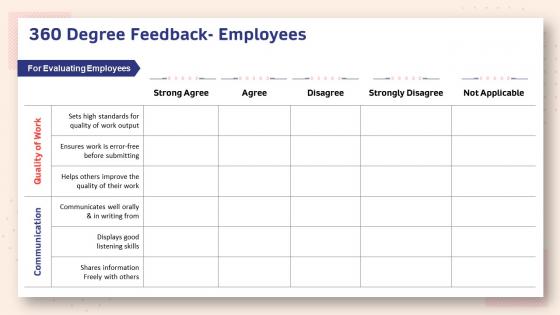
Human resource planning structure 360 degree feedback employees




Try Before you Buy Download Free Sample Product
 Impress Your
 Audience
 100%
100% Editable
 Save Hours
 of Time


Our Human Resource Planning Structure 360 Degree Feedback Employees are topically designed to provide an attractive backdrop to any subject. Use them to look like a presentation pro.
People who downloaded this PowerPoint presentation also viewed the following :
Human resource planning structure 360 degree feedback employees with all 9 slides:
Use our Human Resource Planning Structure 360 Degree Feedback Employees to effectively help you save your valuable time. They are readymade to fit into any presentation structure.








FAQs for Human resource planning structure 360
You need clear objectives first, then pick the right people - manager, peers, direct reports, maybe customers. Design questions that actually match what you're measuring. Anonymity is huge here because nobody's gonna be honest if their name's on it, especially about their boss. Set up a good system for collecting and analyzing everything. Oh, and don't forget the delivery part - how you present results matters. Here's where most companies mess up though: they skip the follow-up. You've gotta create development plans from that feedback and actually track if anything changes. Otherwise you just spent a bunch of money on feedback that'll get ignored.
Honestly, go with a third-party platform for collecting this stuff - way better for real anonymity. Compile everything into themes instead of showing individual responses. Oh, and don't release anything unless you've got at least 3-4 people per category. I've watched so many "anonymous" surveys where it was super obvious who said what, it's ridiculous. Be upfront about who sees the results and how they'll look. People need to actually trust the process or they won't be honest with you.
Look, 360 feedback without tech is basically torture - you'd be drowning in spreadsheets and chasing people forever. Platforms like Culture Amp or 15Five handle all the annoying stuff automatically. They send surveys, collect anonymous responses, and spit out those visual reports that actually make sense. The timing, reminders, data collection - it's all automated so you're not hunting down feedback from random people across departments. Most platforms track trends over time too, which is honestly pretty useful for development stuff. I'd start by checking what integrates with your current HR system, saves headaches later.
Look, you've got to connect your 360 questions to what your company is actually trying to accomplish. Say innovation is huge for you guys - then ask about creative problem-solving and how people handle risk. Map it out: better customer satisfaction? Focus the feedback on communication skills. The behaviors you're measuring need to drive real results, not just check boxes. So many places use these cookie-cutter templates that mean nothing. Here's what works: pick 3-4 things your org really cares about, then build everything around the skills that'll get you there. Otherwise you're just collecting useless data.
First figure out exactly what skills you're trying to measure, then pick your feedback sources - managers, peers, people they manage, maybe some external folks too. Training everyone on how to give decent feedback is honestly non-negotiable. I've seen this blow up when people skip that part. Use anonymous surveys to collect everything, then get someone skilled to help each person make sense of their results. Frame it as growth-focused from day one, not like you're hunting for problems. Build real action plans afterward and actually check in on progress. Oh, and definitely pilot it with a small group first - way easier to fix issues that way before going company-wide.
Definitely train everyone first before rolling this out. Workshops for feedback givers are crucial - teach them to be specific instead of just saying "do better." The receiving end is honestly trickier though. People get so defensive when hearing criticism, so focus hard on active listening skills. Your managers need to know how to run those follow-up conversations too. That's where the real work happens - turning all that feedback into actual changes. Otherwise you just end up with a bunch of hurt feelings and no improvement. Make sure they're comfortable facilitating those tough discussions.
Honestly, the main issue is people won't give you straight answers - they get weird about being honest, especially with their boss. You'll get bland, useless feedback that helps nobody. Also, tons of companies do these programs then literally nothing happens with the results. What's the point, right? Train people beforehand on how to actually give constructive criticism. Be super clear why you're doing this upfront. Most importantly though - you have to act on what you learn or people will check out completely next time.
Getting feedback from just your boss? That's pretty limiting. When you pull in perspectives from coworkers, people you manage, and even clients, suddenly you're seeing the full picture. Maybe your manager thinks you're great at meetings, but your team feels steamrolled by your communication style - that's gold right there. Different relationships show different sides of how you work. The tricky part is delivering all this without making someone completely shut down. Nobody wants to hear they suck from five different angles, you know? But done right, it's way more useful than a single opinion.
Track participation rates first, then watch how behavior actually changes after feedback. Completion rates and response quality matter, but honestly the real test is whether people bother making development plans afterward. Are managers having those follow-up conversations or just ghosting their reports? That's huge. Six months later, check if you're seeing better performance ratings and retention - those numbers don't lie. Employee satisfaction scores tell you a lot too. Oh, and get your baseline data before the next cycle starts, otherwise you're just guessing if anything improved.
Start with bias training - seriously, it's the best thing you can do. Train everyone on stuff like recency bias and halo effects before they rate anyone. Mix up your rater groups too. You want people who've actually worked with the person, not just whoever's free that day (I've seen some really random picks lol). Anonymous feedback helps cut down political BS. Structured rating scales work better than open-ended questions - they're less all over the place. Have someone trained look over the data first. They can spot weird bias patterns before results go out. The training part though? Don't skip it.
Okay so first thing - don't let that feedback just sit there! Within like 2-4 weeks, make a real plan. Pick 2-3 things to work on and set actual deadlines. Here's where people mess up though - they write the plan then forget about it. Schedule check-ins with your manager to stay on track. Also, loop back with whoever gave you the feedback so they see you're serious about it. Oh and don't wait a whole year for the next review cycle. Ask for feedback way more often than that. But honestly? Start super small - just pick one tiny thing you can change right away.
So it really depends on their level, right? Entry-level people just need feedback from their manager, some peers, maybe direct reports if they have any. Keep the questions basic - core skills, what they need to work on. Mid-level can handle more people giving input. But executives? That's when it gets intense - board members, external partners, department heads all weighing in. The questions change too. Less "do they play nice with others" and more "are they actually moving the company forward." Oh, and definitely match your competency framework to what matters for their specific role level - sounds obvious but people mess this up constantly.
Honestly, managers make or break these 360 programs. You've gotta show vulnerability first - take your own feedback and actually do something with it. People notice how you react way more than what you say about feedback being "good for everyone." When tough stuff comes up, get curious instead of defensive. Celebrate team members who share honest insights. I swear, half these programs crash because managers talk a big game but then get all weird when someone criticizes them. Set up regular feedback chats and make visible changes based on what you learn - that's how people know you're serious about it.
I'd go with like 60% positive, 40% areas to improve - that ratio usually works pretty well. Make sure the constructive stuff is super specific though. Don't just say "communication needs work" when you could say "try sending weekly updates to the team." Way more helpful. People really do take feedback better when you start with what they're crushing first. Then slip in the development areas, end on an encouraging note. Oh and definitely train whoever's giving feedback so you're not all over the place with different approaches. Nothing worse than inconsistent messaging across managers.
Honestly, 360 feedback works pretty well for keeping people around when you don't mess it up. People feel valued getting input from everyone, not just their boss. Shows you actually care about developing them - which is huge for commitment. The trick though? Making sure it feels safe. Nobody wants feedback used as ammunition later (been there, seen that drama). Short sentences work. When people see how the feedback translates into real growth opportunities, they'll stick around instead of job hunting. It's way better than those annual reviews that go nowhere.
-
Out of the box and creative design.
-
Great quality slides in rapid time.
-
Excellent products for quick understanding.
-
Helpful product design for delivering presentation.
-
Great designs, really helpful.