

Hyperspectral Imaging Powerpoint Presentation Slides




Try Before you Buy Download Free Sample Product
 Impress Your
 Audience
 100%
100% Editable
 Save Hours
 of Time


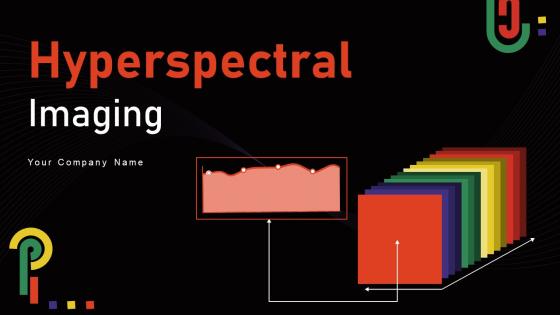
Our Hyperspectral Imaging IT PowerPoint presentation offers an in-depth exploration of this cutting-edge analytical technique rooted in spectroscopy. This Spectral imaging deck provides a comprehensive understanding of hyperspectral imaging, including its principles, functionality, and the fascinating capabilities it unlocks. It covers the fundamentals of spectrographs, the components of enabling technologies, and the unique image sensor requirements. Additionally, our Spectroscopy imaging presentation showcases different scanning methods, such as satellite-based imaging, and highlights the diverse applications of hyperspectral imaging in fields like agriculture, healthcare, and crime-solving. Moreover, the Hyperspectral analysis PPT offers insights into the future possibilities of this technique and provides practical tips for utilizing it effectively. With its engaging content, the presentation takes audiences on a captivating journey into the world of hyperspectral imaging, offering a rich and informative experience. Grab this insightful PowerPoint presentation today to deliver a compelling and educational presentation on hyperspectral imaging.
People who downloaded this PowerPoint presentation also viewed the following :
Content of this Powerpoint Presentation
Slide 1: The slide introduces Hyperspectral Imaging.
Slide 2: This is an Agenda slide. State your agendas here.
Slide 3: The slide displays Table of content for presentation.
Slide 4: The slide continues Table of contents for presentation.
Slide 5: This slide introduces the hyperspectral imaging technique.
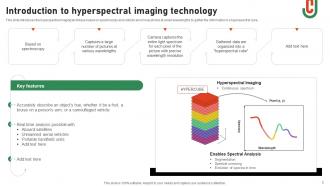
Slide 6: This slide covers the fundamentals of hyperspectral imaging technology.
Slide 7: This slide provides an explanation of the many components of a hyperspectral imaging system.
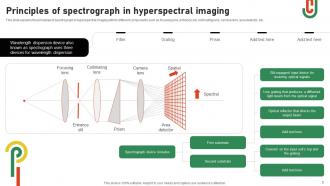
Slide 8: This slide explains the principles of spectrograph in hyperspectral imaging with its different components.
Slide 9: The slide highlights Table of contents for presentation.
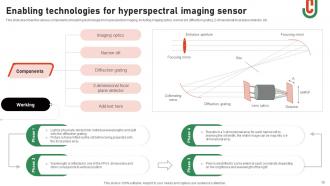
Slide 10: This slide describes the various components of enabling technologies.
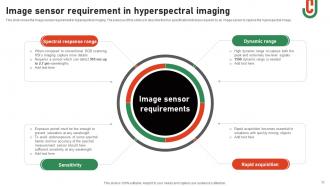
Slide 11: This slide shows the image sensor requirement in hyperspectral imaging.
Slide 12: The slide again displays Table of contents for presentation.
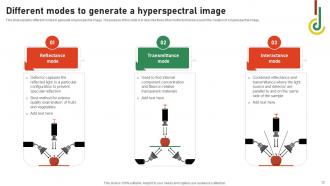
Slide 13: This slide explains different modes to generate a hyperspectral image.
Slide 14: The slide also contains Table of contents.
Slide 15: This slide explains whisk broom scanning in hyperspectral imaging.
Slide 16: This slide illustrates push broom scanning in hyperspectral imaging.
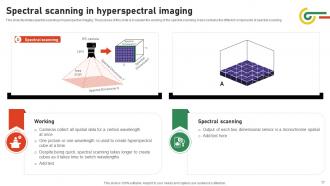
Slide 17: This slide highlights spectral scanning in hyperspectral imaging.
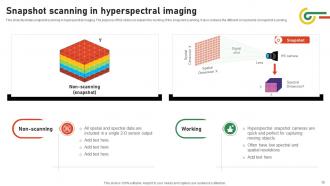
Slide 18: This slide shows snapshot scanning in hyperspectral imaging.
Slide 19: This slide describes spatial and spatio-spectral scanning in hyperspectral imaging.
Slide 20: The slide displays Table of contents further.
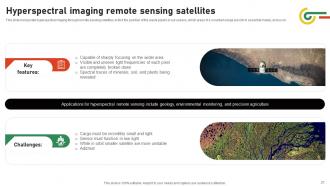
Slide 21: This slide incorporate hyperspectral imaging through remote sensing satellites.
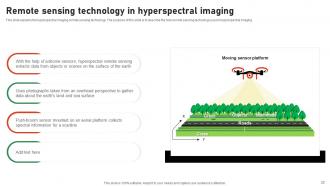
Slide 22: This slide explains the hyperspectral imaging remote sensing technology.
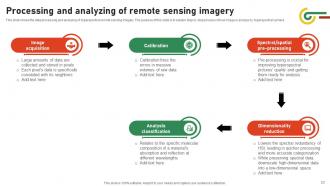
Slide 23: This slide shows the data processing and analyzing of hyperspectral remote sensing imagery.
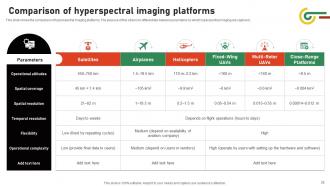
Slide 24: This slide displays the comparison of hyperspectral imaging platforms.
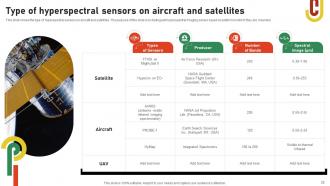
Slide 25: This slide depicts the type of hyperspectral sensors on aircraft and satellites.
Slide 26: This slide showcases the hyperspectral imaging for weed detection in crops.
Slide 27: The slide highlights Table of contents which is discussed further.
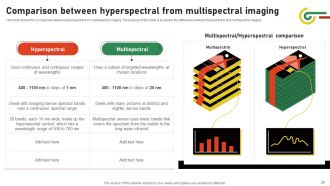
Slide 28: This slide shows the Comparison between hyperspectral from multispectral imaging.
Slide 29: The slide describes another Table of contents.
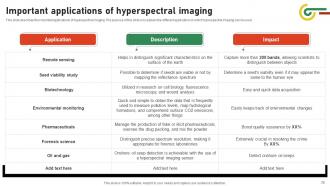
Slide 30: This slide depicts the important applications of hyperspectral imaging.
Slide 31: This slide outlines the applications of hyperspectral imaging in healthcare.
Slide 32: This slide exhibits the applications of hyperspectral imaging in agriculture.
Slide 33: This slide describes applications of hyperspectral imaging in forensics .
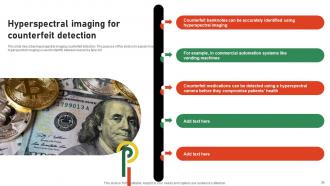
Slide 34: This slide highlights hyperspectral imaging counterfeit detection.
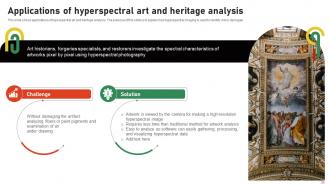
Slide 35: This slide shows applications of hyperspectral art and heritage analysis.
Slide 36: The slide also shows Table of contents.
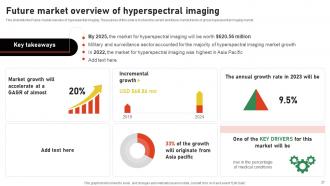
Slide 37: This slide tells the Future market overview of hyperspectral imaging.
Slide 38: The slide highlights Table of contents further.
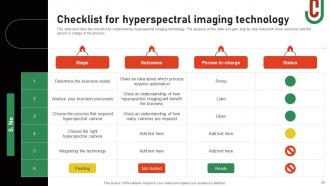
Slide 39: This slide describes the checklist for implementing hyperspectral imaging technology.
Slide 40: The slide depicts Table of contents which is to be discussed further.
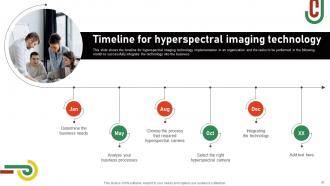
Slide 41: This slide shows the timeline for hyperspectral imaging technology implementation in an organization.
Slide 42: The slide showcases another Table of contents.
Slide 43: This slide represents the 30-60-90 days plan for integrating hyperspectral camera.
Slide 44: The slide exhibits Table of contents further.
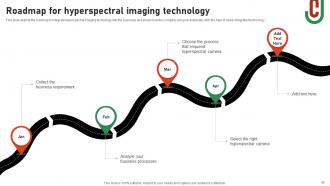
Slide 45: This slide depicts the roadmap to integrate hyperspectral imaging technology.
Slide 46: The slide continues Table of contents further.
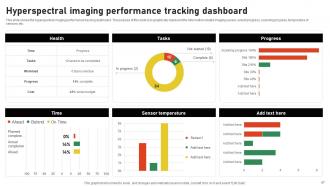
Slide 47: This slide showcases the hyperspectral imaging performance tracking dashboard.
Slide 48: This slide shows all the icons included in the presentation.
Slide 49: This slide is titled as Additional Slides for moving forward.
Slide 50: This is Our Team slide with names and designation.
Slide 51: This slide shows SWOT describing- Strength, Weakness, Opportunity, and Threat.
Slide 52: This is a Financial slide. Show your finance related stuff here.
Slide 53: This slide shows Circular Diagram with additional textboxes.
Slide 54: This slide contains Puzzle with related icons and text.
Slide 55: This is a Thank You slide with address, contact numbers and email address.
Hyperspectral Imaging Powerpoint Presentation Slides with all 60 slides:
Use our Hyperspectral Imaging Powerpoint Presentation Slides to effectively help you save your valuable time. They are readymade to fit into any presentation structure.


























FAQs for Hyperspectral Imaging
Dude, it's basically like having superpowers for your camera. Instead of just RGB, you're getting hundreds of tiny wavelength bands. So you can literally see chemical signatures that are invisible to us - spot crop diseases before they're obvious, tell apart materials that look identical, catch camouflaged stuff. Pretty wild, right? Files get absolutely massive though, and the processing is a pain. But honestly? If you need to identify materials precisely or see beyond normal human vision, hyperspectral crushes everything else. Regular cameras just can't compete for that kind of detail.
So hyperspectral imaging basically takes photos in hundreds of different light wavelengths - way more than regular cameras. Plants reflect light differently when they're stressed, sick, or lacking nutrients, even before you can actually see anything wrong. Pretty cool, right? You can catch nitrogen deficiency, water stress, pest issues, fungal stuff... all from aerial data. Makes it way easier to fix problems early instead of waiting until your crops look terrible. The info helps you water smarter and apply fertilizer exactly where it's needed. I'd start by figuring out what problems hit your crops most, then find systems that target those specific issues.
Dude, hyperspectral imaging is insane for environmental stuff. Instead of just RGB, you're getting hundreds of wavelengths - so you can spot things invisible to our eyes. Water quality monitoring becomes way easier since you can detect algae blooms and pollutants directly. Forest health, deforestation, soil contamination - it picks up on all of it. You can even track oil spills and invasive species based on their unique spectral signatures. Honestly, the detail compared to regular satellite imagery is mind-blowing. Figure out what specific environmental parameters you need to monitor first, then work backwards from there.
Okay so hyperspectral imaging is wild - doctors can literally see hundreds of wavelengths that we can't. They're catching cancer cells super early, tracking blood oxygen, spotting infections before you'd even know something's wrong. It's like having x-ray vision but for chemistry? Each tissue has its own molecular signature that shows up. I know it sounds totally sci-fi but they're actually using this stuff in ORs right now. If you're in medical tech, you should definitely look into how it might work with whatever imaging you're already doing.
Honestly, the biggest pain is just how massive these datasets get - they'll crush your normal processing setup pretty fast. High dimensionality is another headache since regular algorithms just can't handle it well. The curse of dimensionality thing is real too. Noise filtering gets weird because you can't mess up the spectral signatures while cleaning out the junk. Storage space? Good luck with that lol. All those spectral bands being so correlated makes everything more complicated to analyze. You'll probably need some specialized software or even custom code. Definitely start with PCA to shrink things down first - makes life way easier.
So spectral libraries are basically your cheat sheet - they've got all the unique "fingerprints" for different materials so you can actually identify what you're looking at in hyperspectral images. Like a huge lookup table matching spectral curves to known stuff like minerals or vegetation. Honestly, they're lifesavers for automated classification. I mean, without them you're just guessing what those signatures mean, and trust me, that gets tedious real quick when you're crunching thousands of pixels. Build your own library for your specific project but also grab established ones like USGS. You'll thank yourself later.
So ML basically does all that pattern recognition work for you - way faster than doing it manually across hundreds of spectral bands. Random forests, SVMs, or CNNs can learn from your labeled data and then auto-classify new pixels. These algorithms are honestly pretty amazing at catching subtle spectral differences you'd totally miss. They handle all those dimensions without breaking a sweat. Oh, and definitely start simple first - don't go crazy with deep learning right away unless you've got a massive training dataset. Trust me on that one.
Honestly, the biggest pain points are gonna be cost and speed. These cameras aren't cheap, and processing all that spectral data is brutal - you're looking at terabytes that need heavy computing power. Production lines might hate the slower imaging speed compared to regular cameras. You'll also need someone who actually knows how to read all that spectral info, which isn't exactly common knowledge. Oh, and lighting changes can totally screw with your results. I'd definitely test it small-scale first - see if the benefits are worth all the headache and cash you'll be throwing at it.
So hyperspectral imaging basically captures hundreds of narrow light bands that create unique "fingerprints" for different minerals. Each one reflects light differently, which is pretty cool when you think about it. You can map huge areas remotely and spot alteration zones that hint at ore deposits hiding underneath. Plus it'll distinguish between minerals that look identical to your eyes. The best part? You get spatial and spectral data at once. Oh, and definitely check out those USGS spectral libraries - they're gold for matching unknown samples against reference spectra.
So the big thing right now is everything's getting way smaller - like smartphone-sized sensors that give you instant results. AI is doing the heavy lifting on data interpretation, which is honestly a godsend because that stuff used to require serious expertise. Speed's getting crazy fast too, plus better sensitivity in near-infrared. Oh, and cloud processing is letting smaller companies actually afford this tech now. Agriculture and medical diagnostics are where it gets really cool though - that's where I'd watch if you're thinking investment or career stuff.
Yeah so you can stick hyperspectral cameras right onto drones using gimbals or just mount them solid - depends how much stabilization you need. Flight planning software will help you map out routes for best coverage. The data you get is insane, especially for ag stuff and environmental work. Main thing is checking your drone can actually carry the weight first. Also battery life becomes a bigger issue since these cameras are power hungry. I learned that the hard way on my first few flights! Mining companies are going crazy for this tech right now. Just make sure you've got the payload capacity sorted before dropping money on equipment.
So you'll need a spectrometer to split the light into narrow bands, plus an imaging sensor for the spatial stuff. Good optics are key for focusing everything properly. Either your platform moves or the sensor does - honestly the scanning mechanism can get pretty complex. The data side is where things get crazy though - we're talking massive datasets here! You'll also want calibration gear and software to actually make sense of all that spectral info. My advice? Figure out your spectral range and resolution needs first. That'll basically determine what components you can even use.
Ugh, atmospheric interference is such a pain when you're working with hyperspectral data. Water vapor and aerosols scatter light at certain wavelengths, which totally messes up your spectral signatures. Near-infrared bands get hit the worst - atmospheric water just destroys everything there. Think of it like having a dirty filter between your sensor and whatever you're trying to measure. You're not getting the actual surface reflectance, just some warped version of it. That's why you've gotta run atmospheric correction first - ATCOR or FLAASH work well. Skip this step and your analysis is basically worthless.
Dude, this tech is wild but kinda creepy. It can literally see through clothes and detect medical stuff - way more than normal cameras. So you're collecting super detailed info about people's bodies without them knowing. No transparency about when it's happening either, which sucks. There's also the whole profiling thing where certain groups might get targeted unfairly. Honestly feels like we're sleepwalking into full surveillance mode. If someone's gonna use this stuff, they better have solid rules about deleting data and telling people it's being used.
So this tech basically scans food with hundreds of light wavelengths to create a "chemical fingerprint" - way beyond what we can see. Pretty wild stuff. It picks up contamination, spoilage, even nutrient levels without actually touching anything. Works by matching specific wavelengths to different compounds, so you'll catch pathogens or pesticide residues that regular visual checks totally miss. The best part? It's non-destructive and crazy fast for production lines. Honestly worth checking out if you're working with expensive products where consistency really matters.
-
“Love it! I was able to grab an exciting proposal because of SlideTeam.”
-
Loved the collection. Editing the presentation was seamless with their templates.