


Data Visualization Powerpoint Presentation Slides





Try Before you Buy Download Free Sample Product
 Impress Your
 Audience
 100%
100% Editable
 Save Hours
 of Time


Visualization research creates tools to aid in the exploratory analysis process and expands our knowledge of how visuals assist in data interpretation. Check out our competently designed Data Visualization template that gives a brief idea about the current situation in the organization its existing issues to understand the need for visualization research. In this Visualization Research PowerPoint Presentation, we have covered the importance of visualization research. In addition, this PPT contains an introduction to visualization research and its branches, such as scientific, information visualization, and visual analytics. Furthermore, this Visualization research template includes the overview of different analyses for data visualization, use cases, and the tools and software for visualization. Lastly, this deck comprises a 30-60-90 days plan, roadmap, sales performance dashboard, and impact of visualization research implementation in the organization. Download our 100 percent editable and customizable template, which is also compatible with Google slides. Download it now.
People who downloaded this PowerPoint presentation also viewed the following :
Content of this Powerpoint Presentation
Slide 1: This slide introduces Data Visualization. State your company name and begin.
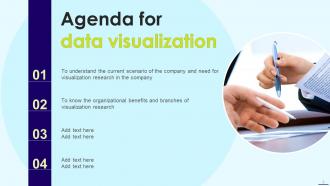
Slide 2: This slide states Agenda of the presentation.
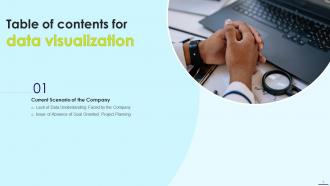
Slide 3: This slide presents Table of Content for the presentation.
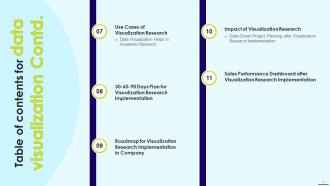
Slide 4: This is another slide continuing Table of Content for the presentation.
Slide 5: This slide shows title for topics that are to be covered next in the template.
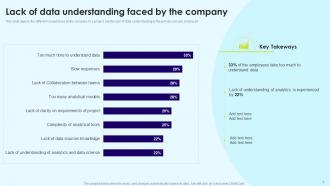
Slide 6: This slide depicts the different issues faced by the company in a project.
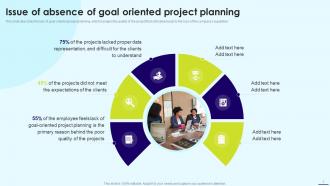
Slide 7: This slide displays Issue of Absence of Goal Oriented Project Planning.
Slide 8: This slide shows title for topics that are to be covered next in the template.
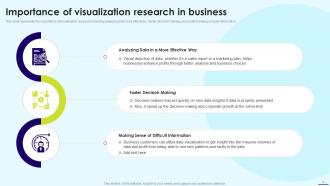
Slide 9: This slide represents Importance of Visualization Research in Business.
Slide 10: This slide depicts the need for visualization research, including assist in dealing with complex data.
Slide 11: This slide shows title for topics that are to be covered next in the template.
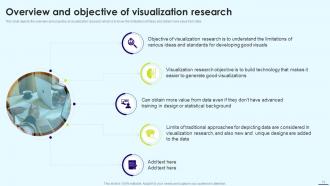
Slide 12: This slide represents Overview and Objective of Visualization Research.
Slide 13: This slide shows title for topics that are to be covered next in the template.
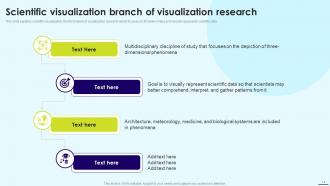
Slide 14: This slide showcases Scientific Visualization Branch of Visualization Research.
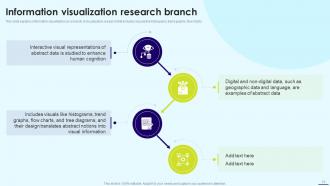
Slide 15: This slide explains information visualization as a branch of visualization research.
Slide 16: This slide shows visual analytics, the last branch of visualization research, which emerged from the advancements in the other two branches.
Slide 17: This slide shows title for topics that are to be covered next in the template.
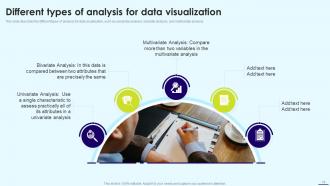
Slide 18: This slide presents Different Types of Analysis for Data Visualization.
Slide 19: This slide depicts the univariate analysis technique for data visualization.
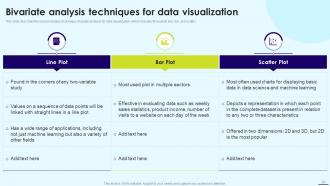
Slide 20: This slide describes the second analysis technique, bivariate analysis for data visualization.
Slide 21: This slide shows title for topics that are to be covered next in the template.
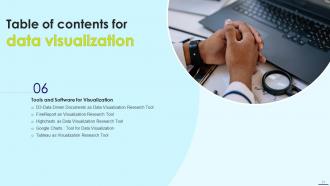
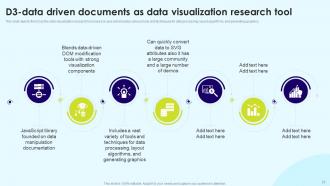
Slide 22: This slide depicts the D3 as the data visualization research tool based on java.
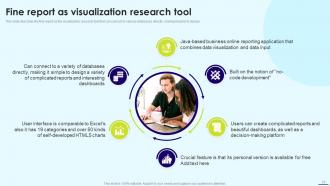
Slide 23: This slide describes the fine report as the visualization research tool that can connect to various databases.
Slide 24: This slide showcases Highcharts as Data Visualization Research Tool.
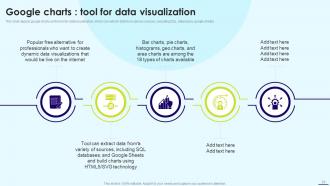
Slide 25: This slide depicts google charts as the tool for data visualization, which can extract data from various sources.
Slide 26: This slide shows the tableau visualization research tool in which users can construct and share interactive and editable dashboards.
Slide 27: This slide shows title for topics that are to be covered next in the template.
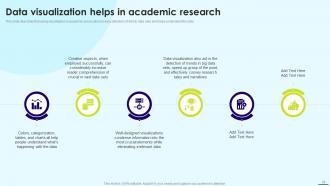
Slide 28: This slide represents Data Visualization Helps in Academic Research.
Slide 29: This slide shows title for topics that are to be covered next in the template.
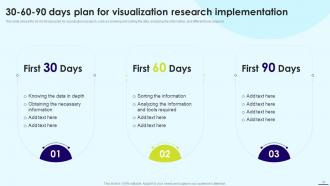
Slide 30: This slide displays 30-60-90 Days Plan for Visualization Research Implementation.
Slide 31: This slide shows title for topics that are to be covered next in the template.
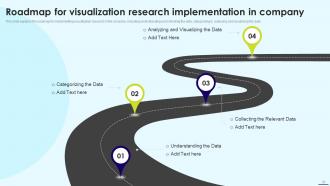
Slide 32: This slide presents Roadmap for Visualization Research Implementation in Company.
Slide 33: This slide shows title for topics that are to be covered next in the template.
Slide 34: This slide showcases Data-Driven Project Planning after Visualization Research Implementation.
Slide 35: This slide shows title for topics that are to be covered next in the template.
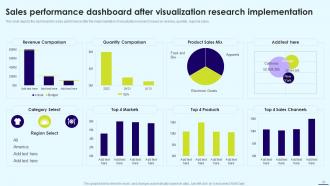
Slide 36: This slide presents Sales Performance Dashboard after Visualization Research Implementation.
Slide 37: This slide contains all the icons used in this presentation.
Slide 38: This slide is titled as Additional Slides for moving forward.
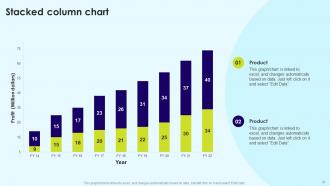
Slide 39: This slide represent Stacked column chart with two products comparison.
Slide 40: This slide contains Puzzle with related icons and text.
Slide 41: This slide shows Post It Notes. Post your important notes here.
Slide 42: This slide shows Circular Diagram with additional textboxes.
Slide 43: This is Our Target slide. State your targets here.
Slide 44: This slide depicts Venn diagram with text boxes.
Slide 45: This slide displays Mind Map with related imagery.
Slide 46: This is a Timeline slide. Show data related to time intervals here.
Slide 47: This is a Thank You slide with address, contact numbers and email address.
Data Visualization Powerpoint Presentation Slides with all 52 slides:
Use our Data Visualization Powerpoint Presentation Slides to effectively help you save your valuable time. They are readymade to fit into any presentation structure.


















FAQs for Data Visualization
Honestly, data viz is a game changer. Your brain just processes visuals way faster than staring at endless spreadsheet rows - like, it's not even close. Charts let you spot weird outliers and trends instantly instead of hunting through numbers for hours (which is basically torture). When you're pitching to your boss or clients, good visuals tell the whole story right away. They'll trust your recommendations more too. I learned this the hard way after bombing a presentation with just tables. Take the extra time to make clean charts - you'll make decisions faster and actually win arguments.
Dude, the chart you pick literally changes everything about how people see your data. Line charts are perfect for showing trends over time, but bar charts make comparisons super obvious. Scatter plots? They'll show you correlations you'd totally miss otherwise. Honestly, pie charts drive me crazy - they make tiny differences look huge, so I skip them most of the time. Same exact data can tell completely different stories though. Like, a stacked bar might hide that your performance is tanking, but a line chart would make it obvious right away. Just pick whatever actually shows the insight you're going for.
Okay so basically - keep it simple and actually tell a story. Pick the right chart type first (bars for comparing stuff, lines for trends over time). Colors should mean something, not just look pretty. Label everything clearly because people aren't mind readers lol. I swear half the dashboards I see are gorgeous but totally useless. Way too much clutter. Before you even start designing, figure out the ONE main thing you want people to understand. Then build everything around that. Your audience matters too - don't make them work hard to get your point.
Honestly, color choice can totally tank your visualization if you're not careful. I've watched people massacre perfectly good data with those awful rainbow gradients - like why?? Stick with palettes that actually make sense: sequential colors for showing progression, diverging ones when you've got a natural midpoint. Contrast is everything between categories. Also, colorblind-friendly palettes aren't just nice to have since 8% of people can't see certain colors anyway. Too many colors = instant visual mess. ColorBrewer's my go-to, or just use whatever accessible options your software already has built in.
Dude, interactive charts are game-changers. They let people actually explore your data instead of just staring at some overwhelming mess. Think hover tooltips, filters, click-to-zoom stuff. Users can start broad then dive into whatever interests them most. Way better than dumping everything on them at once - nobody wants that cognitive overload. It's more like having a conversation with the data, you know? Though honestly, start basic. Add simple tooltips first before you go nuts with fancy interactions. Trust me on this one.
So basically you want to treat your charts like they're telling a story. Start with the setup, then hit them with your main point, and wrap up with what it all means. I've seen way too many dashboards that are just random charts thrown together - total mess. Guide people through your thinking: here's the problem, here's proof, here's what we should do about it. Annotations help a ton, and keep your colors consistent so everything flows together. Oh, and make sure every chart actually serves a purpose instead of just looking pretty. Your visuals should build on each other logically.
So there are three main ones worth checking out: Tableau, Power BI, and Python stuff like matplotlib/seaborn. Tableau's super drag-and-drop friendly if coding isn't your thing. Power BI works great if you're already stuck in Microsoft land at work. Python gives you way more control but you'll need to actually learn some programming. Oh, and don't sleep on Excel - it still does basic charts pretty well. I'd honestly just pick whatever matches what you already know. No point making it harder than it needs to be.
Honestly, charts are game-changers for spotting stuff you'd totally miss in spreadsheets. Your brain just eats up visual info way faster than scanning rows of numbers. Like, plot sales data over time and boom - December spikes are suddenly obvious. Same with weird outliers that make you think "wait, what the hell happened here?" I always start with basic line charts and scatter plots (they're honestly the workhorses). You'll catch gradual trends, seasonal patterns, correlations between things. Weekend traffic dips, cyclical behavior - it all just pops out. Way better than staring at endless data tables trying to find patterns.
Ugh, the worst mistakes are misleading scales and picking the wrong chart type. Don't truncate your y-axis - it makes tiny differences look huge. Also, cramming everything into one messy visual is a disaster. Rainbow colors are terrible (sorry, but they really are) and colorblind people can't read them anyway. Watch out for cherry-picking data that fits your story while ignoring the full picture. Those 3D effects might look cool but they totally distort what people see. Label stuff clearly and keep it simple. Honestly, just show it to someone else first - if they're confused, your audience will be too.
So basically, data viz is like being a translator between your messy spreadsheets and normal people who'd rather not stare at numbers all day. Our brains are wired to process visuals way faster than text anyway. A good chart or infographic helps non-experts see patterns and make decisions without feeling like they need a math PhD. The trick is keeping it stupidly simple - I've seen too many dashboards that look impressive but tell you nothing. Focus on one clear message you want them to remember when they walk away.
Okay so three big things to watch for: accuracy, bias, and accessibility. Don't mess with your scales or cherry-pick data just to make a point - I know it's tempting but people will notice and you'll look sketchy. Your color choices and chart types can accidentally misrepresent different groups too, which sucks. Make sure visually impaired people can actually use your stuff with good contrast and alt text. God, I've seen so many ridiculous charts that completely twist what the data actually shows. Quick test - if someone showed you your own chart without explaining it, would you feel like they were trying to trick you?
For data viz accessibility, color contrast is huge - but don't just rely on color alone. Add patterns or labels too. Font size matters more than you'd think! Screen readers totally struggle with charts, so alt text is a lifesaver. Honestly, I always cringe when I see those tiny axis labels that nobody can read. Try testing with a screen reader yourself first - it's eye-opening. Oh, and throw in a data table alongside your chart. Gives people options, you know? It's extra work upfront but saves headaches later.
Think of whitespace like breathing room for your charts. Without it, everything looks like a hot mess and people's eyes don't know where to look. I learned this the hard way after making some truly awful visualizations back in the day. Space around your key data points, between sections, in legends - it all guides people through your story naturally. Same way pauses make conversations better, you know? Try this: next time you finish a chart, go back and cut 20% of the stuff that isn't totally necessary. You'll be shocked how much cleaner it feels.
Oh, visual metaphors are like brain hacks honestly. Your mind connects new info to stuff you already know, so complex data suddenly makes sense. Car speedometer on a dashboard? Boom, you know red = bad without thinking. I love using water flow for network traffic - people just get it immediately. Building blocks work great for showing hierarchy too. Way better than making someone stare at some confusing abstract chart for five minutes. Pick metaphors your audience actually knows though, like don't use sailing terms for people who've never seen a boat lol.
Dude, those AI visualization tools that build charts from plain English? They're getting insanely good. Real-time dashboards are basically expected now with all the IoT stuff floating around. AR/VR for data storytelling is still pretty niche but picking up steam. Voice analytics and better accessibility features are finally going mainstream too. The whole space is moving so fast it's honestly a bit overwhelming. Oh, and interactive storytelling is huge right now. My take? Pick one new platform to mess around with this quarter. You don't want to be that person playing catch-up later when everyone else already knows the tools.
-
Their designing team is so expert in making tailored templates. They craft the exact thing I have in my mind…..really happy.
-
SlideTeam makes creating presentations easy. Unlimited products, premium quality designs and affordable.