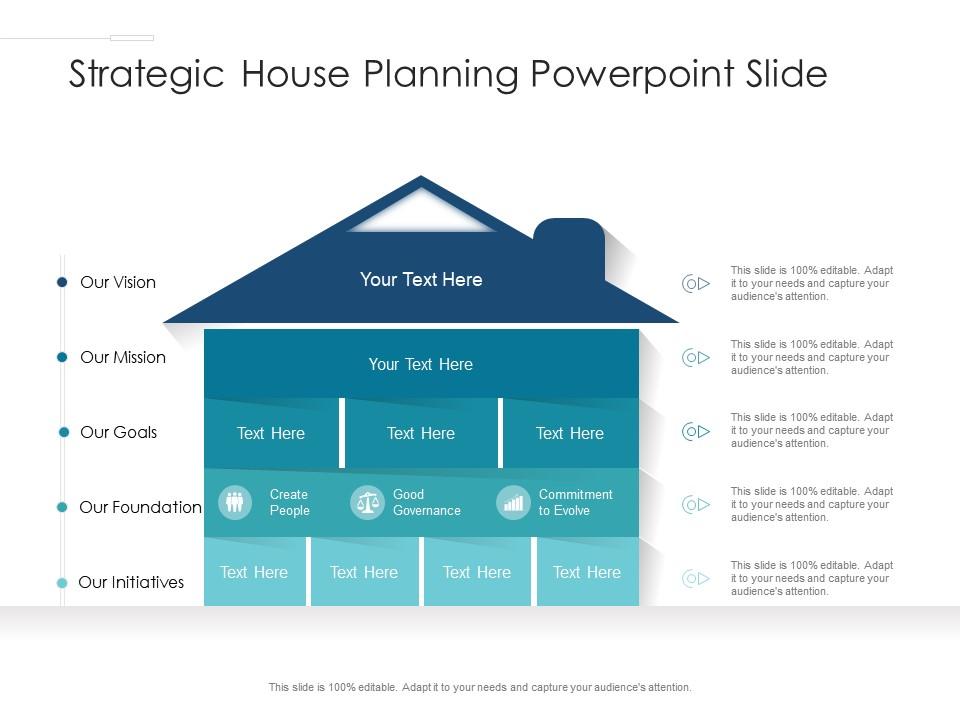
Strategic house planning powerpoint slide infographic template
Try Before you Buy Download Free Sample Product
Audience
Editable
of Time
Derive factual results using this Strategic House Planning Powerpoint Slide Infographic Template. Deploy this PowerPoint template to make and display prospective strategies using impressive graphics that enhance the visual quotient of the presentation. This infographic template also helps in elevating the aesthetic appeal of the presentation, making it useful for every organization. Apart from this, things and projects can be visualized from the onset using this PPT design. As this PowerPoint visual provides an abundance of information in a single layout, it can impress any viewer or higher managerial staff. It also boosts business actions by presenting flawless presentations. The biggest advantage of this slide is that it can be reproduced in various formats, including Google Slides. Therefore, download it now to present a unique presentation every time.
People who downloaded this PowerPoint presentation also viewed the following :
Strategic house planning powerpoint slide infographic template with all 2 slides:
Use our Strategic House Planning Powerpoint Slide Infographic Template to effectively help you save your valuable time. They are readymade to fit into any presentation structure.
FAQs for Strategic house planning powerpoint
Location's huge - think about your commute, schools if you need them, and what's nearby. Budget obviously matters, but don't forget the sneaky costs like maintenance and property taxes that'll bite you later. Consider where you'll be in 5-10 years too - growing family, job changes, whatever. Honestly, resale value is worth thinking about even if you swear you'll never move. Check out the neighborhood vibe and boring stuff like internet speeds (learned that one the hard way). Make a list of your must-haves vs nice-to-haves because perfect houses don't exist, and you'll drive yourself crazy trying to find one.
Hey! So basically design rooms that aren't super specific to one thing - like your guest room could totally become a baby room later. That fancy dining room? Probably better as an office anyway lol. Definitely rough in extra electrical/plumbing even if you can't afford to finish everything now. Think about how life might change in 5-10 years - kids, aging parents, whatever. Leave some basement space unfinished if money's tight. You can always expand later. The flow between rooms is huge though since that's nearly impossible to fix without major construction.
Dude, check zoning first before you get excited about any project. It controls everything - whether you can add that deck, run a business from home, how tall your fence can be. Some HOAs are absolutely nuts about paint colors too. I learned this the hard way when my neighbor got shut down mid-renovation. Your local planning department website usually has maps showing what zone you're in. Height restrictions might totally kill your second story dreams. Better to know now than after you've already hired contractors and stuff.
Honestly, tech makes house planning way less guesswork these days. Apps can track how your family actually moves through spaces and where you're burning energy - super helpful for layout decisions. I'd start with free planning apps to mess around with different room configs before doing anything major. AR stuff is getting crazy good too, you can literally see changes overlaid on your actual rooms. Energy modeling shows what design choices will cost you long-term (wish I'd known about this before my kitchen reno). Smart home platforms let you test setups virtually first. Project management tools are clutch for staying on budget. Pick one room and experiment - see what clicks for your situation.
Honestly, open floor plans are amazing for flexibility - you can move furniture around whenever you want a change. Makes small places feel huge too. Better sight lines mean you can keep an eye on kids while cooking, and if you host people a lot, everyone stays connected instead of being stuck in separate rooms. Natural light flows so much better without walls blocking it. Oh, and your electric bill might actually go down since air circulates easier. First thing though - figure out which walls aren't load-bearing before you get too excited about demo day!
Look, sustainability stuff totally changes how you plan from the very beginning. Site selection, design, material choices - it all has to factor in energy efficiency and water conservation now. Most buyers actually expect it at this point, which is kinda crazy how fast that shifted. Solar orientation and natural lighting become huge considerations way earlier than you'd think. Yeah, there's more upfront planning, but honestly the long-term savings make it worth it. Oh, and definitely get a sustainability consultant involved during feasibility - learned that one the hard way. Your operational costs will thank you later.
Put your main rooms on the south side - you'll get great light all day without that harsh glare. North windows are perfect for steady, even lighting (honestly, it's the best for reading). East and west? Those can be brutal with morning and evening sun streaming in. Go bigger with windows where you actually spend time. Skylights work great for hallways and interior spots. Oh, and light paint colors help bounce everything around naturally. Ditch heavy curtains for adjustable blinds so you're not stuck with whatever lighting situation you get.
Honestly, the key is zoning - give each generation their own space with separate entrances and bathrooms if you can swing it. But keep one main area where everyone hangs out together. Privacy matters SO much here, trust me on this one. Think about soundproofing between floors because hearing your in-laws' TV at 6am gets old fast. Make spaces flexible since needs change - maybe grandma won't need that ground floor suite forever. Map out everyone's routines first to spot potential drama before it happens, then design around those issues.
Oh man, don't make the mistake I see everyone do - planning everything without asking the people who'll actually live there what they want. Also, Instagram trends are pretty but totally useless if they don't fit your life. Like open concept is gorgeous until you're cooking fish and the whole house smells. Storage is always underestimated too. Flow matters way more than cramming stuff into every corner. Honestly? Just write down how you use your current place day-to-day first.
Figure out what you actually care about first - like sustainability, family stuff, whatever matters to you. Then make design choices based on that. Solar panels if you're into being green, open layouts if you have kids running around. Most people just scroll Pinterest and wonder why their house feels blah afterward. Ask yourself "does this fit what I value?" for every big decision. Oh, and write down your reasoning somewhere - you'll thank yourself later when you're tempted to impulse-buy that random expensive thing that doesn't match anything else.
Look, your house's value and how easy it'll be to sell later depends a lot on how well it fits the neighborhood vibe. Research what your HOA allows first - some are super strict about colors and styles. Check out the houses around you too. Are they all modern? Traditional? Try to match that general feel while still getting what you need functionally. I mean, you don't want to be the one house that sticks out like a sore thumb, but you also shouldn't hate looking at it every day. Plus honestly, a cohesive neighborhood just looks better and usually means faster appreciation.
Honestly, planning ahead saves you so much money on energy bills. Think about window placement for natural light, good insulation in walls/attics, and where you put your HVAC system. I made mistakes with my place and paid for it later! An energy audit is clutch - it shows you the worst problem spots first. Don't go room by room though, that's backwards. Look at how energy flows through your whole house instead. Oh, and proper insulation makes a huge difference, way more than most people realize.
Dude, design for flexibility or you'll regret it big time. Open floor plans are your friend - way easier to renovate later. Keep utilities accessible and avoid load-bearing walls if you can. That office might become a baby room someday, or maybe you'll want to knock out a wall between bedrooms. My neighbor just paid $15K extra because her house was basically built like a fortress. Smart positioning of electrical and plumbing now = way less crying over contractor quotes later. Future you will thank present you, trust me.
Your local building codes are basically the rulebook for what you can do with your house. Check setback requirements, height limits, and lot coverage stuff before you get too attached to any design. Some neighborhoods are crazy picky about architectural styles - HOAs can be such a pain. Oh, and structural standards obviously matter too. Research this early though, not after you've already planned everything out. Maybe call your city's building department? Or get an architect who knows the area. Trust me, you don't want expensive surprises later when you're trying to get permits.
Dude, don't sleep on your outdoor space when you're planning the house! Most people forget landscaping can boost property value by like 15-20% if you do it right. But honestly, it's more about how you'll actually live there day-to-day. Picture yourself looking out from your kitchen or living room - what do you want to see? How private will you feel from neighbors? Map out how you want to flow between inside and outside spaces first. Trust me, figure that part out before you lock in your interior layout or you'll regret it later.
-
Excellent products for quick understanding.
-
Informative design.
-
Easy to edit slides with easy to understand instructions.
-
Wonderful templates design to use in business meetings.
-
Graphics are very appealing to eyes.