

Predictive Data Analysis Powerpoint Presentation Slides




Try Before you Buy Download Free Sample Product
 Impress Your
 Audience
 100%
100% Editable
 Save Hours
 of Time


Predictive analytics is applicable and valuable to nearly every industry. Check out our efficiently designed Predictive Data Analysis template. It gives a brief idea about predictive analytics, which uses statistical techniques, machine learning algorithms, and other tools to analyze historical data. It also makes predictions about future events or outcomes. In our Predictive Analytics deck, we have covered the introduction to predictive analytics, its framework, and different models. It shows the importance of predictive analytics with its usage. In addition, our Estimation Model PPT exhibits the different predictive analytics tools and their workflow. Further, it covers the difference between the four types of advanced analytics. Our Forecast Model PPT reveals multiple predictive analytics models like classification models, clustering models, etc. Furthermore, it caters to the prominent business sectors that are already using predictive analytics in their daily operations. These include the healthcare department, banking, finance, and many more. Moreover, this Prospective Analysis module comprises a training program and a budget to develop a predictive analytics model. Lastly, it showcases a checklist, a timeline, and a roadmap for predictive analytics model deployment with a performance tracking dashboard. Get access now.
People who downloaded this PowerPoint presentation also viewed the following :
Content of this Powerpoint Presentation
Slide 1: This slide introduces Predictive Data Analysis.
Slide 2: This is an Agenda slide. State your agendas here.
Slide 3: This slide shows Table of Content for the presentation.
Slide 4: This slide again continues with Table of content with overview of Predictive data analysis.
Slide 5: This slide represents the predictive analytics introduction.
Slide 6: This slide outlines the overview of the predictive analytics framework and its components.
Slide 7: This slide depicts the overview of predictive analytics models, including the predictive problems they solve.
Slide 8: This slide renders another Table of contents with Predictive data analysis.
Slide 9: This slide demonstrates the importance of predictive analytics in different industries.
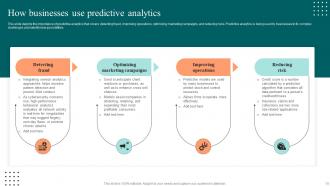
Slide 10: This slide illustrates the importance of predictive analytics and how businesses use it.
Slide 11: This slide also presents Table of contents with difference between four types of advanced analytics.
Slide 12: This slide represents the difference between the main types of advanced analytics.
Slide 13: This slide again showcases Table of content for Predictive analytics tools and workflow.
Slide 14: This slide depicts the tools used for predictive analytics to perform operations in predictive models.
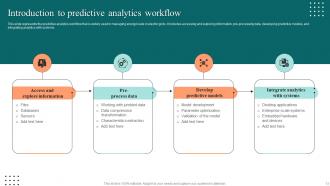
Slide 15: This slide displays the predictive analytics workflow that is widely used in managing energy loads in electric grids.
Slide 16: This slide illustrates the steps for predictive analytics workflow application in industries.
Slide 17: This is another slide continuing Table of content with Predictive analytics modelling.
Slide 18: This slide describes the overview of the classification model used in predictive analytics.
Slide 19: This slide depicts the decision tree model of predictive analytics that are beneficial for quick decision-making.
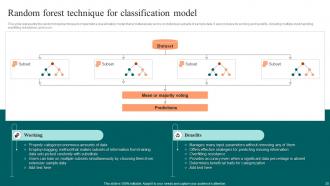
Slide 20: This slide presents the random forest technique to implement a classification model.
Slide 21: This slide also displays Table of contents for Predictive analytics modelling.
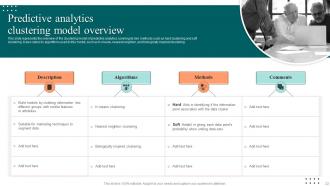
Slide 22: This slide represents the overview of the clustering model of predictive analytics covering its two methods.
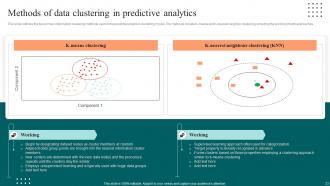
Slide 23: This slide outlines the two primary information clustering methods used in the predictive analytics clustering model.
Slide 24: This is another slide depicting Table of content for Predictive analytics modelling.
Slide 25: This slide presents the regression model of predictive analytics that is most commonly used in statistical analysis.
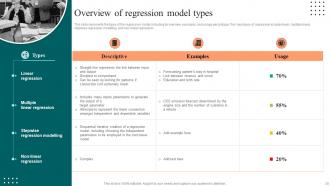
Slide 26: This slide represents the types of the regression model, including its overview.
Slide 27: This slide continues Table of content for Predictive analytics modelling.
Slide 28: This slide depicts the neural networks model of predictive analytics that behave in the same manner as a human brain does.
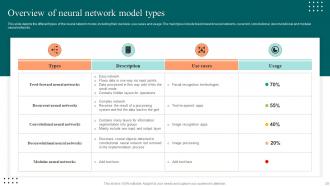
Slide 29: This slide displays the different types of the neural network model types.
Slide 30: This is another slide for table of content for Predictive analytics modelling.
Slide 31: This slide provides the introduction of the forecast model used for predictive analytics to make the metric value predictions.
Slide 32: This slide contains the outliers model used for predictive analytics.
Slide 33: This slide illustrates the time series model of predictive analytics that makes future outcome predictions.
Slide 34: This slide again shows Table of content for Predictive analytics modelling.
Slide 35: This slide discusses the steps required to create predictive algorithm models for business processes.
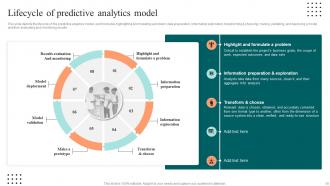
Slide 36: This slide depicts the lifecycle of the predictive analytics model.
Slide 37: This slide exhibits the working of predictive analytics models that operates iteratively.
Slide 38: This slide represents the development process of predictive analytics that uses recent and past information.
Slide 39: This slide showcases table of content for Businesses that are using predictive analytics.
Slide 40: This slide outlines the application of predictive analytics in the healthcare department for forecasting the probability of patients.
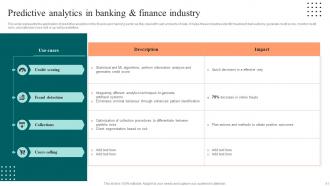
Slide 41: This slide represents the application of predictive analytics in the finance and banking sector.
Slide 42: This slide renders about using predictive analytics in manufacturing forecasting for optimal use of resources.
Slide 43: This slide displays the usage of predictive analytics technology in the government sector to improve cybersecurity.
Slide 44: This slide presents the application of predictive analytics technology in the retail industry.
Slide 45: This slide outlines the use of predictive analytics in the marketing industry.
Slide 46: This slide illustrates Table of content for Training schedule and budget for predictive analytics.
Slide 47: This slide demonstrates the training program for the predictive analytics model.
Slide 48: This slide describes the budget for developing predictive analytics model by covering details of project cost.
Slide 49: This slide depicts Table of content for Checklist for predictive analytics model deployment.
Slide 50: This slide represents the checklist for predictive analytics deployment that is necessary for organizations.
Slide 51: This slide shows Table of content for Timeline for predictive analytics model development.
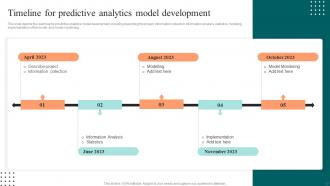
Slide 52: This slide depicts the roadmap for predictive analytics model development, including describing the project.
Slide 53: This slide displays Table of content for Roadmap for predictive analytics model development.
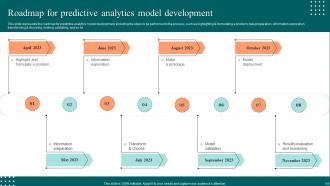
Slide 54: This slide represents the roadmap for predictive analytics model development, including the steps to be performed in the process.
Slide 55: This slide showcases Table of content for Predictive analytics model performance tracking dashboard.
Slide 56: This slide presents the predictive analytics model performance tracking dashboard,covering all the details.
Slide 57: This slide shows all the icons included in the presentation.
Slide 58: This slide is titled as Additional Slides for moving forward.
Slide 59: This slide describes the usage of predictive analytics in banking and other financial institutions for credit purposes.
Slide 60: This slide exhibits the application of predictive analytics in underwriting by insurance companies.
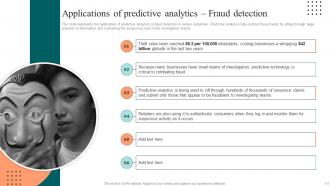
Slide 61: This slide depicts the application of predictive analytics in fraud detection in various industries.
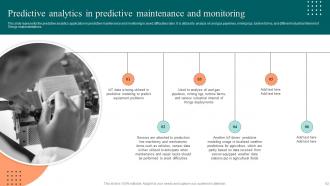
Slide 62: This slide renders the predictive analytics application in predictive maintenance and monitoring to avoid difficulties later.
Slide 63: This slide illustrates the comparison between predictive analytics and machine learning based on technology used and built on.
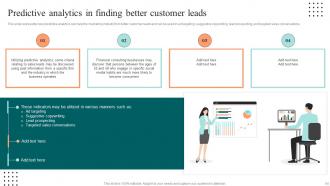
Slide 64: This slide displays how predictive analytics can help the marketing industry find better customer leads.
Slide 65: This slide depicts how predictive analytics help identifies prospects faster in the marketing industry.
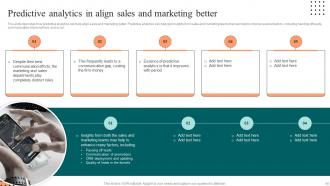
Slide 66: This slide describes how predictive analytics can help align sales and marketing better.
Slide 67: This slide outlines how predictive analytics can help understand existing customers' needs.
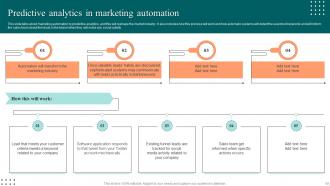
Slide 68: This slide exhibits about marketing automation by predictive analytics, and this will reshape the market industry.
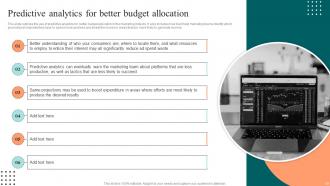
Slide 69: This slide renders the use of predictive analytics for better budget allocation in the marketing industry.
Slide 70: This is About Us slide to show company specifications etc.
Slide 71: This is an Idea Generation slide to state a new idea or highlight information, specifications etc.
Slide 72: This is Our Target slide. State your targets here.
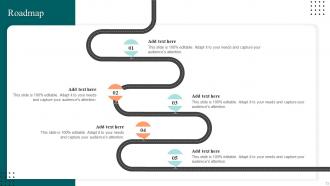
Slide 73: This slide presents Roadmap with additional textboxes.
Slide 74: This is a Thank You slide with address, contact numbers and email address.
Predictive Data Analysis Powerpoint Presentation Slides with all 79 slides:
Use our Predictive Data Analysis Powerpoint Presentation Slides to effectively help you save your valuable time. They are readymade to fit into any presentation structure.




































FAQs for Predictive Data Analysis
So you'll want to focus on four main things: collecting data, cleaning it up, building models, and testing them. Get good historical data first - crappy data means crappy results, obviously. Cleaning takes forever btw, way longer than anyone tells you. Then comes modeling with regression, decision trees, ML algorithms, whatever fits. Test your model's accuracy afterward. Honestly, you won't get it right the first time - it's super iterative. Oh and start with just one specific thing you want to predict instead of going crazy trying to forecast everything.
So basically, it all comes down to what kind of data you're dealing with. Finance companies need super fast fraud detection, so they love random forests for those split-second decisions. Healthcare is obsessed with deep learning - especially for spotting cancer in X-rays and stuff. Retail focuses more on recommendation systems and predicting what inventory they'll need. Manufacturing tries to catch equipment failures before everything breaks down (learned that one the hard way at my last job). The trick is just matching your algorithm to whatever timeline your business actually needs.
So ML can dig through tons of data and spot patterns you'd never catch on your own. You don't have to guess which factors actually matter - the algorithms figure that out by looking at hundreds of variables simultaneously. What's wild is they keep improving as they process more information. Feed them your sales history, weather data, customer habits, whatever you've got, and they'll predict future stuff with crazy precision. I'd honestly start simple though - try linear regression first before diving into those complex neural networks that everyone talks about.
Pick one thing you're already tracking with decent historical data - customer churn, inventory, whatever. Don't try to fix everything at once (learned that the hard way). Build simple dashboards that show predictions right next to your normal metrics so people actually see them in regular meetings. Nobody's gonna dig through complicated models when they're rushed. Make it as easy to read as any other report you use. Then spend time teaching your team how to read confidence levels - like when predictions are solid vs when they're basically guessing. That's honestly the part most people skip.
Look for data that's fresh, comprehensive, and actually connects to what you're predicting. Transactional data and customer behavior logs are gold - way better than survey responses or opinion stuff. I'd personally skip anything older than 2-3 years unless there's a really good reason to include it. Mix your internal data (sales, usage patterns, customer interactions) with external sources like market trends. Oh, and definitely audit what you already have first. You'll probably find tons of useful data just sitting in random systems that nobody's bothered connecting yet. Start there before buying anything new.
So basically predictive analysis is like having a heads up on what your customers will do next. Pretty cool for CRM stuff. You can catch people before they bail, figure out which leads are actually worth your time, and nail the timing on when to hit people up. I mean, it's not perfect but way better than just guessing. The whole thing works by looking at what happened before to predict what's coming. Pick one behavior you want to get ahead of - maybe people canceling or whatever - then work backwards to see the patterns. Focus your energy where it'll actually pay off.
Honestly, the ethics stuff breaks down into bias, transparency, and consent. Your training data probably has baked-in discrimination from historical inequities - audit that regularly or you'll just amplify existing problems. People hate being secretly profiled (can't blame them), so be upfront about data use and algorithmic decisions. Get real consent and let folks opt out. Don't forget GDPR compliance either - that's a headache you don't want. Set up some kind of ethics review before you deploy anything. Sounds boring but it'll save you later.
Hey! So there are different ways to check how good your model is. Classification problems? I usually go with F1-score because it's like the sweet spot between precision and recall - way better than just looking at accuracy percentage. Regression is more straightforward - MAE or RMSE work great. Oh, and definitely test on fresh data your model hasn't touched! I do 80/20 splits most of the time. Pick maybe 2-3 metrics and stick with them so you're not constantly changing what you're measuring. Makes comparison way easier down the road.
Dude, biggest mistake is diving into predictions with messy data - total waste of time. Companies love overcomplicating things too, building these fancy models when something basic would work fine. Actually, I've seen teams spend months on "impressive" tech that doesn't solve any real business problem. Plus nobody bothers getting stakeholders on board, so the predictions just sit there unused. My advice? Pick one clear problem, clean your data first (seriously, this step sucks but you can't skip it), and make sure someone actually wants your results before you build anything crazy.
Dude, visualization tools are a game changer for predictive analytics. You know how nobody wants to stare at spreadsheets full of numbers? Charts and graphs fix that instantly. Heat maps will show you exactly where your predictions are solid. Time series plots reveal seasonal stuff you'd totally miss otherwise. Interactive dashboards are clutch too - you can dig into specific segments without losing your mind. Honestly, I think bar charts and line graphs are still underrated for most analyses. Your team will actually *get* the insights instead of glazing over. Makes everything way more digestible.
For churn prediction, I'd go with logistic regression first - super easy to interpret. Random forests work great too if you want better accuracy. Focus on usage patterns since declining activity is a massive red flag. Also track billing history and support tickets. Gradient boosting usually wins but honestly it's overkill unless you're working with huge datasets. The real trick is building features that show engagement trends over time windows instead of just static snapshots. Start simple with a logistic model using recency/frequency stuff. That baseline catches like 70% of churners anyway, then you can get fancy later.
So basically, you analyze past data patterns to catch financial problems before they blow up. Works great for spotting credit risks, fraud, market swings - stuff like that. Way better than scrambling to fix things after the fact, which honestly feels like most companies still do. These models crunch through tons of data super fast and give you heads up about portfolio issues or compliance problems. I'd probably start with whatever's your biggest headache right now and build a model around that first. Makes way more sense than trying to predict everything at once.
Dude, healthcare and finance are absolutely crushing it with predictive analytics right now. Hospitals can predict readmissions and catch diseases super early - the accuracy is getting scary good. Banks use it for fraud detection and credit stuff. Retail's doing demand forecasting and those creepy-but-helpful product recommendations. Oh, and manufacturing's big on predictive maintenance now. Honestly, if you're thinking about switching careers, healthcare analytics is where I'd look first. That's where all the cool jobs are showing up, plus you'd actually be helping people which is kinda nice.
Stats and math are your foundation - regression, probability, hypothesis testing, all that good stuff. Pick up Python or R (I'd go Python personally), plus you'll need SQL for sure. Machine learning libraries like scikit-learn are basically expected now. Honestly though, the business side trips up a lot of people. Understanding what problems actually need solving matters way more than building the fanciest model. You'll spend tons of time explaining your work to people who don't code, so communication skills are clutch. Oh, and data viz tools help - Tableau's popular but matplotlib works if you're cheap like me. Start with one language first.
Honestly, you don't need to spend a fortune on this stuff. Google Analytics is free and shows you customer patterns right away. Excel or Google Sheets work great too - people sleep on how good basic forecasting functions are in spreadsheets. If anyone on your team knows Python, that's clutch because all the libraries are free. Tableau Public won't cost you either. Here's the thing though - pick ONE thing to predict first. Like customer churn or when sales spike seasonally. Don't try to forecast everything at once, you'll go crazy. Your POS and CRM data is probably enough to start spotting useful trends.
-
Great combination of visuals and information. Glad I purchased your subscription.
-
Awesome use of colors and designs in product templates.