


Predictive Modeling Methodologies Powerpoint Presentation Slides
Predictive analytics is applicable and valuable to nearly every industry. Check out our efficiently designed Predictive Modeling Methodologies template. It gives a brief idea about predictive analytics, which uses statistical techniques, machine learning algorithms, and other tools to analyze historical data. It also makes predictions about future events or outcomes. In our Predictive Analytics deck, we have covered the introduction to predictive analytics, its framework, and different models. It shows the importance of predictive analytics with its usage. In addition, our Estimation Model PPT exhibits the different predictive analytics tools and their workflow. Further, it covers the difference between the four types of advanced analytics. Our Forecast Model PPT reveals multiple predictive analytics models like classification models, clustering models, etc. Furthermore, it caters to the prominent business sectors that are already using predictive analytics in their daily operations. These include the healthcare department, banking, finance, and many more. Moreover, this Prospective Analysis module comprises a training program and a budget to develop a predictive analytics model. Lastly, it showcases a checklist, a timeline, and a roadmap for predictive analytics model deployment with a performance tracking dashboard. Get access now.
Predictive analytics is applicable and valuable to nearly every industry. Check out our efficiently designed Predictive Mod..
















-

- Google Slides is a new FREE Presentation software from Google.
- All our content is 100% compatible with Google Slides.
- Just download our designs, and upload them to Google Slides and they will work automatically.
- Amaze your audience with SlideTeam and Google Slides.
-

Want Changes to This PPT Slide? Check out our Presentation Design Services
-

- WideScreen Aspect ratio is becoming a very popular format. When you download this product, the downloaded ZIP will contain this product in both standard and widescreen format.
-

- Some older products that we have may only be in standard format, but they can easily be converted to widescreen.
- To do this, please open the SlideTeam product in Powerpoint, and go to
- Design ( On the top bar) -> Page Setup -> and select "On-screen Show (16:9)” in the drop down for "Slides Sized for".
- The slide or theme will change to widescreen, and all graphics will adjust automatically. You can similarly convert our content to any other desired screen aspect ratio.
Compatible With Google Slides

Get This In WideScreen
You must be logged in to download this presentation.


Do you want to remove this product from your favourites?
PowerPoint presentation slides
This complete presentation has PPT slides on wide range of topics highlighting the core areas of your business needs. It has professionally designed templates with relevant visuals and subject driven content. This presentation deck has total of seventy five slides. Get access to the customizable templates. Our designers have created editable templates for your convenience. You can edit the color, text and font size as per your need. You can add or delete the content if required. You are just a click to away to have this ready-made presentation. Click the download button now.

People who downloaded this PowerPoint presentation also viewed the following :
Content of this Powerpoint Presentation
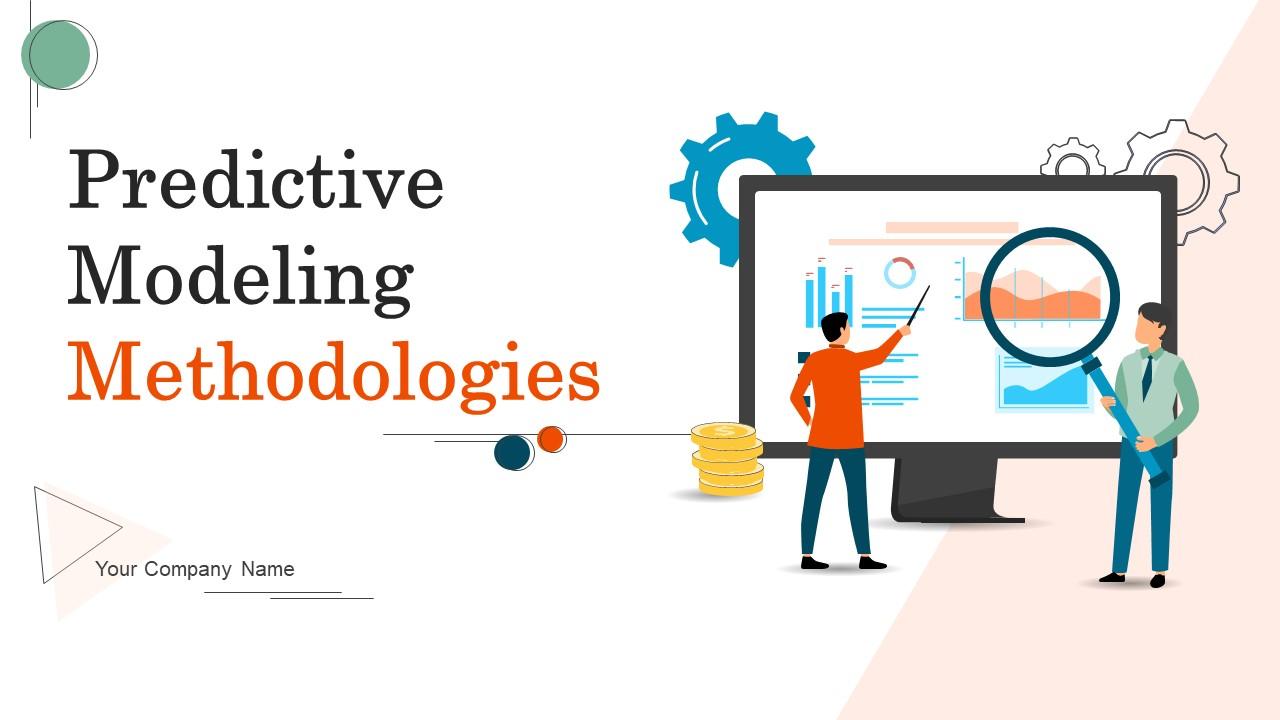
Slide 1: This slide introduces Predictive Modeling Methodologies.
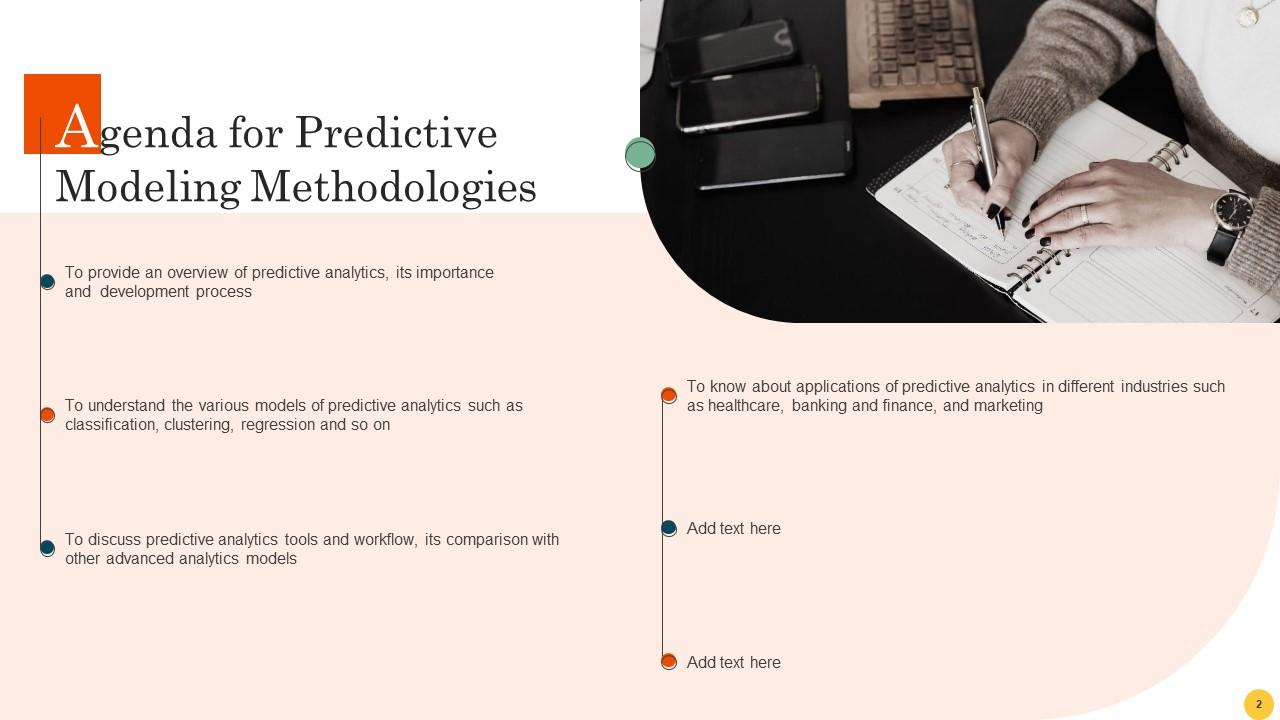
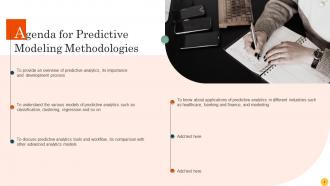
Slide 2: This slide shows Agenda for Predictive Modeling Methodologies.
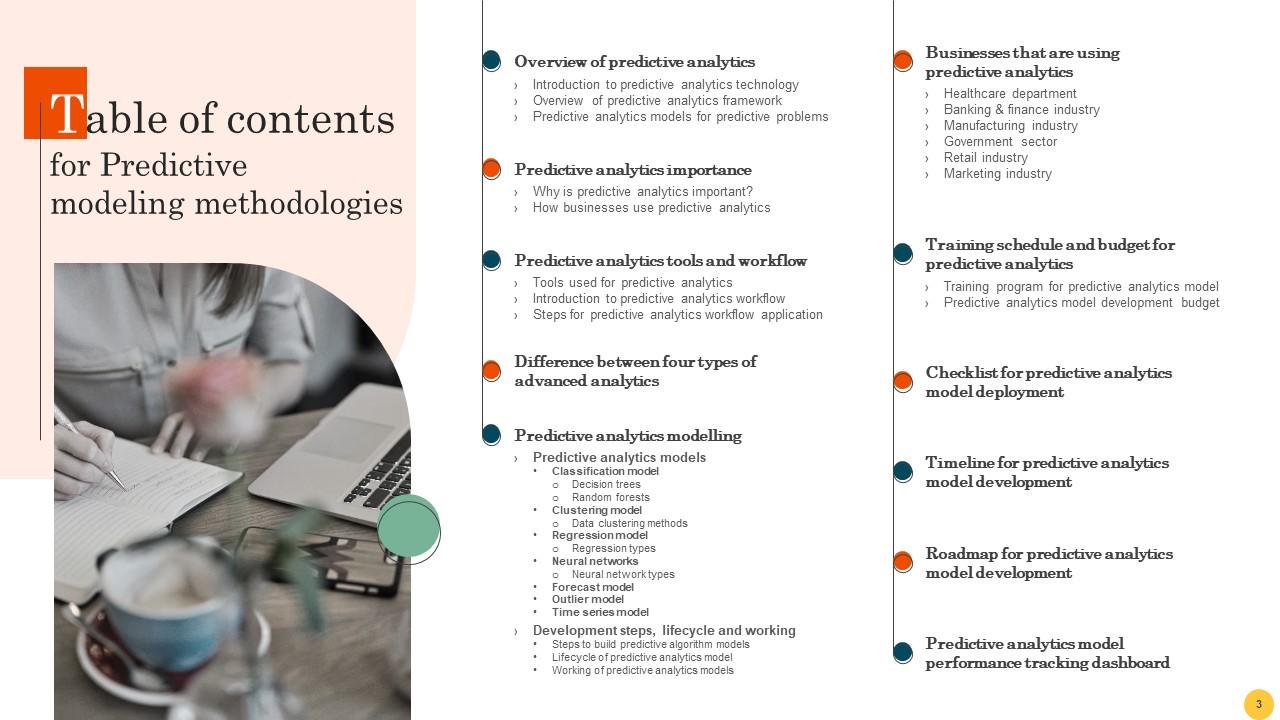
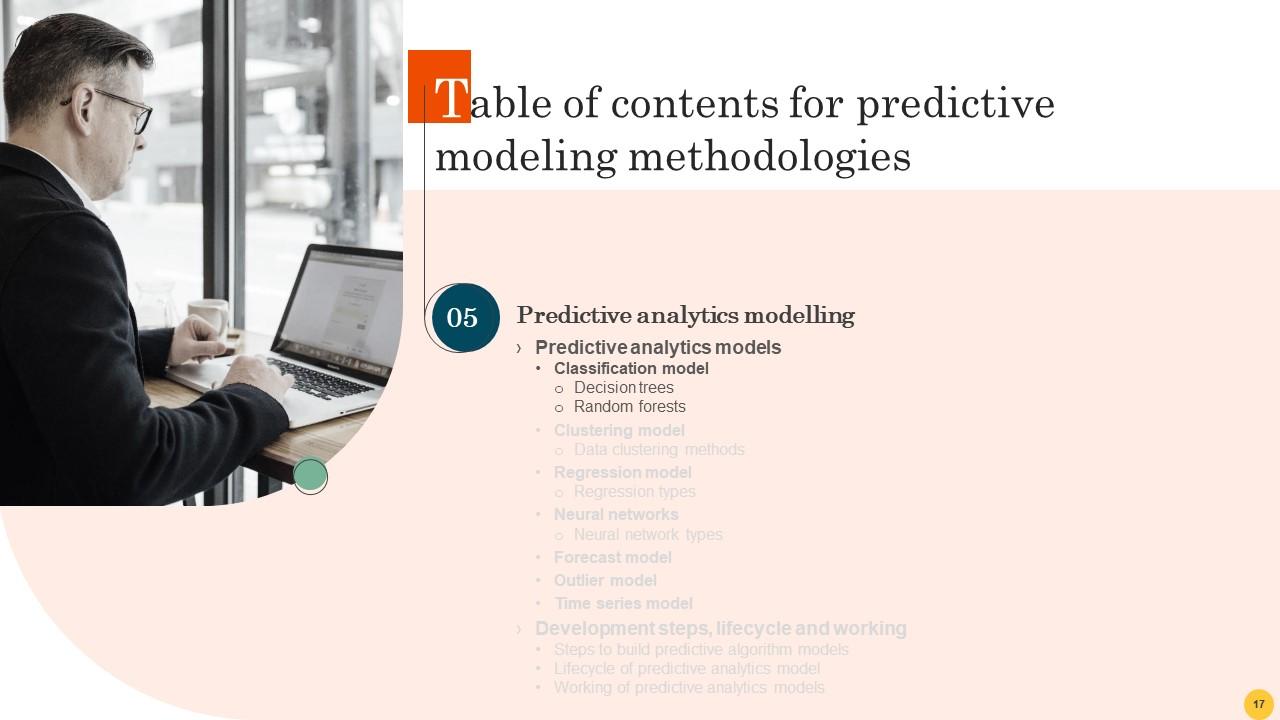
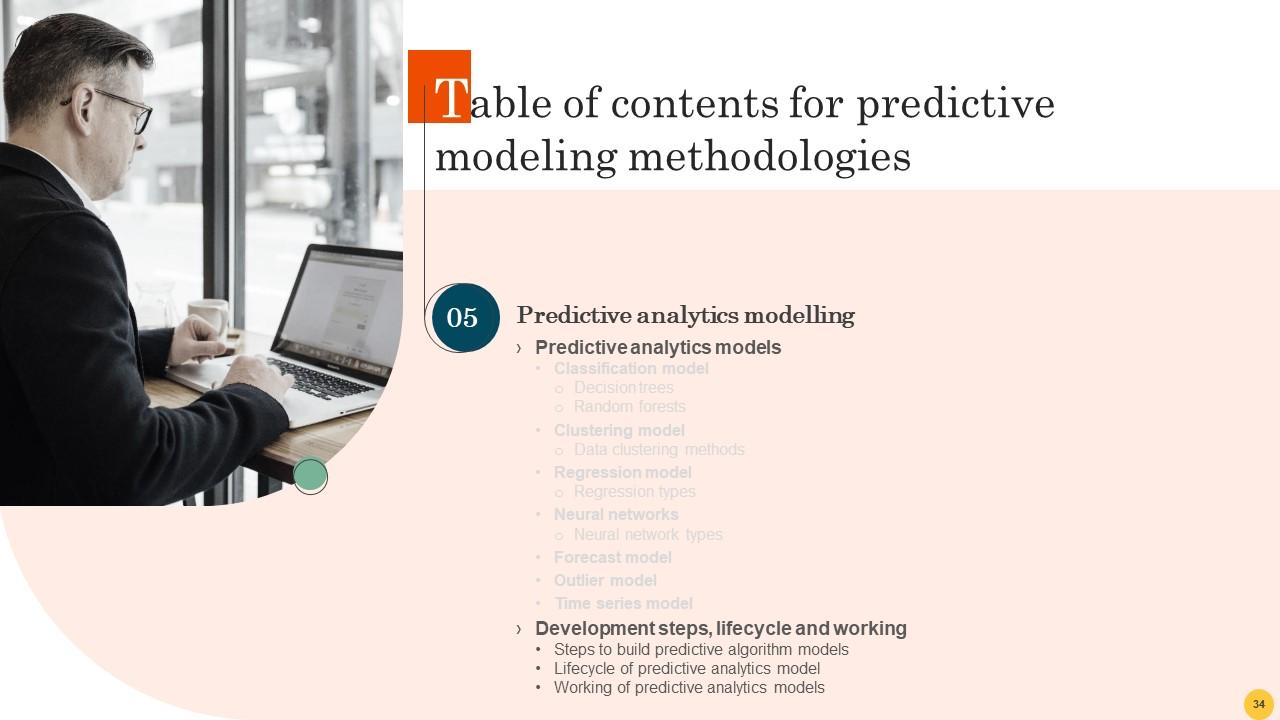
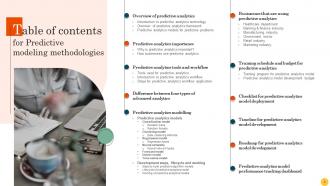
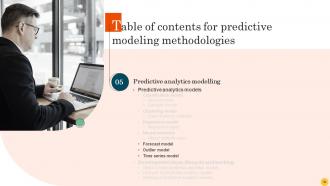
Slide 3: This slide contains Table of contents for Predictive modeling methodologies.
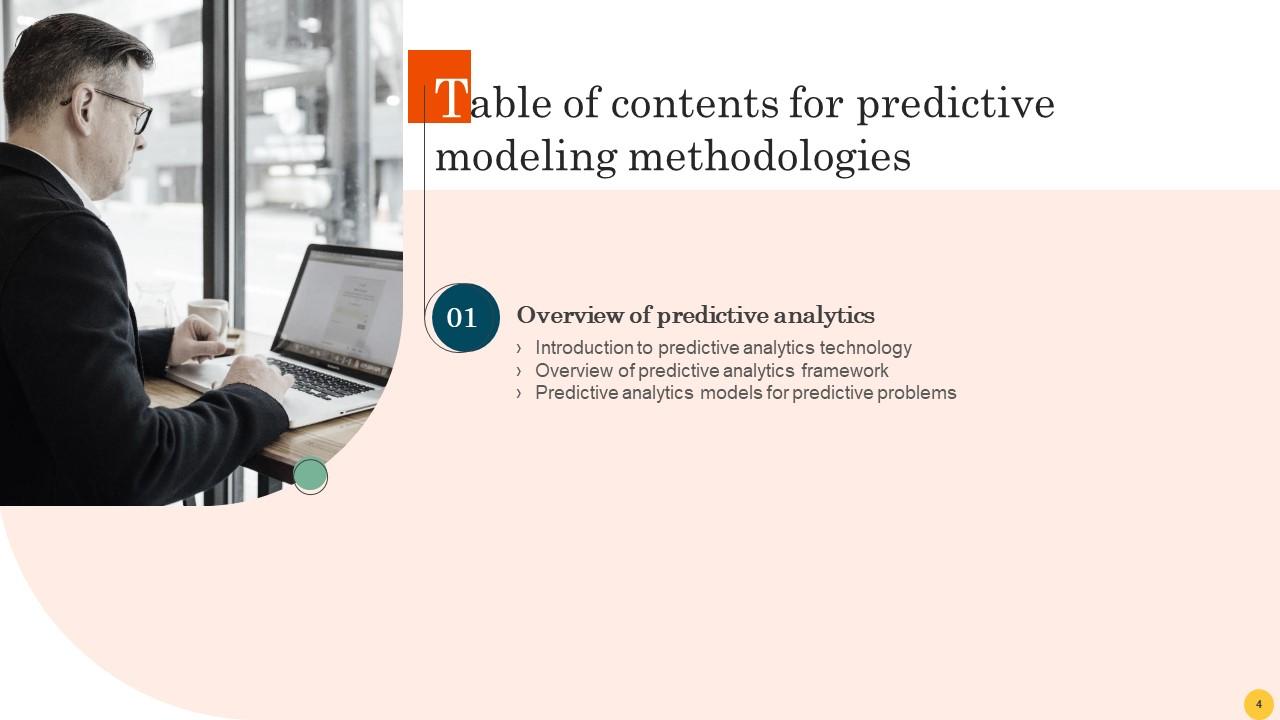
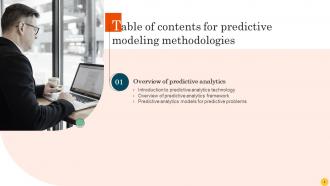
Slide 4: This slide again contains Table of contents for predictive modeling methodologies.
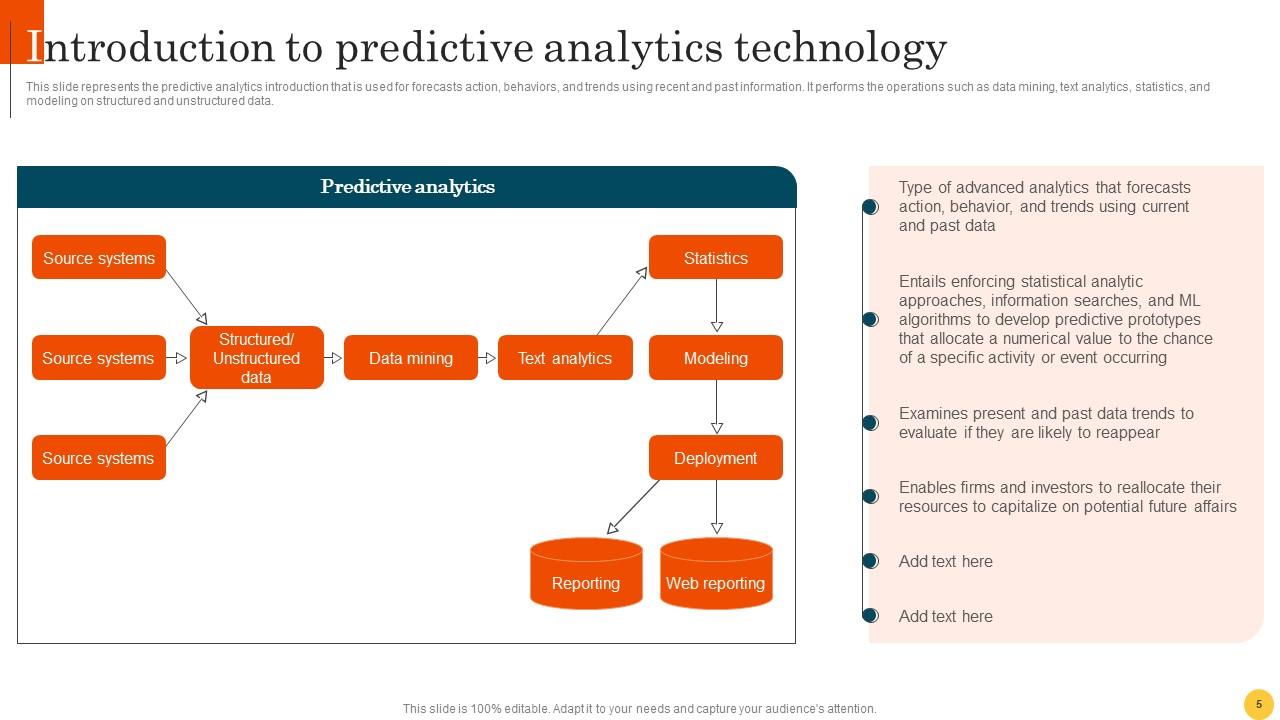
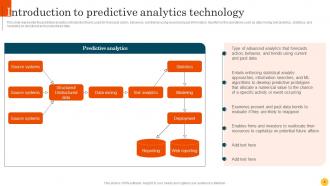
Slide 5: This slide represents the predictive analytics technology introduction.
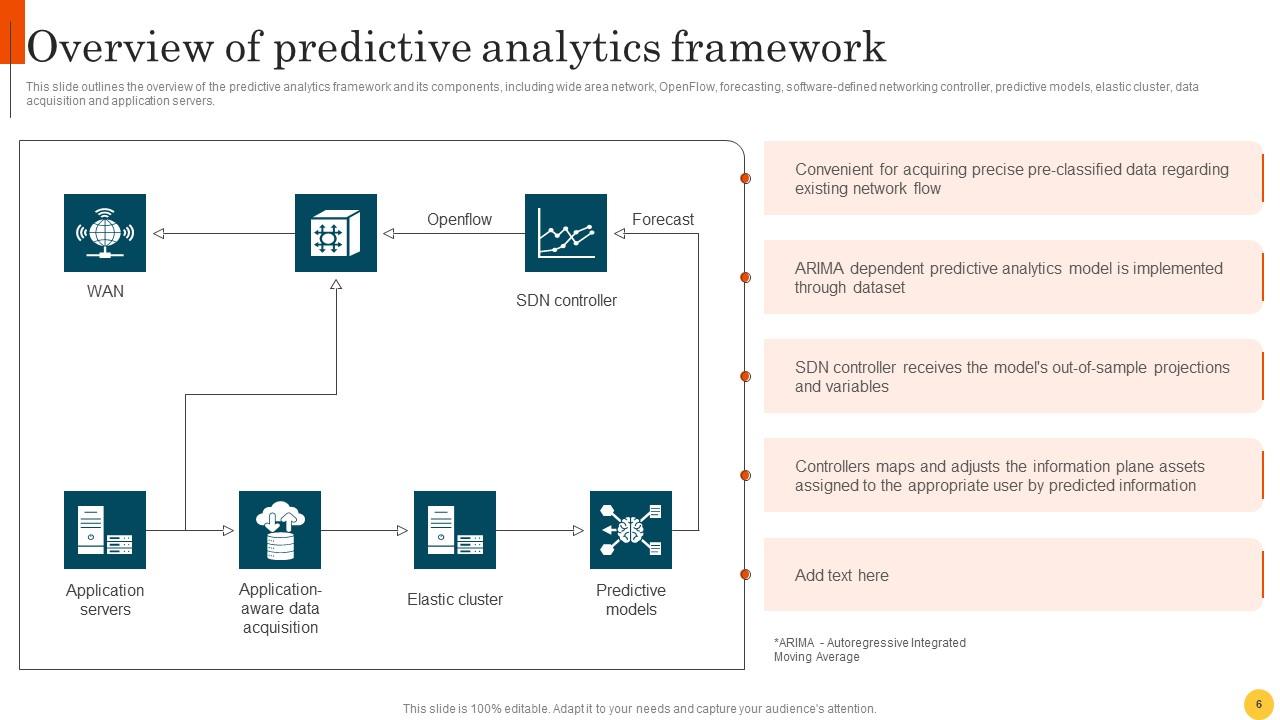
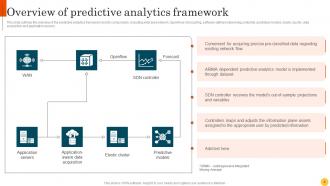
Slide 6: This slide outlines the overview of the predictive analytics framework and its components.
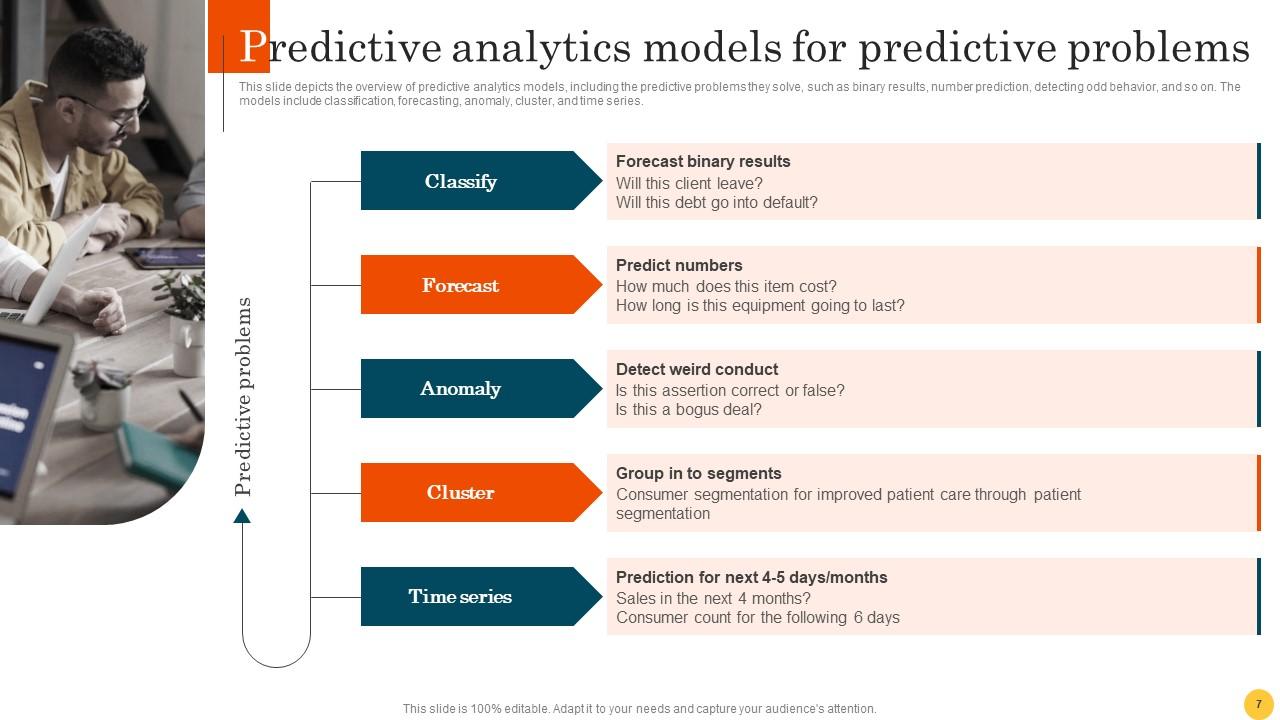
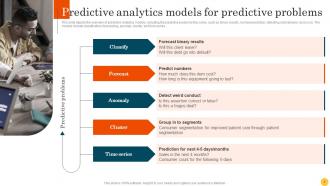
Slide 7: This slide depicts the overview of predictive analytics models.
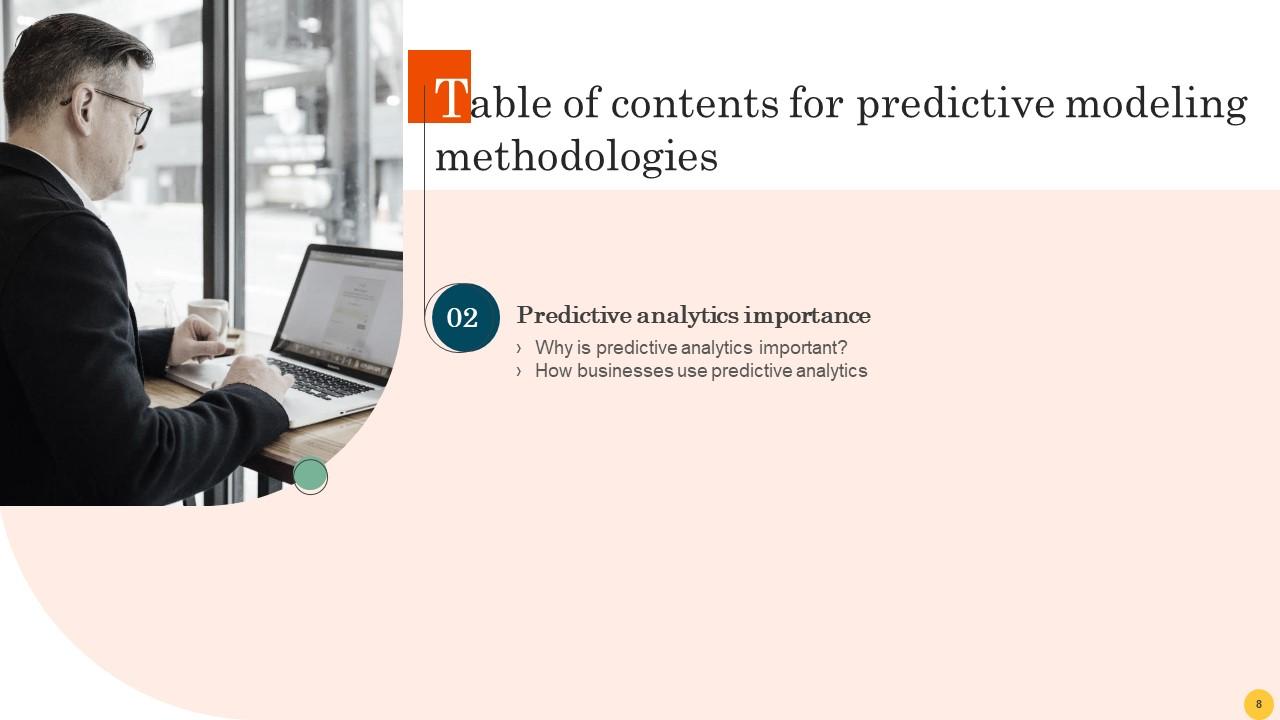
Slide 8: This slide displays Table of contents for predictive modeling methodologies further.
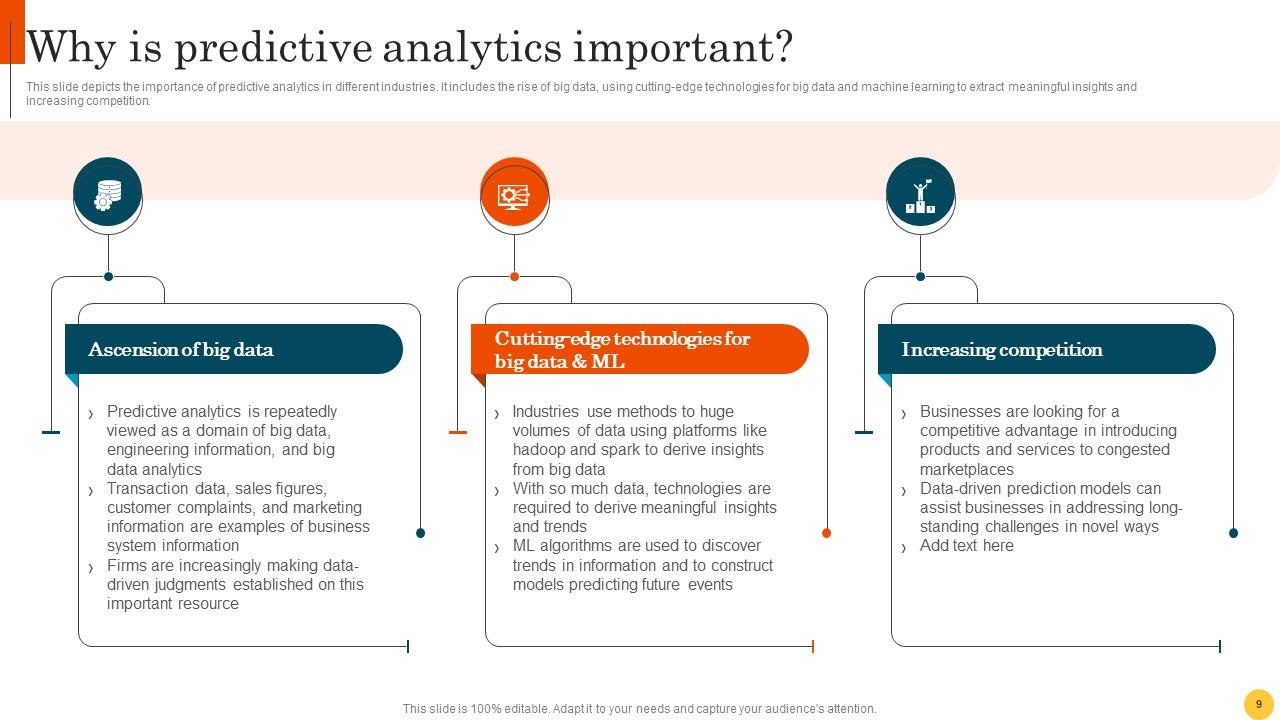
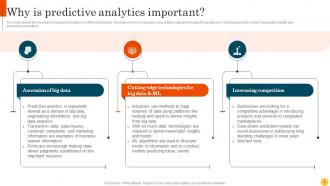
Slide 9: This slide illustrates the importance of predictive analytics in different industries.
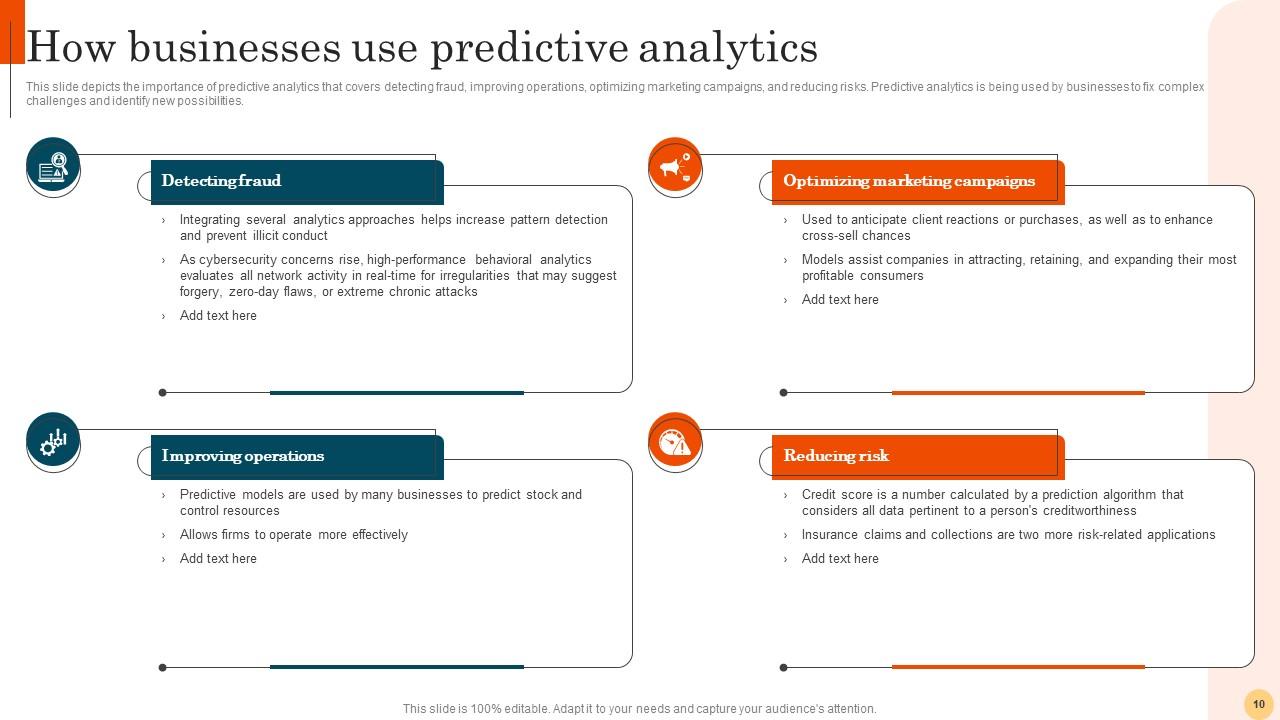
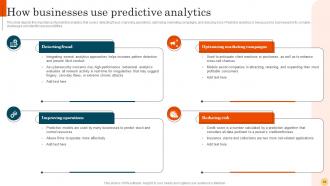
Slide 10: This slide displays the importance of predictive analytics how businesses use it.
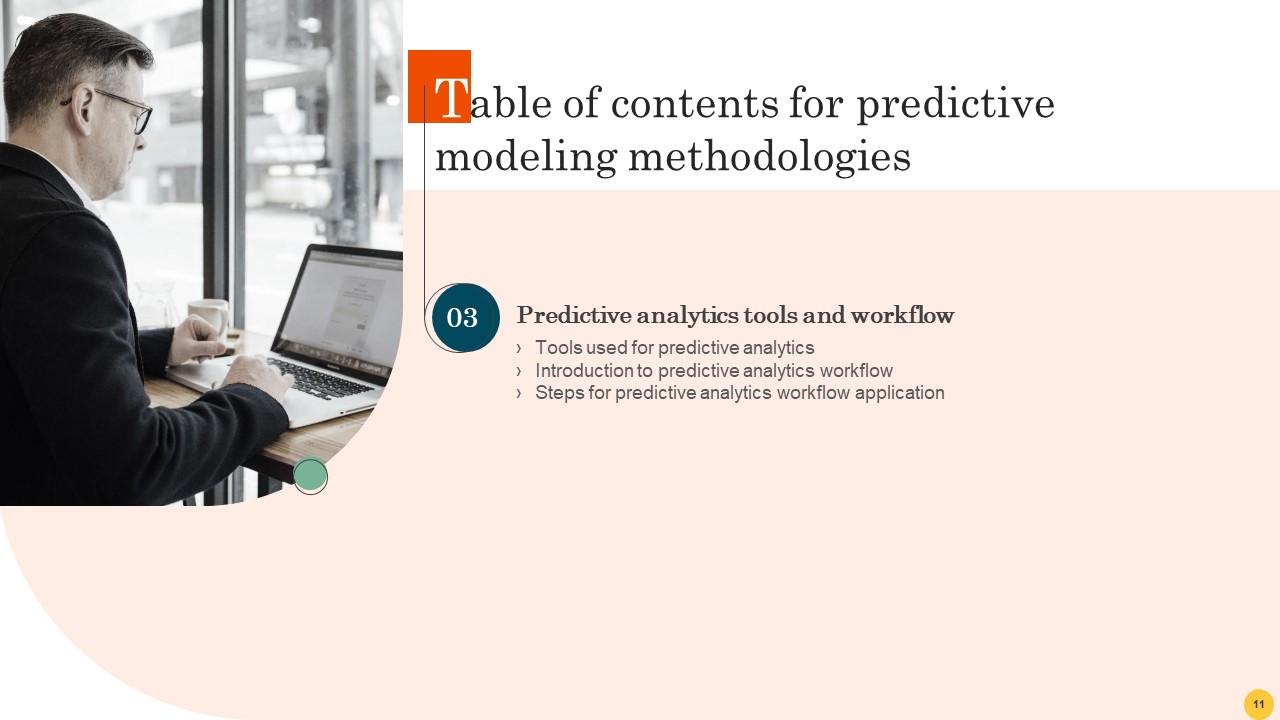
Slide 11: This slide is continuing Table of contents for predictive modeling methodologies.
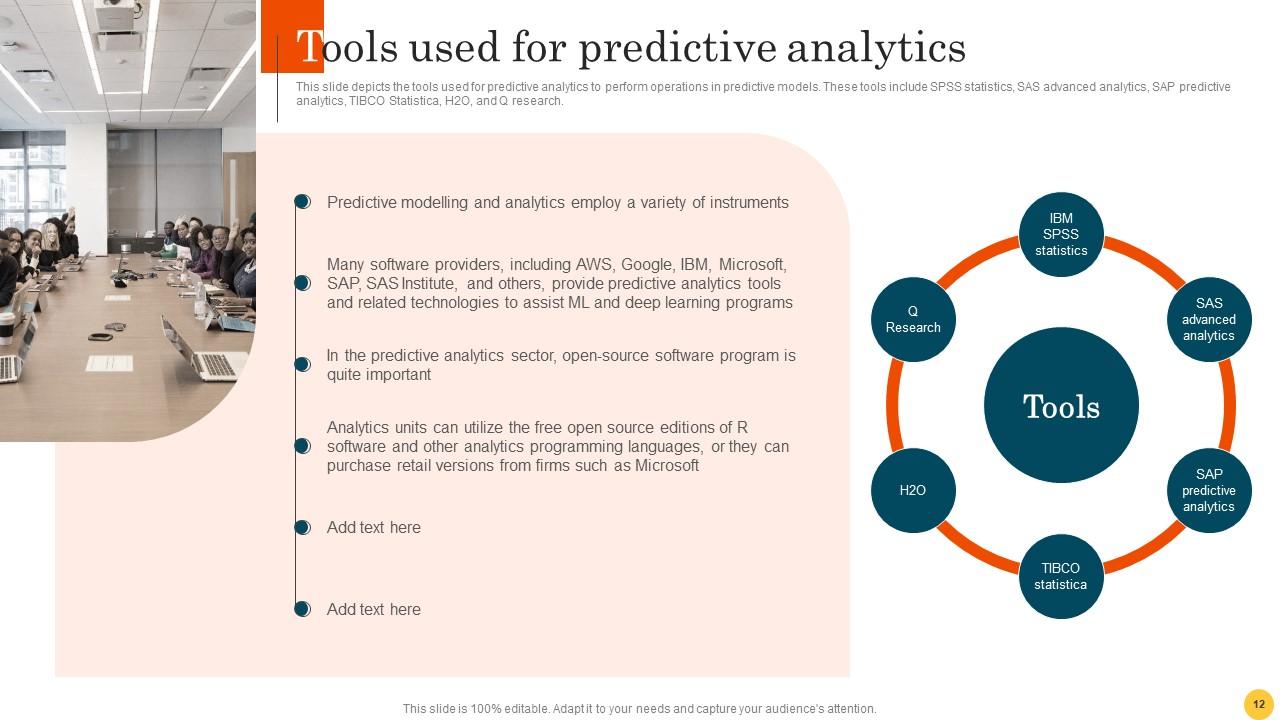
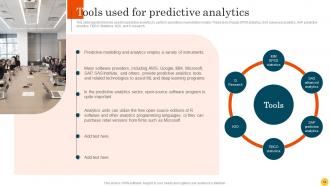
Slide 12: This slide depicts the tools used for predictive analytics to perform operations in predictive models.
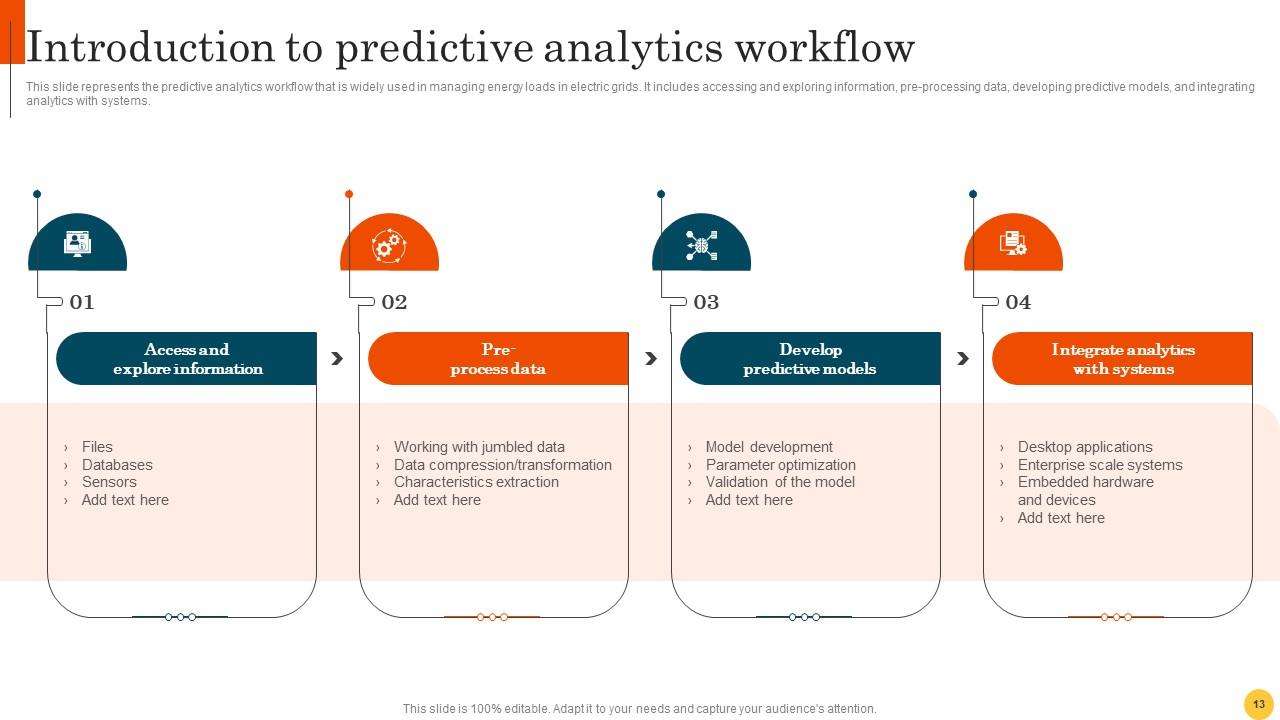
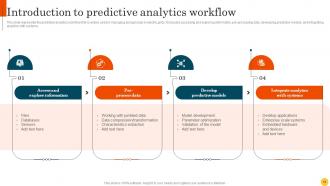
Slide 13: This slide presents the predictive analytics workflow that is widely used in managing energy loads in electric grids.
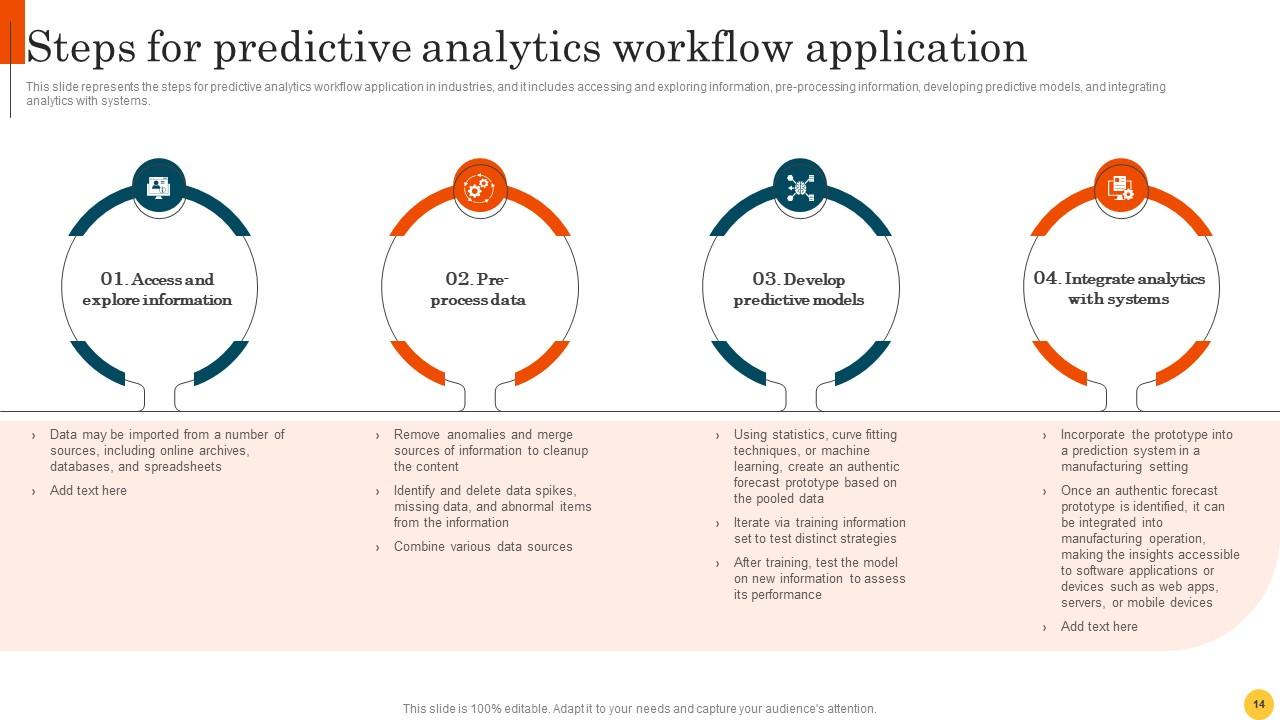
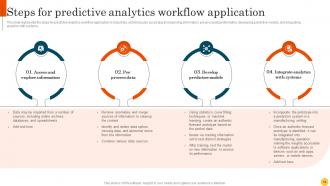
Slide 14: This slide renders the steps for predictive analytics workflow application in industries.
Slide 15: This slide again contains Table of contents for predictive modeling methodologies
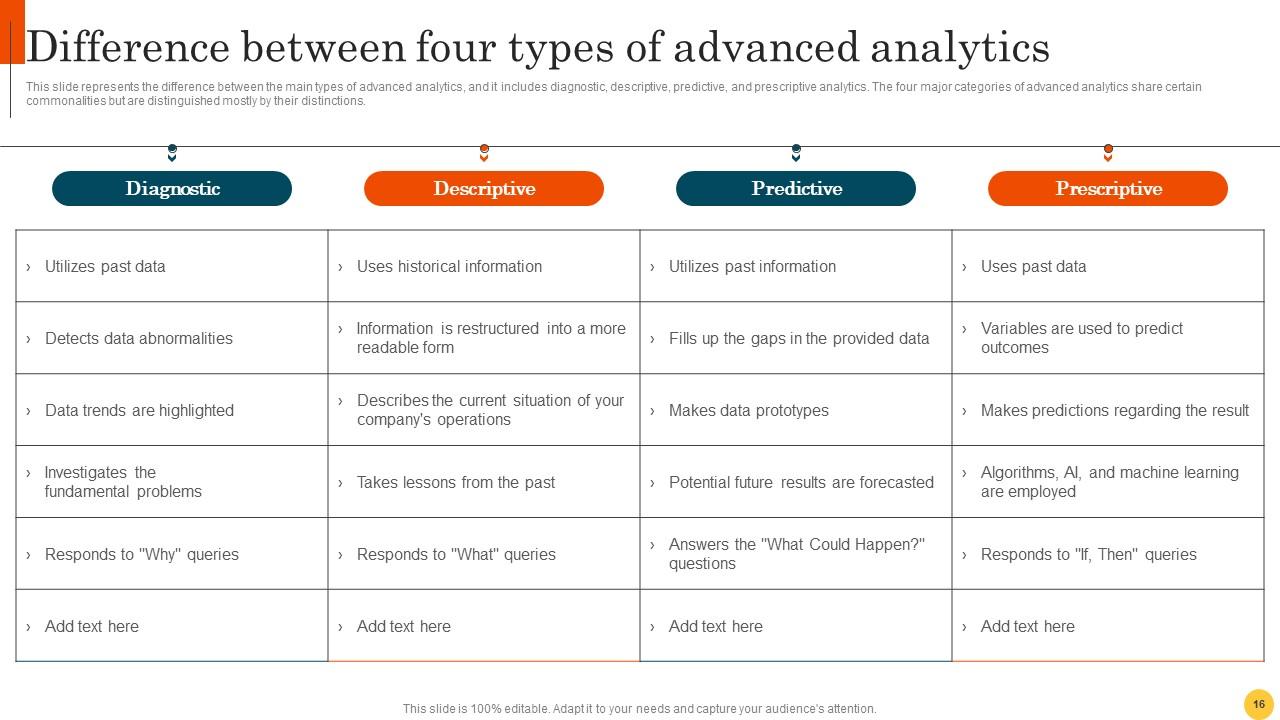
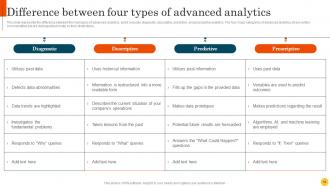
Slide 16: This slide displays the difference between the main types of advanced analytics.
Slide 17: This slide is another continuing with Table of contents for predictive modeling methodologies.
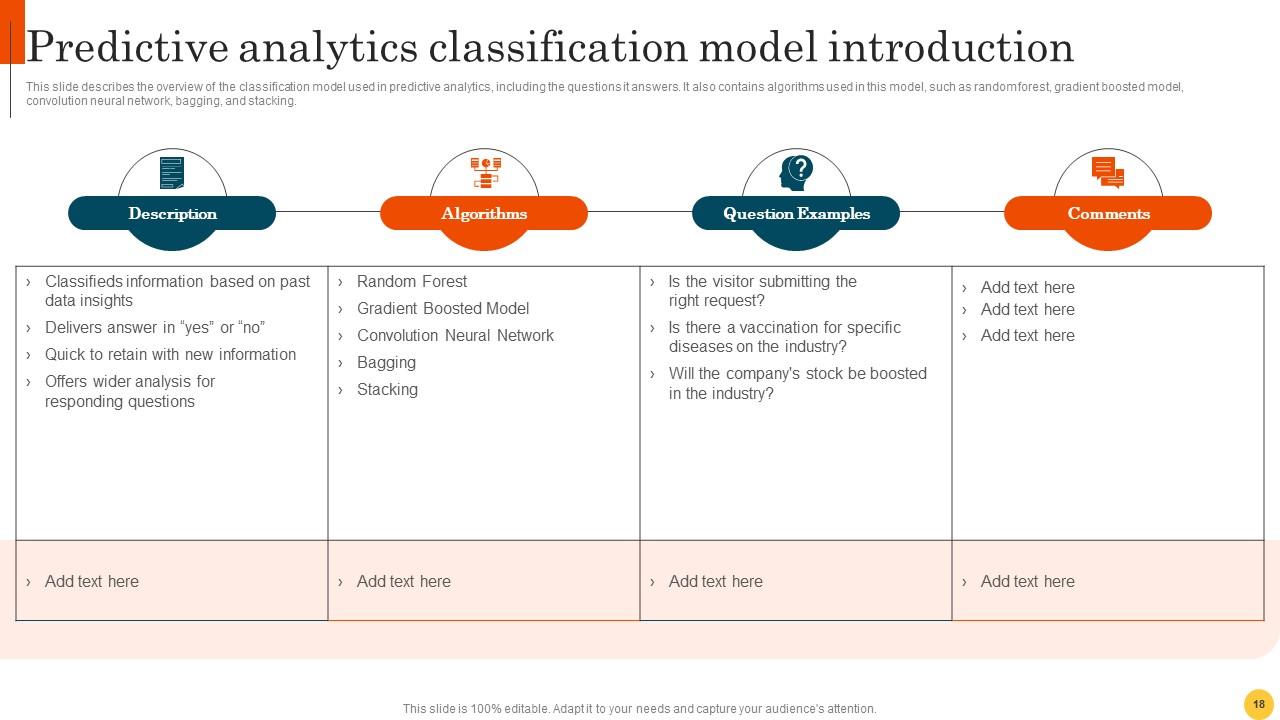
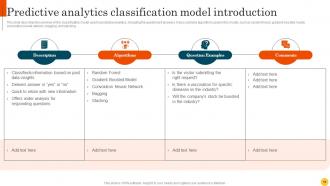
Slide 18: This slide describes the overview of the classification model used in predictive analytics, including the questions it answers.
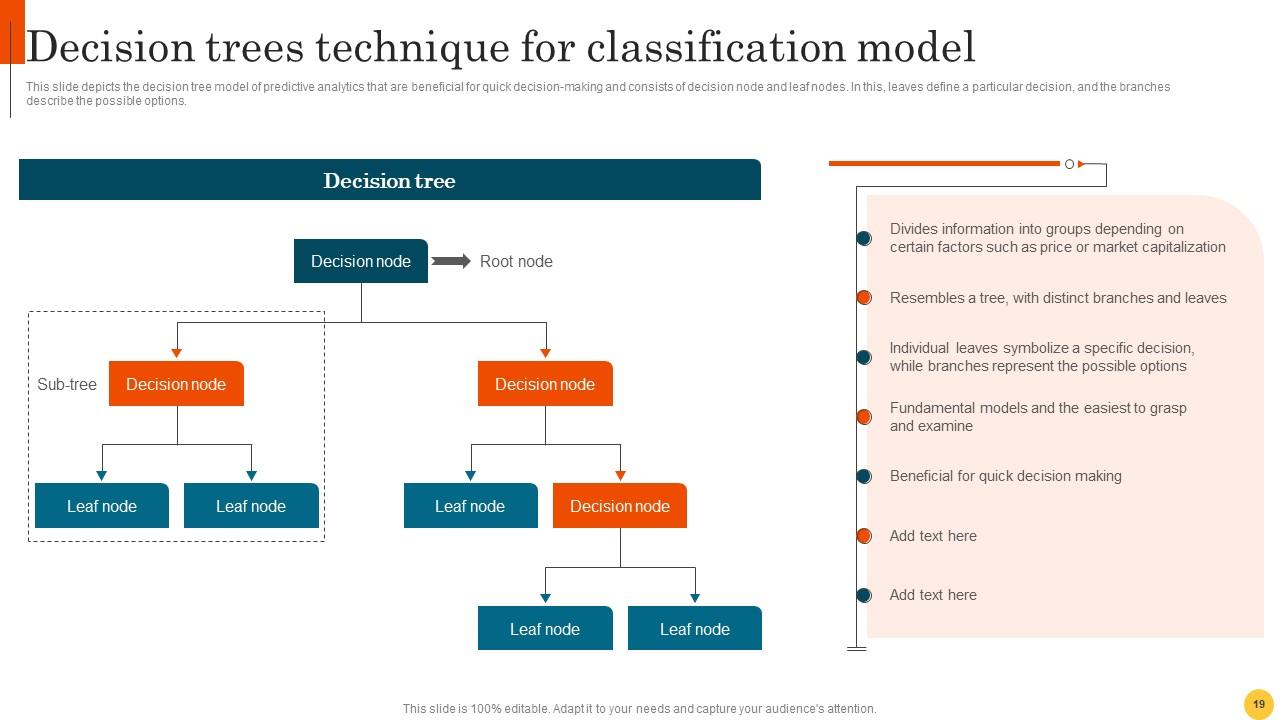
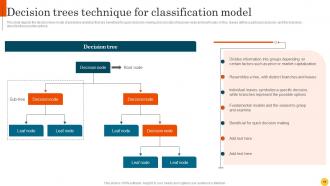
Slide 19: This slide depicts the decision tree model of predictive analytics that are beneficial for quick decision-making.
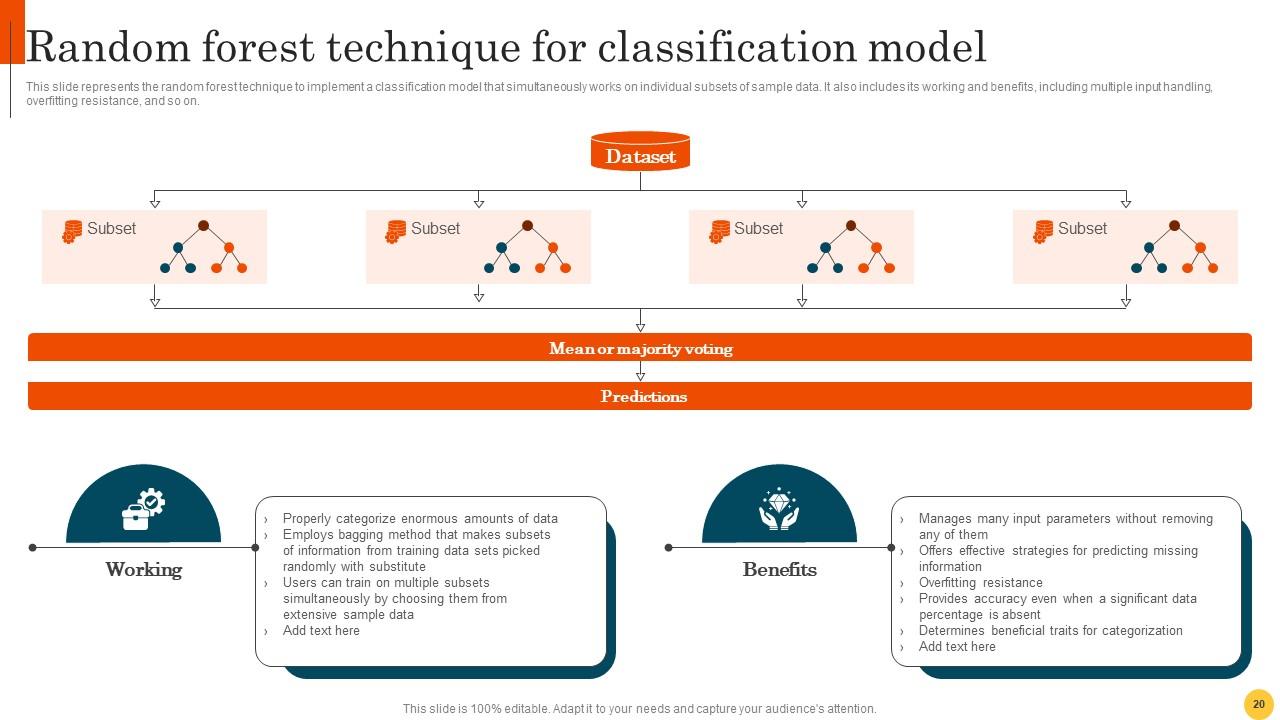
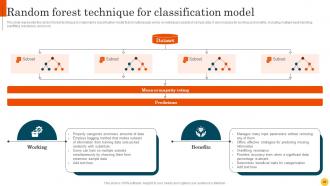
Slide 20: This slide represents the random forest technique to implement a classification model.
Slide 21: This slide is another with Table of contents for predictive modeling methodologies.
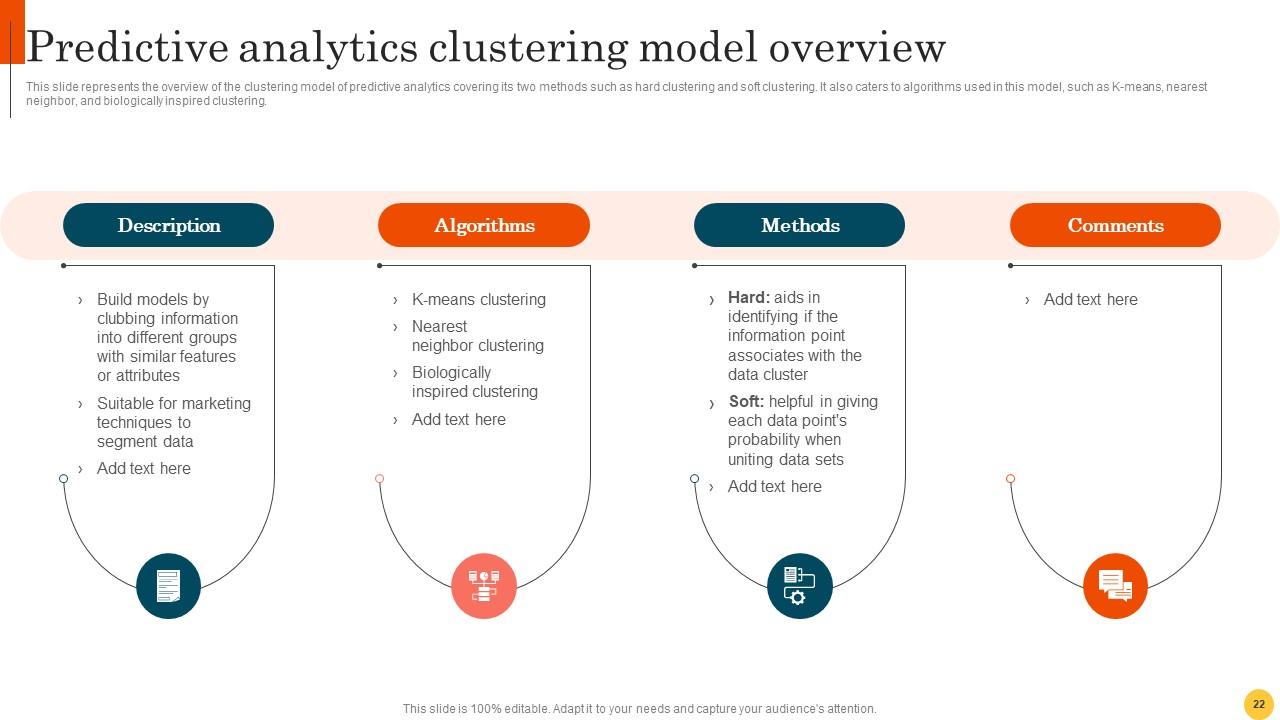
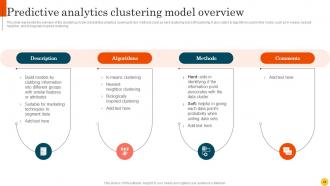
Slide 22: This slide presents the overview of the clustering model of predictive analytics covering its two methods.
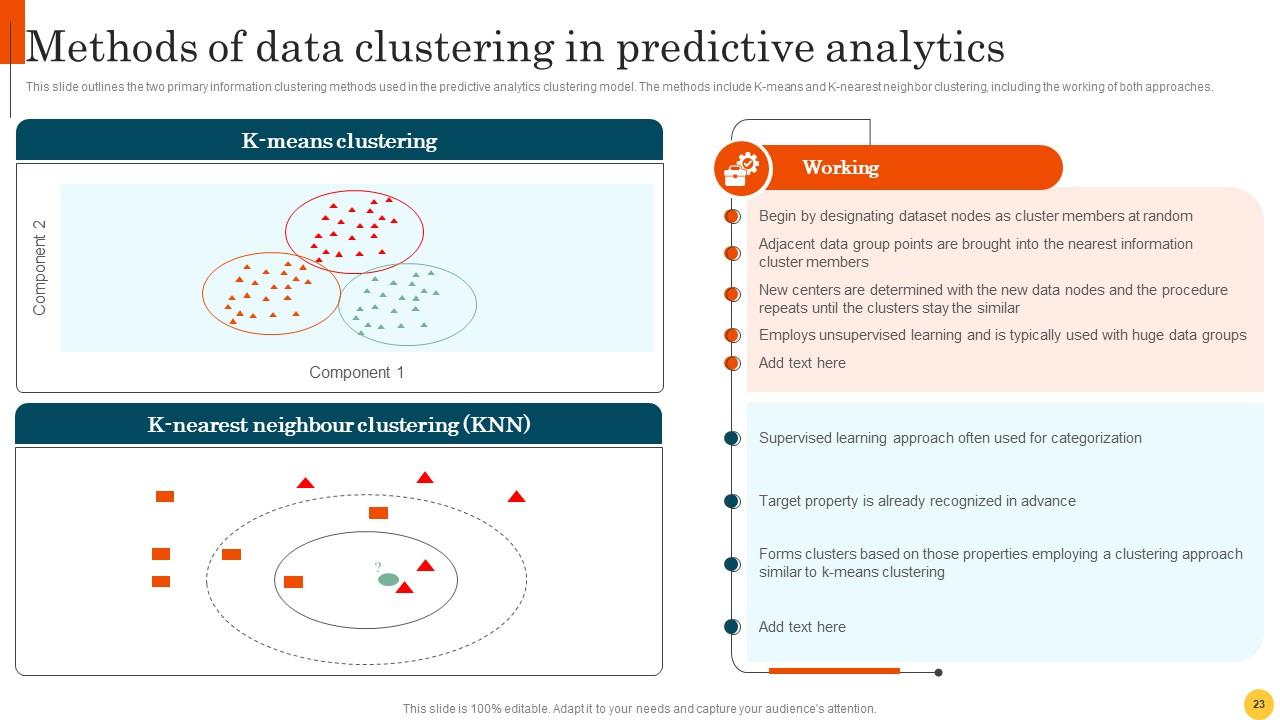
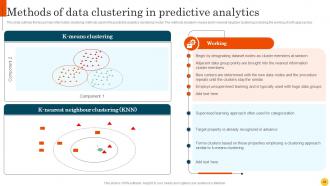
Slide 23: This slide exhibits the two primary information clustering methods used in the predictive analytics clustering model.
Slide 24: This slide is continuation of Table of contents for predictive modeling methodologies
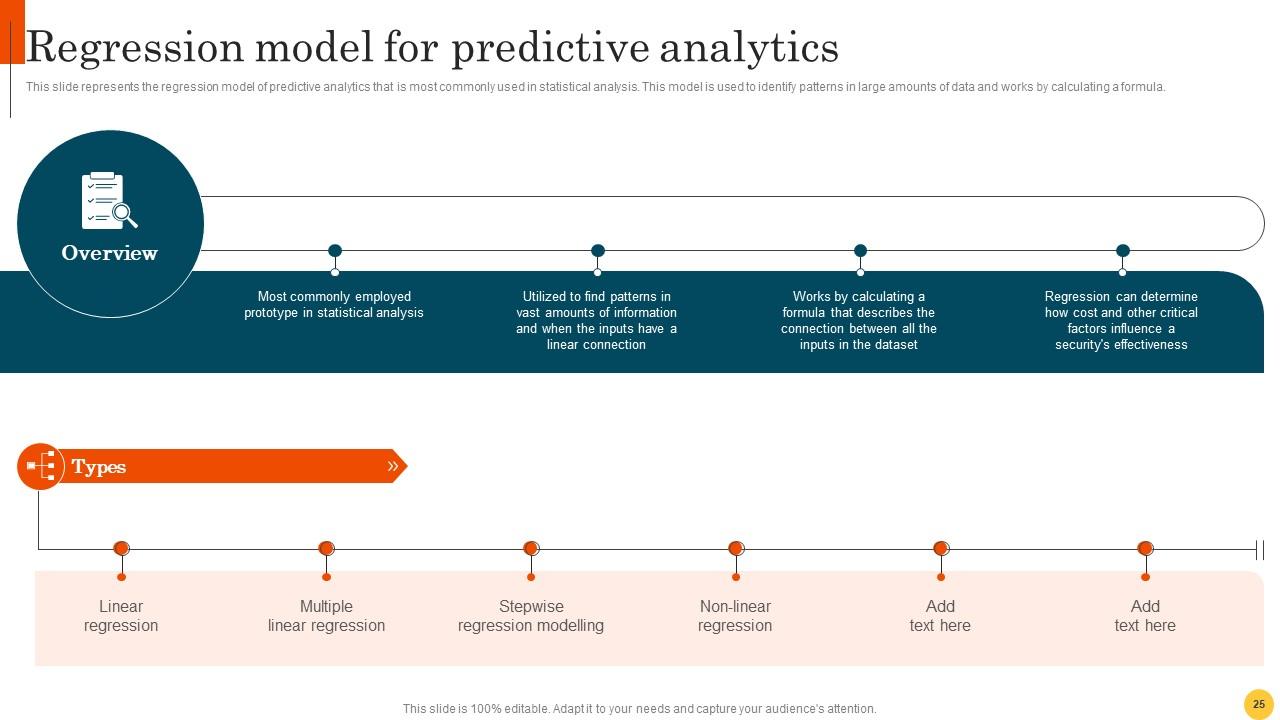
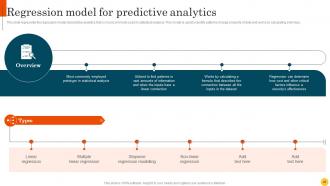
Slide 25: This slide demonstrates the regression model of predictive analytics that is most commonly used in statistical analysis.
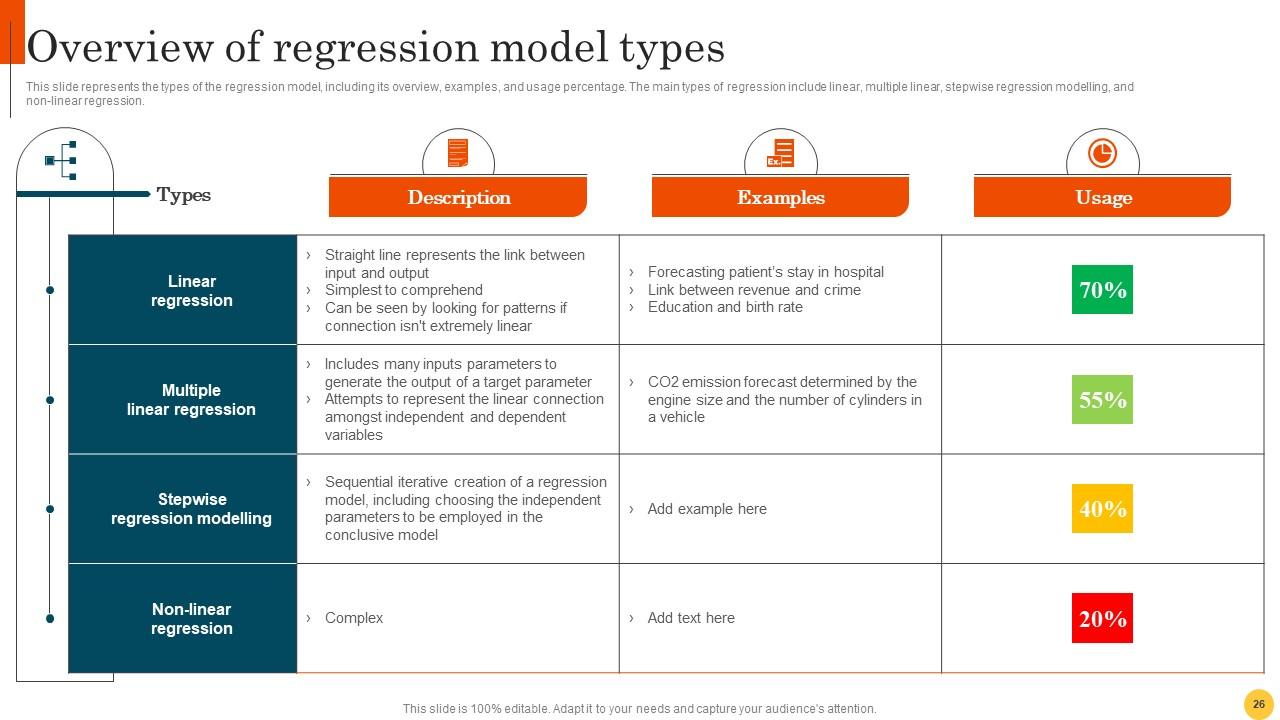
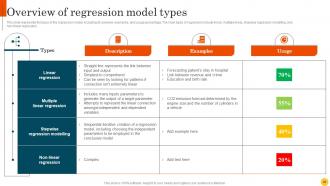
Slide 26: This slide shows the types of the regression model, including its overview, examples, and usage percentage.
Slide 27: This slide renders Table of contents for predictive modeling methodologies further.
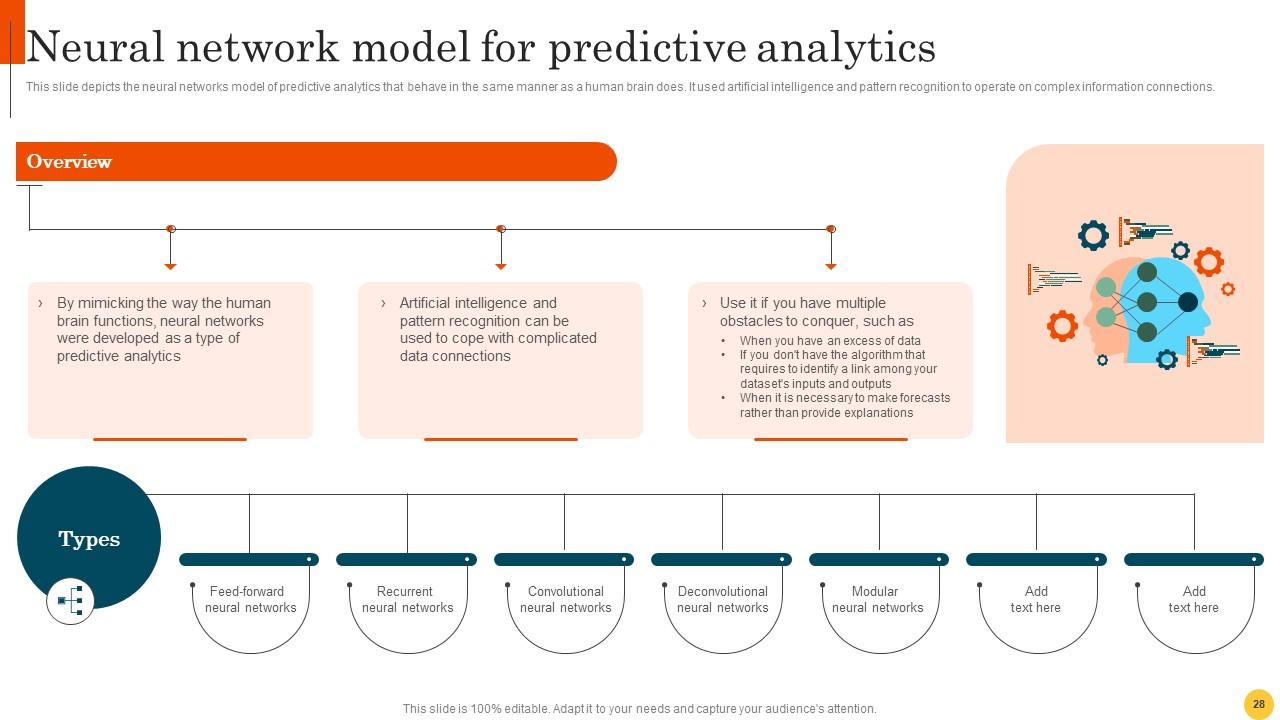
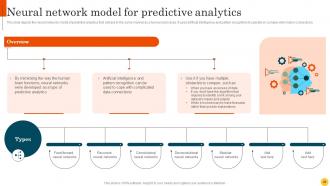
Slide 28: This slide depicts the neural networks model of predictive analytics that behave in the same manner as a human brain does.
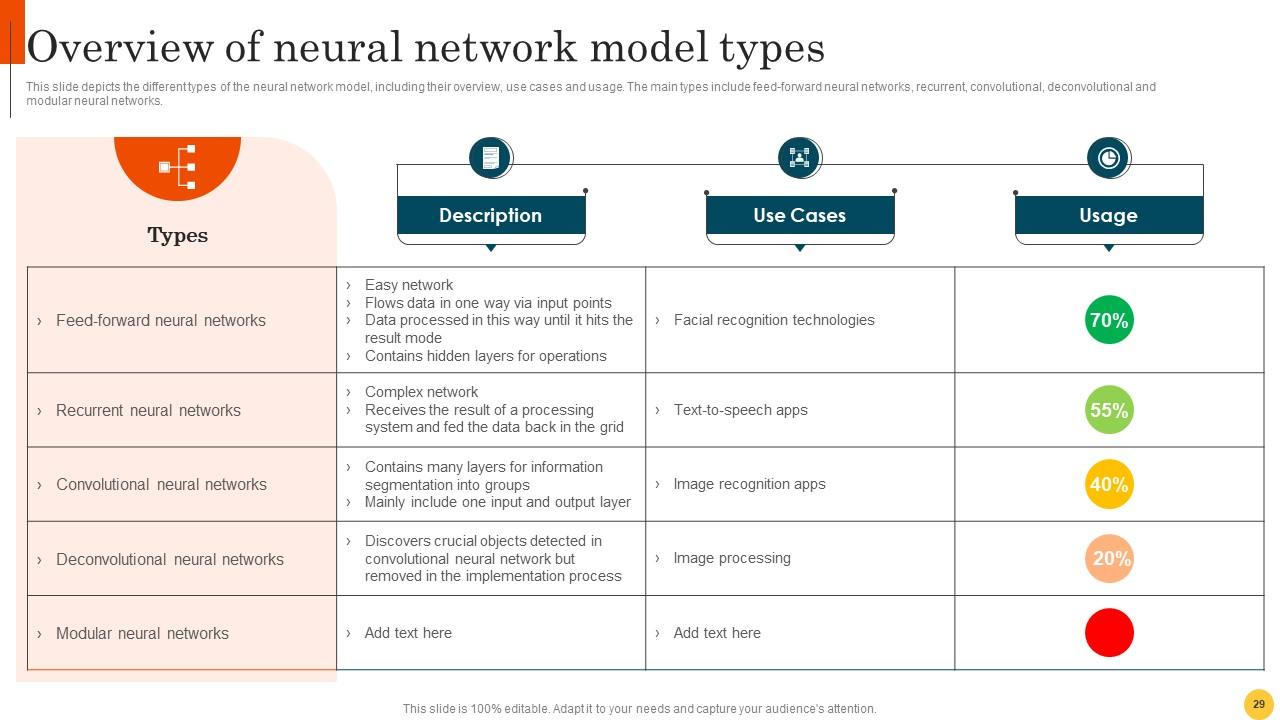
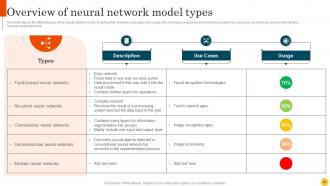
Slide 29: This slide depicts the different types of the neural network model.
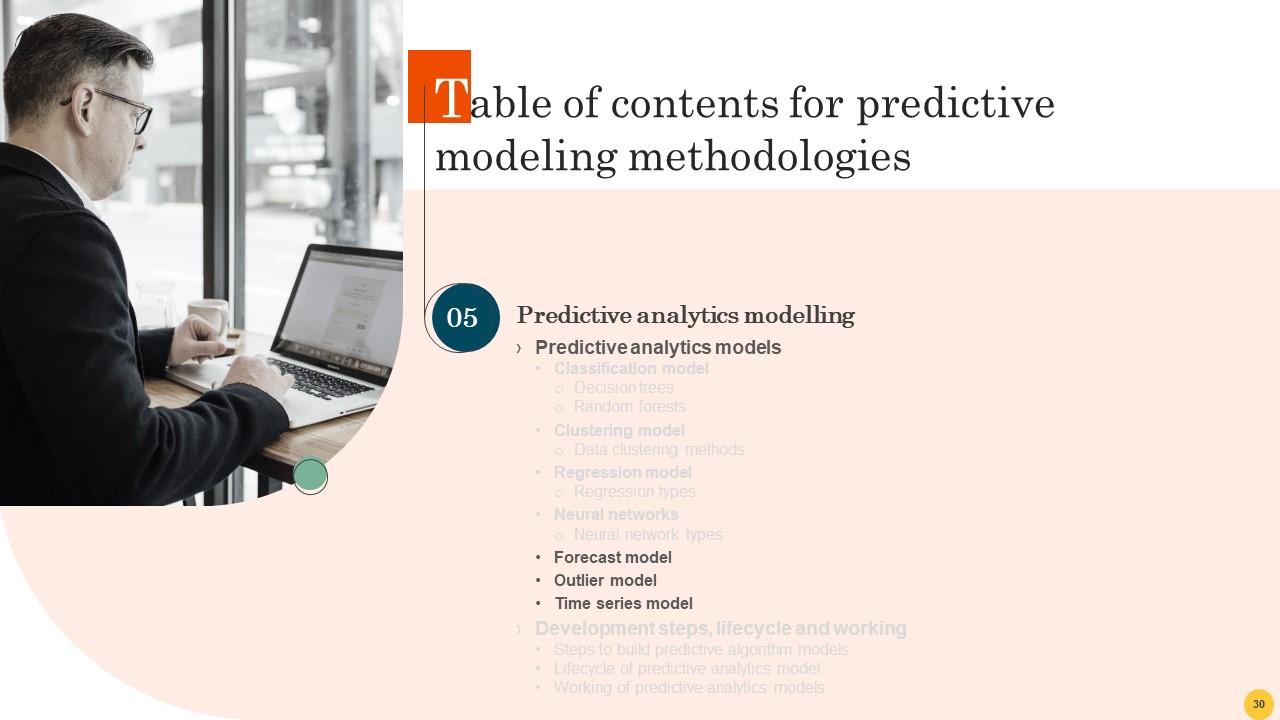
Slide 30: This slide is again of Table of contents for predictive modeling methodologies.
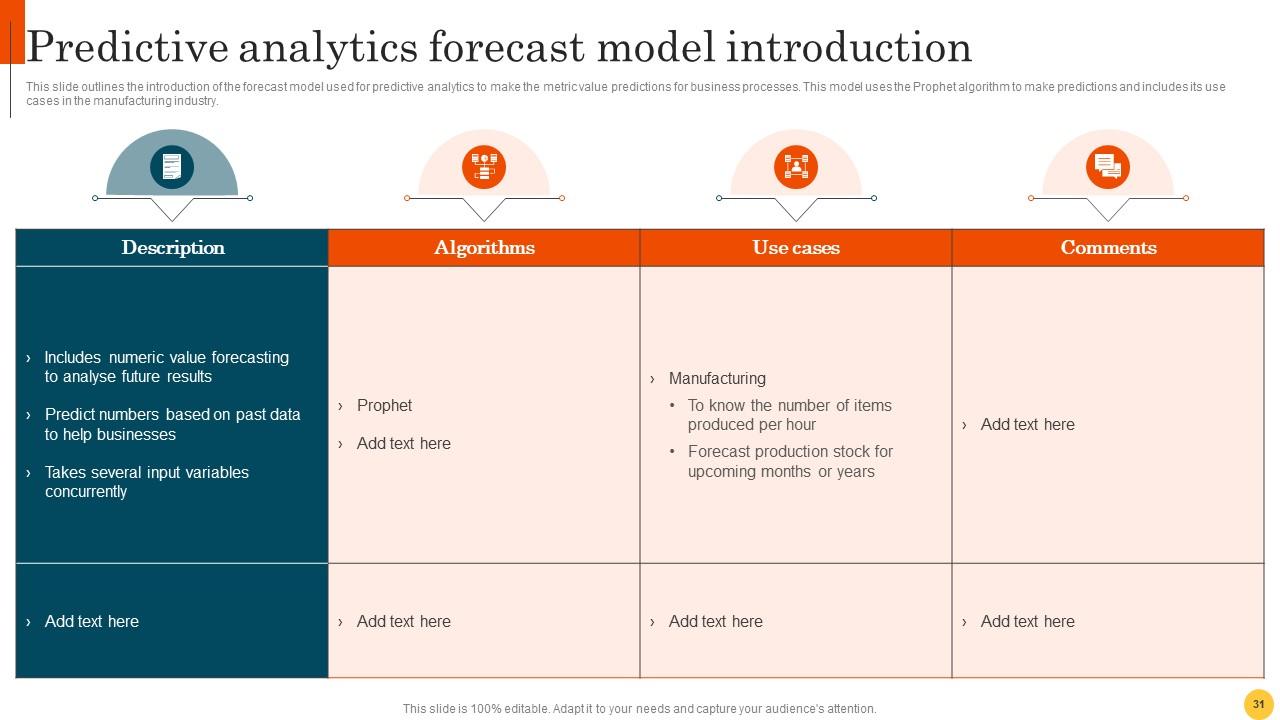
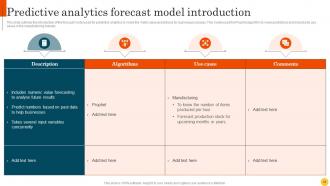
Slide 31: This slide outlines the introduction of the forecast model used for predictive analytics.
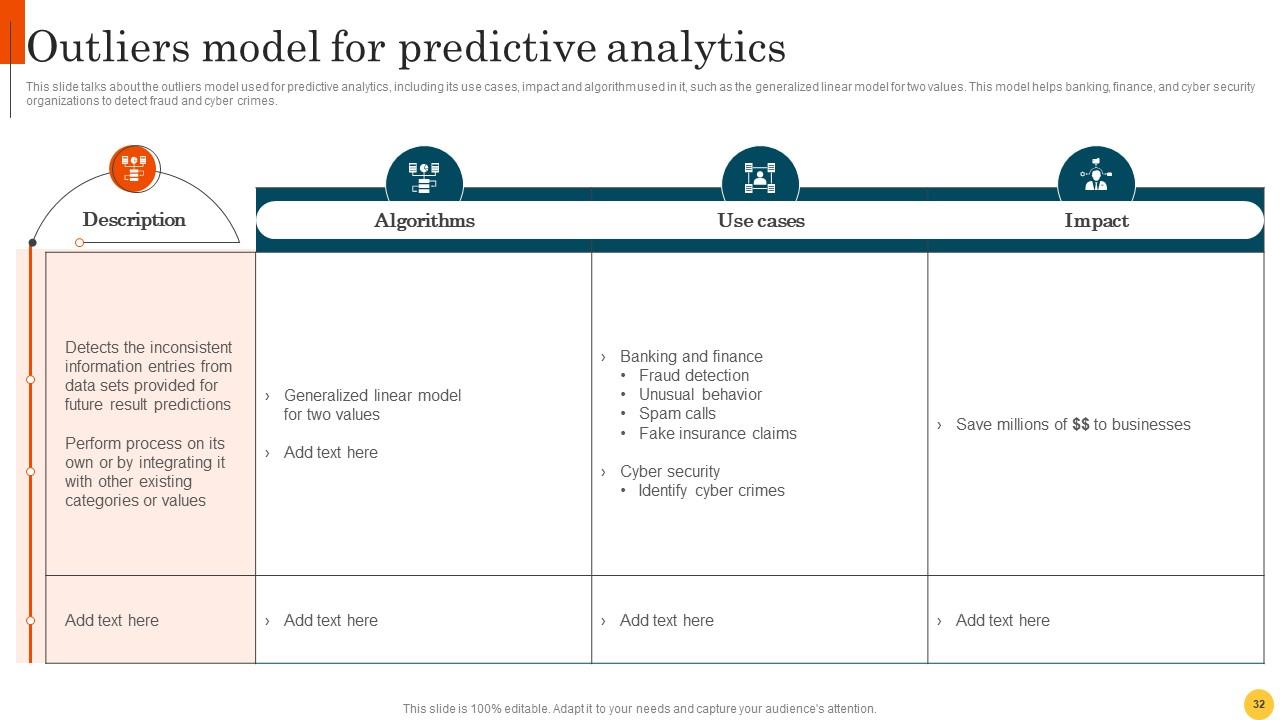
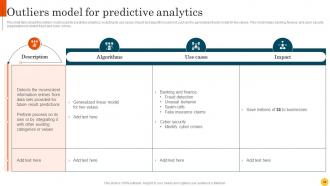
Slide 32: This slide presents about the outliers model used for predictive analytics, including its use cases, impact and algorithm used in it.
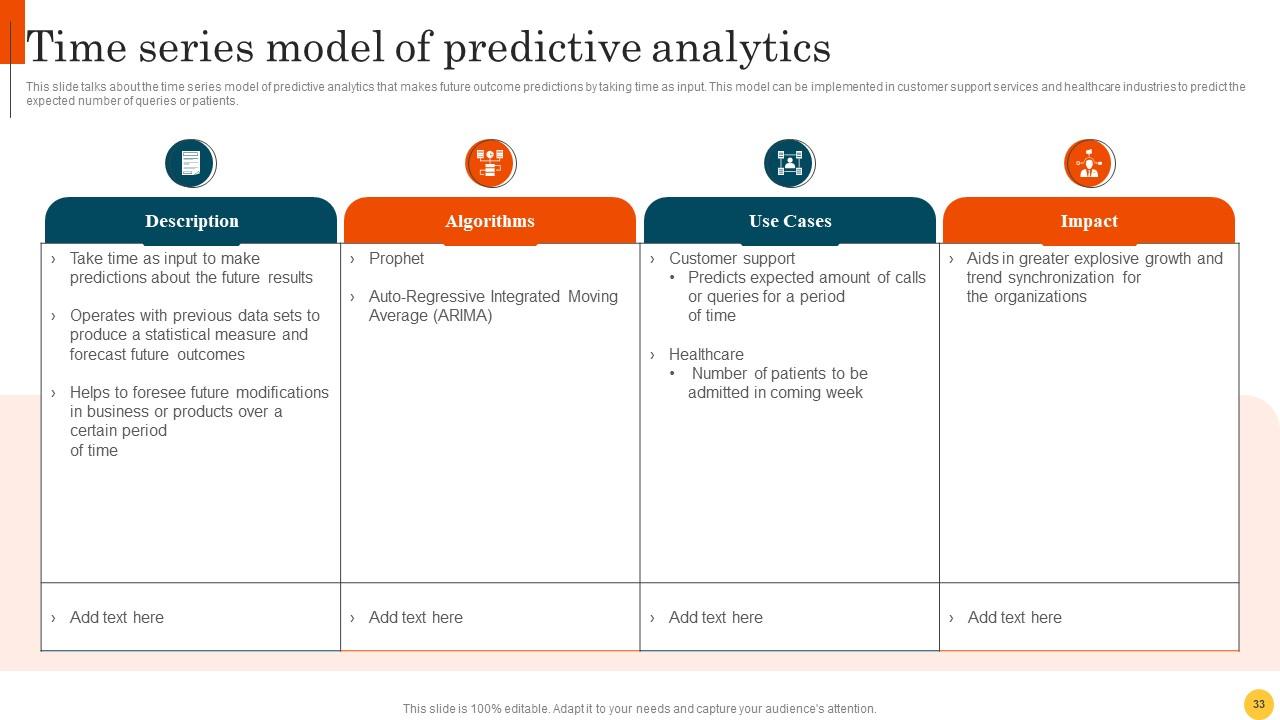
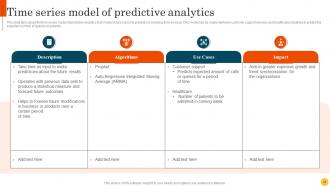
Slide 33: This slide shows about the time series model of predictive analytics that makes future outcome predictions by taking time as input.
Slide 34: This slide again shows Table of contents for predictive modeling methodologies.
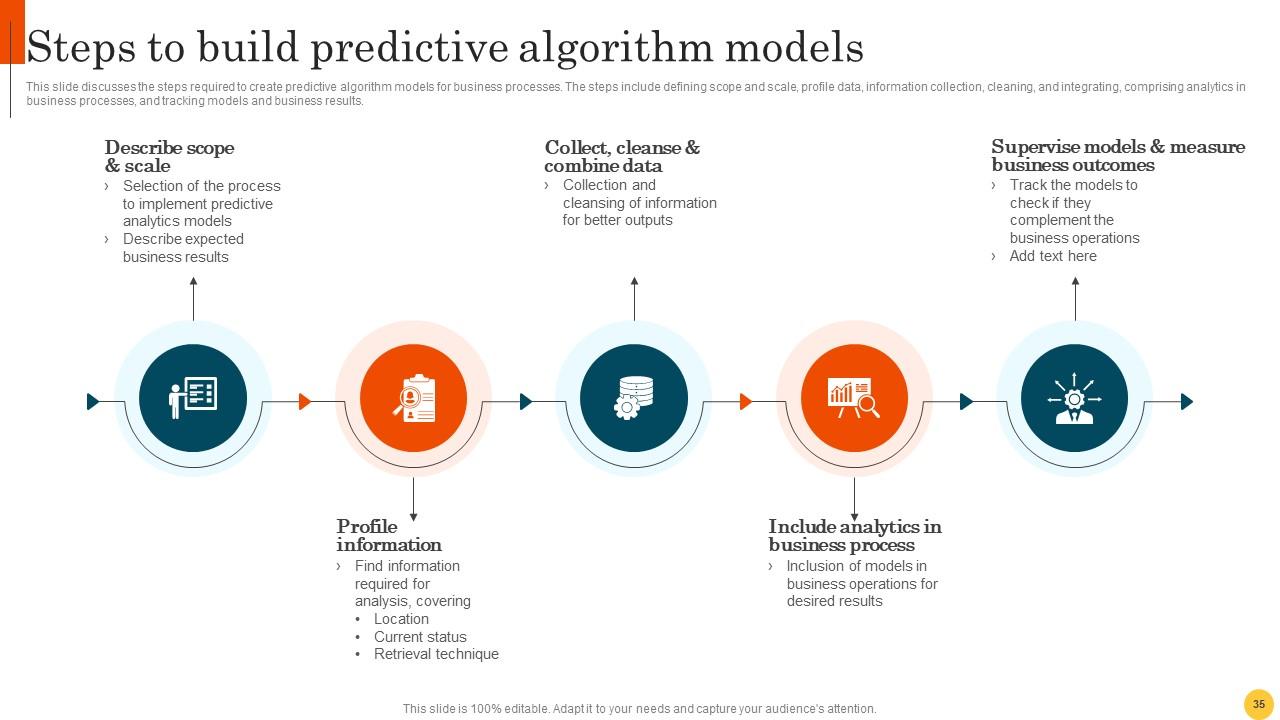
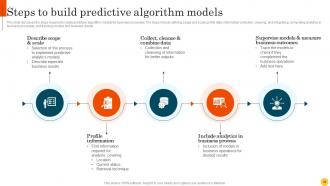
Slide 35: This slide discusses the steps required to create predictive algorithm models for business processes.
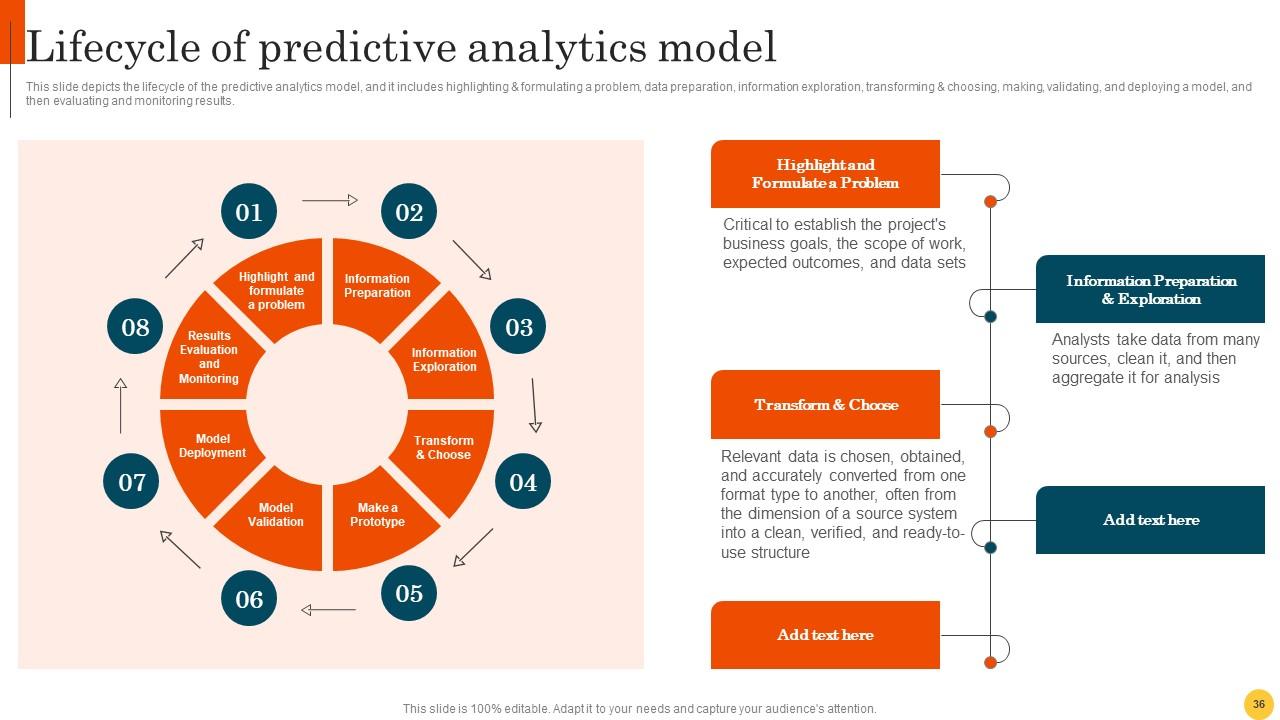
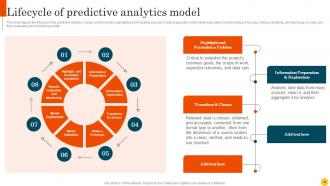
Slide 36: This slide depicts the lifecycle of the predictive analytics model.
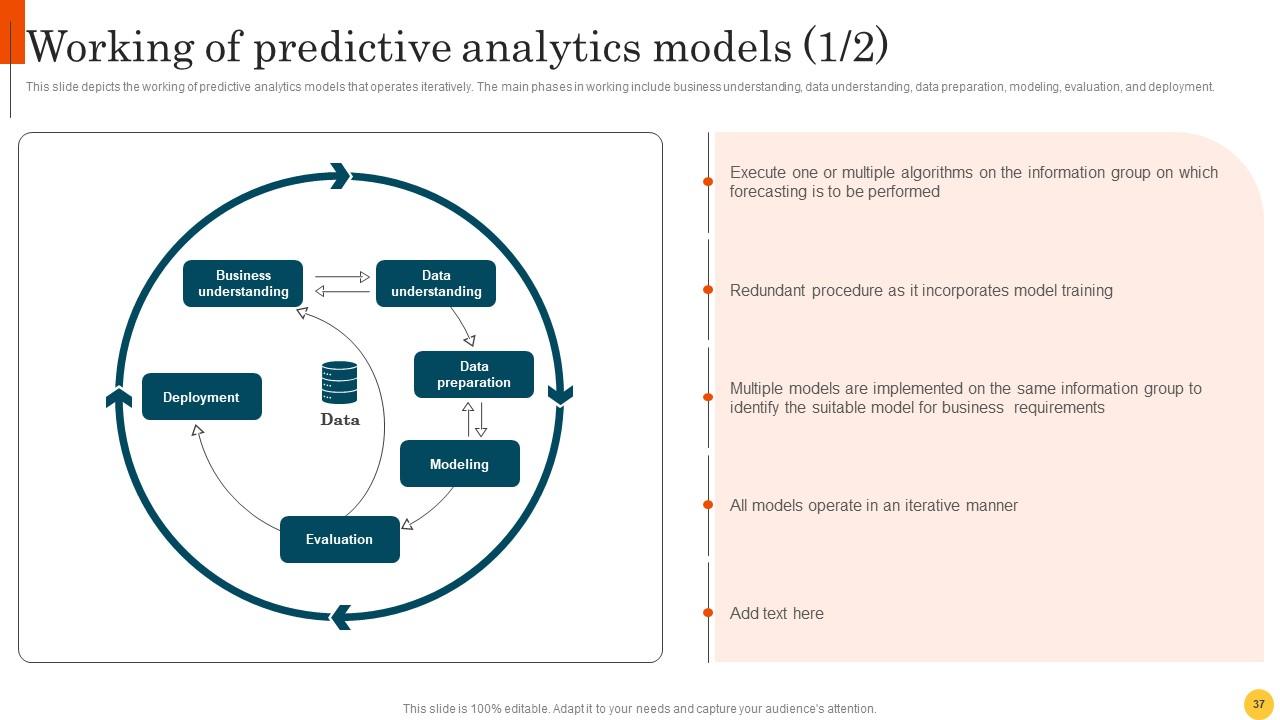
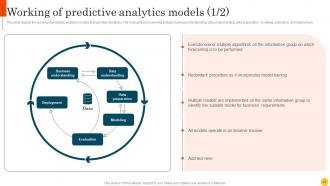
Slide 37: This slide shows the working of predictive analytics models that operates iteratively.
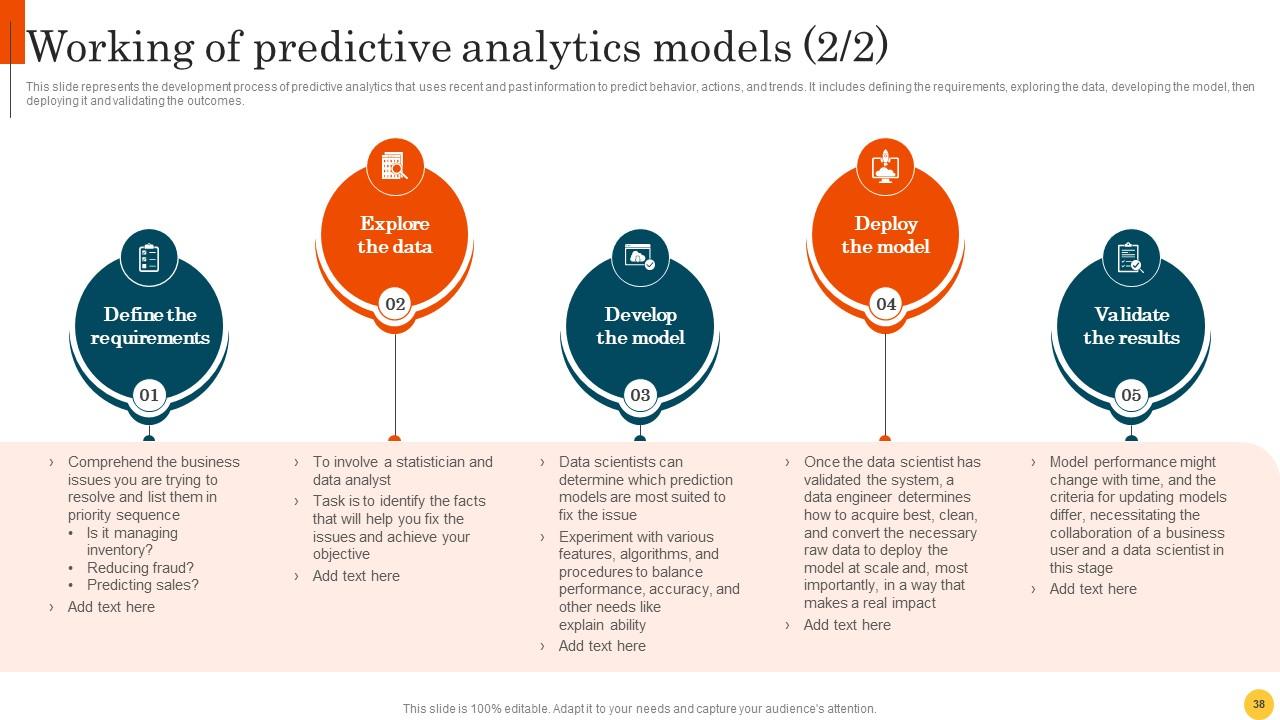
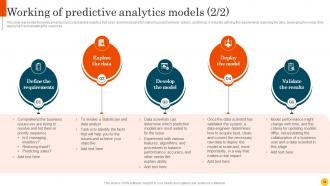
Slide 38: This slide represents the development process of predictive analytics that uses recent and past information.
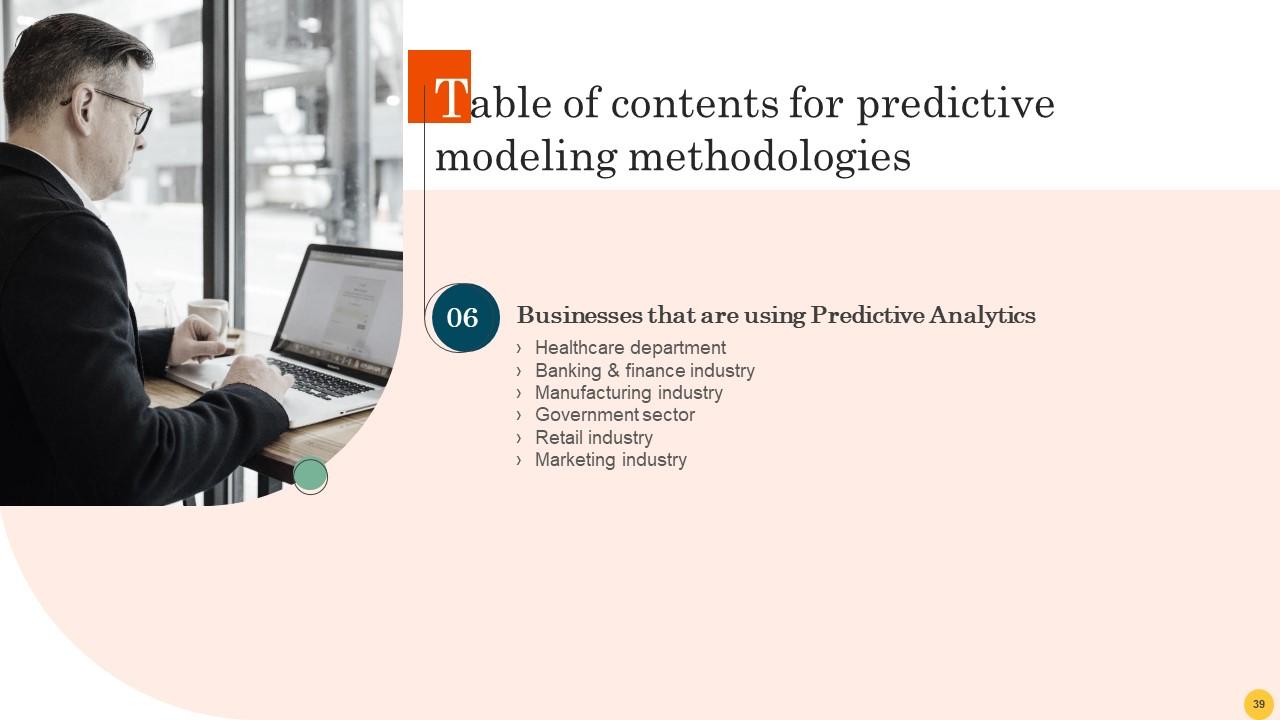
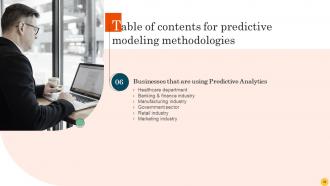
Slide 39: This slide is another with Table of contents for predictive modeling methodologies.
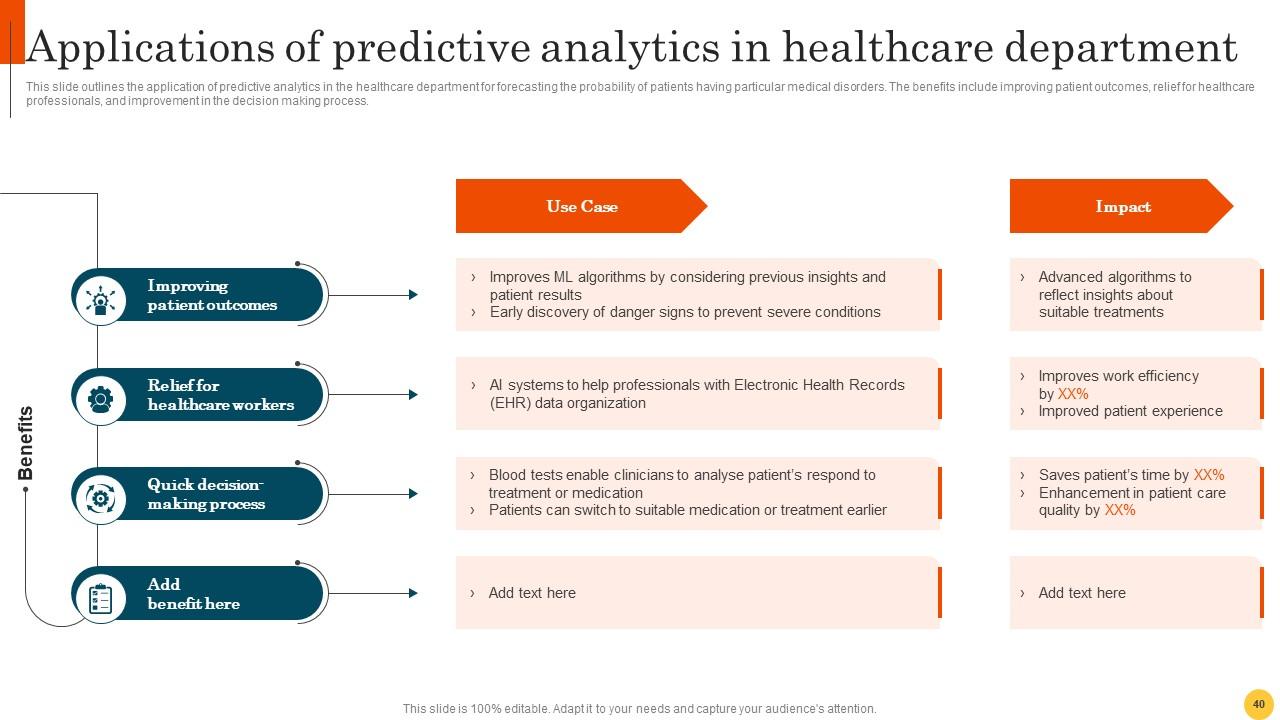
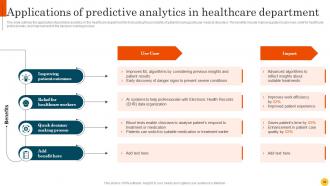
Slide 40: This slide outlines the application of predictive analytics in the healthcare department.
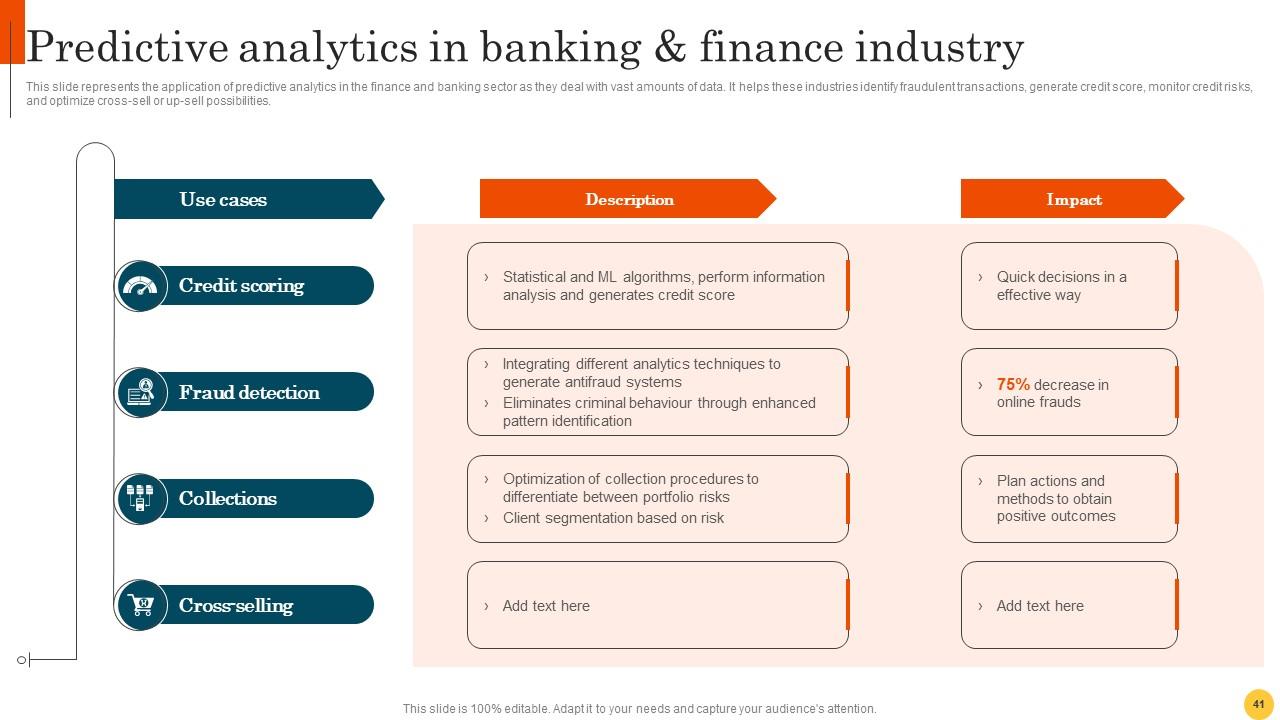
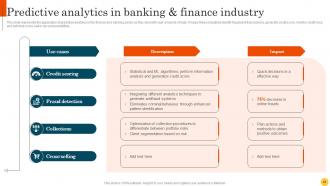
Slide 41: This slide represents the application of predictive analytics in the finance and banking sector.
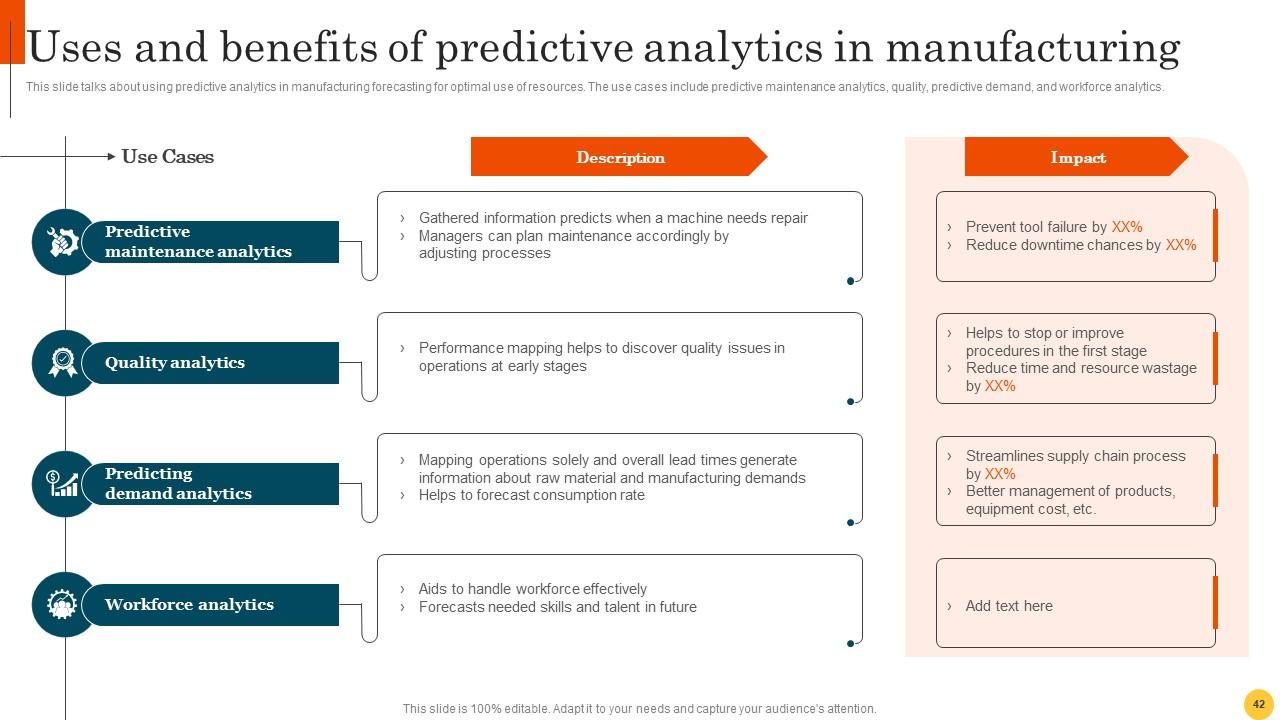
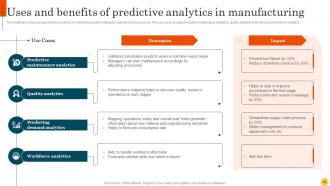
Slide 42: This slide displays about using predictive analytics in manufacturing forecasting for optimal use of resources.
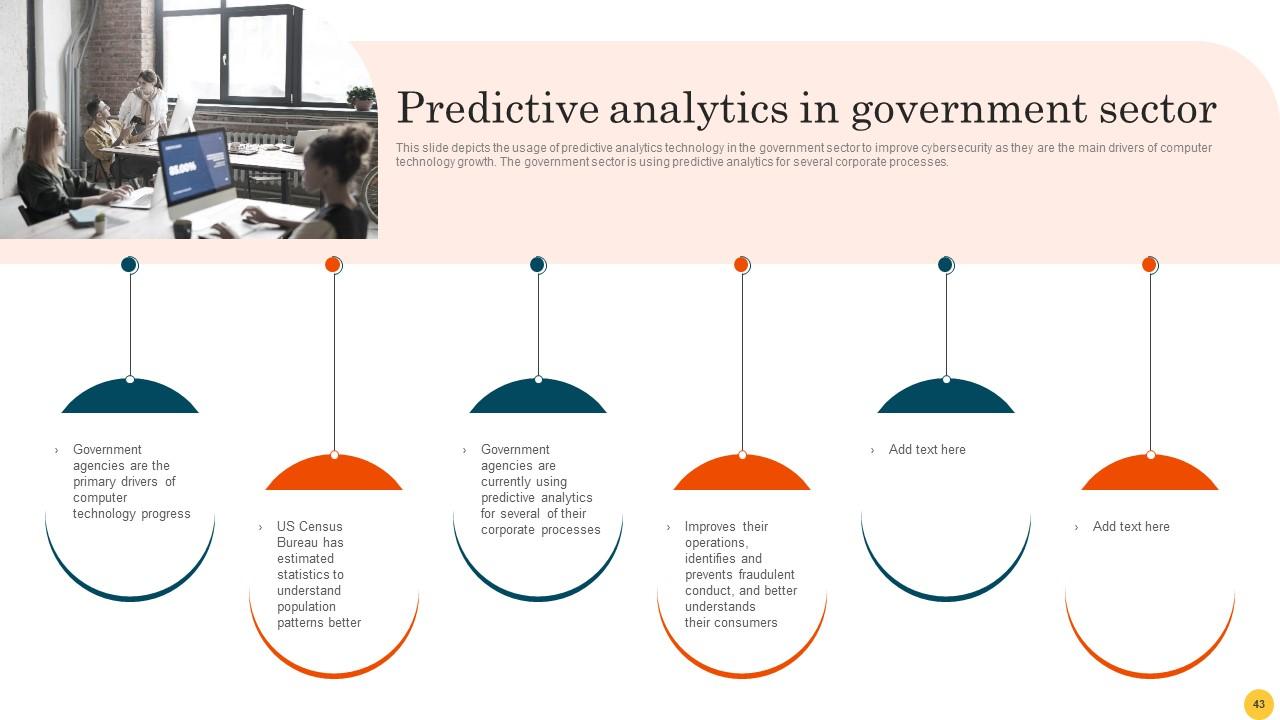
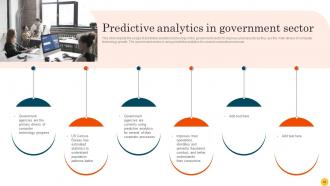
Slide 43: This slide depicts the usage of predictive analytics technology in the government sector to improve cybersecurity.
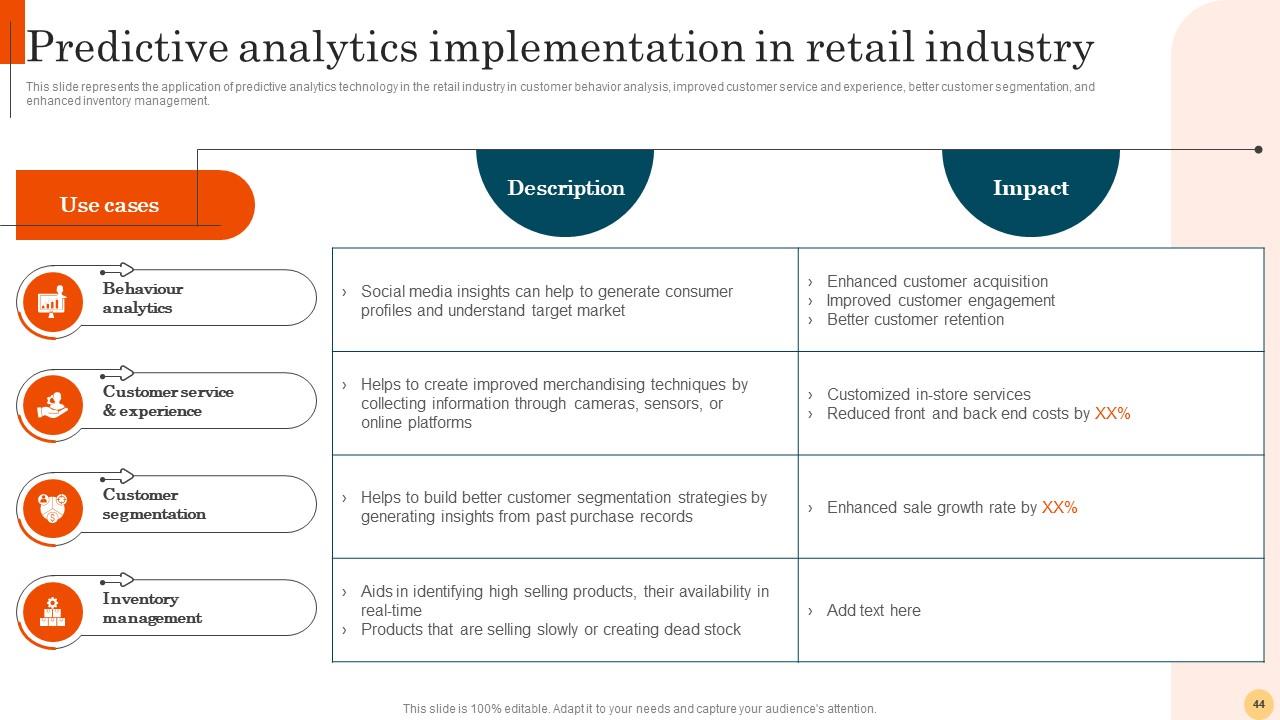
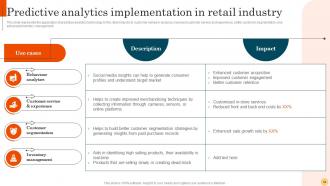
Slide 44: This slide represents the application of predictive analytics technology in the retail industry.
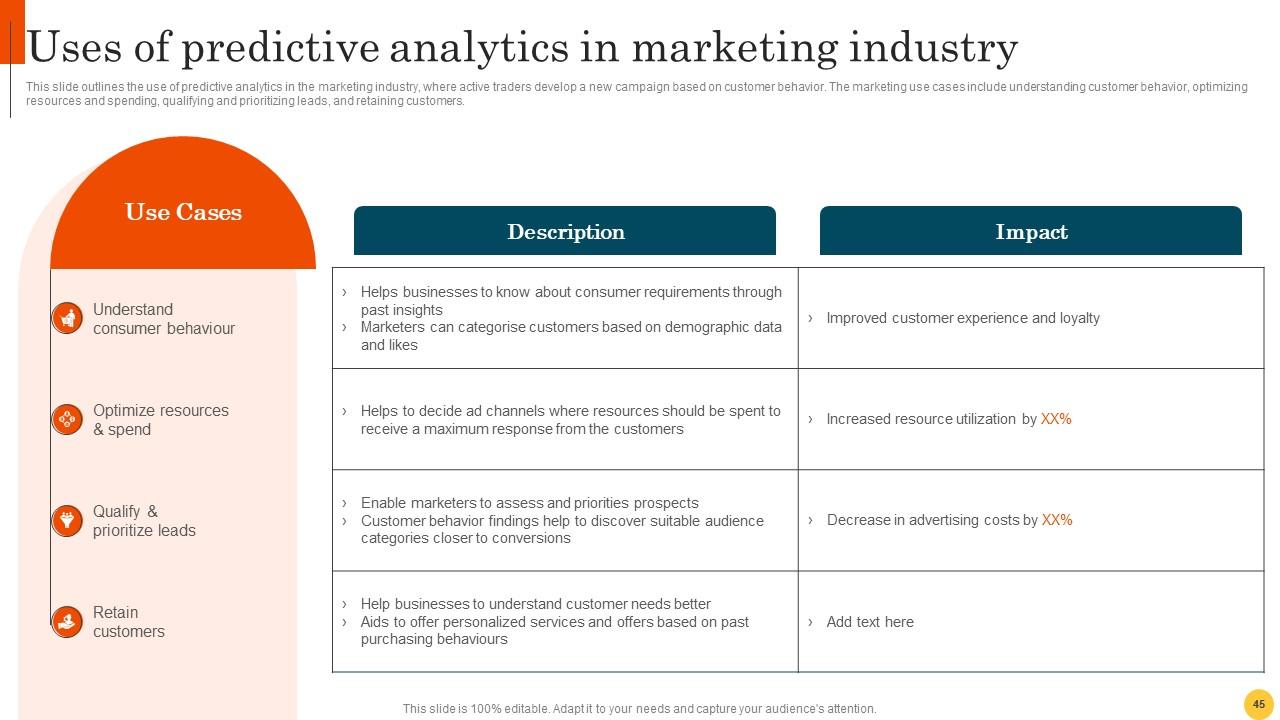
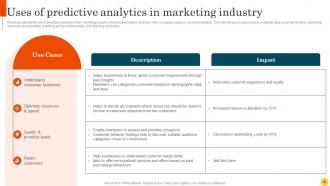
Slide 45: This slide outlines the use of predictive analytics in the marketing industry.
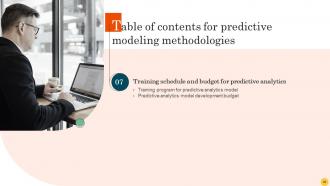
Slide 46: This slide is again of Table of contents for predictive modeling methodologies.
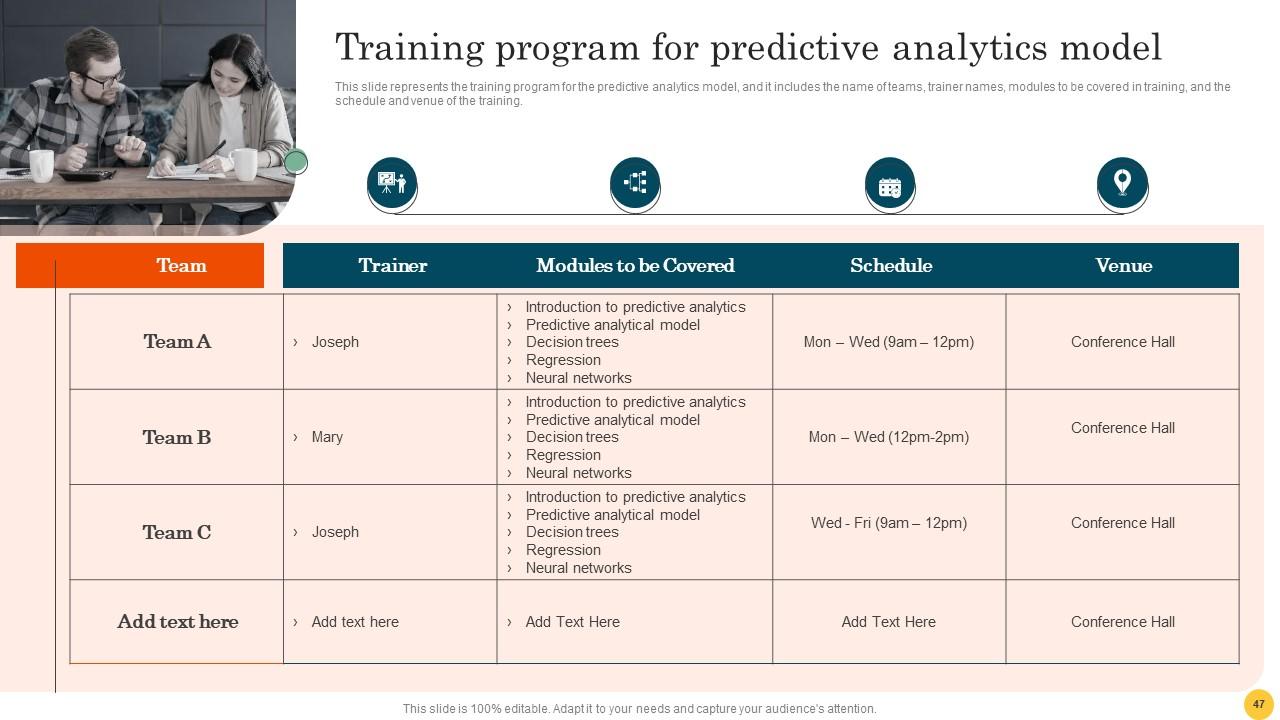
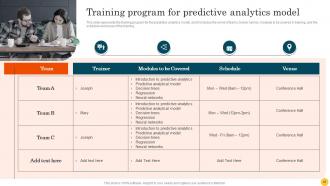
Slide 47: This slide represents the training program for the predictive analytics model.
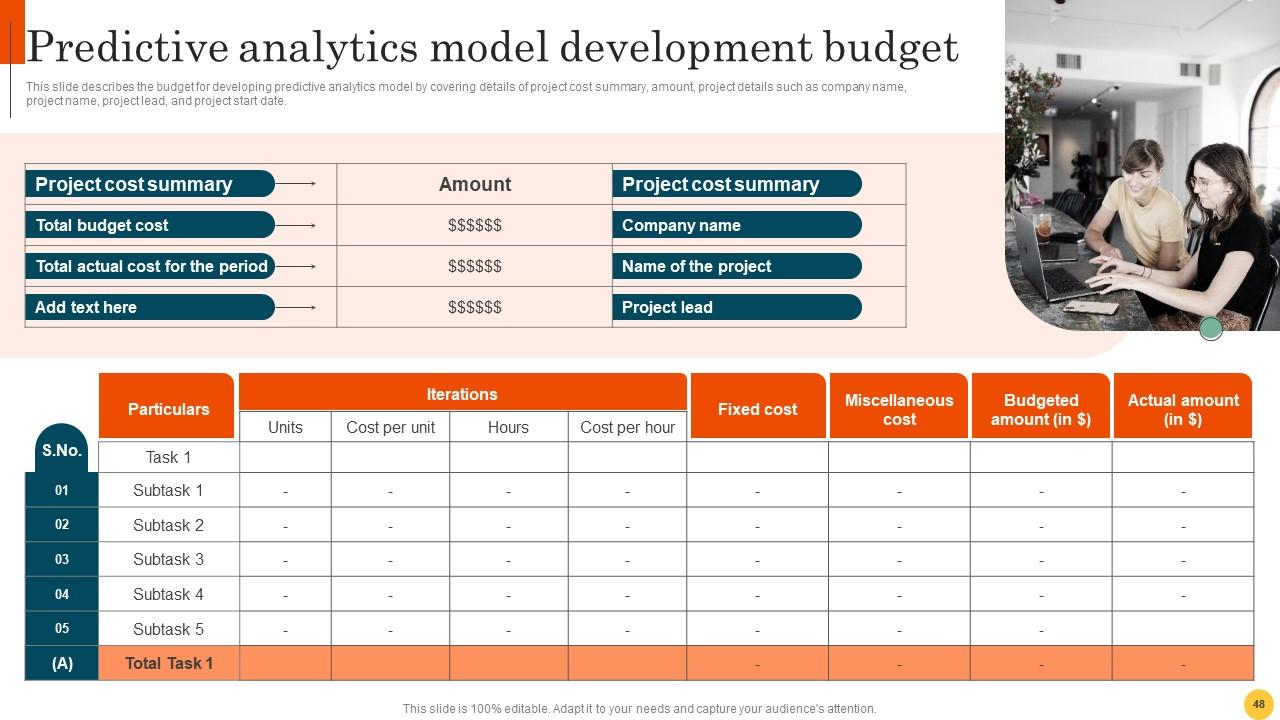
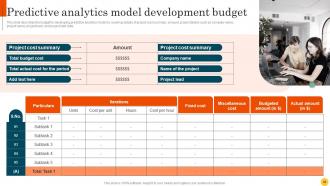
Slide 48: This slide describes the budget for developing predictive analytics model by covering details of project.
Slide 49: This slides shows Table of contents for predictive modeling methodologies.
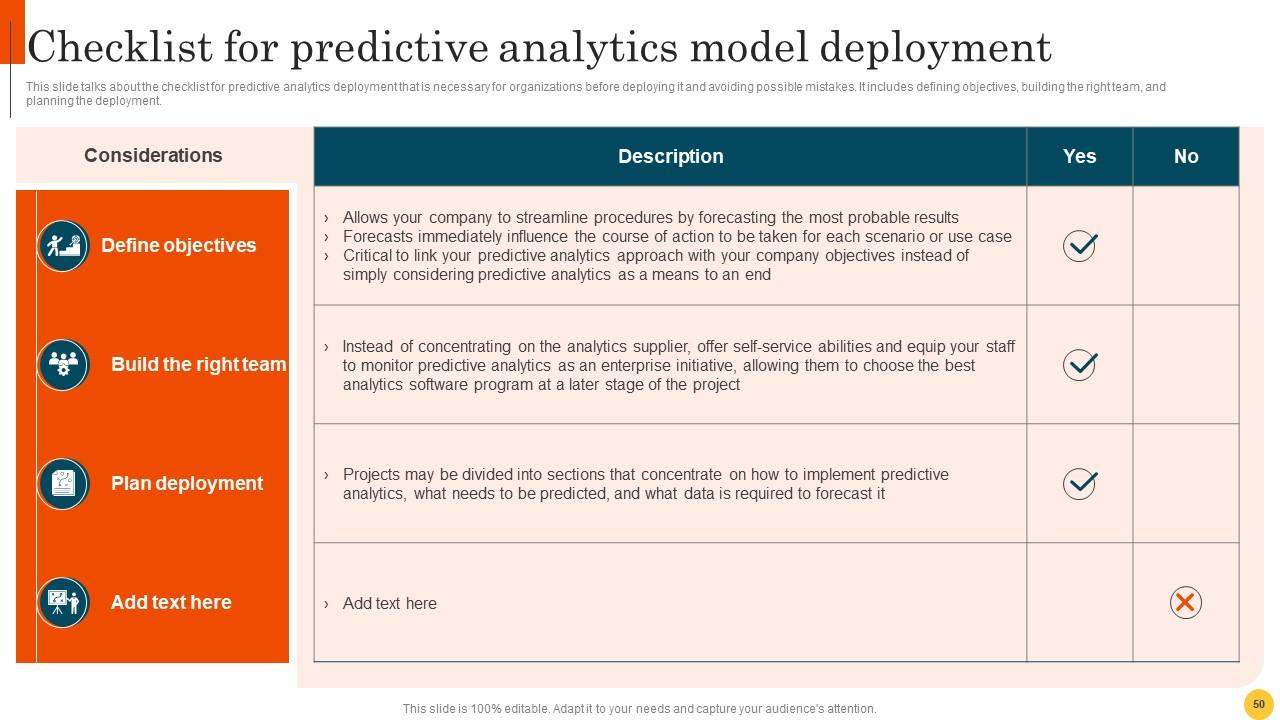
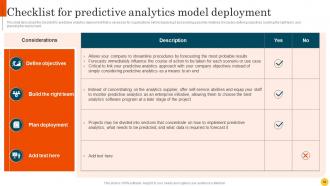
Slide 50: This slide contains about the checklist for predictive analytics deployment that is necessary for organizations.
Slide 51: This slide exhibits Table of contents for predictive modeling methodologies.
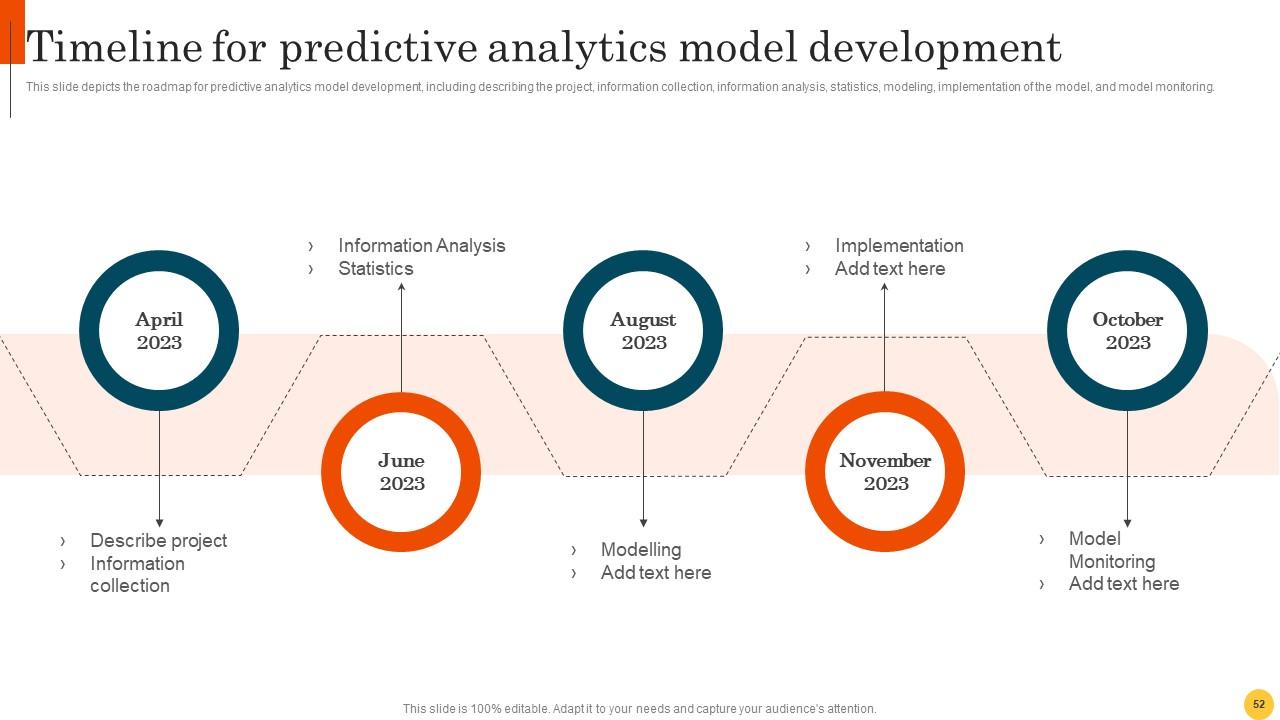
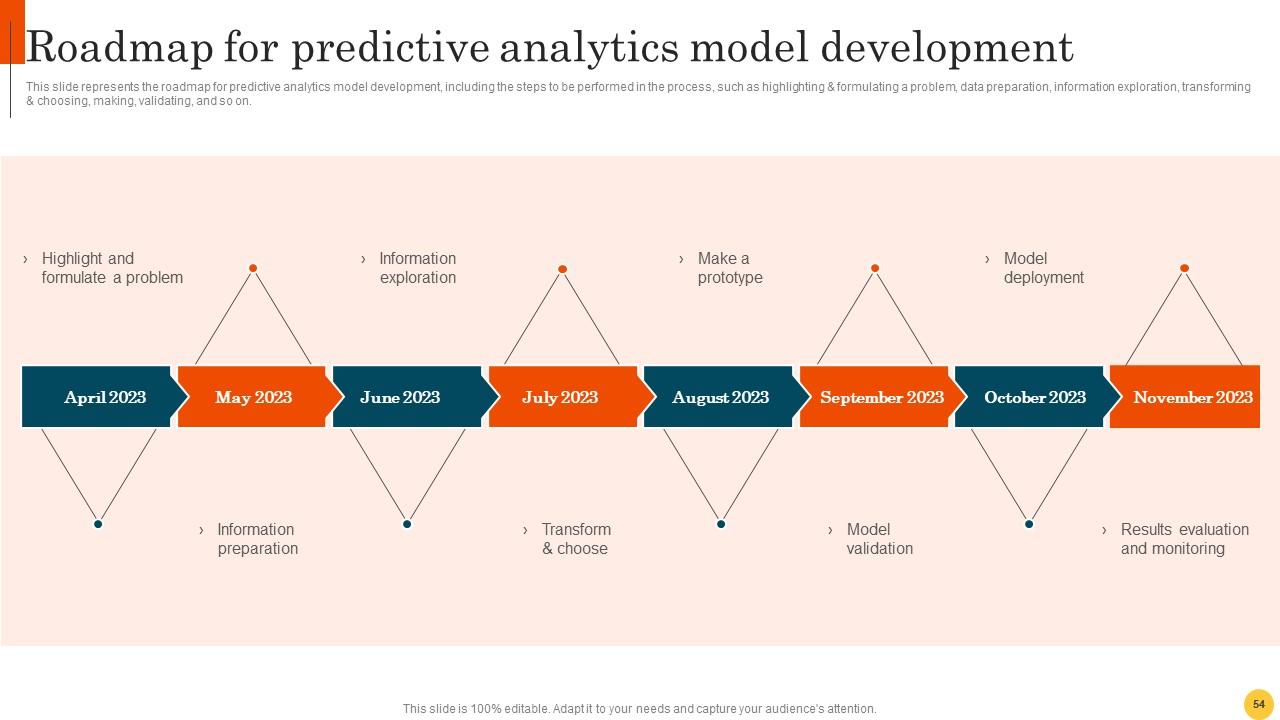
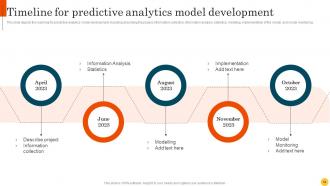
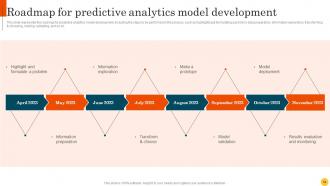
Slide 52: This slide depicts the roadmap for predictive analytics model development.
Slide 53: This slide represents Table of contents for predictive modeling methodologies.
Slide 54: This slide illustrates the roadmap for predictive analytics model development.
Slide 55: This slide displays Table of contents for predictive modeling methodologies
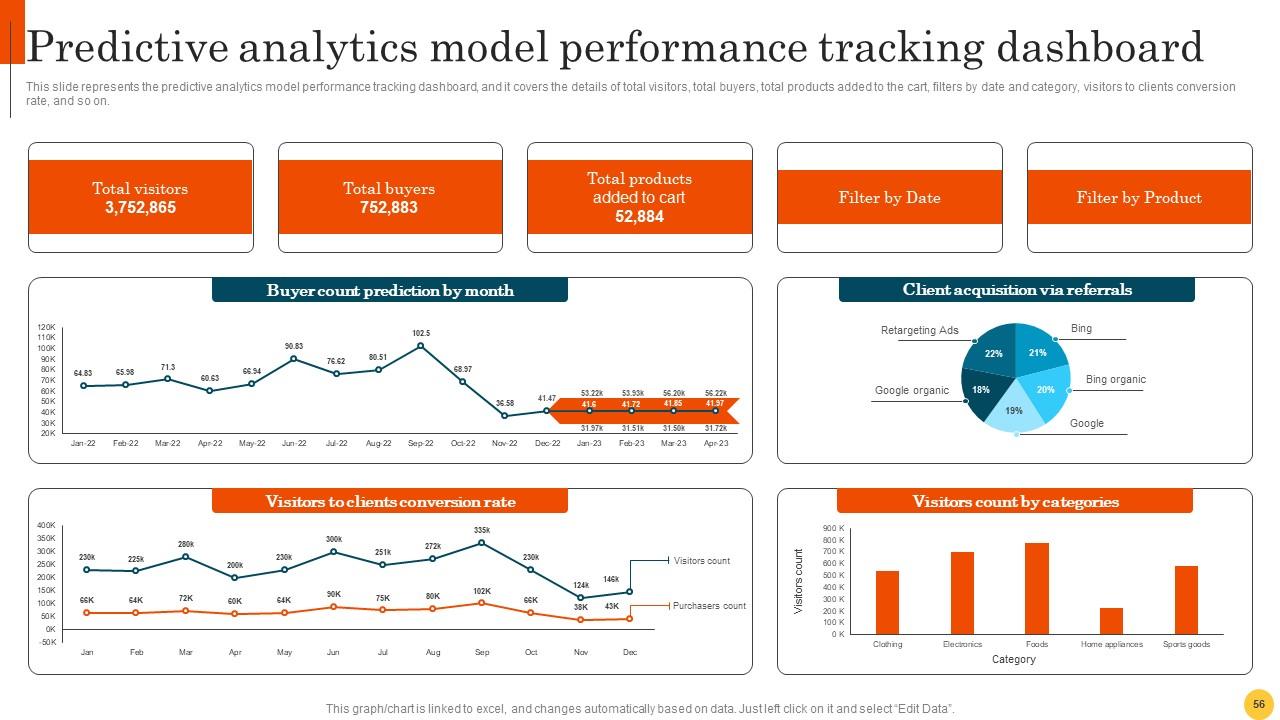
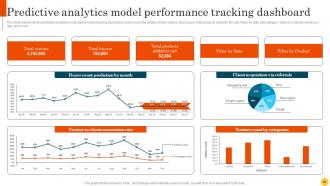
Slide 56: This slide presents the predictive analytics model performance tracking dashboard.
Slide 57: This slide shows all the icons included in the presentation.
Slide 58: This slide is titled as Additional Slides for moving forward.
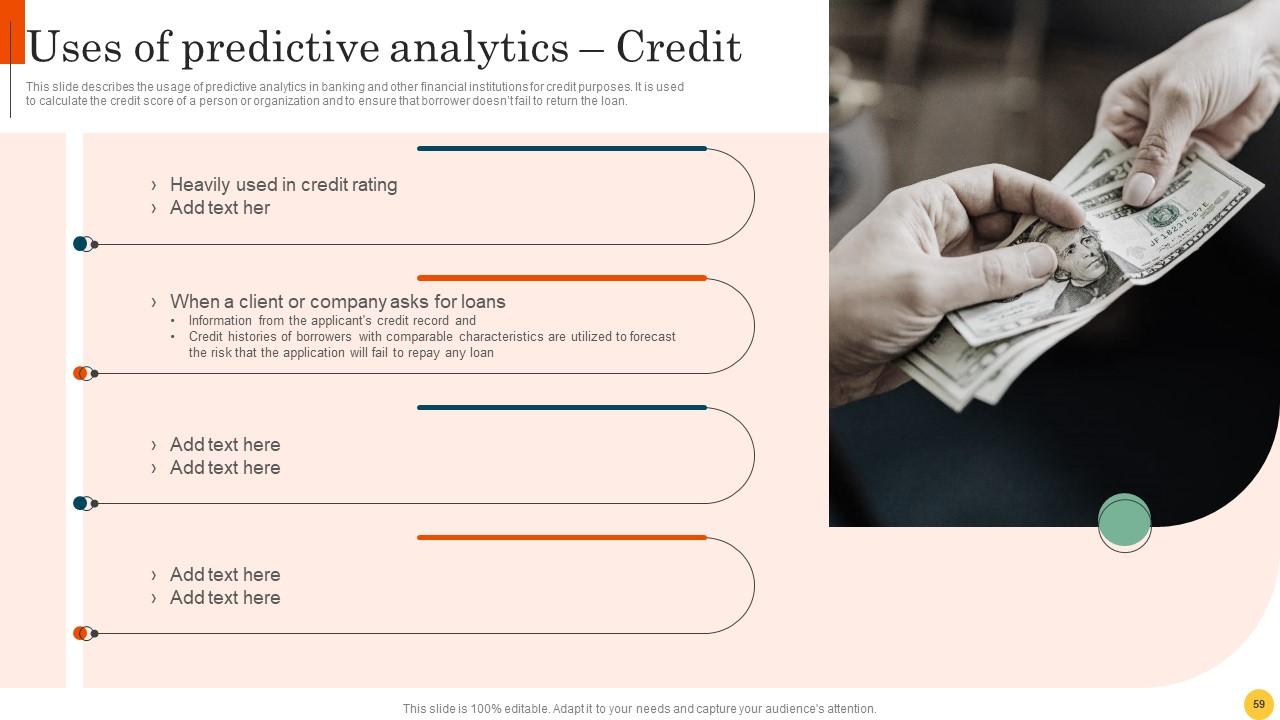
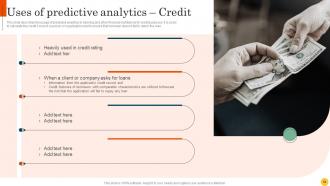
Slide 59: This slide describes the usage of predictive analytics in banking and other financial institutions for credit purposes.
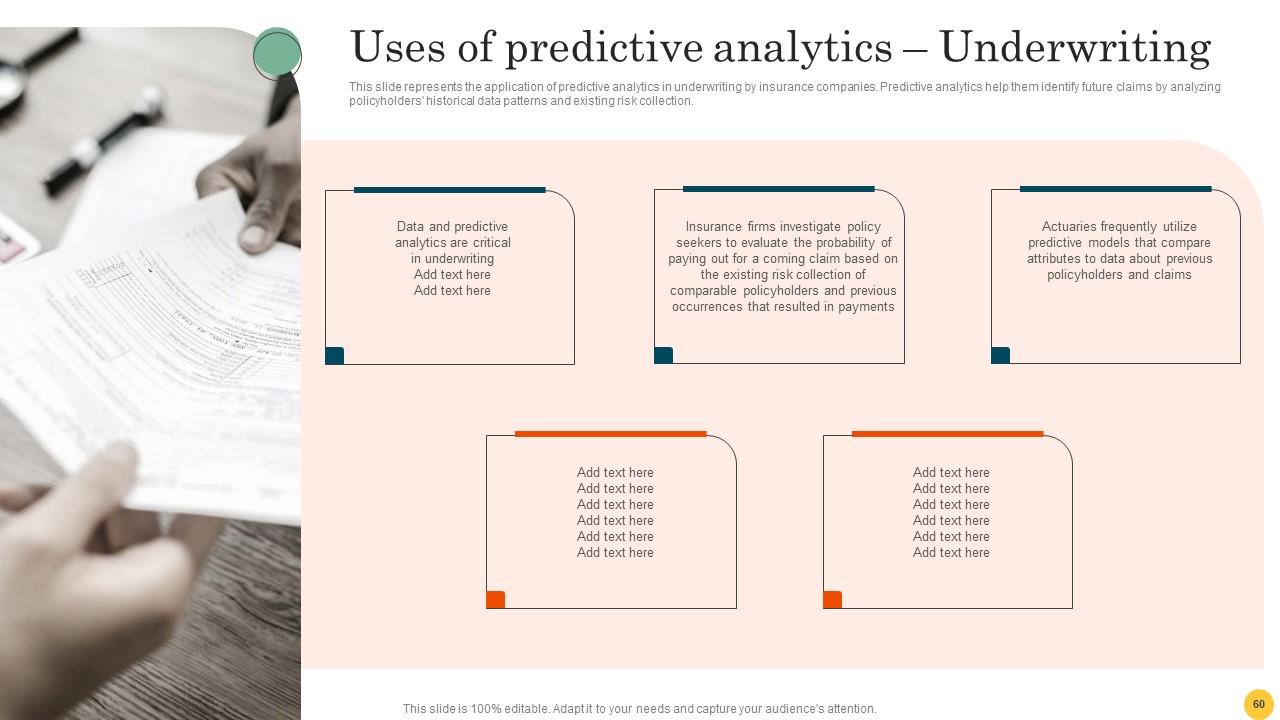
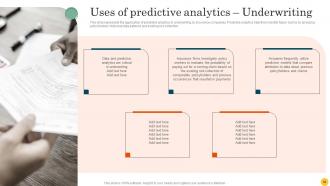
Slide 60: This slide represents the application of predictive analytics in underwriting by insurance companies.
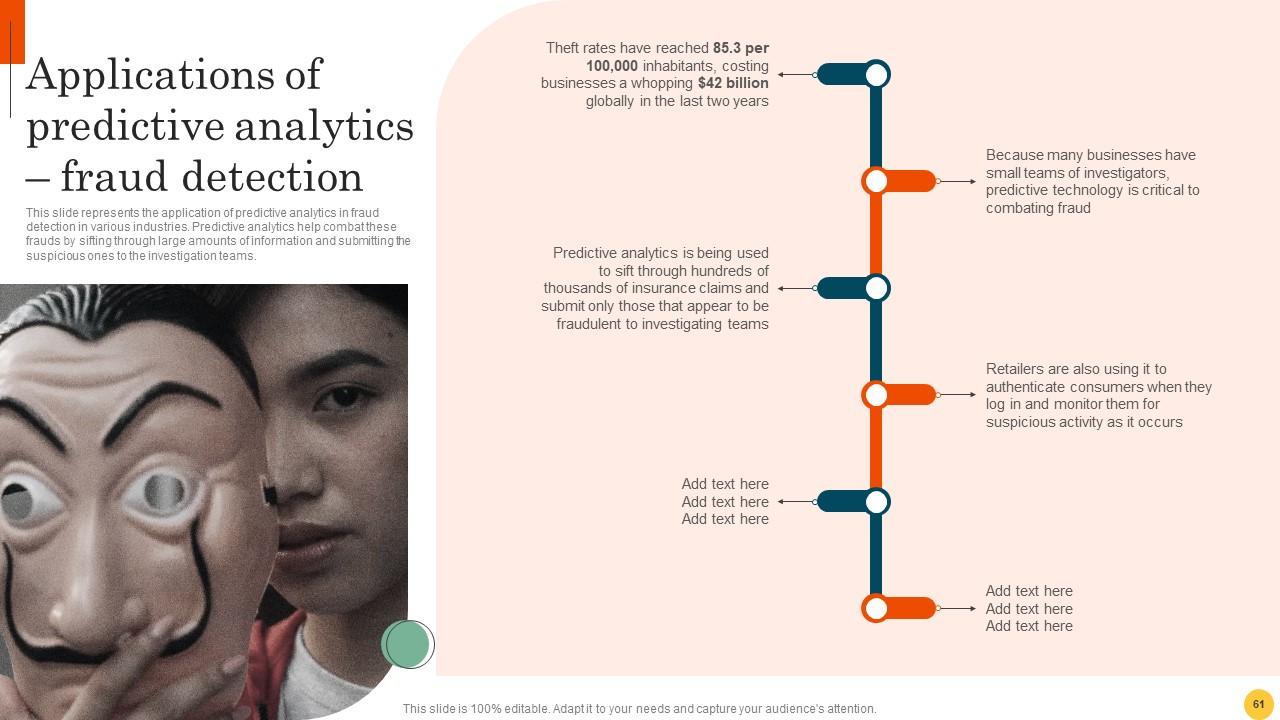
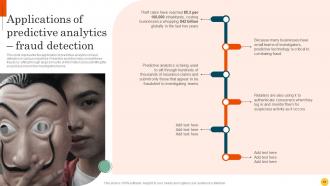
Slide 61: This slide shows the application of predictive analytics in fraud detection in various industries.
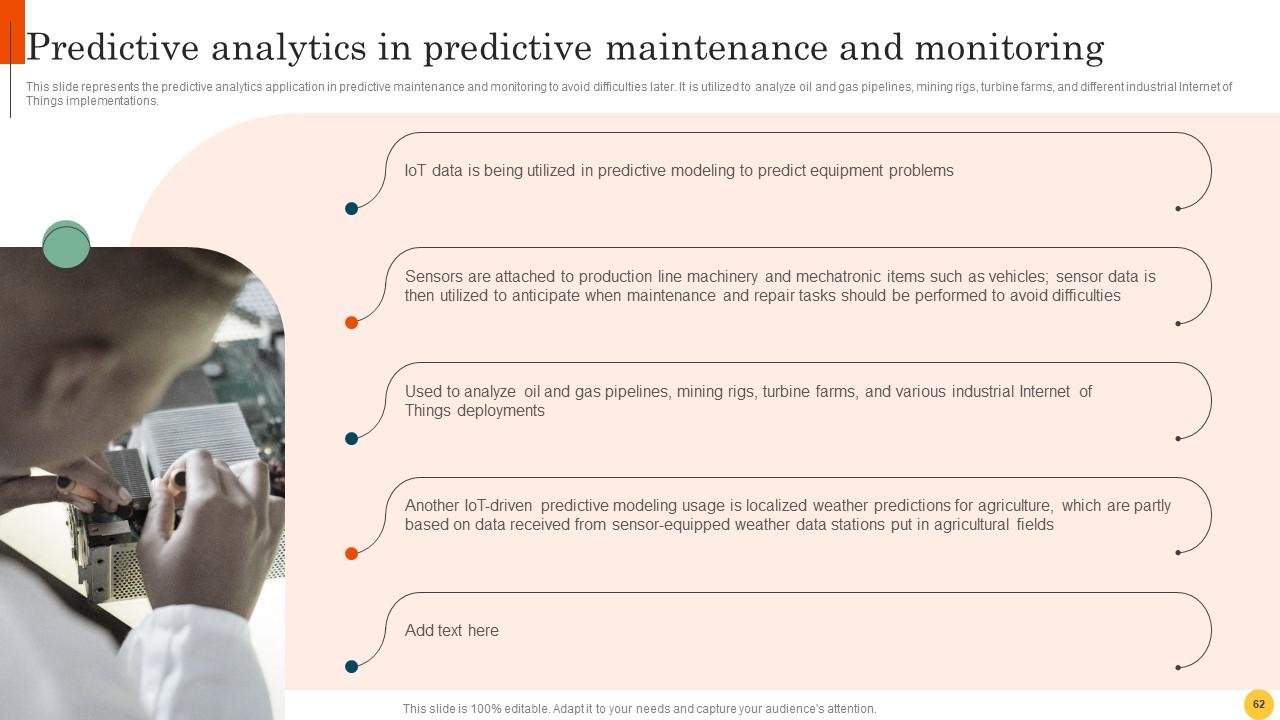
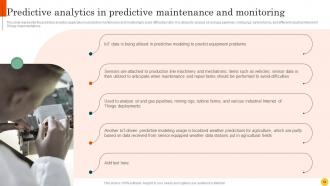
Slide 62: This slide presents the predictive analytics application in predictive maintenance and monitoring to avoid difficulties later.
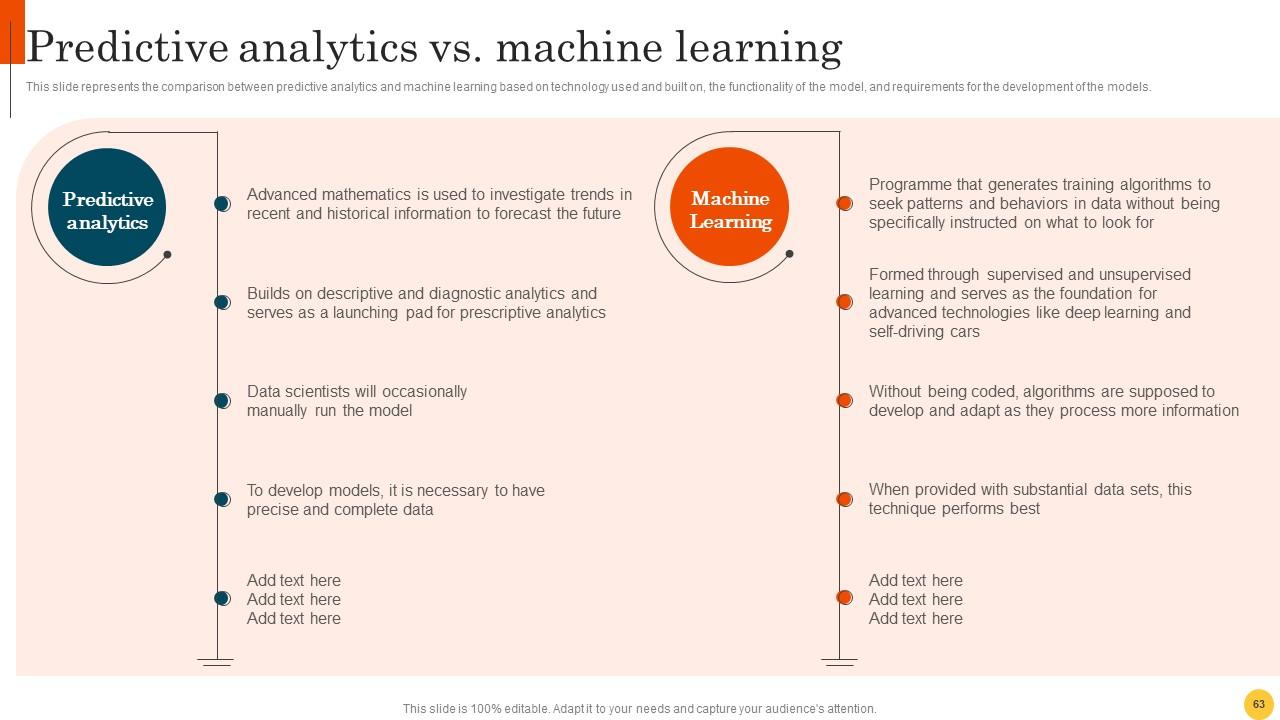
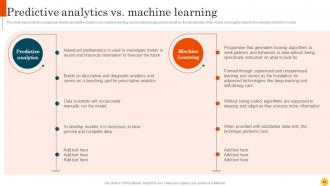
Slide 63: This slide exhibits the comparison between predictive analytics and machine learning based on technology used and built on.
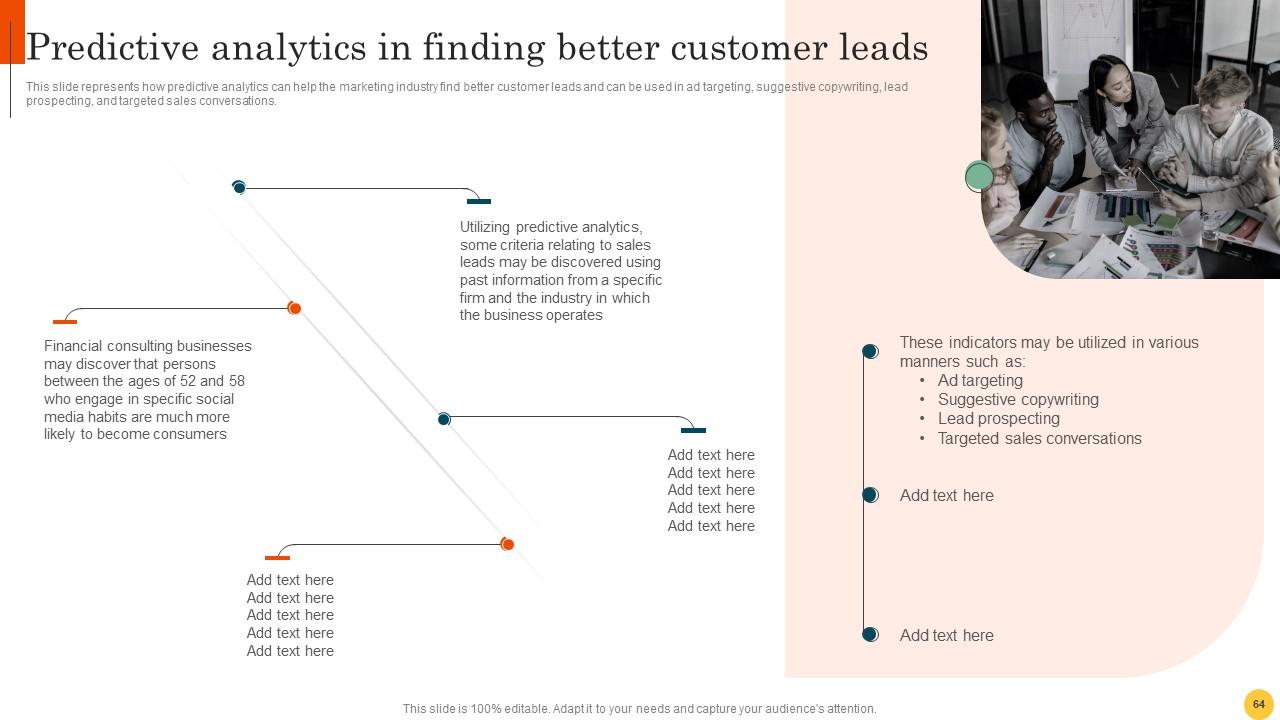
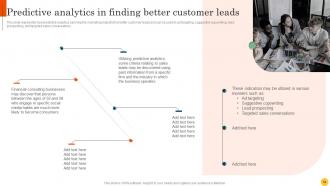
Slide 64: This slide displays how predictive analytics can help the marketing industry find better customer leads.
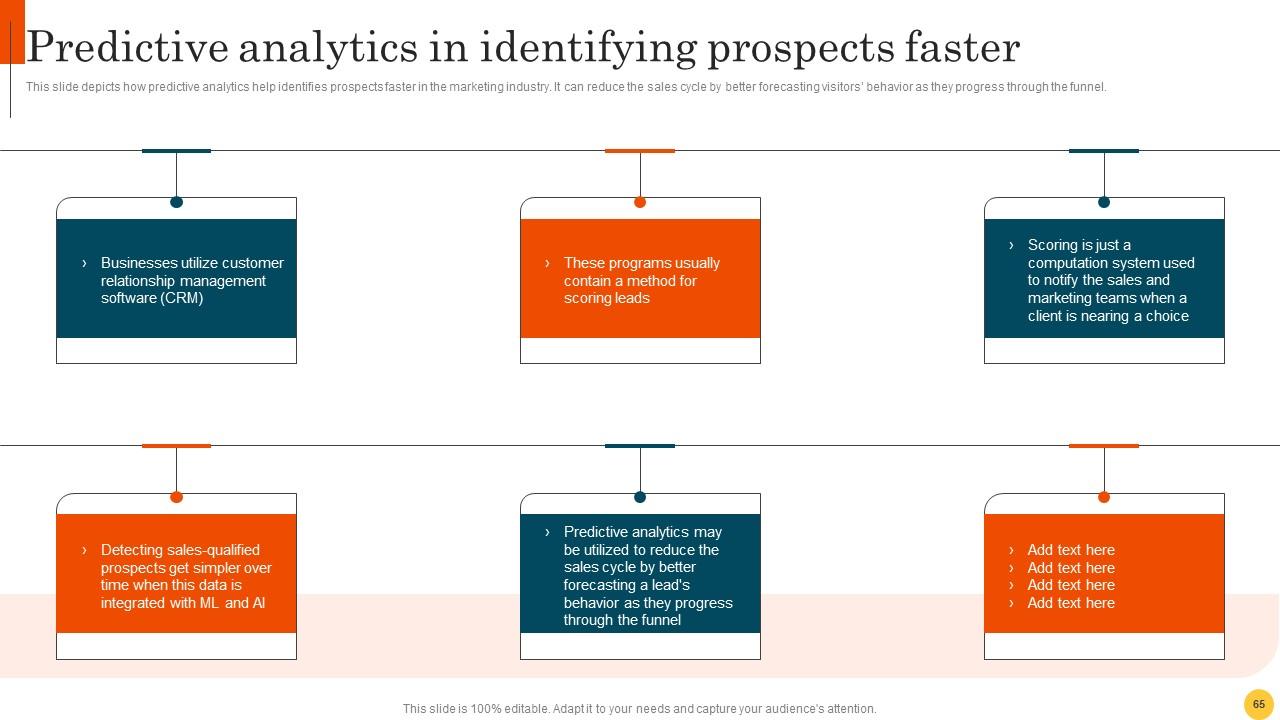
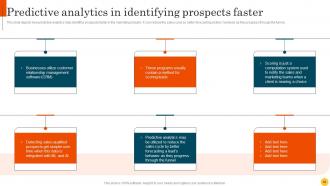
Slide 65: This slide depicts how predictive analytics help identifies prospects faster in the marketing industry.
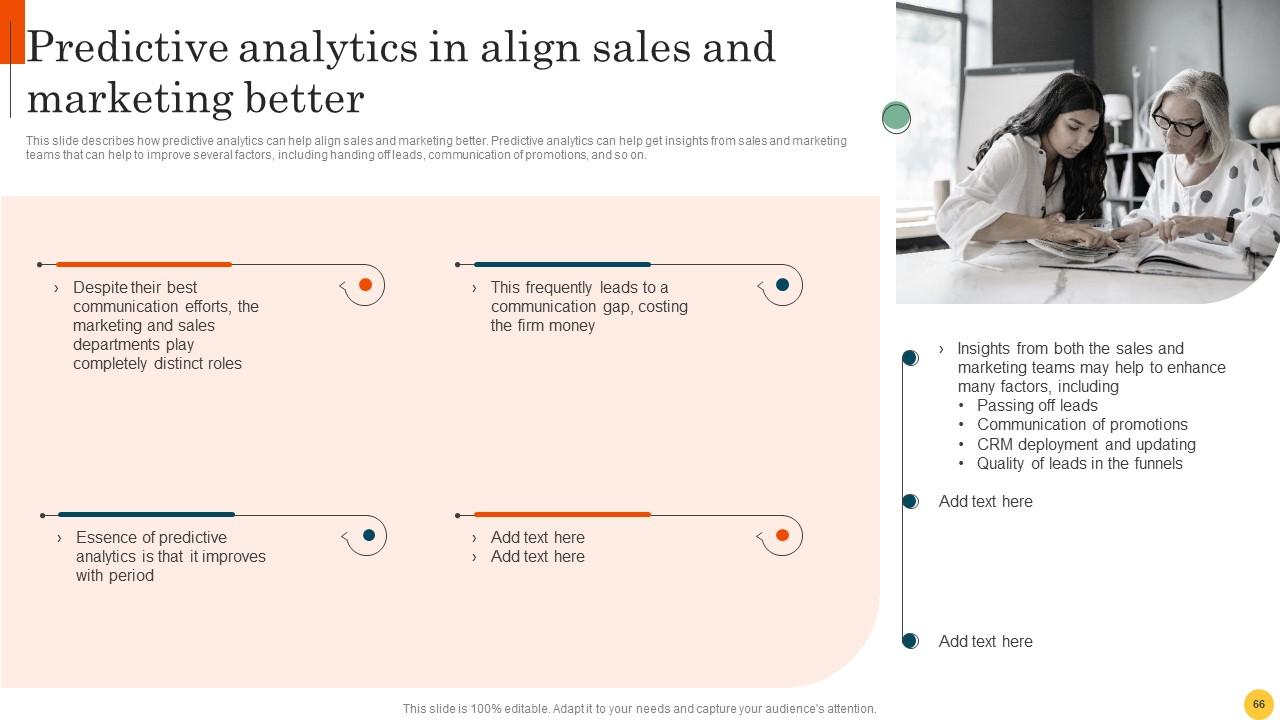
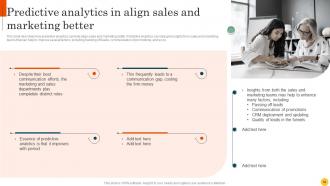
Slide 66: This slide describes how predictive analytics can help align sales and marketing better.
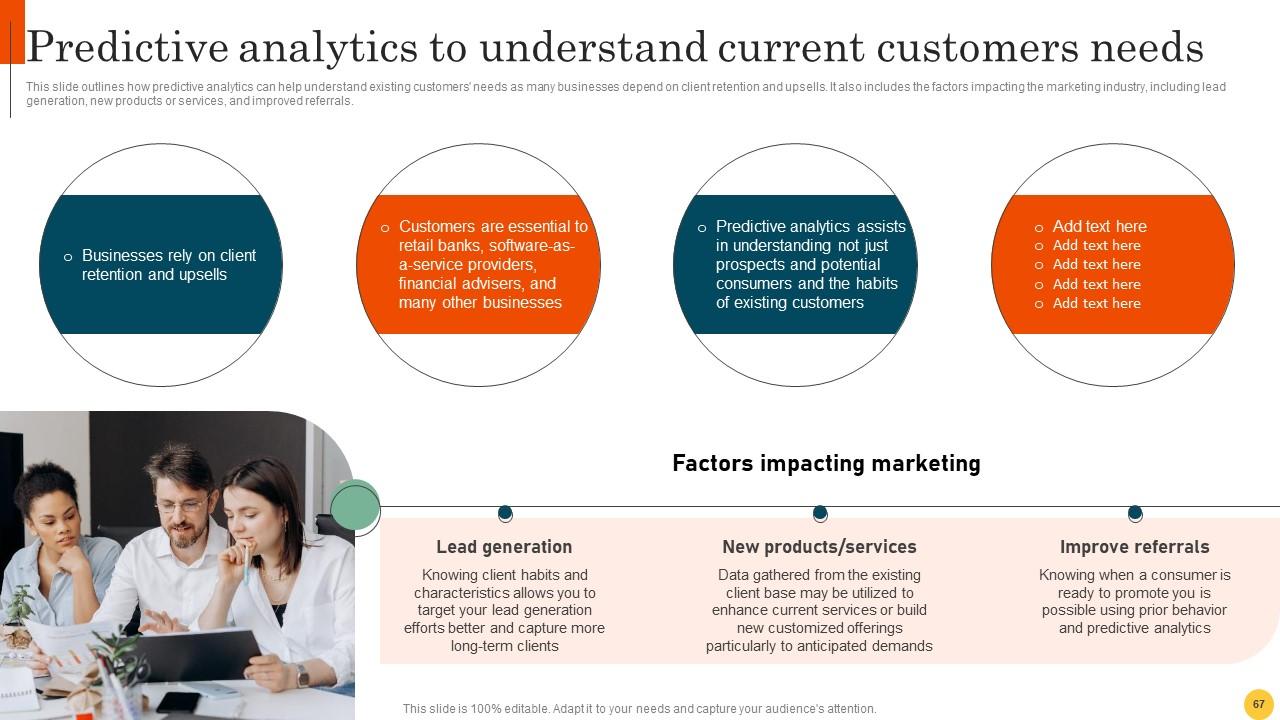
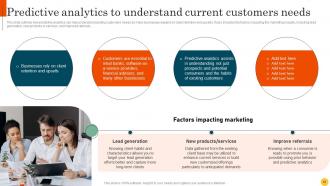
Slide 67: This slide showcases how predictive analytics can help understand existing customers' needs.
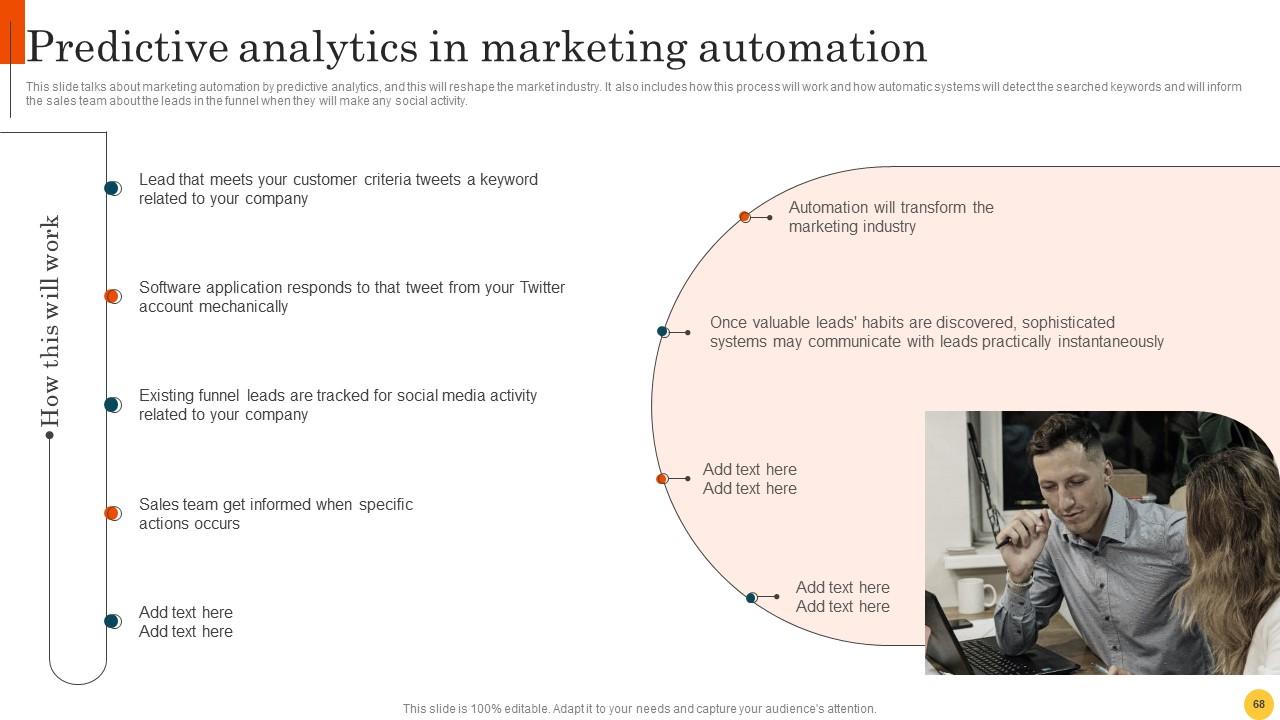
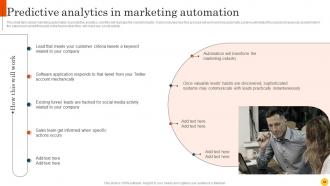
Slide 68: This slide shows marketing automation by predictive analytics, and this will reshape the market industry.
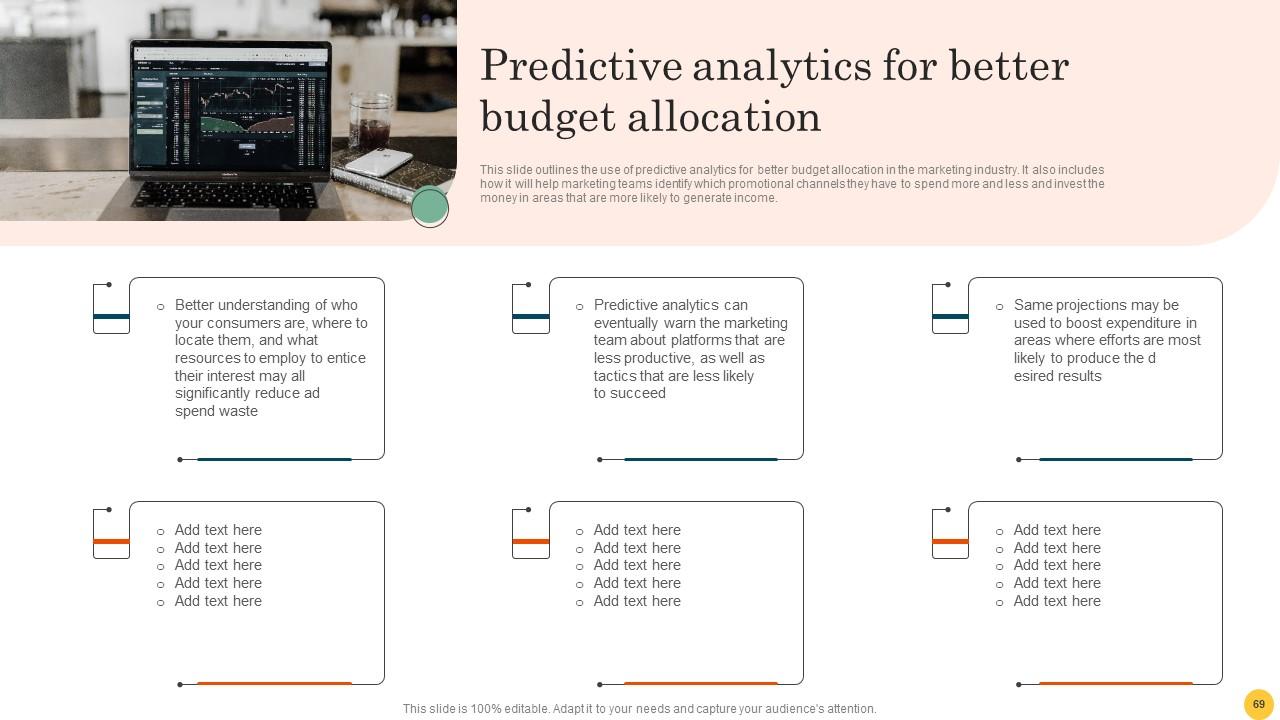
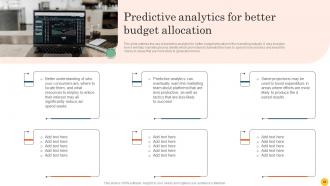
Slide 69: This slide outlines the use of predictive analytics for better budget allocation in the marketing industry.
Slide 70: This slide is About Us slide to show company specifications etc.
Slide 71: This slide is Mission slide with related imagery and text.
Slide 72: This slide depicts Venn diagram with text boxes.
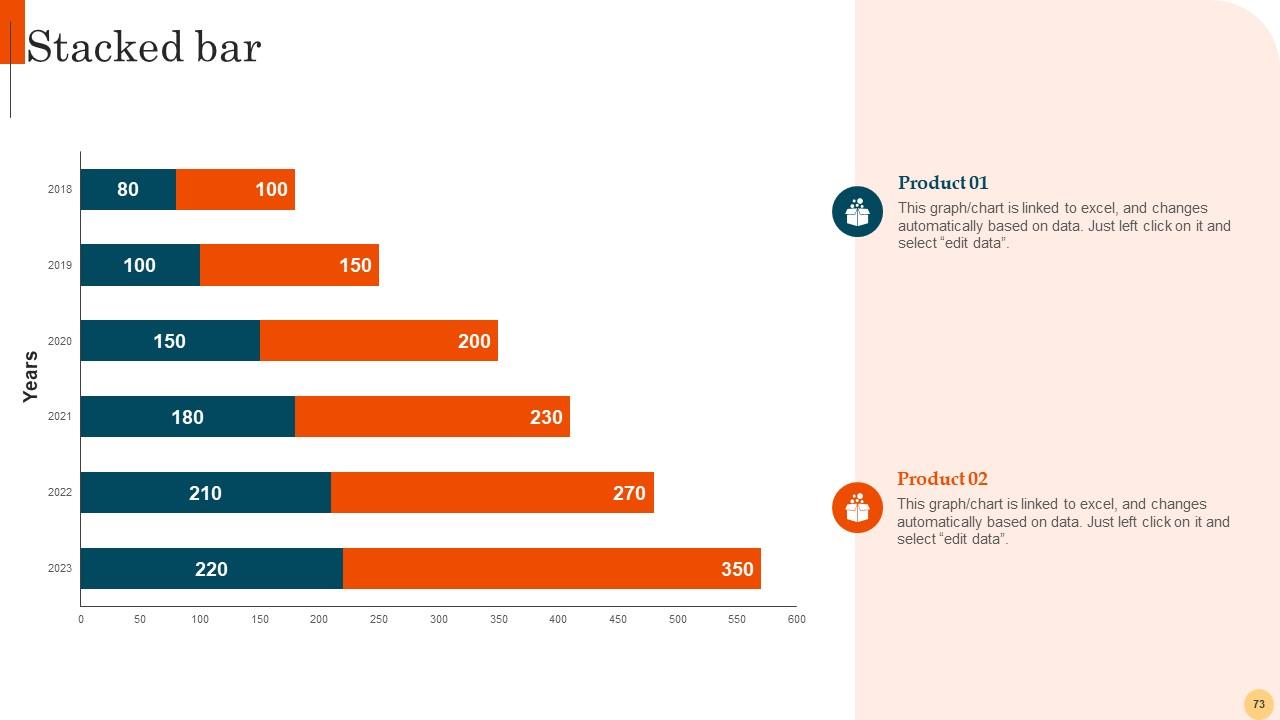
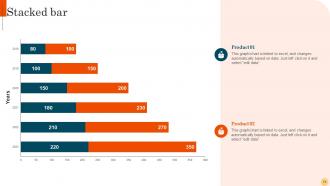
Slide 73: This slide shows Stacked bar linked to excel, and changes automatically based on data.
Slide 74: This slide is an Idea Generation slide to state a new idea or highlight information, specifications etc.
Slide 75: This is a Thank You slide with address, contact numbers and email address.
Predictive Modeling Methodologies Powerpoint Presentation Slides with all 80 slides:
Use our Predictive Modeling Methodologies Powerpoint Presentation Slides to effectively help you save your valuable time. They are readymade to fit into any presentation structure.
FAQs
The clustering models in predictive analytics use various methods, including k-means clustering, hierarchical clustering, and density-based clustering. These methods group similar data points together based on their characteristics or proximity in order to identify patterns or segments within the data.
The regression model is a statistical analysis technique used in predictive analytics to identify the relationship between a dependent variable and one or more independent variables. It helps predict continuous numerical outcomes, such as sales volume, based on historical data and the identified relationship.
Neural networks in predictive analytics mimic the functioning of the human brain to process and analyze data. They consist of interconnected layers of artificial neurons that learn from the input data and adjust their weights to make predictions. Neural networks are effective in tasks like image recognition, natural language processing, and pattern recognition.
Predictive analytics in healthcare can help improve patient outcomes, optimize resource allocation, identify at-risk populations, detect early signs of diseases, and enhance operational efficiency. It allows healthcare providers to make proactive decisions and personalize treatment plans based on patient data and predictive models.
Predictive analytics can benefit the marketing industry by identifying potential customer leads, understanding customer needs and preferences, optimizing marketing campaigns, improving lead conversion rates, and enabling better budget allocation. It helps marketers make data-driven decisions and target the right audience with personalized messaging.
-
The best and engaging collection of PPTs I’ve seen so far. Great work!
-
The templates are the best in class. Very clear and innovative graphics! I am excited to explore and download more presentations.
