


ICT Strategic Plan Powerpoint Ppt Template Bundles




Try Before you Buy Download Free Sample Product
 Impress Your
 Audience
 100%
100% Editable
 Save Hours
 of Time


Our ICT Strategic Plan Powerpoint Ppt Template Bundles are topically designed to provide an attractive backdrop to any subject. Use them to look like a presentation pro.
People who downloaded this PowerPoint presentation also viewed the following :
ICT Strategic Plan Powerpoint Ppt Template Bundles with all 17 slides:
Use our ICT Strategic Plan Powerpoint Ppt Template Bundles to effectively help you save your valuable time. They are readymade to fit into any presentation structure.
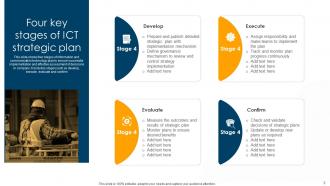
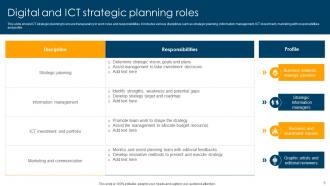






FAQs for ICT Strategic Plan Powerpoint
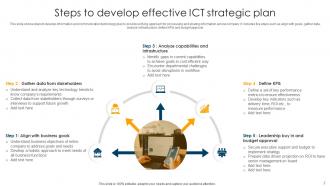
OK so for your ICT plan, first figure out where your tech currently stands - like what's actually working vs what's garbage. Map out where you want to be in 2-3 years, then list the projects that'll get you there with realistic timelines and budgets. Governance stuff is super boring but you need it - who decides what, how you'll handle risks, success metrics, all that. Stakeholder buy-in is huge too because people freak out about tech changes. Honestly, the hardest part is making it detailed enough to be useful but not so rigid that you can't pivot when everything goes sideways.
Look, you've got to map your tech stuff directly to what the business actually wants - like if they're pushing into new markets, your systems better support that. Getting both teams in regular meetings is honestly the hardest part, but it's crucial. Track metrics the business cares about, not just your usual IT performance stuff. When making tech decisions, think about what'll drive revenue or cut costs first. Oh, and customer experience too - that's huge now. Basically treat IT like it's part of the business strategy instead of some separate thing. Check how aligned you are every quarter or you'll drift apart fast.
Start with a full infrastructure audit - catalog your hardware, software, networks, everything. Do a SWOT analysis on your tech stack to spot strengths, weaknesses, opportunities and threats. Check what capacity you're actually using vs. paying for (there's always tons of waste, trust me). Benchmark your performance against industry standards and definitely interview stakeholders about their pain points. Users know where the real problems are. Don't get stuck overthinking it though - set a deadline and actually stick to it or you'll be analyzing forever.
Look, emerging tech means your ICT plan has to be crazy flexible now. Can't do those old rigid 5-year roadmaps anymore - AI and cloud stuff changes way too fast. We got burned on this once, had a "future-proof" system that was basically ancient after 18 months lol. Build it modular so you can pivot quickly. Set aside budget for new opportunities and do quarterly reviews to scan what's coming. Oh and have clear rules for when you'll jump on new tech vs waiting it out. Trust me, you'll need that flexibility.
Dude, you absolutely have to get stakeholders involved from day one. Map out who matters - users, executives, department heads - and actually talk to them regularly throughout planning. I've watched so many IT teams build "perfect" systems in isolation that nobody ends up using. What a waste. Your stakeholders know the real pain points and roadblocks you'd never think of. Plus they'll actually support the plan since they helped create it. Short version: involve people early, listen to what they say, and check in often. Makes the difference between a plan that works and expensive shelf decoration.
Build your KPIs right into each goal upfront - metrics as an afterthought never work. Track stuff like uptime, delivery times, user happiness, budget performance. The key thing? Make sure they actually connect to business results, not just cool tech stats nobody understands. Honestly, leadership doesn't give a damn about server performance if it's not helping the company. Do quarterly reviews where you show real progress to stakeholders. Pick owners for each metric. Consequences matter too - good and bad. Oh, and start with maybe 3-5 solid metrics instead of creating some overwhelming dashboard mess.
Don't just slap security on at the end - weave it into everything from day one. Do a solid risk assessment first to see where you're exposed, then figure out what security goals actually match your business needs. Budget properly for tools, training, and people because honestly, good security pros don't come cheap. But trust me, it's way cheaper than dealing with a breach. Build in regular audits and have a real incident response plan ready. Oh, and don't forget compliance stuff if that applies to you. The whole point is making security work WITH your digital plans, not against them.
First thing - match your tech projects to what the business actually needs. No point building cool stuff that doesn't move the needle, right? Score each project on ROI, risk, how much it'll cost you, that sort of thing. Honestly, this is where most people mess up because new tech is so tempting! Quick wins first - they'll get leadership on your side. Dependencies matter too (learned that the hard way). Once you've got some momentum going, then you can tackle the bigger strategic stuff. Oh, and definitely get exec buy-in early or you'll be fighting uphill battles later.
Honestly, budget issues hit you first - either not enough money or your team's missing key skills. People hate change too, even good changes. Legacy systems are the worst - they never integrate smoothly with new stuff. Oh, and everyone wants everything done yesterday, which is just unrealistic. Different departments keep sneaking in extra requirements mid-project, so scope creep becomes a nightmare. You'll save yourself a ton of stress if you pad your timelines from the start. Getting executives on board early makes everything easier - they can actually help push the change management stuff through.
So here's what I'd do - start by figuring out which of your workloads are most unpredictable. Cloud computing is perfect for this because you can scale up or down based on what you actually need instead of buying expensive hardware that just sits there. Honestly, the budget flexibility alone makes it worth it. Focus on hybrid models where stuff can move between private and public clouds smoothly. That way you'll handle those crazy demand spikes, support remote workers, and adapt without rebuilding everything from scratch. Oh, and don't try to move everything at once - that's just asking for headaches.
Dude, the hardware and software costs are just the tip of the iceberg. Training your team will cost more than you think, plus data migration is always a nightmare. Don't even get me started on system integration - that's where budgets go to die. Oh, and scope creep? It's gonna happen, trust me. Requirements change halfway through every single project I've seen. You'll also have ongoing maintenance eating into your budget for years. Honestly, whatever number you come up with, just add 20% on top. You'll thank me later.
Dude, compliance stuff will literally dictate your whole ICT strategy whether you like it or not. Map out all the regulations that apply to your industry first - data protection, security standards, the works. Then build everything around those rules instead of scrambling later. Trust me on this one, trying to bolt on compliance afterwards is a nightmare. It affects your cloud timeline, vendor choices, security design... pretty much everything. Yeah it's annoying and slows things down, but getting audited or fined because you cut corners? Way worse. Start with the constraints, then get creative within them.
Look, an ICT strategic plan is basically your game plan for not wasting money on random tech stuff. You map out what you have now versus what you actually need - that gap shows you exactly where to focus. It helps you figure out which technologies to tackle first and what skills your team's missing. Honestly, the timeline part is huge because otherwise you're just throwing money at problems hoping they'll fix themselves overnight. The plan keeps your IT spending tied to real business goals instead of just buying the shiniest new tool. Oh, and you can actually track if it's working instead of just crossing your fingers.
Track your numbers against what you originally set out to do - both the hard data and the softer stuff. Quarterly check-ins usually work pretty well for measuring uptime, user happiness, delivery times, and whether you're actually making money back on tech spending. Here's the thing though: focus on metrics that actually move the needle for your business, not just impressive-looking stats. Are your ICT projects helping you hit bigger goals or just maintaining status quo? Build a simple visual dashboard (seriously, keep it simple) and resist the urge to track everything under the sun.
Build flexibility in from the start, that's the secret. Set up quarterly reviews minimum to see what's actually working. Get real budget commitment upfront - not just "we'll figure it out later" promises that never materialize. Document everything super clearly because people leave and you don't want your plan dying with them. Track progress with actual metrics, not just gut feelings. Here's the thing though - don't write it once and call it done. It's gotta be a living thing you're constantly tweaking. Book those review meetings right now and don't let anyone cancel them.
-
Such amazing slides with easy editable options. A perfect time-saver.
-
The templates are easy to get, and the chat customer support is excellent.