

Pr Campaign Plan Powerpoint Ppt Template Bundles




Try Before you Buy Download Free Sample Product
 Impress Your
 Audience
 100%
100% Editable
 Save Hours
 of Time


Our Pr Campaign Plan Powerpoint Ppt Template Bundles are topically designed to provide an attractive backdrop to any subject. Use them to look like a presentation pro.
People who downloaded this PowerPoint presentation also viewed the following :
Pr Campaign Plan Powerpoint Ppt Template Bundles with all 16 slides:
Use our Pr Campaign Plan Powerpoint Ppt Template Bundles to effectively help you save your valuable time. They are readymade to fit into any presentation structure.









FAQs for Pr Campaign Plan Powerpoint
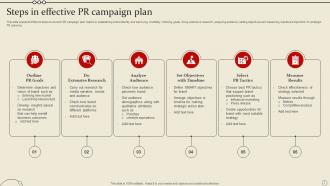
Okay so you need five main things for a decent PR campaign. Clear objectives first - like what are you actually trying to do here? Target audience and messaging come next (messaging is honestly where most campaigns live or die). Media strategy and tactics are the fun creative parts everyone gets excited about. Timeline, budget, and KPIs round it out so you can track if it's working. Oh and start with nailing those objectives - I know it sounds boring but everything else just flows way better once you've got that sorted. Trust me on this one.
Dude, audience research is a game changer - stops you from basically throwing money at the wall and hoping something sticks. You find out what actually bugs people, where they hang out online, what makes them click. I can't tell you how many campaigns I've watched crash because someone was like "oh we totally know our customers" (they absolutely did not). Survey your current customers first. Test a few messages on a small group before you blow your whole budget. Different channels work for different people - like my mom's on Facebook but my brother only checks Instagram stories. Makes all the difference in whether people actually give a damn about what you're saying.
You definitely want to track both the media stuff and actual business impact. Media metrics are reach, sentiment, share of voice vs competitors - but honestly those are kinda just vanity numbers. The stuff that actually matters? Website traffic spikes, leads generated, brand awareness surveys, sales if you can trace it back. Don't forget social mentions and engagement since that shows if people are organically sharing your story. Set your baseline first, then measure consistently. Here's the thing though - pick like 3-5 metrics max that actually connect to your goals. Otherwise you'll drown in data and won't know what's working.
Honestly, just figure out where your people actually hang out first. Check their demographics and what they're into - are they scrolling TikTok or still reading the morning paper? Don't ignore traditional stuff like TV if that's your crowd, but podcasts and smaller niche sites can be goldmines too. Budget matters obviously. I'd personally hit them from a few different angles instead of going all-in on one thing - way safer that way. Oh, and those super engaged smaller audiences? Sometimes they're worth way more than massive reach.
Honestly, storytelling is what makes PR actually work. Nobody gives a damn about boring press releases, but a good story? That sticks. Find the human angle in whatever you're pushing - maybe it's the scrappy startup vibe, some cool breakthrough, or how you're helping the community. Journalists eat that stuff up way more than corporate speak. Your facts need to live inside narratives that make people feel something. I swear, the emotional connection is everything. Start with whatever feels most relatable about your thing and build from there.
Honestly, SWOT analysis is like doing your homework before launching into PR stuff. You map out what you're good at, what sucks, what opportunities are sitting there, and what might bite you later. Sounds boring but it actually works. Once you see everything laid out, your messaging becomes way more focused – you can play up your strong points while dodging the obvious traps. I always find weird partnership opportunities I wouldn't have thought of otherwise. Just brainstorm 3-5 things for each category, then build your whole strategy around what comes up.
Honestly, start with Google Alerts - it's free and catches the basics for your brand and campaign stuff. Mention and Brand24 are decent if you want social media tracking without breaking the bank. The expensive ones like Meltwater and Cision are what all the big PR firms use, but they're honestly overkill unless you really need those fancy sentiment reports for the C-suite. I'd say grab Google Alerts plus one paid tool first. You might be surprised by how much coverage you're missing - or getting that you didn't even know about.
Think of crisis management as your campaign's backup plan for when shit hits the fan. Map out what could go wrong beforehand and draft some response templates - seriously, do this now while you're thinking clearly, not during a meltdown. I made that mistake once and it was brutal. Monitor everything so you catch problems early, then designate someone to decide when to switch from normal campaign mode to damage control. The trick is keeping your crisis responses aligned with your brand voice. You don't want to sound like a completely different company when you're firefighting.
Look, journalists are crazy busy, so your headline better grab them immediately. Lead with your best angle in that first paragraph - they're literally scanning for what matters. Keep it under a page, write like you're reporting news (third person), and get real quotes from actual humans, not that corporate nonsense that sounds totally fake. Hit the basics upfront: who, what, when, where, why. Oh, and make your contact info super obvious - don't make them hunt for it. Here's the thing though: step back and ask yourself if you'd actually want to read this story. If it's boring to you, it'll be boring to everyone else. Rework it until it's genuinely interesting.
Honestly, just work backwards from your big deadlines - product launches, events, whatever you're tied to. Break those major things into smaller tasks with realistic timelines. Always pad extra time because journalists operate on their own planet, trust me on this one. You'll need chunks for creating content, reaching out to media, following up (ugh), and actually measuring if it worked. I just use a basic spreadsheet to track everything - nothing fancy. Oh, and definitely run your timeline by stakeholders early so they can tell you if you're being completely unrealistic before it's too late.
Look for influencers whose followers actually match your target audience - follower count isn't everything. Generic "collab" emails are trash and get deleted immediately, so personalize your outreach. Show you actually know their content style. Instead of just asking for posts, offer them something cool - early access to products, exclusive stuff, or maybe co-create content together. I always engage with their posts first before sliding into DMs with requests. Takes patience but works way better. The whole thing should feel like you're building a real partnership, not just paying for promotion. That's honestly when they put in their best effort.
Dude, your budget isn't something to figure out at the end - it should control literally everything from day one. Pick maybe 2-3 things max that'll actually move the needle. I swear, most campaigns crash because they try doing everything instead of doing a few things well. Start with free stuff like your own content, then hunt for media coverage opportunities. Only throw money at ads if you've got cash leftover. Oh, and make a wishlist of all the cool tactics you want, then slash it until the math works. Trust me on this one.
Oh man, biggest mistakes? Wrong audience is huge - like pitching tech stuff to lifestyle writers. Don't set crazy tight deadlines either, media works on their own timeline. You gotta have actual measurable goals from day one, not just "get some coverage." Diversify beyond press releases too - that's so 2010. Crisis planning is boring but trust me, something will blow up eventually. Also? If you don't have a real story, don't try forcing one. Research your journalists first, map out key messages, and build in buffer time. Everything takes twice as long as you think it will.
So digital marketing basically takes your PR work and makes it go way further. You can turn press releases into social posts, run ads to push your media coverage, and make sure people can actually find your stories online through SEO. Email's honestly your best bet for getting news straight to the people who matter - way better than crossing your fingers that some journalist will bite. Oh, and timing is everything. You want all your digital stuff hitting at the same time as traditional coverage so it all builds on each other. Map out what digital moves match each PR moment and you're golden.
Honestly, audience feedback is like your GPS for campaigns - tells you what's hitting and what's totally missing the mark. Monitor comments, engagement, media coverage, all that stuff to see if people actually care. The data can be wild sometimes, showing you things you never saw coming! Don't wait till the end to fix what's broken. Check in regularly and be ready to switch up your tone or even channels if needed. Course-correcting mid-campaign based on real reactions beats sticking to some strategy that isn't working. Trust what you're hearing over what you think should happen.
-
Amazing variety of PowerPoint slides. Really helpful in designing professional presentations.
-
Design layout is very impressive.