


Stakeholders of a business project powerpoint ideas




Try Before you Buy Download Free Sample Product
 Impress Your
 Audience
 100%
100% Editable
 Save Hours
 of Time


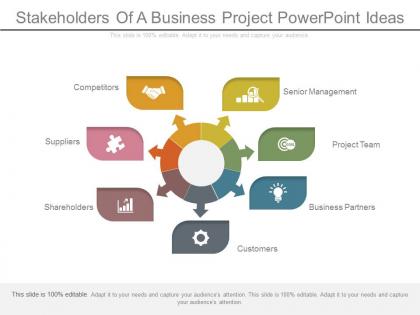
Highlight the role of investors in the commerce development with our stakeholders of a business project PowerPoint slide. In business industry, project stakeholder can be an individual, company or group which is affected by the outcome of a project. Our Presentation design highlights some key aspects that can be shared with the audience. There are total seven stages shown in the PPT template such as competitors, suppliers, shareholders, customers, business partners, project team and senior management. Project leader, resource managers, senior management, project testers, consultants are some of the examples of project stakeholders. With our creative Presentation design you can let your audience focus on them and understand its value in the organizational growth. The PowerPoint template slide has been created by our professional and experienced designers for your use. So, just download the design, insert it in the presentation and then present it as required. The PPT diagram is easily editable which gives you an opportunity to make changes as you want. Besides this, we have many other designs available in our gallery that you can check and download.Our Stakeholders Of A Business Project Powerpoint Ideas are ever available. You will find them around almost forever.
People who downloaded this PowerPoint presentation also viewed the following :
Stakeholders of a business project powerpoint ideas with all 5 slides:
Achievements are galore with our Stakeholders Of A Business Project Powerpoint Ideas. Get on a firm footing to grow.
FAQs for Stakeholders of a business
Oh man, stakeholders can totally make or break everything. Seriously, I've seen projects tank because someone didn't keep the right people happy. When they're on your side, you'll get resources and they'll actually fight for you with upper management. But ignore them? Good luck dealing with all the roadblocks they'll throw up. Here's the thing though - they all want different stuff and define "success" completely differently. You gotta figure out who actually has power (not just who talks the loudest) and what really matters to them. My advice? Map out the key players super early and start building those relationships now, not when you desperately need their help later.
Honestly, stakeholders are just people with different agendas pulling you in opposite directions. Your investors want profits, employees want raises, customers want cheaper prices - it's a mess sometimes. But here's what works: figure out who actually has power over your decision first. Like, don't waste time on voices that can't make or break you. Map out your top 3 stakeholder groups and see where their interests overlap. When they don't? You'll have to pick sides or find creative compromises. I usually start with whoever controls the budget - probably cynical but it's true.
Honestly, just make a giant list first - don't overthink it. Grab your team and brainstorm everyone who might care about this project or could mess it up. Sponsors, users, department heads, even Karen from accounting who always has opinions about everything. Check old project files to see who got involved before. Interview your sponsors early since they usually know the political landscape better than you do. You can use those fancy stakeholder templates if you want, but a whiteboard works fine too. Once you've got everyone down, then figure out who actually has power and who gives a damn about the results.
Honestly, it all comes down to your industry's vibe and how much scrutiny you're under. Healthcare? You'll be drowning in paperwork and compliance stuff because patient safety is everything. Tech companies get to be way more chill - quick surveys, beta groups, whatever works. Manufacturing usually means dealing with supply chain people and environmental groups (those meetings are... interesting). Financial services is all about keeping regulators and investors happy. The real difference is whether your decisions directly mess with people's lives or not. Just figure out who in your sector can actually kill your projects first - that's where you start.
Honestly, just start with a simple 2x2 grid - plot people by how much influence they have versus how interested they are in your project. Miro works great but Excel's fine too. RACI charts help define who does what, though I always forget what the letters stand for lol. Don't get fancy with the tech - sometimes grabbing a whiteboard beats any software. List everyone who could affect your work or get affected by it, then sort them into categories. The real trick? Actually stick with whatever system you choose. I've seen too many people build perfect stakeholder maps then never look at them again.
So you'll want feedback sessions at key points - after requirements, during prototyping, before releases. Don't wait until the end like I did once (disaster). Mix up your approach too - surveys for some stakeholders, one-on-ones for others. Here's what really matters though: document everything they tell you, then actually tell them back what you're doing with their input. People get annoyed when they give feedback and it disappears into a void. Oh and prioritize the changes obviously - you can't fix everything. Close the loop always.
Look, stakeholder communication can make or break your project - I've watched too many crash and burn because people felt ignored. Requirements shift constantly. Issues come out of nowhere. Weekly check-ins aren't optional if you want everyone aligned on progress and decisions. Honestly, some project managers think they can just send email updates and call it good, but that's not enough. You'll catch problems way earlier with regular touchpoints, plus stakeholders stay bought in when they're not left guessing. Skip this and you're asking for scope creep and budget disasters.
Honestly, you've gotta spot where people's interests are gonna clash before it becomes a mess. I always set up regular check-ins and stay super transparent about trade-offs upfront - saves so much drama later. Once conflicts pop up (because they always do), get everyone in a room for structured talks where they can actually voice what's bugging them. Don't try making everyone thrilled though - that's impossible. Just find something workable that people can live with. Write everything down afterward so nobody conveniently "forgets" what was agreed on. Prevention beats cleanup every single time.
Hey! So measuring stakeholder satisfaction - I'd start simple with quarterly surveys using NPS scores or basic ratings. Track their engagement too - meeting attendance, how fast they respond to emails, stuff like that. Response times matter a lot; people get cranky when they feel ignored. Nobody wants to track complaints but honestly? It's one of the most telling metrics you'll get. Oh, and don't try measuring everything at once - pick maybe 2-3 things that actually make sense for your specific groups. You can always add more later once you've got the basics down.
Dude, cultural stuff can totally mess up your stakeholder relationships if you're not careful. Some people are brutally direct while others dance around problems forever - took me way too long to pick up on that. Decision-making is another nightmare since certain cultures want everyone's input before moving forward. Others just want fast decisions. Oh, and don't get me started on meeting styles and feedback approaches. They're all over the place depending on where people are from. My advice? Do your homework on each stakeholder's background first. Then adjust how you communicate with them. Trust me, it'll save you so many awkward situations later.
Honestly, the hardest part is dealing with constantly shifting requirements - your stakeholders will get dizzy from all the changes. Most of them expect you to hand over some detailed project plan upfront, but agile is basically the opposite of that. You're supposed to roll with uncertainty and adjust based on what you learn. Communication gets weird too since you need way more frequent check-ins instead of those formal milestone meetings. Oh, and you'll be juggling input from different people who want completely different things that change every sprint. Just set expectations early about how this whole agile thing actually works and schedule regular touchpoints so people don't freak out.
Honestly, the right tech stack makes stakeholder stuff so much easier. I'd start with mapping who needs what level of updates - saves you from over-communicating later. Slack or Teams work great for keeping everyone posted without endless email chains. Video calls obviously kill the geography problem, and those survey tools let you grab feedback from way more people at once. Project management platforms are clutch too since stakeholders can actually see what's happening instead of constantly asking for updates. The trick is matching your tools to how much each group actually needs to be involved, you know?
Honestly, just be straight up with everyone involved - don't just cater to whoever yells loudest or has the most clout. Someone's always gonna get screwed over, so at least be upfront about those trade-offs. Listen to people who don't usually get heard, especially communities that might be affected but aren't in the room. I know it's tempting to go for quick wins, but think long-term too. The whole thing really comes down to consistency - if you keep acting ethically and actually pay attention to concerns (not just pretend to), people will start trusting you. It's not rocket science, just takes commitment.
Ugh, stakeholder conflicts are the worst. Map out who actually has power over your project first - those people matter most. Then figure out who gets hit hardest by whatever you decide. I know it sounds cynical, but you're basically playing politics at this point. Weigh their concerns against what your project needs to accomplish and what the business wants. Write down your reasoning (trust me on this) so you can defend your choices later. The key thing? Be straight with everyone about why you made certain calls. Even pissed-off stakeholders will respect transparency over being left wondering what happened.
Honestly, stakeholders are like having extra eyes everywhere. Get your sponsors involved early - they'll catch budget red flags you'd totally miss. End users? They spot usability disasters before launch. Vendors actually know their limitations better than we think they do. The trick is making them comfortable enough to give you bad news upfront instead of sugarcoating everything. I learned this the hard way on my last project. Set up regular check-ins but don't make them feel like interrogations. You want people speaking up about problems while there's still time to fix them.
-
Excellent template with unique design.
-
Great quality slides in rapid time.