


Implementing HR Strategy Employee Journey And Work Culture In Your Organization Complete Deck





Try Before you Buy Download Free Sample Product
 Impress Your
 Audience
 100%
100% Editable
 Save Hours
 of Time


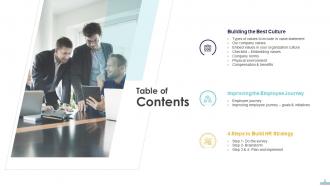
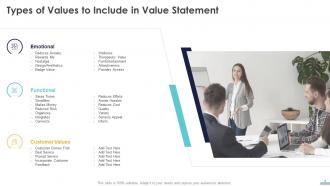
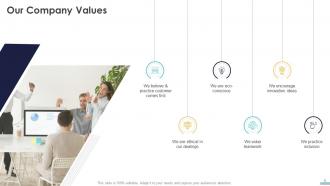
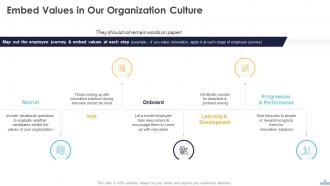
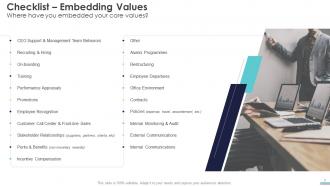
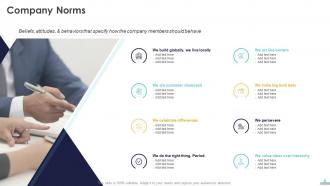
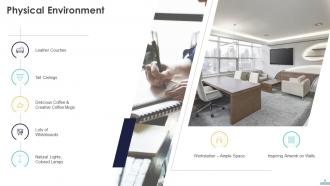
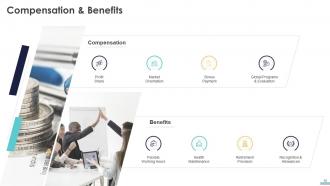
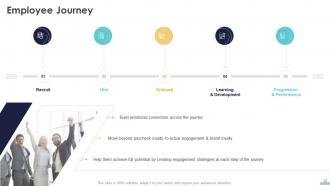
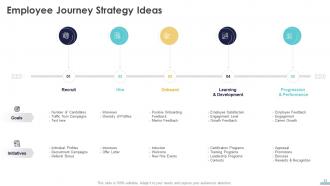
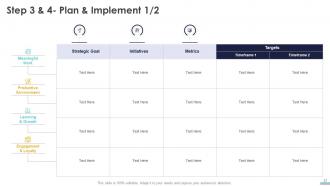
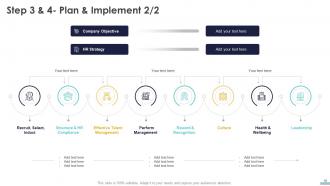
Good working environment and work culture is the foundation of a committed workforce that gives you best results. However, most companies do only a lip service when it comes to good organizational culture. To help businesses practice in spirit the principles and essentials of good wok culture and ethics, our researchers have broken down the process through this HR Strategy- Employee Journey and Work Culture in Your Organization PPT presentation. The first step in building a strong work culture is to look at your value statement and reflect the commitment for better working environment for employees within the value statement. HR professionals need to put these company values into practice by implementing a strategy whereby each value is practiced at each stage of the employee journey-right from hiring, selection, onboarding, promotion to exit. Create a plan how company values can be put into implantation at each stage. Human resource professionals will also learn through this Employee Journey PPT the role of company norms, working environment, compensation and benefits in building a satisfied work experience and loyalty towards company. Download our ready-to-use, professional HR Strategy presentation with completely customizable templates to put your thoughts on slides and into action.
People who downloaded this PowerPoint presentation also viewed the following :
Implementing HR Strategy Employee Journey And Work Culture In Your Organization Complete Deck with all 34 slides:
Encourage a bit of informal banter with our Implementing HR Strategy Employee Journey And Work Culture In Your Organization Complete Deck. Indulge in a good humored exchange.


FAQs for Implementing HR Strategy Employee Journey And Work Culture In Your
You'll want to nail down talent management, performance systems, and workforce planning first. Culture alignment matters too - way more than people think. Map out where your business is going, then figure out what gaps you have in your talent pipeline. Recruitment and retention should tie directly to those business goals, not just float around doing their own thing. Honestly, the performance management side can make or break everything else. Don't skip compensation strategy either. Oh, and succession planning - learned that one the hard way when our best manager quit with zero backup ready.
Honestly, first figure out what your company's actually trying to hit this year - growth numbers, new markets, whatever. Then build your HR stuff around that. Like if they want 30% growth, your hiring and training better support it, you know? I used to do random HR initiatives just because they sounded good (oops), but now everything ties back to real business results. Short version: talk to leadership regularly so you're not doing busy work while they're focused on completely different priorities. Every big HR move should connect to something the business actually cares about.
Think of data analytics like GPS for HR - shows you if you're actually headed in the right direction. Track stuff like turnover rates, engagement scores, hiring success. Once you start spotting patterns, it's weirdly addictive! Way better than making decisions based on hunches. Leadership loves it too because you can actually prove ROI when they question your budget (which they always do). My advice? Pick 3-4 metrics that match your goals and track them religiously. Facts beat gut feelings every time.
Get stakeholders involved from the start, don't just dump finished plans on them. Figure out what actually matters to each group - execs care about ROI, managers want smoother processes, employees want things that don't suck. Involve them in building solutions instead of just asking for sign-off later. Seriously, I've watched so many HR people skip this and then act shocked when everyone's lukewarm about their "game-changing" program. Show them real data on what to expect and quick wins in the first 90 days. Oh, and create actual feedback loops throughout - not just that one kickoff meeting where everyone nods politely.
Honestly, the worst part is when people just refuse to change - employees AND leadership can be equally stubborn about it. Budget's always tight too, plus you never have enough time or staff to do things right. Communication screws up everything if you mess it up. Like, if people don't get WHY you're changing stuff, they'll fight you on every little thing. Also your HR plans need to actually match what the company's trying to do overall, otherwise it's just chaos. I'd say start small so you can show some quick wins first. Oh, and communicate constantly from the beginning - can't stress that enough.
Honestly, if your people aren't engaged, your HR strategy is dead in the water. I've watched so many good initiatives just... sit there because nobody cared. But when employees are actually excited? They'll jump into new programs, give you real feedback (not just the polite stuff), and convince their coworkers to get on board too. That peer influence beats any corporate memo every single time. You can't just announce changes from the top and expect magic to happen. Focus on getting people genuinely pumped about what you're doing first - makes everything else way easier.
Honestly, you can't just pick one type - you need both leading and lagging indicators or you're flying blind. I'd start with the basics: employee engagement scores, retention rates, and how long it takes to fill positions. Internal promotion percentages are huge too. Training completion rates and 360 feedback scores will show if people are actually growing (which everyone says they care about but half the companies I know barely track it). Don't go overboard though - maybe 5-7 solid metrics that actually connect to what you're trying to achieve. Get your baseline numbers now, then check quarterly to see what's working.
Honestly, tech is a lifesaver for HR stuff. Start with whatever manual tasks are driving you crazy - that's your biggest win right there. HRIS systems can handle employee tracking and onboarding automatically, which frees up so much time. Analytics dashboards are pretty sweet too - they take all your messy data and actually make it useful for spotting retention issues early. Communication tools like Slack help everyone stay connected without the endless email chains (thank god). The key is picking solutions that fix your specific headaches, not just buying random software because it looks fancy.
Honestly, change management can make or break your whole HR strategy. I've watched brilliant systems totally flop because nobody wanted to use them - like this perfect performance review process that just sat there gathering dust. People genuinely hate change, so you've got to sell them on WHY it matters first. Get your biggest supporters involved early (they'll do half the work convincing others for you). Don't just dump new processes on people either. Walk them through it, train properly, and actually listen when they complain. Otherwise you're basically throwing money at something that'll never work.
Honestly, your leaders have to walk the walk first - culture trickles down whether they realize it or not. If you're pushing collaboration but only promoting the people who steamroll everyone else, you're sending mixed signals. Be super clear about WHY these changes matter because confused employees won't buy in. Oh, and definitely expect pushback initially - people hate change even when it's good for them. Find your culture champions early and arm them with what they need to sway others. The biggest thing? Make sure your hiring, promotions, and recognition all align with what you're preaching. Consistency across everything is what actually makes it stick.
Honestly, communication is everything during HR rollouts. Hit people from multiple angles - emails, town halls, intranet posts - because everyone processes info differently. Don't disappear for weeks like some leadership teams do (that's how implementations crash and burn). Your managers need to be ready for questions since that's who employees actually talk to first. Timeline transparency matters too. Oh, and set up ways for people to give feedback - you'll need to pivot when things aren't working. It's messier than you think but totally manageable if you stay visible throughout.
Honestly, map out where things could go sideways before they do - like people pushing back on changes, budget getting tight, or leadership not being on the same page. Do quick pulse surveys and chat informally with managers to catch issues early. I've watched so many good plans fall apart because nobody anticipated the resistance! Build in some buffer time and have backup plans ready. Monthly check-ins with your team are clutch - don't wait for problems to find you. And seriously, be ready to switch direction when something's clearly not working. Better to adapt than crash and burn.
Here's my take: your training programs are literally the only thing standing between a great strategy and total failure. Seriously, I've watched so many companies crash because they had amazing plans but nobody knew how to actually do the work. Your managers need to learn those tough performance conversations. Employees need new skills to hit targets. Without that? Dead strategy. Here's what works - tie every single training session back to your big goals. Succession planning means leadership development. Going digital means upskilling everyone. Don't just throw money at random workshops and hope for the best.
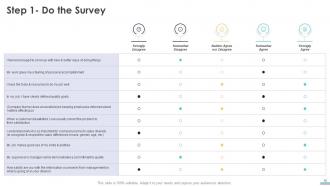
Start with a full audit of your HR stuff - recruitment, employee development, all of it. Honestly, get someone from outside to do this because you're probably too close to see what's actually broken. Map what you have now against industry standards and figure out your weak spots. Oh, and definitely survey your employees - they'll straight up tell you what sucks. Being brutally honest here is everything. What you think is happening probably isn't what's really going down. Make a capability matrix or whatever and tackle the biggest gaps first.
Honestly, remote work flexibility should be your top priority - that's what everyone still cares about most. Mental health support is massive right now too. AI keeps changing job roles way faster than I expected, which is kinda wild. Your team probably wants more learning opportunities and upskilling programs. Oh, and DEI plus pay transparency aren't optional anymore - they're expected. Skills-based hiring is getting bigger than requiring degrees. Maybe do a quick survey first? See what your people actually want instead of guessing.
No Reviews