


Inbound Marketing Team Organisation Chart




Try Before you Buy Download Free Sample Product
 Impress Your
 Audience
 100%
100% Editable
 Save Hours
 of Time


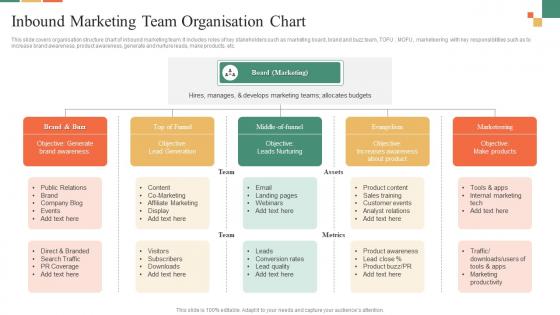
This slide covers organisation structure chart of inbound marketing team. It includes roles of key stakeholders such as marketing board, brand and buzz team, TOFU , MOFU, marketeering with key responsibilities such as to increase brand awareness, product awareness, generate and nurture leads, make products, etc.
People who downloaded this PowerPoint presentation also viewed the following :
Inbound Marketing Team Organisation Chart with all 6 slides:
Use our Inbound Marketing Team Organisation Chart to effectively help you save your valuable time. They are readymade to fit into any presentation structure.






FAQs for Inbound Marketing
Okay so you'll definitely need a content strategist to plan everything out, plus a writer/designer for the actual blogs and creative stuff. SEO specialist is non-negotiable if you want organic traffic. Marketing ops person handles all the automation and lead nurturing - honestly that role saves you so much time. Oh and don't sleep on getting a good social media manager! People always think it's just posting but amplifying content properly is an art. Data analyst is nice to have if budget allows since measuring results matters. Start there, then maybe add video people or conversion specialists later when things get rolling.
Dude, just start with yourself doing everything - content, social, basic tracking. Your first hire? Someone who covers what you suck at. I'm terrible at writing so I'd grab a content person first. Don't get obsessed with fancy org charts yet - staying flexible beats having rigid roles. You need these bases covered: content creation, social management, email, and tracking performance. Freelancers work great for filling gaps initially, way cheaper than full-time people. Main thing is having someone actually own each channel and measure what's working. Otherwise you're just posting into the void.
Okay so writing skills are huge - you need someone who can switch their tone for different audiences. SEO knowledge is a must too, otherwise nobody finds your stuff. Basic design helps when they're making graphics or talking to designers. Here's the thing though - curiosity is honestly what separates good content creators from great ones. They should naturally want to dig into your industry and actually understand your audience. Analytics skills matter so they can see what's bombing vs. what's working. Oh and project management basics, because they'll be juggling like five pieces at once. Look for people who research well and won't get weird about interviewing experts.
Okay so basically SEO people do the nerdy stuff - keyword research, technical optimization, link building, all that ranking nonsense. Content marketers are the creative ones writing blogs and making campaigns people actually want to read. Honestly there's overlap which gets confusing if you don't sort out who does what. But here's the thing - they need to work together on strategy. Have your SEO person give keyword targets and requirements, then let content marketing make it actually interesting. Just make sure they're talking regularly or you'll end up with content that ranks but doesn't convert (or vice versa).
Look, forget page views and that surface-level stuff. Your CEO only cares about one thing - are you driving actual revenue? Start with MQLs, conversion rates, and how many of those leads turn into real sales opportunities. Track your cost to acquire customers too, that's huge. Website traffic's fine but honestly it's pretty meaningless if those visitors aren't converting. Email performance and content metrics help you understand what's working in your campaigns. But seriously, pick like 3-5 KPIs that tie straight to money first. You can always add the fluffier metrics later once you've proven your team's actually moving the needle on pipeline.
Honestly, your teams are probably just working in their own little worlds right now. Start with weekly standups where content, design, and demand gen actually talk to each other about what they're doing. Asana or Monday work great for seeing the whole campaign pipeline instead of just your slice. Most of this stuff breaks down because people literally don't know what others are working on - which is kinda ridiculous but happens everywhere. Set up Slack channels for big campaigns and tell people to ask dumb questions early. Way better than everyone making assumptions. Just don't make it feel super formal or people won't actually use it.
Honestly, start with mapping out what you're already doing - that's the boring part but trust me, it helps. Asana and Monday.com are solid for tracking content calendars and campaigns. ClickUp's good too, though their interface can be a bit much sometimes. Make sure whatever you pick plays nice with your marketing tools like HubSpot. Nothing's worse than having everything scattered across different platforms. Teams or Slack keeps everyone in the loop without endless email chains. Pick something that matches how your team actually works, not what looks coolest in the demo.
Yeah, company size totally changes how you build your inbound team. When you're small, you need people who can do everything - like one person juggling content, social media, maybe some SEO stuff. Once you hit medium size, that's when you can actually hire specialists. You know, dedicated writers, designers, someone just for analytics. Big companies get all the fancy roles though - conversion optimizers, automation experts, the works. Honestly feels unfair sometimes. But here's the thing: just start with what you can afford and add specialists when you spot gaps. Works way better than trying to hire everyone at once.
So data analysts are like your reality check people - they dig through all your marketing numbers to see what's actually moving the needle. Website traffic, email opens, social engagement, conversion rates... they track it all then tell you what it means. Without them you're basically flying blind (learned that the hard way lol). They'll build you dashboards and reports so you can make decisions based on actual data instead of just winging it. Oh and definitely set up regular check-ins with them - their findings should shape your next campaigns, not just sit in some folder gathering dust.
Yeah, you definitely need someone focused on social if you're doing inbound marketing seriously. Your audience lives on these platforms, and they need consistent posting plus real engagement - not just random updates when you remember. Algorithm changes happen constantly, trending stuff moves fast, and angry customers expect quick replies. I swear, companies that treat social media like busy work always complain about terrible engagement later. Maybe start part-time if money's tight? Just make sure it's actually their main job, not something they squeeze in between emails and meetings.
Honestly, you've gotta bake customer feedback right into how you create content and plan campaigns. Surveys work well, customer interviews too, plus monitoring social media chatter. Your marketing ops person usually handles collecting all this - though really, everyone should tune in to what customers say about your messaging. Monthly check-ins with sales are clutch since they're hearing pain points constantly. Then use everything to update buyer personas, adjust content topics, maybe tweak those nurture sequences. Sales feedback is probably the easiest place to start actually.
Honestly, the worst part is usually when roles get all mixed up - like your content person suddenly handling leads and nobody knows who's doing what anymore. Resource constraints suck too. Sales and marketing teams love to work against each other instead of together, which is just... exhausting. Also? Everyone gets distracted by whatever shiny new platform is trending that week instead of actually sticking to what works. My advice: write down who does what (boring but necessary), have regular check-ins between teams, and pick maybe two channels to nail instead of half-assing everything. Trust me on that last one.
Honestly? I'd say every 3 months if you're growing quickly, otherwise twice a year works. When conversion rates tank or your team starts complaining about workflows - that's when you know something's off. Don't wait until everything's on fire (learned that one the hard way). Quick wins are checking if people hit their goals and whether lead quality is actually decent. Major red flags: overwhelmed team members or clunky processes that make everyone groan. Oh, and actually put it in your calendar or you'll totally forget like I always do.
Start with HubSpot Academy - it's free and covers all the basics like content marketing and SEO. Your team needs hands-on training with Google Analytics and email platforms since they'll use those daily. Writing workshops are surprisingly helpful too. I'd honestly skip the expensive courses at first and focus on certifications that actually matter. Social media strategy training is worth it if you're doing organic content. Oh, and don't sleep on project management skills - that stuff saves so much headache later. Maybe set up a quarterly budget where everyone picks one cert to go after?
Stop chasing follower counts - learned that the hard way lol. What you really need is to figure out what success actually looks like to your executives. Is it cheaper customer acquisition? Higher lifetime value? Market share? Whatever it is, tie your inbound stuff directly to those numbers. Don't just say "we want growth." Sales teams usually have the best intel on what metrics leadership cares about, so grab coffee with them regularly. Track the leading indicators that predict real business wins. Honestly, most marketing teams get stuck measuring the wrong things entirely.
-
It's always a delight to see new templates from you! I am extremely pleased with the fact that they are easy to modify and fit any presentation layout in seconds!
-
“Thank you to the SlideTeam. Your presentations look really skillful and have made my life so much easier.”