

Inbound Service Call Center Flow Chart Process




Try Before you Buy Download Free Sample Product
 Impress Your
 Audience
 100%
100% Editable
 Save Hours
 of Time


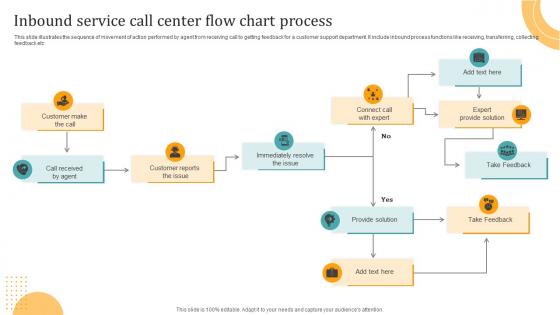
This slide illustrates the sequence of movement of action performed by agent from receiving call to getting feedback for a customer support department. It include inbound process functions like receiving, transferring, collecting feedback etc
People who downloaded this PowerPoint presentation also viewed the following :
Inbound Service Call Center Flow Chart Process with all 6 slides:
Use our Inbound Service Call Center Flow Chart Process to effectively help you save your valuable time. They are readymade to fit into any presentation structure.





FAQs for Inbound Service Call Center
So you want good call routing first - gets people to the right person fast. Train your staff properly (not just script readers, actual problem solvers). Your CRM needs to show customer history right away. Queue management is everything - waiting sucks and people hang up. Make the IVR simple to navigate. Oh, and track your metrics like first-call resolution and wait times religiously. Honestly though? The biggest thing is letting agents make decisions themselves instead of escalating constantly. Saves everyone time and frustration.
Honestly, start with fixing your call routing - that's where you'll see the biggest difference right away. AI chatbots are great for handling the basic stuff before calls even hit your agents. CRM integration is clutch too since agents can pull up customer history instantly. I'd also look into real-time analytics to catch problems as they're happening. Call recording with sentiment analysis shows you where things go sideways in conversations. Oh, and intelligent routing gets people to the right specialist faster - customers hate being transferred around. These upgrades will actually make a noticeable impact on satisfaction scores.
Honestly, start with these basics: average handle time, first call resolution, and customer satisfaction scores. Abandonment rate's critical too - nobody likes being hung up on. Service level is probably the biggest one though (like hitting 80% of calls in 20 seconds). Agent occupancy rate will blow your mind when you see how it reveals staffing gaps. Customer effort score is getting more attention these days since it shows if you're actually making things easy for people. Pull these weekly instead of obsessing over daily numbers - trends matter way more. These five will catch problems before they explode on you.
Training your agents well is a game changer, honestly. They'll fix problems way faster without having to transfer calls around or grab their manager every five minutes. Nobody wants to sit on hold while someone's frantically clicking through screens trying to figure stuff out. Start with product knowledge - that's your foundation. Then work on how they actually talk to people, especially the cranky ones. Oh, and definitely track your call times before and after training sessions. You'll be surprised how much those numbers drop. Well-trained agents just flow through calls smoother, and customers can totally tell the difference.
Ugh, three big headaches you'll deal with: agents quitting constantly, customers waiting forever, and service all over the place quality-wise. Training programs help with turnover - give people actual career growth instead of keeping them stuck. Callback options are a lifesaver for wait times, plus you gotta staff based on when calls actually come in. Coaching sessions fix the quality mess, but honestly the metrics need to make sense first. Track your numbers obsessively though. When stuff starts falling apart, you need to pivot fast or it gets ugly quick.
Honestly, just dig into those customer complaints - they're telling you exactly what's broken. Like if everyone's complaining about getting bounced around between agents, that's your cue to fix first-call resolution. Those post-call surveys are pure gold, but most people just glance at the ratings instead of reading the actual comments (big mistake). Track what keeps popping up and build better resources for your team. Oh, and here's the thing - you actually have to DO something with this info. Set up monthly check-ins where you compare feedback trends to how you're currently handling things and make changes.
Skill-based routing is huge - technical calls need your tech people, VIP customers should jump the line, and tricky stuff goes to your senior agents. Geographic routing works great if you've got different languages or time zones. But here's what really kills me: customers getting passed around three times because nobody knows what they're talking about. Set it up so repeat callers automatically get routed back to whoever helped them last time. Customers eat that up. Oh, and don't just send calls to whoever's available first - that's lazy and creates chaos.
Scripts are your best friend for keeping everyone on the same page - just don't make them too rigid or your agents will sound like they're reading from a teleprompter. Regular coaching sessions work wonders too. Pull real calls and go through what worked, what didn't. I'd also set up scorecards to track stuff like how fast issues get resolved and customer happiness scores. The trick is showing your team what "good" actually looks like, then giving them feedback so they can nail it every time. Oh, and let them inject some personality into calls - people can smell fake from a mile away.
Dude, data analytics is a game changer for call centers. You'll spot patterns in call volume and agent performance that would be impossible to catch otherwise. Predicting busy periods becomes way easier, plus you can see which agents need extra training. The real gold though? Finding out why customers are calling in the first place - saves so much time. Track stuff like handle times and first-call resolution rates too. I mean, without proper data you're basically flying blind and hoping for the best. Even just basic reporting will give you actionable insights right away.
Honestly, you've got to nail three things: staffing, routing, and what happens when shit hits the fan. Get workforce management tools to predict busy periods - trust me, this saves your ass when volume spikes. Smart routing sends calls to the right people faster, which cuts down handle times. Queue callbacks are seriously underrated. Instead of making people wait forever, let them hang up and you call back. Set up overflow so calls bounce to other teams when queues get crazy long. Oh, and track your abandon rates every day - you'll start seeing patterns before they turn into complete disasters.
Honestly, start by looking at your call patterns - that's gonna tell you where things are getting jammed up. Schedule more people during your busy hours (sounds obvious but so many places mess this up). Set up skills-based routing so calls don't get passed around like hot potatoes. Your team should know the common stuff by heart to wrap calls faster. Callbacks are clutch when it's crazy busy - way better than making people sit on hold forever. Oh, and definitely add some self-service options for the basic questions that eat up time.
Dude, CRM integration is seriously clutch for call centers. When customers call, agents instantly see their whole history - past purchases, complaints, whatever. No more dead air while they dig through systems. Honestly, it makes agents look way more competent than they probably are lol. Resolution times get way faster since you actually understand what's going on before diving in. You can also spot trends - like if everyone's complaining about the same broken feature. I'd start with your main customer database first, then build out from there. It'll save you so much headache.
Honestly, call center culture is everything. Agents who feel supported will actually give a damn about helping customers - I've watched it happen. Toxic environments? You get people just reading scripts and counting down to 5pm. But when you treat agents well with decent training, recognition, and let them make real decisions, suddenly your satisfaction scores jump and turnover drops big time. It's kinda wild how much difference the vibe makes. Focus on empowering your team instead of micromanaging them to death.
Honestly, pull all their data before the call even starts - customer history, what they bought before, all that stuff. Then your agents can skip the boring "what's your account number" dance and actually help people. Train them on scripts that don't sound like they're reading from a manual (we've all been on those calls, ugh). Your CRM should pop up relevant offers based on who's calling. The whole thing is about prepping your team so they're not scrambling around looking stuff up while someone's on hold. I'd start by looking at where your calls drag - bet there's tons you could automate beforehand.
AI chatbots are handling basic customer questions now, so your team can tackle the messy stuff that actually requires thinking. Customers want to switch between chat, phone, social media without repeating themselves - honestly, who can blame them? Remote support tools aren't going anywhere (we all figured that out). Real-time sentiment tracking helps route angry customers to your best people. Oh, and predictive routing is getting pretty smart too. Don't wait around - start testing AI tools to help your agents instead of scrambling later when everyone else is already using them.
-
One word for SlideTeam–Versatile!
-
Really like the color and design of the presentation.