

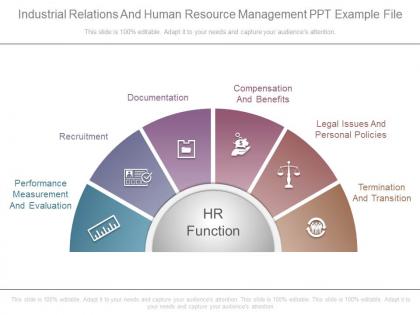
Industrial relations and human resource management ppt example file




Try Before you Buy Download Free Sample Product
 Impress Your
 Audience
 100%
100% Editable
 Save Hours
 of Time


Our Industrial Relations And Human Resource Management Ppt Example File evolve on a daily basis. They forecast forthcoming fashions.
People who downloaded this PowerPoint presentation also viewed the following :
Industrial relations and human resource management ppt example file with all 7 slides:
Our Industrial Relations And Human Resource Management Ppt Example File go beyond the brief. They give you better than you asked for.




FAQs for Industrial relations and human resource management
Trust is huge - like, everything falls apart without it. Clear policies help, but only if people actually understand them instead of getting some confusing 50-page handbook. Fair dispute processes matter too, obviously. Most companies are still stuck in the stone age though, which is wild in 2024. You want psychological safety where people can speak up early before stuff explodes. Regular back-and-forth between management and employees works way better than those awkward quarterly meetings. Oh, and flexibility around work arrangements isn't just nice-to-have anymore - people expect transparency in decisions that affect them.
Labor laws are basically the rulebook for workplace stuff - wages, working conditions, how unions can negotiate, all that. They're like having a referee so employers can't totally screw you over (and vice versa, I guess). The better the protections in your state, the more power workers have when push comes to shove. Honestly, most people don't even know what their rights are until something goes wrong. If you're dealing with workplace drama, definitely look up what the actual laws say first. That'll tell you if you have a case or if you're just stuck dealing with a crappy boss.
Good communication stops those stupid misunderstandings from turning into massive drama. You've gotta be transparent about decisions and actually listen when people bring up concerns - not just nod and ignore them. Regular feedback makes employees feel like they matter. Mixed messages are the worst though, they destroy morale so fast. I learned this the hard way at my old job! Open dialogue helps you catch problems early before they explode. Make it two-way instead of just broadcasting announcements. Start with regular check-ins, but here's the thing - you actually have to act on what people tell you.
Look, negotiation is basically how you stop workplace fights from turning into total disasters. Union reps and management sit down for collective bargaining - wages, hours, all that stuff gets hammered out there. Sometimes you need a mediator when people get stubborn (which happens way more than it should, honestly). Both sides gotta compromise though. That's just how it works. If you're ever dealing with this stuff at work, come prepared and actually listen to the other side. Patience helps too. Finding middle ground that doesn't screw anyone over is the whole point.
So basically these contracts cover the big stuff - wages, benefits, work conditions, how to handle complaints, and how long the deal lasts. Workers get standardized pay and job protection, plus way more power when they negotiate together instead of alone (obviously). Companies benefit too since they can predict labor costs better and people don't quit as much. Honestly, the grievance process part is huge - gives everyone a clear path when things go sideways. If you're managing unionized folks, definitely dig into whatever clauses affect your specific area first.
Honestly, remote work kills those random conversations that actually matter - like bumping into someone by the coffee machine or catching up in the hallway. Without that stuff, small issues turn into formal complaints way faster. Unions struggle to connect with people, and managers can't read the room anymore since there literally isn't a room, lol. Everything feels so structured now. You really have to force those casual check-ins to happen because they won't naturally. It's wild how much those little interactions used to smooth things over without anyone even realizing it.
Honestly, tech is changing everything with employee stuff. HR analytics help you catch problems early before they explode into drama. Digital platforms make it super simple for people to share feedback or complaints. Video calls work fine for most meetings, but the really messy conversations? You still need to be in the same room - that's just how it is. AI can actually track how people feel in their messages and spot patterns in complaints, which is pretty cool. The whole point though is making human connections better, not replacing them entirely.
Honestly, the whole landscape's getting wild. Remote work is now a huge bargaining chip, plus there's all this drama around gig worker classifications. Climate stuff is creeping into union demands too - didn't see that coming five years ago. AI's the big one though. Workers want guarantees they'll get retrained instead of just replaced, which makes total sense. Younger folks are also pushing hard for mental health benefits and actual work-life balance. Supply chain chaos has everyone wanting more job security. Even cross-border solidarity is happening now. Your industry's probably feeling these shifts already - worth watching how they handle it.
Dude, cultural stuff is huge when you're managing international teams. Like, Germans will tell you exactly what they think while Japanese employees might be way more subtle - total recipe for confusion. Power dynamics are weird too. Your German team probably wants everyone on equal footing, but Malaysian workers might actually prefer clear hierarchies. Then you've got union attitudes, work-life balance expectations... honestly it's a lot to juggle. I'd say figure out each culture's deal early on and coach your managers to switch up their style depending on who they're working with. Makes a massive difference.
Honestly, most of this comes down to actually listening to people. Town halls and surveys can work, but only if you're gonna do something with what you hear - otherwise it's just performative BS. Get union reps and management working together on real problems. When you're training managers, teach them to collaborate instead of being combative all the time. Oh, and don't try to overhaul everything at once. Pick one thing, do it well, build some trust first. People can smell fake engagement from a mile away, so whatever you do has to be genuine.
Trade unions are basically your collective bargaining power against management. They negotiate wages, working conditions, and how disputes get handled - which totally affects whether your workplace runs smoothly or not. Honestly, they're still super relevant today with all the gig economy stuff and automation happening. Even if your workplace isn't unionized, unions in your industry still set wage standards that companies follow. Quick tip though - if you're dealing with any workplace drama, check what unions are active in your field first. The agreements they've hammered out will give you way better context for understanding what's actually going on.
Look, workplace democracy matters because people actually get a say in stuff that affects their daily work life. Reduces all that tension and builds trust naturally. Short sentences work better sometimes. When workers can jump into problem-solving instead of just taking orders, you won't see as many grievances blowing up or unions getting defensive. Makes total sense, right? The trick is real consultation - not those BS feedback meetings where decisions are already made. Get employee reps involved early in policy talks. Honestly, I've seen this work way better than the old top-down approach most places still use.
You've gotta jump on stuff early before it turns into a total mess. Mediation works way better than the whole adversarial thing - nobody wants to burn bridges at work, you know? I swear, some people just love to dig their heels in and make everything ten times worse. Ask what someone actually needs instead of just listening to their demands. That's the real trick. Set up clear grievance procedures so there's no confusion about the process. Oh, and definitely train your supervisors in basic conflict resolution. They're dealing with this stuff first, so they better know what they're doing!
Dude, training programs seriously work wonders for workplace drama. Workers feel valued when you invest in their skills - builds real trust. Get your managers trained on communication and conflict stuff so they can squash problems early. Cross-training is clutch too because people finally understand why other departments do what they do. Floor workers get supervisor decisions, supervisors understand the ground-level reality. Honestly, I'd start with basic communication workshops for everyone, then figure out your specific problem areas from there. It's way cheaper than dealing with constant HR headaches later.
Honestly, it all comes down to treating people fairly and being upfront about stuff. Pay people what they deserve, keep workplaces safe, don't discriminate - basic human decency that somehow gets complicated in corporate land. You've gotta balance what employees need with what actually keeps the business running though. Can't just throw money at problems. Communication during negotiations should be straight-up honest, respect people's privacy, and make sure your disciplinary stuff is consistent across the board. Oh and definitely audit what you're doing now - might be surprised what you find.
-
It saves your time and decrease your efforts in half.
-
Easy to edit slides with easy to understand instructions.