

Industry Report For Food Manufacturing Sector Powerpoint Presentation Slides




Try Before you Buy Download Free Sample Product
 Impress Your
 Audience
 100%
100% Editable
 Save Hours
 of Time


Industry Report for Food Manufacturing Sector provides a comprehensive overview food market in the USA. The industry analysis summary showcases the competitive landscape, key trends, and economic indicators related to the food production segment. The PowerPoint deck includes a basic overview of the food manufacturing industry regarding contribution toward GDP, estimated revenues, and the total number of registered plants in the USA. Also, this PPT module includes a comprehensive industry analysis using SWOT, PESTEL, and Porters Five Forces techniques. Additionally, it covers an in-depth market analysis of food production industry sub-segments meat, dairy, grains, fruits, and vegetables. Further, the PPT presentation contains an action plan to adopt Industry 4.0 to overcome the food manufacturing challenges. It also includes details of Industry 4.0 impact on the food manufacturing sector in terms of enhanced surveillance of the food manufacturing ecosystem, better control over complex supply chains, etc. and the possible risks that can hinder the successful adoption of Industry 4.0. Eventually, it also incorporates dashboards to monitor consumer goods sales and supply chain costs. Download it now.
People who downloaded this PowerPoint presentation also viewed the following :
Content of this Powerpoint Presentation
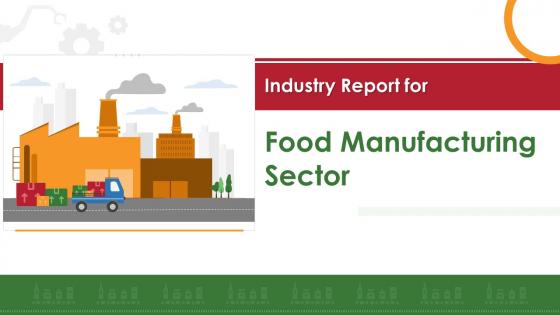
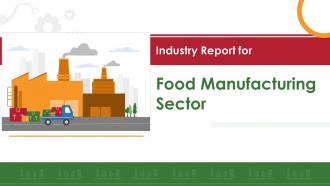
Slide 1: This slide introduces Industry Report for Food Manufacturing Sector. State Your Company Name and begin.
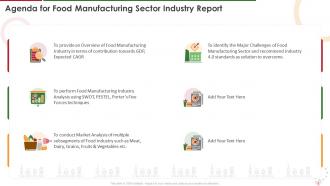
Slide 2: This is an Agenda slide. State your agendas here.
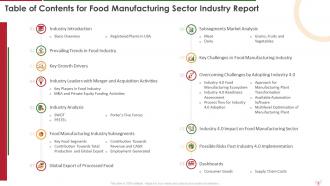
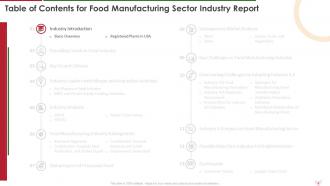
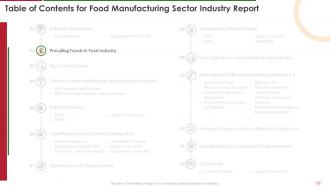
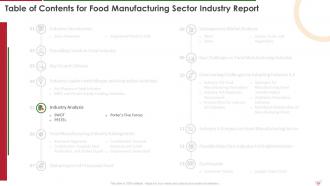
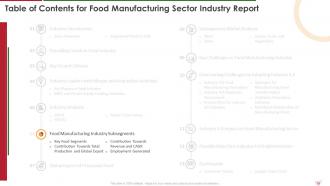
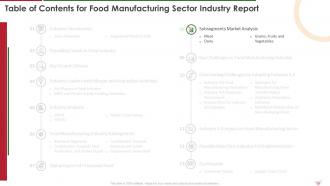
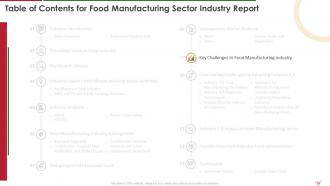
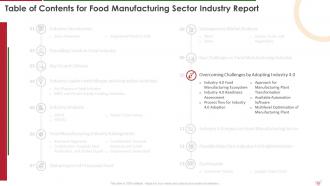
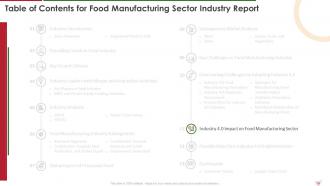
Slide 3: This slide presents Table of Content for the presentation.
Slide 4: This slide highlights title for topics that are to be covered next in the template.
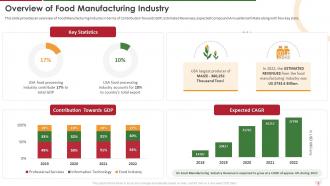
Slide 5: This slide shows Overview of Food Manufacturing Industry.
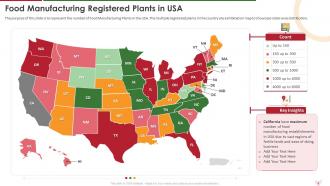
Slide 6: This slide presents Food Manufacturing Registered Plants in USA.
Slide 7: This slide highlights title for topics that are to be covered next in the template.
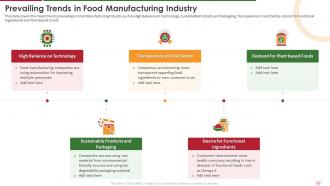
Slide 8: This slide displays Prevailing Trends in Food Manufacturing Industry.
Slide 9: This slide highlights title for topics that are to be covered next in the template.
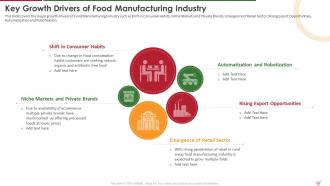
Slide 10: This slide represents Key Growth Drivers of Food Manufacturing Industry.
Slide 11: This slide highlights title for topics that are to be covered next in the template.
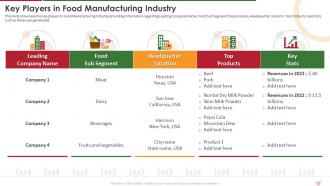
Slide 12: This slide showcases Key Players in Food Manufacturing Industry.
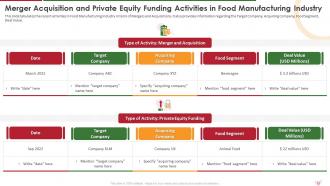
Slide 13: This slide shows Merger Acquisition and Private Equity Funding Activities in Food Manufacturing Industry.
Slide 14: This slide highlights title for topics that are to be covered next in the template.
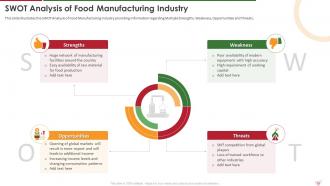
Slide 15: This slide represents SWOT Analysis of Food Manufacturing Industry.
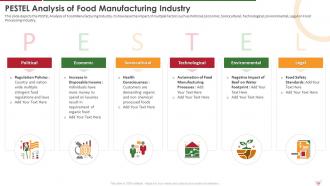
Slide 16: This slide showcases PESTEL Analysis of Food Manufacturing Industry.
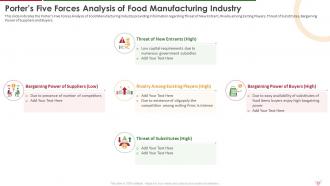
Slide 17: This slide shows Porter’s Five Forces Analysis of Food Manufacturing Industry.
Slide 18: This slide highlights title for topics that are to be covered next in the template.
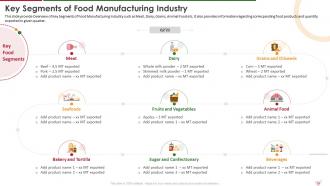
Slide 19: This slide presents Key Segments of Food Manufacturing Industry.
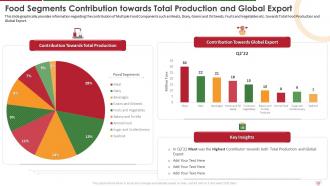
Slide 20: This slide displays Food Segments Contribution towards Total Production and Global Export.
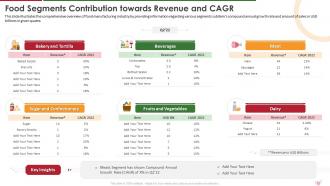
Slide 21: This slide represents Food Segments Contribution towards Revenue and CAGR.
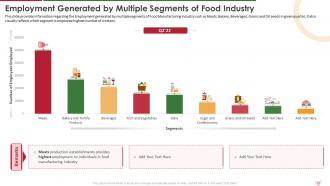
Slide 22: This slide showcases Employment Generated by Multiple Segments of Food Industry.
Slide 23: This slide highlights title for topics that are to be covered next in the template.
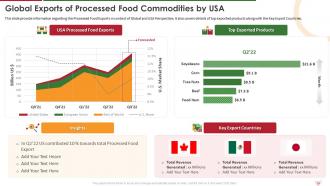
Slide 24: This slide shows Global Exports of Processed Food Commodities by USA.
Slide 25: This slide highlights title for topics that are to be covered next in the template.
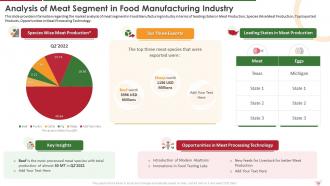
Slide 26: This slide presents Analysis of Meat Segment in Food Manufacturing Industry.
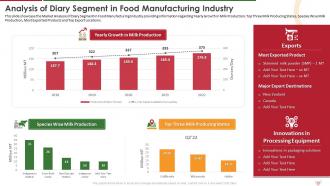
Slide 27: This slide displays Analysis of Diary Segment in Food Manufacturing Industry.
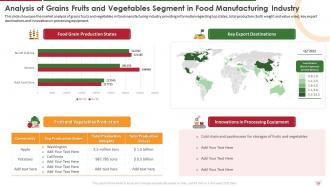
Slide 28: This slide showcase the market analysis of grains fruits and vegetables in food manufacturing industry.
Slide 29: This slide highlights title for topics that are to be covered next in the template.
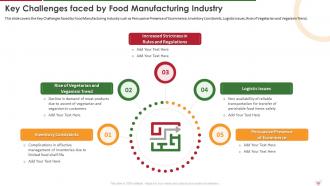
Slide 30: This slide represents Key Challenges faced by Food Manufacturing Industry.
Slide 31: This slide highlights title for topics that are to be covered next in the template.
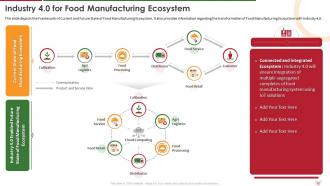
Slide 32: This slide depicts the Framework of Current and Future State of Food Manufacturing Ecosystem.
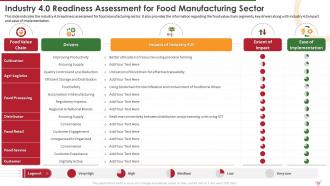
Slide 33: This slide indicates the industry 4.0 readiness assessment for food manufacturing sector.
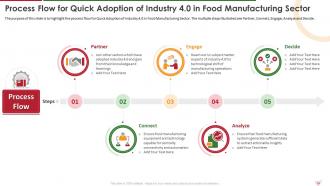
Slide 34: This slide represents Process Flow for Quick Adoption of Industry 4.0 in Food Manufacturing Sector.
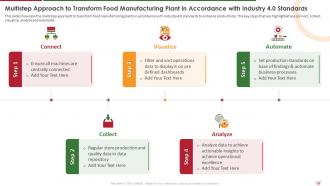
Slide 35: This slide showcase the multistep approach to transform food manufacturing plants.
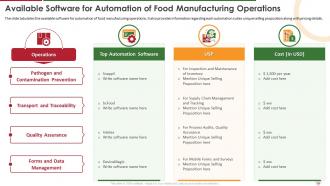
Slide 36: This slide shows Available Software for Automation of Food Manufacturing Operations.
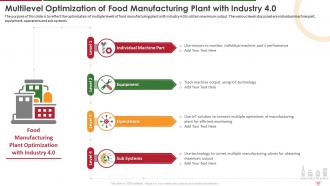
Slide 37: This slide presents Multilevel Optimization of Food Manufacturing Plant with Industry 4.0.
Slide 38: This slide highlights title for topics that are to be covered next in the template.
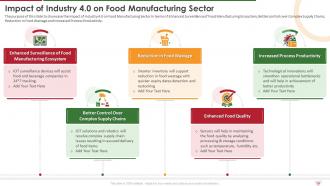
Slide 39: This slide represents Impact of Industry 4.0 on Food Manufacturing Sector.
Slide 40: This slide highlights title for topics that are to be covered next in the template.
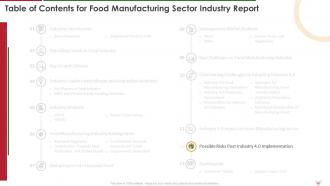
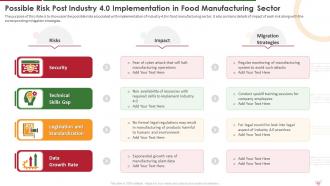
Slide 41: This slide showcases Possible Risk Post Industry 4.0 Implementation in Food Manufacturing Sector.
Slide 42: This slide highlights title for topics that are to be covered next in the template.
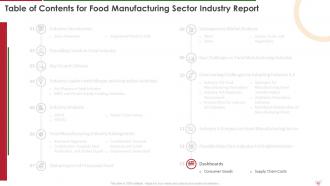
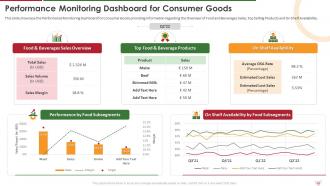
Slide 43: This slide shows Performance Monitoring Dashboard for Consumer Goods.
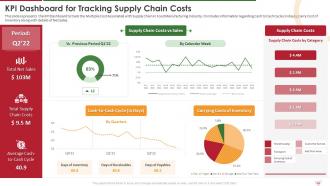
Slide 44: This slide represents the KPI Dashboard to track the Multiple Cost Associated with Supply Chain.
Slide 45: This slide showcases Icons for Food Manufacturing Sector Industry Report.
Slide 46: This slide is titled as Additional Slides for moving forward.
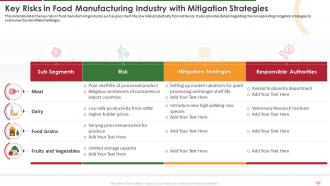
Slide 47: This slide showcases Key Risks in Food Manufacturing Industry with Mitigation Strategies.
Slide 48: This slide provides 30 60 90 Days Plan with text boxes.
Slide 49: This is About Us slide to show company specifications etc.
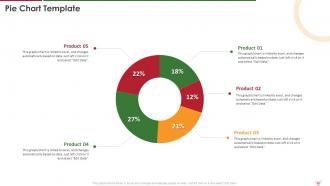
Slide 50: This slide shows Pie Chart with data in percentage.
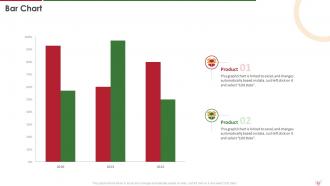
Slide 51: This slide presents Bar chart with two products comparison.
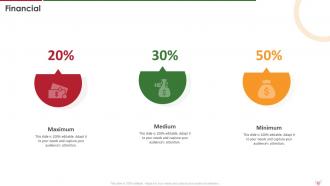
Slide 52: This is a Financial slide. Show your finance related stuff here.
Slide 53: This slide represents Funnel Filter Icon with Arrow.
Slide 54: This is Our Mission slide with related imagery and text.
Slide 55: This is Our Team slide with names and designation.
Slide 56: This slide contains Puzzle with related icons and text.
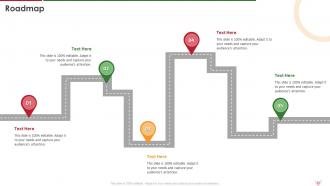
Slide 57: This slide presents Roadmap with additional textboxes.
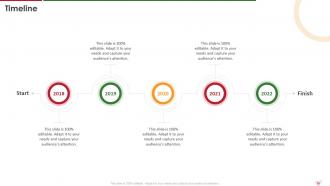
Slide 58: This is a Timeline slide. Show data related to time intervals here.
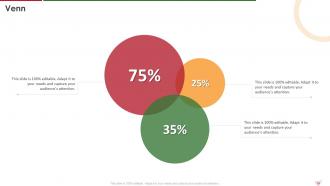
Slide 59: This slide depicts Venn diagram with text boxes.
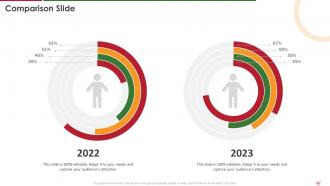
Slide 60: This is a Comparison slide to state comparison between commodities, entities etc.
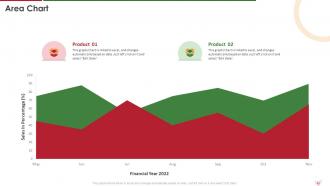
Slide 61: This slide depicts Area chart with two products comparison.
Slide 62: This is a Thank You slide with address, contact numbers and email address.
Industry Report For Food Manufacturing Sector Powerpoint Presentation Slides with all 67 slides:
Use our Industry Report For Food Manufacturing Sector Powerpoint Presentation Slides to effectively help you save your valuable time. They are readymade to fit into any presentation structure.







FAQs for Industry Report For Food Manufacturing Sector
Dude, plant-based stuff is absolutely everywhere right now - can't escape it. Automation's taking over production too, which is wild to watch. Consumers are obsessed with sustainability and transparency now, like they'll actually research where their snacks come from. Personalized nutrition is getting insane with AI figuring out what you specifically should eat. Companies had to scramble and find new suppliers after all those supply chain messes we've been dealing with. Honestly, if you're thinking investments, find companies doing at least two of these things well. That's where the smart money's going.
Dude, the tech stuff happening in food production right now is honestly crazy. Robots are doing all the boring packaging work while AI figures out supply chains and quality checks. Production lines are flying compared to what they used to be. Way fewer mistakes, better consistency, and tons of data to actually improve things. Safety's gotten so much better too - that alone probably pays for itself. Oh and if you're thinking about jumping in, don't go all-out at first. Pick one thing to automate and see how it goes.
Dude, sustainability is everywhere in food manufacturing right now. Companies are going all-in on renewable energy and cutting water waste. Local suppliers are huge too since it reduces shipping emissions. Honestly, it's not just about looking good anymore - customers demand it and the regulations keep getting stricter. The crazy part? Most of these changes actually save money over time through better efficiency. When you're looking at manufacturing partners (or updating your own stuff), definitely factor in their sustainability game. It's become a real competitive edge, not just some nice bonus feature.
So these new regulations are making manufacturers totally redo their quality systems. Companies have to deal with stricter labels, better safety protocols, tons more paperwork at every stage. The FDA updates alone? Smaller places are straight up struggling to keep up with new HACCP requirements and monitoring equipment costs. Honestly, it's been pretty brutal for some operations. But the upside is consumers trust brands more now, plus you're way less likely to get hit with lawsuits. My advice - audit your stuff now before inspectors show up and find problems you didn't know about.
Ugh, food manufacturers are getting hit from every angle right now. Supply chains are still a mess, nobody wants to work, and ingredient costs keep climbing. Then you've got all these new regulations for food safety and sustainability - because apparently we needed more paperwork, right? Consumers want everything "clean label" and transparent too. Companies are trying to automate their way out of the labor problem, but that equipment costs a fortune. My take? Start with diversifying your suppliers - that'll actually move the needle on costs pretty quick.
Honestly, shoppers are calling all the shots right now. Companies are scrambling to cut sugar and sodium because people actually read labels now - wild concept, right? My dad even switched to oat milk which I never saw coming. Plant-based stuff is everywhere. Brands can't just throw "natural" on packaging anymore and call it a day. Clean labels, probiotics, sustainable packaging - it's all happening because consumers demand it. Oh, and if you're developing anything, definitely survey people first instead of hoping they'll magically want whatever you create.
Honestly, I'd start by figuring out where you're actually losing stuff - bad storage and crappy packaging waste way more than you'd think. Focus on three things: predicting demand better (data analytics helps here), tighter inventory control, and solid supplier relationships. Just-in-time delivery cuts spoilage big time, especially if you nail your cold chain logistics. Oh, and don't put all your eggs in one basket with suppliers - when one screws up, you're toast. Better forecasting means you won't overproduce perishables that just rot anyway. It's honestly not rocket science, just requires some upfront work.
Dude, the sensor stuff is wild right now - they can catch contamination while it's happening instead of waiting for lab results. High-pressure processing is replacing heat treatments, which honestly makes way more sense since you're not destroying all the nutrients. Cold plasma tech is blowing up for cleaning surfaces too. Blockchain tracking lets you follow ingredients from the actual farm all the way to your plate, which is pretty sick. Oh and pulsed electric fields are another way they're zapping pathogens without cooking everything to death. I'd start by checking what sensor tech your competition's using - that seems like the easiest entry point.
Dude, the plant-based thing is absolutely exploding right now. Major food companies are throwing serious money at R&D and either buying up startups or creating their own alt-protein teams. The taste has gotten so much better - I tried this new burger thing last week and was actually shocked. Younger people are driving most of the demand, plus everyone's freaking out about sustainability. Short sentences work. If you're investing in this space, look for companies partnering with food tech rather than building everything themselves. Way smarter approach.
Honestly, go digital-first with your marketing. Social media is where it's at right now - TikTok and Instagram especially crush it for food brands. Tell the real story behind your ingredients and how you make stuff. People eat that authenticity up way more than boring ads. Partner with food bloggers and chefs too. Their followers actually trust what they say. Oh, and don't just rely on retail - build your own direct sales so you're not at the mercy of someone else's margins. Start simple: check what your digital presence looks like now, then find 2-3 smaller influencers in your space to test with.
Honestly, data analytics is a total game changer - you stop guessing and start making decisions based on actual patterns. Track your ingredient costs, supplier issues, production efficiency, all that stuff in real-time. The magic happens when you catch bottlenecks before they wreck your budget and predict demand way better. No more sitting on mountains of food that'll just spoil. My advice? Don't go crazy at first. Pick something specific like reducing waste or keeping equipment running smoothly. Once you see the results there, you'll want to expand it everywhere.
Trade policies are honestly brutal for supply chains. Tariffs jack up your raw material costs overnight - steel for canning or imported spices suddenly cost 20-30% more. Export restrictions can totally cut off ingredient sources. Food safety standards keep changing between countries too, which screws with logistics. Brexit was such a mess for this stuff. You really need suppliers spread across different regions though. When one trade route gets hit, you won't be stuck paying crazy premium prices for last-minute alternatives.
Yeah, tons of food companies are really pushing sustainable packaging these days. Plant-based plastics are everywhere now, plus compostable films and way less packaging overall. Major brands are dumping serious money into biodegradable stuff and refillable containers - some of it's actually pretty impressive when you look into it. They're also figuring out how to use less material without screwing up food safety. Oh, and if you want to stay on top of this trend, just watch what the big CPG companies put in their sustainability reports. Smaller companies basically copy whatever they do within like a year or so.
Honestly, food recalls are brutal for brands - like, recovery can take years. Your customers instantly start doubting everything about your safety standards. And with social media? Forget about it, the bad news spreads everywhere in hours. The money side is insane too. You're not just paying for the recall itself - sales tank, lawsuits pile up, and regulators will be breathing down your neck forever. I can't stress this enough though: have your crisis plan ready beforehand. How you respond in those first two days basically decides if you bounce back or completely tank.
So the whole training thing is getting way more hands-on now. Companies are teaming up with community colleges to teach people both food safety basics AND how to work with robots and data systems - which honestly makes sense since that's where everything's heading. Most programs ditched the boring classroom stuff for real training where you actually touch the equipment. My buddy's company just started this and he loves it way more than sitting through PowerPoints all day. Figure out what automated systems you'll roll out in the next couple years, then build your training around those specific tools. Gets people comfortable with the tech they'll actually use.
-
Easy to edit slides with easy to understand instructions.
-
Unique design & color.