

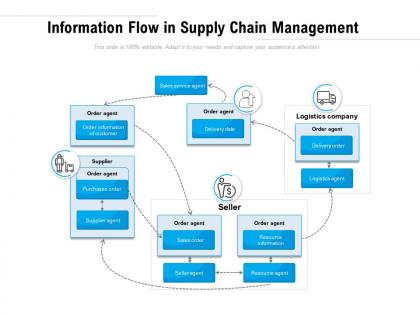
Information flow in supply chain management




Try Before you Buy Download Free Sample Product
 Impress Your
 Audience
 100%
100% Editable
 Save Hours
 of Time


Our Information Flow In Supply Chain Management are explicit and effective. They combine clarity and concise expression.
People who downloaded this PowerPoint presentation also viewed the following :
Information flow in supply chain management with all 2 slides:
Give your audience a fulfilling experience. They will find our Information Flow In Supply Chain Management elevating.
FAQs for Information flow in
So you're looking at demand forecasting, inventory tracking, order management, and performance metrics - all that data flowing between you, suppliers, and customers. Transportation visibility is huge for timing. Don't forget supplier communications and customer feedback loops either. There's honestly so many moving pieces that need to connect! Real-time visibility happens when your ERP talks to supplier portals and customer platforms. I'd start by mapping what info you're sharing now, then tackle the biggest gaps first. It sounds overwhelming but breaking it down helps.
Look, good info flow is a game changer for supply chains. You'll spot demand shifts and inventory issues way before they blow up into real problems. Fast response times mean fewer stockouts and less junk sitting around collecting dust. Your suppliers can actually plan instead of freaking out constantly - honestly, this alone makes everything run smoother. Most companies see cost drops around 10-15% plus way happier customers since you're not always behind the curve. Oh, and definitely start by figuring out where info gets bottlenecked in your current setup.
Honestly, IoT sensors are huge right now - they track temperature, location, whatever as your stuff moves around. Cloud platforms like AWS let everyone see the same live data, which beats the hell out of spreadsheets and endless email chains. Your ERP and warehouse systems can actually talk to each other through APIs, so info flows automatically between partners. Blockchain's getting some buzz for transparency but it's still pretty niche if I'm being real. I'd say start with cloud integration - that'll give you the biggest bang for your buck if you're upgrading.
Honestly, data analytics is a game-changer for supply chain stuff. You stop guessing about demand and actually see what's happening in real-time across your whole operation. Spotting bottlenecks before they blow up? Check. Better inventory levels? Yep. It'll even help predict when things might go sideways - which is pretty wild when you think about it. You can figure out which suppliers are reliable, nail down seasonal forecasts, and set up automatic reordering. My advice? Pick one area where you're just winging it right now and see what the numbers actually show you. Might surprise you.
Honestly, good collaboration is what keeps supply chains from falling apart. Share real-time data with your suppliers and distributors so everyone stops guessing what's actually happening. Think of it like having everyone on the same text thread instead of that weird telephone game we played as kids (way less fun when it's your business though). You need shared visibility into demand forecasts, inventory levels, disruptions - the whole mess. Pick your most important partners first and start exchanging data regularly. Even basic weekly inventory reports help tons. Trust me, it's better than flying blind and hoping for the best.
Ugh, supply chain disruptions are the worst - you basically lose all visibility into what's actually happening. Your suppliers go dark, inventory numbers become sketchy, and delivery dates? Forget about it. Making decisions with half the info you need is brutal. It's honestly like driving blindfolded sometimes. You end up putting out fires instead of planning ahead, which sucks. My advice? Set up backup communication with your key suppliers now, not later. Real-time tracking systems are worth the investment too - trust me on this one.
Honestly, start by getting everyone on the same data system - can't have accounting looking at different numbers than warehouse, you know? Then automate the boring stuff like inventory counts and shipping updates. Real-time dashboards will save your sanity, trust me on this one. Communication protocols between teams are huge too. Oh, and definitely get integration tools so your ERP talks to your warehouse system automatically instead of someone manually updating spreadsheets all day. I'd map out where info's falling through cracks first, then fix whatever's causing the biggest headaches.
So blockchain gives you this shared record that nobody can mess with - everyone in your supply chain sees the same info at the same time. No more playing telephone between systems that don't talk to each other. It's like having a group text where messages can't be deleted, so you can actually trace stuff from start to finish without drowning in paperwork or wondering if people are being honest. Honestly, the transparency part is pretty game-changing. I'd start by figuring out where you're losing visibility right now and see if blockchain makes sense for those problem areas.
Ugh, honestly the worst part is dealing with systems that refuse to talk to each other. Legacy stuff mixed with cloud platforms - it's a mess. Data formats are all over the place too. Some partners will fight you on every change, which is super fun. Security gets scary fast when you're linking networks, and nobody wants to share their sensitive data anyway. Oh and budget? Forget whatever number you started with - double it at least. I'd say pick one important partner first, show it actually works and saves money, then expand from there. Way less painful that way.
Honestly, start with the basics - standardize your data formats and set up proper validation rules so you don't get that classic "garbage in, garbage out" mess. Role-based access is huge too. Only let the right people see sensitive stuff. Encrypt everything (in transit and stored), and definitely use multi-factor auth on critical systems. Oh, and audit your data quality regularly - catches problems before they snowball. Map out your current data flows first though. Find your weak spots and tackle those. Way easier than trying to fix everything at once.
Honestly, cloud stuff is pretty amazing for supply chains. You get real-time tracking of everything - inventory, shipments, how your suppliers are doing. Your whole team can see the same info instantly, which is clutch. No more dealing with those expensive servers that'll be ancient in like 3 years. Integration with partners gets way easier too since everyone's on similar systems. The money side is great - you just pay for what you actually use instead of dropping tons upfront. I'd probably start by figuring out what's driving you crazy right now, then see which features fix those exact problems.
Each industry has its own data obsessions based on what keeps them up at night. Manufacturing is all about real-time production numbers and demand forecasting. Retail? They're tracking inventory and customer buying patterns like crazy. Healthcare gets super paranoid about traceability and compliance - honestly can't blame them with all those regulations. Food companies watch cold chain temps and expiration dates religiously, while tech focuses on component availability since designs change constantly. Figure out what data actually matters for your specific headaches, then build your systems to capture and share that info smoothly across your whole network.
Honestly, don't overthink this - focus on data accuracy first, then how fast info moves between your partners. Order visibility is massive too. I'd also track forecast accuracy since that shows if people are actually getting useful intel when they need it. Exception response times matter, but honestly those can be tricky to measure consistently. Partner collaboration scores are good if you can swing it. Here's the thing though - pick maybe 3-4 metrics max that actually matter for your specific setup. Otherwise you'll end up drowning in spreadsheets you never look at.
So predictive analytics basically lets you turn all your old supply chain data into actual forecasts that matter. Instead of scrambling when stuff goes wrong, you can spot demand spikes and bottlenecks coming. Machine learning finds patterns you'd totally miss otherwise - honestly blew my mind when I first saw it in action. Your inventory optimization becomes way more automatic too. The whole thing shifts you from reactive mode to getting ahead of supplier issues and transport delays before they bite you. I'd say pick your worst headaches first and see if you've got enough historical data to build something useful around those problems.
Honestly, automation is a game changer for getting info to flow faster through your supply chain. No more mindless data entry or those ridiculous email threads that go on forever. Real-time updates on inventory, shipments, demand forecasting - all happening automatically between your systems. EDI and APIs push updates instantly when things change. The cool part? You'll spot problems way sooner since everything flows between suppliers, warehouses, and customers without someone having to manually update stuff. I'd start by figuring out where you're doing the most manual work first - that's usually the low-hanging fruit.
No Reviews