


Innovation adoption curve powerpoint slide




Try Before you Buy Download Free Sample Product
 Impress Your
 Audience
 100%
100% Editable
 Save Hours
 of Time


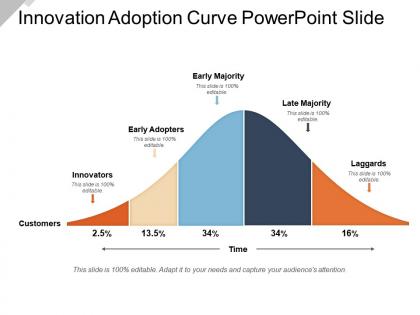
Encourage every one of your employees to get creative with their work by using our innovation adoption curve PowerPoint slide. The use of high resolution and premium quality slides while designing this adoption curve business slides will help you raise the standard of your work. Using our crossing the chasm PPT presentation you will be able to discuss a number of business-related processes like customers, inventors, early adopters, early majority, late majority, laggards, the time is taken, etc. Our business experts have especially for business professionals like you designed this hype cycle PPT slideshow you will be able to adopt new and innovative working methods which will help with the growth of your business organization. Also, because this innovation bar graph business template is made up of predesigned slides you will be able to save your time and energy that was earlier spent in designing the slideshow. It is assured that all the viewers will be highly impressed with your work. Fix their eyes on the same goal with our Innovation Adoption Curve Powerpoint Slide. They help align all forces.
People who downloaded this PowerPoint presentation also viewed the following :
Innovation adoption curve powerpoint slide with all 5 slides:
Host your guests with our Innovation Adoption Curve Powerpoint Slide. They will certainly enjoy your hospitality.


FAQs for Innovation adoption
So there are five stages in the Innovation Adoption Curve - basically how new stuff catches on. Innovators (2.5%) try everything first, then Early Adopters (13.5%) who actually have influence. Early Majority makes up 34% and waits until things are proven. Late Majority is another 34% but they need peer pressure to jump in. Laggards are the final 16% who hate change. What's crazy is these percentages stay pretty consistent across different products. Oh, and there's this "chasm" thing between early adopters and mainstream - that's where most startups die. You'll want to nail those first two groups since they're your gateway to everyone else.
So early adopters are the people who get excited about new stuff - they've got money, education, and love being first to try things. Laggards are the opposite. They're suspicious of change and wait until literally everyone else has tested it first (which honestly isn't always wrong). Early adopters make quick decisions based on what they read or hear from experts. But laggards? They need their friends and family to convince them. Income and social connections play a huge role too. If you're launching something, definitely start with early adopters - they'll spread the word for you.
Where you fall on the adoption curve depends on a bunch of things. Risk tolerance is probably the biggest one - some people jump on anything new while others wait forever. Your friend group influences you more than you'd think. Income obviously matters since new stuff costs more, but your job does too. Tech and marketing people are way more likely to try random gadgets. Age and education play a part, though I know plenty of older folks who are early adopters. Honestly, the main thing is whether it actually fixes something annoying in your life. Check these patterns in whoever you're trying to reach.
Honestly, the best customers are those tech-savvy early adopters who jump on new stuff right away. They've got money to spend and aren't afraid to try things. I'd check your social media first - who's always sharing and commenting on your launches? Survey people about their buying patterns too. Track who buys immediately when you drop something new. These people are amazing for feedback since they actually care about innovation. Also dig into your data for folks buying premium versions or beta releases. The real magic happens when they don't just purchase - they tell everyone else about it.
Dude, social influence is everything when it comes to new tech adoption. People watch what their friends are doing first before jumping in. Early adopters try stuff out, then they basically become walking advertisements for everyone else. The early majority won't budge until they see those trendsetter types using it successfully. Laggards? They're waiting until their grandma has figured it out lol. Each group needs that social proof from the one before them. So if you're trying to get something new off the ground, win over those early adopters - they'll do the heavy lifting for you.
Match your messaging to where people's heads are at. Innovators and early adopters want the shiny new stuff - they're basically paying to feel superior. The early majority? They need to see proof it actually works before jumping in. Late majority folks are super cautious, so testimonials from similar people work better than flashy features. Laggards... honestly, they might never budge, but if you're going after them anyway, play up how stable and reliable everything is. Oh, and definitely map out which customers fall into which bucket first. Then you can create separate campaigns that actually speak their language instead of using the same pitch for everyone.
Network effects are wild once they kick in. Facebook with 10 users? Totally pointless. But get enough people on board and suddenly everyone wants in because the value shoots up for everybody. That's why you see that steep S-curve in adoption - nobody wants to be left out of the party. Early adopters drag in the fence-sitters way faster than usual. I swear the hardest part is just hitting critical mass in the first place. Once you're there though, it's like watching dominoes fall. Focus everything on getting those first crucial users and the rest kinda takes care of itself.
Your early adopters are gold - they'll catch stuff you totally missed before you blow up. Set up a feedback form or survey, something simple. Most of them are pretty chatty about what sucks and what doesn't, which honestly saves you so much time. Focus on the complaints that keep coming up - those are your real problems. They help you figure out which features people actually want vs the ones you spent forever building that nobody cares about. It's like having free QA testers who genuinely want your product to succeed.
Late adopters are honestly just scared of messing up what already works. Cost is always their first worry, plus they think new tech will be too complicated to figure out. They want to see everyone else succeed before they'll even consider it - like waiting for your friend to try the sketchy restaurant first, you know? Risk is their biggest enemy. Switching costs freak them out too because retraining staff is a nightmare. If you're trying to win them over, keep everything simple and show clear money benefits. Pilot programs work great since they can test without fully committing.
Honestly, tech moves so fast now that the whole adoption thing is completely different. Innovators still jump first, obviously. But everyone else? They're not far behind anymore. ChatGPT is the perfect example - went from nerdy tool to your mom asking about it in like three months. Social media kills those old slow rollout timelines. Early majority, late majority - they all pile in way quicker because word spreads instantly online. So if you're launching something, don't bank on having years to figure things out. You've got weeks, maybe months before everyone's either on board or moved on to the next thing.
Honestly, the whole thing boils down to knowing your audience at each stage. Early adopters? They want the cool new stuff, all the bells and whistles. But once you're trying to hit mainstream - totally different game. Those folks need proof it actually works and won't break on them. Apple's probably the best example (even if their events are kinda cringe now). You can't just copy-paste your pitch across different customer groups. Tesla and Netflix both had to play the long game too, waiting for regular people to catch up. Figure out where your customers are on that adoption curve first, then build your strategy around that.
Look for influencers who are genuinely into new tech - not just posting for money. Give them early access so they can actually play with your product first. That's way better than some fake promotional post, trust me. Tech reviewers and niche community people work really well here. Skip the mega-influencers honestly - their engagement usually sucks anyway. You want someone whose audience actually listens to them. Hook them up with something exclusive they can't get anywhere else, and you'll get into those early adopter circles way faster than boring traditional ads.
Honestly, I'd focus on just 2-3 metrics instead of going crazy with data. Adoption rate is obvious - track how fast people move from early adopters to mainstream users. Time-to-adoption matters too (basically launch to widespread use). User engagement after they adopt is critical because what's the point if they bail after a week? Market penetration percentage and customer satisfaction scores are solid picks. Oh, and retention rates - I always forget about those but they're huge. Pick what actually matches your goals though, not just what sounds impressive in meetings.
Oh man, cultural differences are huge for this stuff. Americans love being first to try new tech - we're all about standing out. But in places like Japan or Germany? People wait for everyone else to test it first. Collectivist cultures move slower because they need group buy-in, though honestly once they commit, adoption rates are actually better. Risk tolerance is all over the map too. Some places have that "fail fast" vibe, others need like 50 studies before touching anything new. My advice? Don't assume what works in Silicon Valley works everywhere. Research the local mindset first.
Honestly, skeptics just need to see proof that actually matters to them. Get your early customers to share real numbers and results - like actual ROI data, not fluffy testimonials. I've found the best thing is having skeptics talk directly to users who used to be just as doubtful. Sounds obvious but it works. Don't rush these people either. Offer pilot programs so they can test without going all-in. Keep sharing concrete evidence until their doubt turns into genuine interest. Oh, and skip the generic sales pitch - address their specific worries instead. Takes longer but way more effective.
-
Great designs, Easily Editable.
-
Content of slide is easy to understand and edit.