


Stellen Sie sich vor Bewerbungs-Powerpoint-Präsentationsfolien






Try Before you Buy Download Free Sample Product
 Impress Your
 Audience
 100%
100% Editable
 Save Hours
 of Time


Gewinn Sie ein paar Brownie-Punkte mit unseren Präsentationsfolien für Bewerbungs-Powerpoint-Präsentationen. Wir haben diese kreativen PPT-Diagramme entworfen, um die detaillierten Arbeitspräsentationen zu präsentieren, die es Ihnen ermöglichen, bei Ihrem Publikum einen bleibenden Eindruck zu hinterlassen. Diese PPT-Layouts zur Selbstpräsentation helfen Ihnen, Ihre Fähigkeiten in einem malerischen Stil darzustellen. Dies ist eine Möglichkeit, Ihre Leistungen, Qualifikationen, Fähigkeiten und Sprachkenntnisse zu präsentieren, ohne egozentrisch zu sein. Dieses PPT-Diagramm behandelt diese Selbstdarstellungsthemen wie Agenda, Biografie, Karriereziele, Stärken und Schwächen, berufliche Qualifikationen, Ausbildung, Erfahrung, Erfolge, Fallstudie, Karriereweg, Fähigkeiten, Sprachkenntnisse, Hobbys, Zitate, Mindmap, Ziele, Mindmap, Kontaktdaten und vielen Dank. Diese Folien enthalten auch die Zeitleiste, Säulendiagramme, Flächendiagramme, Liniendiagramme, Bilder, Clipart-Symbole, Roadmaps und Karten, um Ihre Demonstration beeindruckend zu machen und den maximalen Aufruf zum Handeln zu setzen, da in der heutigen Welt ein großer Wettbewerb um Jobs herrscht. Laden Sie diese PowerPoint-Präsentationsfolien für eine Stellenbewerbung herunter, um den Spieß Ihres Publikums umzudrehen. Unsere Powerpoint-Präsentationsfolien für Stellenbewerbungen stellen Sie sich vor. Sie sind auf jeden Fall gut im Herzen.
People who downloaded this PowerPoint presentation also viewed the following :
Inhalt dieser Powerpoint-Präsentation
Folie 1 : Dies ist eine Stellenbewerbungsfolie mit Bildern.
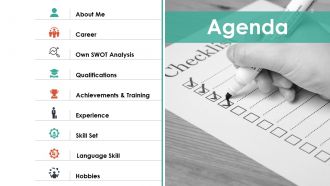
Folie 2 : Dies ist eine AGENDA-Folie mit Über mich, Karriere, eigene SWOT-Analyse, Qualifikationen, Leistungen und Training, Erfahrung, Fähigkeiten, Sprachkenntnisse, Hobbys.
Folie 3 : Dies ist eine Folie über mich. Hier können Sie Text nach Ihren Wünschen hinzufügen.
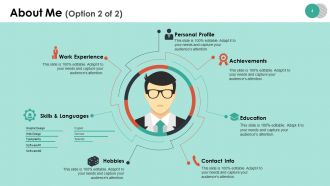
Folie 4 : Dies ist auch eine Über mich-Folie (Option 2 von 2) mit den folgenden Punkten, die Sie verwenden, hinzufügen oder bearbeiten können: Persönliches Profil, Ausbildung, Leistungen, Berufserfahrung, Kontaktinformationen, Hobbys, Fähigkeiten und Sprachen.
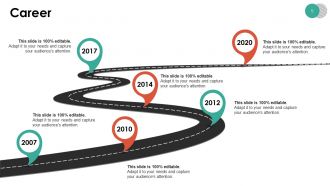
Folie 5 : Diese Folie zeigt die Karriere-Roadmap in Jahren. Sie können es nach Bedarf hinzufügen/bearbeiten.
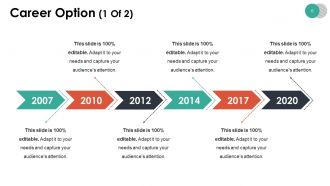
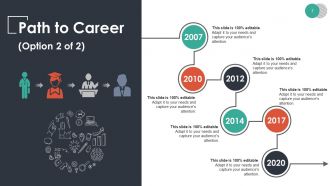
Folie 6 : Dies ist die Karriereoption (1 von 2) Folie in Form einer Zeitleiste. Nennen Sie hier Ihre Karriereaspekte und nutzen Sie diese.
Folie 7 : Diese Folie zeigt die Zeitleiste von Path to Career. Inhalte nach Ihren Wünschen hinzufügen/bearbeiten.
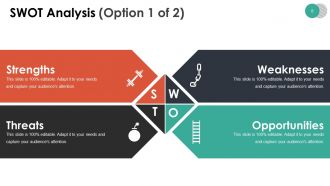
Folie 8 : Diese Folie präsentiert die SWOT-Analyse. Verwenden Sie es, um Ihre Stärken, Schwächen, Bedrohungen, Chancen anzugeben.
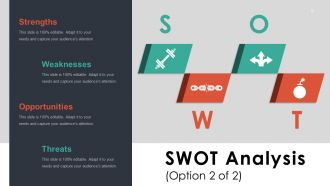
Folie 9 : Dies ist eine weitere Folie der SWOT-Analyse (Option 2 von 2). Verwenden Sie es nach Ihrem Bedarf.
Folie 10 : Dies ist eine Folie zu den beruflichen Qualifikationen, um im Detail zu erläutern.
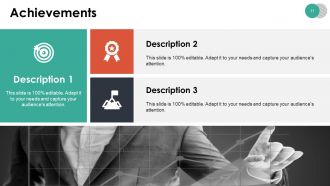
Folie 11 : Dies ist die Erfolgsfolie. Beschreiben Sie hier Ihre verschiedenen Erfolge.
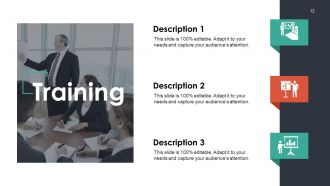
Folie 12 : Diese Folie präsentiert das Training mit Beschreibung.
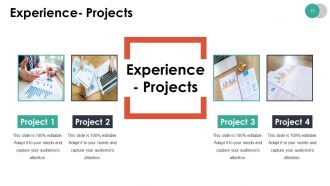
Folie 13 : Dies ist eine Erfahrungsfolie in Bezug auf Projekte. Geben Sie sie hier an.
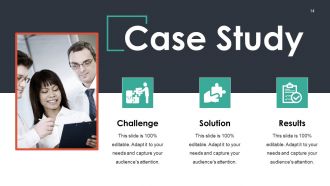
Folie 14 : Diese Folie zeigt die Fallstudie mit Herausforderung, Lösung, Ergebnissen.
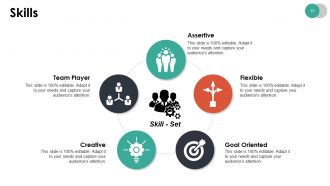
Folie 15 : Dies ist eine Folie mit den Fähigkeiten, die als durchsetzungsfähig, flexibel, zielorientiert, kreativ, Teamplayer kategorisiert ist.
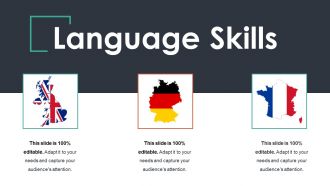
Folie 16 : Diese Folie zeigt Sprachkenntnisse in Bezug auf – Deutsch, Englisch, Französisch. Verwenden Sie es, um Ihre eigenen Sprachkenntnisse zu zeigen.
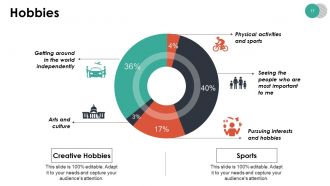
Folie 17 : Diese Folie gibt kreative Hobbys in Prozent an. Zeigen Sie hier Ihre eigenen Hobbys.
Folie 18 : Diese Folie trägt den Titel Kaffeepause, um anzuhalten und dann fortzufahren. Sie können den Folieninhalt nach Belieben ändern.
Folie 19 : Diese Folie trägt den Titel Neue Stellen Sie sich selbst Jobsymbolfolie vor. Ändern Sie die Symbole nach Wunsch.
Folie 20 : Diese Folie trägt auch den Titel „Neue Stellenanzeige mit Jobsymbol“. Ändern Sie die Symbole nach Wunsch.
Folie 21 : Diese Folie geht weiter zu Diagrammen und Grafiken. Verwenden Sie nach Ihren Anforderungen.
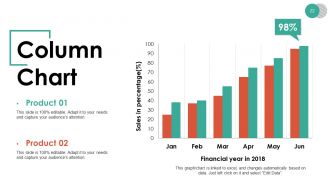
Folie 22 : Diese Folie präsentiert ein Säulendiagramm zur Darstellung von Produkt-/Unternehmenswachstum, Vergleich usw.
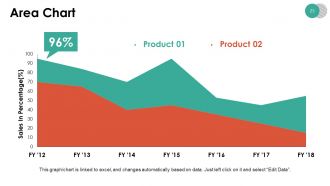
Folie 23 : Diese Folie präsentiert ein Flächendiagramm zur Darstellung des Produkt-/Unternehmenswachstums, Vergleichs usw.
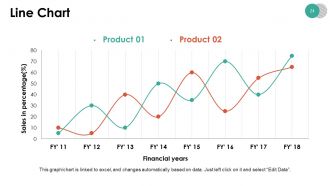
Folie 24 : Diese Folie präsentiert ein Liniendiagramm zur Darstellung von Produkt-/Unternehmenswachstum, Vergleich usw.
Folie 25 : Diese Folie trägt den Titel Zusätzliche Folien, um vorwärts zu gehen. Sie können den Folieninhalt nach Bedarf ändern.
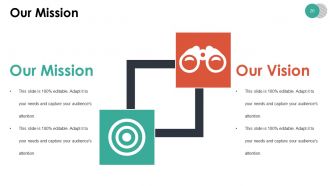
Folie 26 : Dies ist unsere Mission-Folie, um sie zu erklären.
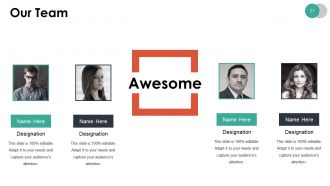
Folie 27 : Dies ist die Folie unseres Teams mit Feldern zum Ausfüllen von Name und Bezeichnung.
Folie 28 : Dies ist eine Über uns-Folie. Geben Sie hier Team-/Firmenspezifikationen an.
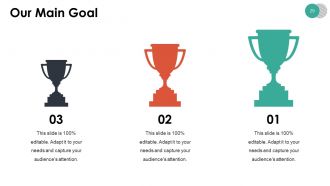
Folie 29 : Diese Folie zeigt unser Hauptziel. Nennen Sie hier Ihre wichtigsten Ziele.
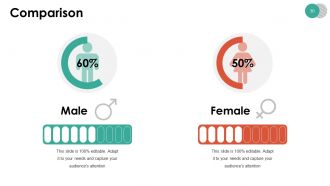
Folie 30 : Diese Folie zeigt den Vergleich zweier Entitäten.
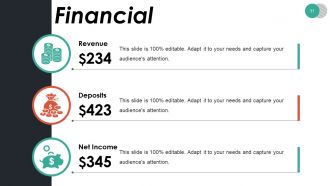
Folie 31 : Dies ist eine Finanzfolie mit Einnahmen, Einlagen, Nettoeinkommen.
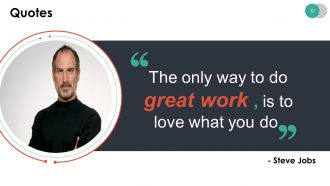
Folie 32 : Dies ist eine Zitate-Folie, um Unternehmens-/Organisationsbotschaften, Überzeugungen usw. zu vermitteln. Sie können den Folieninhalt nach Bedarf ändern.
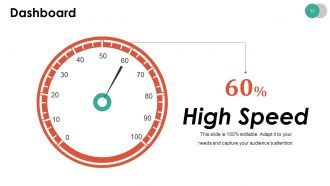
Folie 33 : Dies ist eine Dashboard-Folie, um Informationen in Prozent usw. anzuzeigen.
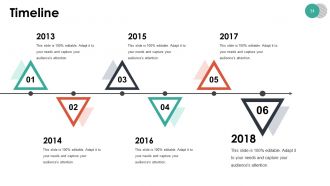
Folie 34 : Diese Folie stellt eine Zeitleiste dar, um Wachstum, Meilensteine usw.
Folie 35 : Dies ist eine Zielfolie. Geben Sie hier Ihre Ziele an.
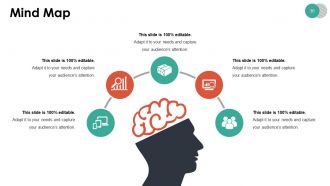
Folie 36 : Diese Folie präsentiert eine Mindmap mit Textfeldern.
Folie 37 : Dies ist eine Idea Bulb-Folie mit Bildern, um Informationen, innovative Aspekte usw.
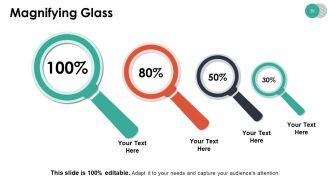
Folie 38 : Dies ist eine Lupenbildfolie, um Informationen, Scoping-Aspekte usw. anzuzeigen.
Folie 39 : Dies ist eine Dankesfolie mit Adresse# Hausnummer, Stadt, Bundesland, Kontaktnummern, E-Mail-Adresse.
Stellen Sie sich vor Stellenbewerbung Powerpoint-Präsentationsfolien mit allen 39 Folien:
Nehmen Sie jeden Aspekt in die Agenda mit unseren Powerpoint-Präsentationsfolien für Stellenbewerbungen vor. Fördern Sie einen zusammengesetzten Dialog.






FAQs for Introduce Yourself Job Application
Okay so four key things to hit: quick personal intro, why you want THIS job specifically, relevant experience with actual examples, and how you'd tackle the role. Don't do that cringe "I'm passionate about synergy" nonsense - be real about what draws you to them. Pick 2-3 solid examples that prove you can handle what they're asking for. Show you actually researched the company, maybe throw in one thoughtful observation or idea you have. Oh and definitely practice saying it out loud first - nothing worse than sounding like you're just reading bullet points. Keep it structured but not stiff, you know?
Honestly, visuals can totally set you apart from other candidates. Most people just talk through their accomplishments, but if you show charts of your results or before/after examples, hiring managers can actually *see* your impact. Way more memorable that way. A career timeline works great too - I've seen people nail interviews with those. Just don't go crazy with animations or cheesy clipart (major turnoff). Stick to 2-3 clean visuals that directly relate to the job. We process visual info so much faster than just listening to someone ramble anyway.
Dude, don't cram your slides with text and then just read off them - it's literally painful to watch. Research the company first because generic pitches are so obvious it hurts. Practice beforehand! I learned this the hard way. Keep it to 3-4 main points and actually tell them why you're perfect for the job instead of listing random stuff. Watch your time too. Tech always breaks so have a backup ready. Oh and structure matters - people get lost if you're all over the place. Trust me on this one.
Honestly, just match what they actually care about. Tech companies? Show your GitHub or do a quick demo - they want to see how you think through problems. Finance people are all about those clean slides with solid numbers. Creative roles should lead with your portfolio (don't make them wait till slide 10, seriously). Traditional places like healthcare or manufacturing still prefer the formal presentation route with detailed methods. Before you prep anything though, stalk their LinkedIn and website a bit. You'll get a feel for whether they're corporate suits or hoodie-wearing startup types, then format accordingly.
Dude, stories are everything in interviews. Don't just say "I boosted sales 20%" - walk them through the whole thing. What was broken? How'd you fix it? What got in your way? Our brains eat that stuff up way more than boring bullet points. Plus it actually shows how you think, not just what you achieved. I learned this the hard way after bombing a few interviews just rattling off accomplishments. Keep it short though - maybe 2-3 solid examples that actually relate to the job. Practice them like you're explaining a crazy work situation to a friend.
Your opening slide can make or break everything - seriously, you've got like 30 seconds before they zone out. Skip the boring "thanks for having me" nonsense. Jump right into who you are, what job you want, and why they should care. I always think of it like a movie trailer that either grabs you or makes you scroll your phone. Lead with something punchy - maybe a big win you had, how you see their problems differently, or just be bold about what you'd actually do for them. Honestly, people remember first impressions way longer than they should.
Honestly? Just go with boring fonts like Arial or Calibri. Black text, white background - that's it. Maybe throw in one accent color for headers if you want, but don't get crazy with it. I made the mistake once of using this awful purple font that looked like garbage when printed out. Your resume isn't the place to show off your artistic side - save that energy for the actual content. Also, definitely print a test copy because what looks good on your laptop screen might be totally different on paper. Trust me on this one.
Definitely use the STAR method - Situation, Task, Action, Result. Pick like 2-3 solid examples that actually match what they want. I bombed an interview once by just rambling about random stuff, so now I keep each story super tight - maybe 30-60 seconds tops when talking, or just a few sentences in writing. Numbers are your friend here. "Boosted sales by 20%" sounds way better than "I'm good at sales." Practice your go-to stories beforehand so you can tweak them for different questions. Oh, and have your strongest example ready first - you want to start strong.
Focus on metrics that actually matter for the job - revenue growth, cost savings, team improvements, project completion rates, customer satisfaction scores. Numbers beat vague statements every time, trust me. Throw in some industry benchmarks so they know you get the bigger picture. Don't have hard data? Process improvements work too. Oh, and certifications are solid if they're relevant. The trick is tying each number back to how you'd help their specific team. Makes it way more convincing than just listing random achievements.
Wrap it up by connecting your strengths to what they actually need. Don't just do the boring "thanks for your time" thing - honestly, that makes you blend in with everyone else. Instead, mention something specific you talked about or a project you're excited to tackle. Keep it brief but confident. Maybe reference that challenge they mentioned or how you'd fit with their team culture. The last thing you say is what sticks with them when they're comparing candidates later, so make it count. Practice saying it out loud until it doesn't sound rehearsed.
Honestly, interactive stuff can make or break your presentation. Ask them direct questions about their biggest challenges - gets them thinking. Quick polls work too if you want to know their priorities. If you're in tech, do a live demo. Way more impressive than just talking about what you built. I'd also let them ask questions throughout instead of that awkward "questions at the end" thing. Maybe even try whiteboarding if it fits the vibe. Just don't go overboard - pick like two things you're actually comfortable with and read the room first.
Definitely prep for the obvious stuff - your experience, handling challenges, why you want to work there. I usually write down 5-6 questions they'll probably ask and think through answers ahead of time. Go back through that job description too since they love asking "how would you tackle this responsibility?" Oh, and have some good questions ready about the company or team. Shows you actually care. Honestly, the Q&A part often matters more than your actual presentation. Keep some specific examples in your back pocket that show off your skills. If you need a sec to think, just say "good question, give me a moment" - totally fine to do that.
Keep it short - like 10-15 minutes tops. Honestly, 5-10 minutes is probably perfect for most jobs. I've watched so many people drone on for 20+ minutes while the interviewers just... zone out. It's painful to watch. Stick to maybe 3 or 4 key points that actually connect to what they're hiring for. Always save time for questions at the end too. Oh, and definitely practice timing yourself beforehand because presentations somehow always take way longer than you think they will. If they don't give you a time limit upfront, just ask when you're prepping - shows you respect their time.
Don't just ask "how'd I do?" - that's useless feedback territory. Get specific instead. Have them focus on your opening, whether your examples made sense, or if you were fidgeting too much. Time each section so you know where you're rushing. I hate when people just nod and say "looked great!" because honestly, that doesn't help anyone improve. Take notes while they're talking and don't argue back. Do a full practice run with maybe 2-3 people who'll actually be straight with you, not just tell you what sounds nice. Then you can fix the weird parts before showtime.
Dude, just go with PowerPoint or Google Slides - they're solid choices and any employer can open them without issues. Canva's pretty sweet if you want something that looks more polished without much effort. I've watched people waste SO much time on crazy animations that honestly just annoy everyone. Clean layout is key. Use Arial or Calibri (boring but readable), add white space so it doesn't look cramped, and maybe throw in their company colors if you can find them online. Oh and definitely practice your timing! Nothing worse than rushing through slides. Always save a PDF version too - tech issues happen at the worst moments.
-
good
-
Informative design.
-
The content is very helpful from business point of view.